# WhiteHouseCryptoSummit

21.64K
#WhiteHouseCryptoSummit
White House meeting fails to resolve US crypto legislation stalemate
Ripple CEO Joins White House Crypto Summit, But Hoskinson Is Left Out
February 4
March 11, 2025
🏛️ What Is the White House Crypto Summit?
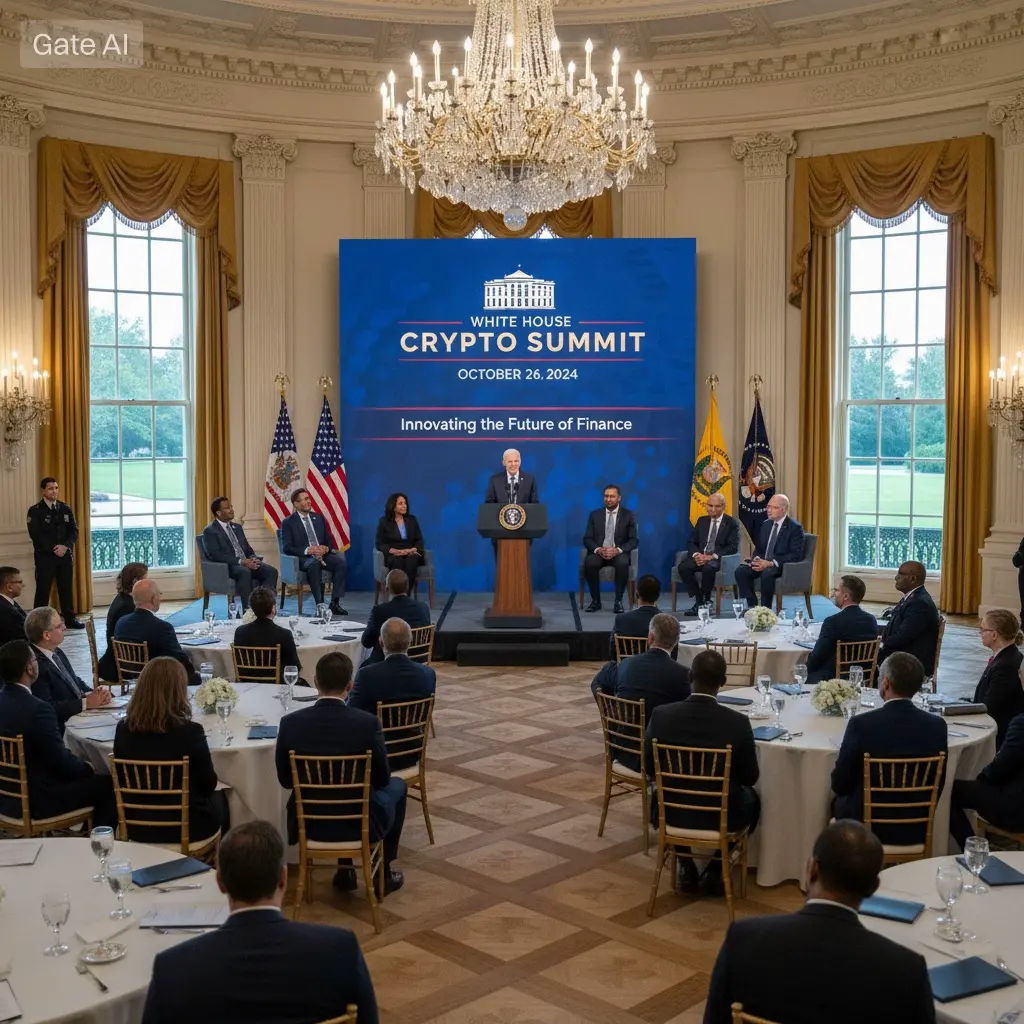
The White House Crypto Summit refers to a high‑level meeting hosted at the White House (first held on March 7, 2025) bringing together U.S. government officials, regulators, lawmakers and leaders from the cryptocurrency industry to discuss the future of digital assets in American policy and law. It was positioned as a historic event intended to shape U.S. crypto re
BTC0,5%
ETH-0,07%
SOL0,94%
ADA-0,48%
HighAmbitionvip
#WhiteHouseCryptoSummit
White House meeting fails to resolve US crypto legislation stalemate
Ripple CEO Joins White House Crypto Summit, But Hoskinson Is Left Out
February 4
March 11, 2025
🏛️ What Is the White House Crypto Summit?
The White House Crypto Summit refers to a high‑level meeting hosted at the White House (first held on March 7, 2025) bringing together U.S. government officials, regulators, lawmakers and leaders from the cryptocurrency industry to discuss the future of digital assets in American policy and law. It was positioned as a historic event intended to shape U.S. crypto regulation and industry direction.
The American Presidency Project
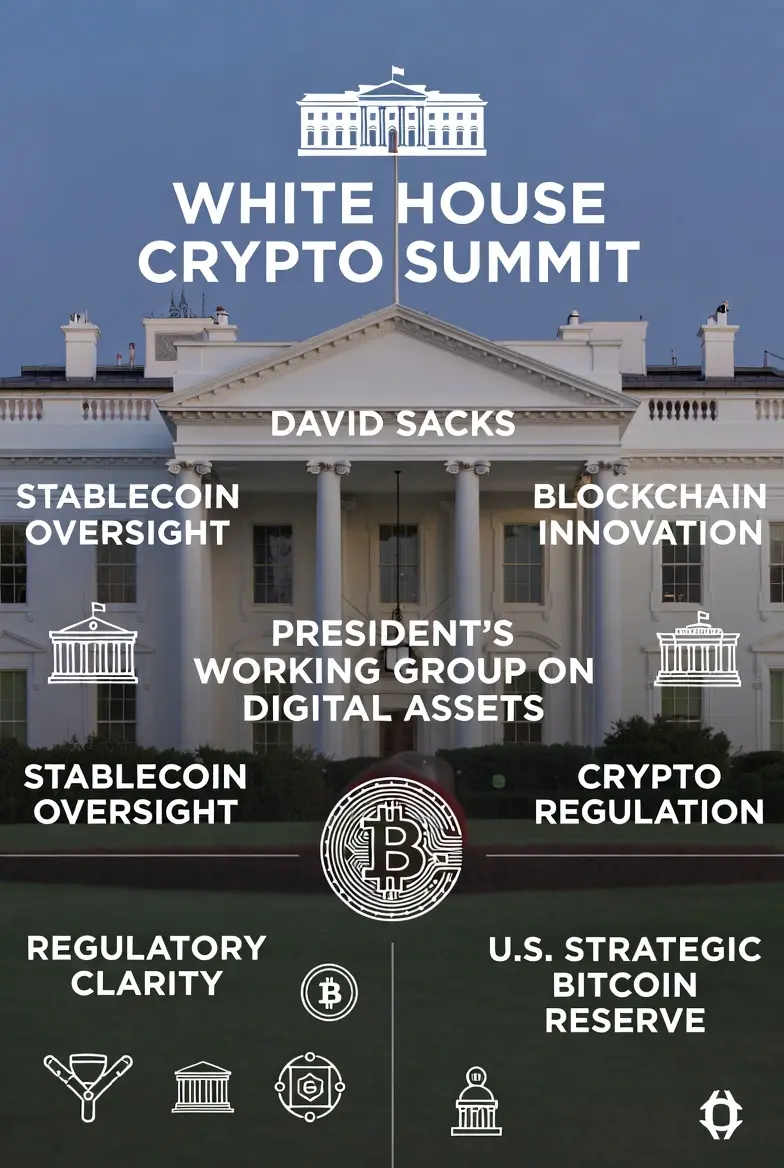
It was chaired by David Sacks, the White House’s appointed AI and Crypto Czar, with the President’s Working Group on Digital Assets playing a central role.
The American Presidency Project
🎯 Main Goals & Focus Areas
1. Regulatory Clarity
One of the summit’s primary aims was to define clear rules and frameworks for crypto — especially after years of uncertainty due to enforcement actions and legal disputes involving regulators like the SEC. Policymakers and industry leaders talked about ways to provide clarity around compliance, oversight, and how digital assets fit into financial law.
2. Stablecoin Oversight
Stablecoins — digital tokens pegged to fiat currencies — were a major topic. Leaders debated how to regulate stablecoin rewards and interest, an issue causing legislative friction between banks and crypto platforms.
3. U.S. Strategic Bitcoin Reserve
A key backdrop to the summit was the proposal to create a U.S. Strategic Bitcoin Reserve — akin to a “digital Fort Knox.” The idea, backed by an executive order signed just before the summit, was to hold seized government Bitcoin and possibly other assets as a permanent reserve. The summit discussed how to audit and manage these holdings and whether to include only BTC or also altcoins.
4. Innovation & Mainstream Adoption
The discussions also touched on how blockchain technology, DeFi, Layer‑2 scaling, and public trust initiatives can accelerate mainstream adoption of crypto while maintaining financial stability and consumer protections.
👥 Who Attended?
The event gathered top crypto industry figures, CEOs, founders, and regulators. Attendees included leaders from major firms, such as exchanges and blockchain projects, along with federal regulators and policymakers.
This blending of industry and government was designed to create dialogue around workable policy solutions.
However, some notable figures (like Cardano’s Charles Hoskinson) were reportedly not invited, which sparked debate in the crypto community about representation.
📜 What Was Announced?
Although the summit was highly anticipated, it did not produce sweeping new crypto laws or detailed regulatory mandates at the time it occurred. Instead, the White House used it to signal direction and priorities:
✅ A strong pro‑crypto stance from the administration
✅ Continued work toward stablecoin and market structure legislation
✅ Emphasis on audits and transparency in government crypto holdings
✅ Reinforcement of the Strategic Bitcoin Reserve concept (though specifics were limited)
Some attendees expressed confidence about clearer rules in the future, but no major legislative breakthrough was announced at the summit itself.
📈 Market & Investor Reactions
The summit received mixed reactions:
📉 Short‑term market response — Bitcoin and altcoins dipped after the summit, possibly due to unmet expectations or “sell‑the‑news” trading behavior. Some investors felt the announcements lacked actionable detail.
📊 Long‑term sentiment — Many institutional voices saw it as a historic moment, believing that U.S. government engagement with crypto at this level signals legitimacy and future regulatory progress.
🧠 Broader Policy Significance
The summit fits into broader shifts in U.S. crypto policy under the current administration, including:
🔹 Executive orders supporting crypto innovation
🔹 More collaborative approaches between regulators and industry
🔹 Efforts to make the U.S. a global leader in crypto and digital finance
🔹 Focus on integrating crypto within traditional financial systems and frameworks
It wasn’t just a one‑off event — it’s part of an ongoing policy effort that could influence legislation, regulatory rulemaking, and market standards over the coming years.
🔍 Key Debates & Ongoing Issues
Here are the main debates coming out of the summit:
⚖️ Stablecoin rules — Banks worry rewards could pull deposits away; crypto firms argue rewards are key for growth.
📊 Strategic Crypto Reserve — Should the U.S. government include only Bitcoin, or also other digital assets like Ethereum, Solana, Cardano, and XRP?
📜 Regulation vs. Innovation — How do you balance consumer protection with fostering innovation and global competitiveness?
📉 Investor Expectations — Some traders expected major announcements or policy guarantees, and short‑term price moves reflected disappointment.
🧩 In Summary: Why #WhiteHouseCryptoSummit Matters
It formally brought crypto issues to the highest level of U.S. government.
It set the stage for future regulatory frameworks and stablecoin laws.
It reinforced the idea of a Strategic Bitcoin Reserve and stronger U.S. leadership in crypto.
It showed both industry cooperation and policy tensions between banks, exchanges, and regulators.
Overall, the summit marked a historic moment for crypto policy, even if the immediate outcomes were less dramatic than some expected.
repost-content-media
  • Reward
  • Comment
  • Repost
  • Share
#WhiteHouseCryptoSummit
White House meeting fails to resolve US crypto legislation stalemate
Ripple CEO Joins White House Crypto Summit, But Hoskinson Is Left Out
February 4
March 11, 2025
🏛️ What Is the White House Crypto Summit?
The White House Crypto Summit refers to a high‑level meeting hosted at the White House (first held on March 7, 2025) bringing together U.S. government officials, regulators, lawmakers and leaders from the cryptocurrency industry to discuss the future of digital assets in American policy and law. It was positioned as a historic event intended to shape U.S. crypto re
BTC0,5%
ETH-0,07%
SOL0,94%
ADA-0,48%
HighAmbitionvip
#WhiteHouseCryptoSummit
White House meeting fails to resolve US crypto legislation stalemate
Ripple CEO Joins White House Crypto Summit, But Hoskinson Is Left Out
February 4
March 11, 2025
🏛️ What Is the White House Crypto Summit?
The White House Crypto Summit refers to a high‑level meeting hosted at the White House (first held on March 7, 2025) bringing together U.S. government officials, regulators, lawmakers and leaders from the cryptocurrency industry to discuss the future of digital assets in American policy and law. It was positioned as a historic event intended to shape U.S. crypto regulation and industry direction.
The American Presidency Project
It was chaired by David Sacks, the White House’s appointed AI and Crypto Czar, with the President’s Working Group on Digital Assets playing a central role.
The American Presidency Project
🎯 Main Goals & Focus Areas
1. Regulatory Clarity
One of the summit’s primary aims was to define clear rules and frameworks for crypto — especially after years of uncertainty due to enforcement actions and legal disputes involving regulators like the SEC. Policymakers and industry leaders talked about ways to provide clarity around compliance, oversight, and how digital assets fit into financial law.
2. Stablecoin Oversight
Stablecoins — digital tokens pegged to fiat currencies — were a major topic. Leaders debated how to regulate stablecoin rewards and interest, an issue causing legislative friction between banks and crypto platforms.
3. U.S. Strategic Bitcoin Reserve
A key backdrop to the summit was the proposal to create a U.S. Strategic Bitcoin Reserve — akin to a “digital Fort Knox.” The idea, backed by an executive order signed just before the summit, was to hold seized government Bitcoin and possibly other assets as a permanent reserve. The summit discussed how to audit and manage these holdings and whether to include only BTC or also altcoins.
4. Innovation & Mainstream Adoption
The discussions also touched on how blockchain technology, DeFi, Layer‑2 scaling, and public trust initiatives can accelerate mainstream adoption of crypto while maintaining financial stability and consumer protections.
👥 Who Attended?
The event gathered top crypto industry figures, CEOs, founders, and regulators. Attendees included leaders from major firms, such as exchanges and blockchain projects, along with federal regulators and policymakers.
This blending of industry and government was designed to create dialogue around workable policy solutions.
However, some notable figures (like Cardano’s Charles Hoskinson) were reportedly not invited, which sparked debate in the crypto community about representation.
📜 What Was Announced?
Although the summit was highly anticipated, it did not produce sweeping new crypto laws or detailed regulatory mandates at the time it occurred. Instead, the White House used it to signal direction and priorities:
✅ A strong pro‑crypto stance from the administration
✅ Continued work toward stablecoin and market structure legislation
✅ Emphasis on audits and transparency in government crypto holdings
✅ Reinforcement of the Strategic Bitcoin Reserve concept (though specifics were limited)
Some attendees expressed confidence about clearer rules in the future, but no major legislative breakthrough was announced at the summit itself.
📈 Market & Investor Reactions
The summit received mixed reactions:
📉 Short‑term market response — Bitcoin and altcoins dipped after the summit, possibly due to unmet expectations or “sell‑the‑news” trading behavior. Some investors felt the announcements lacked actionable detail.
📊 Long‑term sentiment — Many institutional voices saw it as a historic moment, believing that U.S. government engagement with crypto at this level signals legitimacy and future regulatory progress.
🧠 Broader Policy Significance
The summit fits into broader shifts in U.S. crypto policy under the current administration, including:
🔹 Executive orders supporting crypto innovation
🔹 More collaborative approaches between regulators and industry
🔹 Efforts to make the U.S. a global leader in crypto and digital finance
🔹 Focus on integrating crypto within traditional financial systems and frameworks
It wasn’t just a one‑off event — it’s part of an ongoing policy effort that could influence legislation, regulatory rulemaking, and market standards over the coming years.
🔍 Key Debates & Ongoing Issues
Here are the main debates coming out of the summit:
⚖️ Stablecoin rules — Banks worry rewards could pull deposits away; crypto firms argue rewards are key for growth.
📊 Strategic Crypto Reserve — Should the U.S. government include only Bitcoin, or also other digital assets like Ethereum, Solana, Cardano, and XRP?
📜 Regulation vs. Innovation — How do you balance consumer protection with fostering innovation and global competitiveness?
📉 Investor Expectations — Some traders expected major announcements or policy guarantees, and short‑term price moves reflected disappointment.
🧩 In Summary: Why #WhiteHouseCryptoSummit Matters
It formally brought crypto issues to the highest level of U.S. government.
It set the stage for future regulatory frameworks and stablecoin laws.
It reinforced the idea of a Strategic Bitcoin Reserve and stronger U.S. leadership in crypto.
It showed both industry cooperation and policy tensions between banks, exchanges, and regulators.
Overall, the summit marked a historic moment for crypto policy, even if the immediate outcomes were less dramatic than some expected.
repost-content-media
  • Reward
  • 3
  • Repost
  • Share
AYATTACvip:
Buy To Earn 💎
View More
White House to Address Stablecoin Yield Concerns On Feb 10
The White House plans a February 10 meeting to discuss stablecoin yield regulations amid ongoing tensions between banks and crypto firms, which argue that reward features enhance market competition.
ai-iconThe abstract is generated by AI
Expand All
  • Reward
  • Comment
  • Repost
  • Share
#WhiteHouseCryptoSummit Crypto at the Center of Policy and Market Strategy
The White House Crypto Summit has once again placed digital assets at the forefront of policy discussions, marking a pivotal moment for the crypto ecosystem. By bringing together regulators, industry leaders, and institutional participants, the summit emphasizes the growing importance of collaboration between government frameworks and decentralized innovation. The outcomes could shape regulatory clarity, market adoption, and institutional confidence—impacting both short-term price action and long-term strategic position
BTC0,5%
ETH-0,07%
DEFI1,26%
MrFlower_XingChenvip
#WhiteHouseCryptoSummit Crypto at the Center of Policy and Market Strategy
The White House Crypto Summit has once again placed digital assets at the forefront of policy discussions, marking a pivotal moment for the crypto ecosystem. By bringing together regulators, industry leaders, and institutional participants, the summit emphasizes the growing importance of collaboration between government frameworks and decentralized innovation. The outcomes could shape regulatory clarity, market adoption, and institutional confidence—impacting both short-term price action and long-term strategic positioning.
Historically, policy clarity acts as a catalyst for adoption. When major institutions and governments engage directly with the crypto ecosystem, uncertainty declines, encouraging participation from cautious investors. Traders, fund managers, and retail participants monitor signals on taxation, compliance, infrastructure development, and innovation pathways closely, adjusting exposure and liquidity in anticipation of official announcements.
One of the summit’s most critical aspects is the balance between innovation and regulation. Decentralized finance, tokenization, and blockchain-based applications offer transformative potential, while governments focus on mitigating fraud, market manipulation, and systemic risks. The White House’s involvement indicates that crypto is no longer peripheral—it is a mainstream asset class requiring thoughtful governance. A collaborative approach, fostering innovation while protecting consumers, has historically led to sustainable market growth.
From a market perspective, anticipation around the summit can generate both volatility and opportunity. Short-term trading often reacts to policy rumors, statements, and perceived regulatory friendliness, driving price swings in Bitcoin, Ethereum, and high-cap altcoins. Long-term investors view the summit as a signal to assess which sectors—like stablecoins, DeFi platforms, and Web3 services—are likely to benefit from regulatory clarity and institutional adoption.
Investor psychology during these events is key. The summit reassures hesitant participants that engagement between government and industry is proactive. When markets perceive that authorities understand the technology and are seeking workable frameworks, confidence rises, liquidity improves, and sidelined capital re-enters. Conversely, signals of restrictive policy or unresolved friction can trigger short-term caution, emphasizing the dual-edged nature of high-profile governmental events.
Beyond immediate market effects, the summit underscores the strategic maturation of the crypto industry. Engaging with policymakers, providing data-driven insights, and influencing regulatory discourse demonstrates the ecosystem’s commitment to legitimacy and sustainability. The focus is not only on price or adoption but on building a resilient framework where decentralized networks coexist with structured oversight.
In conclusion, #WhiteHouseCryptoSummit represents more than a meeting; it signals crypto’s evolving status from an experimental asset to mainstream financial infrastructure. For investors, traders, and the broader crypto community, it provides both a lens to interpret potential regulatory impact and a roadmap for strategic positioning. The discussions may influence the pace of adoption, the flow of capital, and the long-term trajectory of digital assets, making the summit a cornerstone event in the integration of crypto into the global financial ecosystem.
repost-content-media
  • Reward
  • 6
  • Repost
  • Share
YingYuevip:
1000x VIbes 🤑
View More
📊 White House Crypto Summit — Market Takeaways
Dragon Fly Official Market View
The White House hosted a crypto summit with regulators, policymakers, and industry leaders, focusing on regulatory clarity, innovation, and the future of digital assets in the U.S.
🔍 Key Points:
• Regulatory Clarity: Potential guidelines on stablecoins, DeFi, and digital securities
• Market Sentiment: Positive dialogue could boost confidence among institutional and retail investors
• Innovation Impact: Signals U.S. commitment to responsibly integrating crypto
💡 Dragon Fly Insight:
“Summits like this don’t immedia
DEFI1,26%
TOKEN-2,73%
DragonFlyOfficialvip
📊 White House Crypto Summit — Market Takeaways
Dragon Fly Official Market View
The White House recently hosted a crypto summit, bringing together regulators, policymakers, and industry leaders. Discussions focused on regulatory clarity, innovation, and the future of digital assets in the U.S. financial system.
🔍 Key Market Considerations
• Regulatory clarity: Potential for new guidelines on stablecoins, DeFi, and digital securities
• Market sentiment: Positive dialogue may improve confidence among institutional and retail investors
• Innovation impact: Summit signals continued U.S. commitment to integrating crypto responsibly
Dragon Fly Official view:
“Summits like this don’t immediately move prices, but they shape long-term market structure and trust.”
📈 Outlook for Traders
Short-term: Expect cautious reactions around news highlights
Medium-term: Monitor announcements that impact trading rules or token classification
Risk management: Stay disciplined; regulatory events can create volatility spikes
Dragon Fly Official insight:
“Understanding the implications of policy is as important as reading charts. Strategy should combine both.”
🧭 Key Takeaway
The White House Crypto Summit is a structural positive for the market. Traders who integrate regulatory awareness with technical positioning can navigate upcoming shifts effectively.
#WhiteHouseCryptoSummit
repost-content-media
  • Reward
  • 1
  • Repost
  • Share
BeautifulDayvip:
2026 GOGOGO 👊
#WhiteHouseCryptoSummit 🚀The White House Crypto Summit marks a turning point that goes far beyond daily candles or weekly volatility. This event is not designed to move markets overnight; it is designed to reposition crypto within the long-term strategic thinking of the United States. When an asset class reaches the level where it is discussed alongside national competitiveness, financial infrastructure, and policy coordination, it has already crossed the line from speculation into relevance.
What truly matters is who is in the room and why they are there. These discussions are no longer abou
BTC0,5%
LittleQueenvip
#WhiteHouseCryptoSummit 🚀The White House Crypto Summit marks a turning point that goes far beyond daily candles or weekly volatility. This event is not designed to move markets overnight; it is designed to reposition crypto within the long-term strategic thinking of the United States. When an asset class reaches the level where it is discussed alongside national competitiveness, financial infrastructure, and policy coordination, it has already crossed the line from speculation into relevance.
What truly matters is who is in the room and why they are there. These discussions are no longer about whether crypto should exist, but about how it should be governed, integrated, and leveraged. That shift alone reduces existential risk. Markets tend to underprice this phase because it lacks immediate catalysts, but historically, this is the groundwork phase that precedes durable capital inflows.
Regulation remains the most misunderstood variable. Many traders instinctively hear “regulation” and think suppression. In reality, large pools of capital cannot allocate meaningfully without clear legal frameworks. Pension funds, sovereign entities, and major financial institutions require defined rules around custody, compliance, and liability. This summit signals movement toward that clarity, even if the language initially sounds restrictive.
Another overlooked angle is geopolitical competition. The U.S. is not regulating crypto in a vacuum. Europe, parts of Asia, and emerging markets are actively building frameworks to attract blockchain capital and innovation. If the U.S. fails to provide a coherent structure, capital migrates. The summit reflects an awareness that digital assets are now part of global financial competition, not just domestic policy debate.
Bitcoin stands in a uniquely strong position within this shift. Its decentralized nature, established commodity classification, and lack of issuer make it structurally easier to integrate into regulatory systems. As oversight increases, Bitcoin often benefits not from hype, but from relative simplicity. Clarity tends to push capital toward assets with the least regulatory ambiguity.
Altcoins, on the other hand, enter a sorting phase. This does not mean collapse—it means differentiation. Projects with real use cases, transparent governance, and compliance-friendly structures gain credibility. Those driven purely by narratives or opaque structures face increasing pressure. Over time, this process strengthens the ecosystem, even if it feels uncomfortable in the short term.
Timing also matters. The summit occurs during tight liquidity and macro uncertainty, when governments are reassessing payment systems, settlement layers, and financial resilience. Stablecoins, tokenized assets, and blockchain-based settlement are no longer theoretical—they are practical tools being evaluated at policy level. That alone reframes crypto from “risk asset” to “infrastructure layer.”
Short-term market reactions may remain noisy. Headlines will be misread, comments will be taken out of context, and volatility may follow. This is normal. Markets often sell clarity before repricing it correctly. The key is that legal risk premiums—one of the largest overhangs on crypto valuation—begin to compress once frameworks take shape.
Smart money is not reacting to soundbites. It is analyzing language, jurisdictional intent, and follow-through. The real signal will not be price movement during the summit week, but how policy drafts, enforcement consistency, and institutional participation evolve in the months that follow.
In the end, this summit is neither bullish nor bearish in isolation. It is foundational. It confirms that crypto has reached a stage where it must be governed because it matters. Markets that understand this distinction will focus less on immediate reactions and more on what this legitimization unlocks over the next cycle.
repost-content-media
  • Reward
  • 2
  • Repost
  • Share
MasterChuTheOldDemonMasterChuvip:
2026 Go Go Go 👊
View More
#WhiteHouseCryptoSummit
Washington, D C — A Defining Moment for Digital Asset Policy
The White House has been at the center of one of the most watched policy conversations of 2026: how the United States defines the future of digital assets, stablecoins, market structure, and the regulatory framework for cryptocurrencies.
In early February, a high-level summit brought together senior executives from major banks, leading crypto firms, and key federal policymakers in a bid to break a months-long legislative deadlock on digital asset regulation. �
Despite hope for progress, the talks concluded wi
discoveryvip
#WhiteHouseCryptoSummit
Washington, D C — A Defining Moment for Digital Asset Policy
The White House has been at the center of one of the most watched policy conversations of 2026: how the United States defines the future of digital assets, stablecoins, market structure, and the regulatory framework for cryptocurrencies.
In early February, a high-level summit brought together senior executives from major banks, leading crypto firms, and key federal policymakers in a bid to break a months-long legislative deadlock on digital asset regulation. �
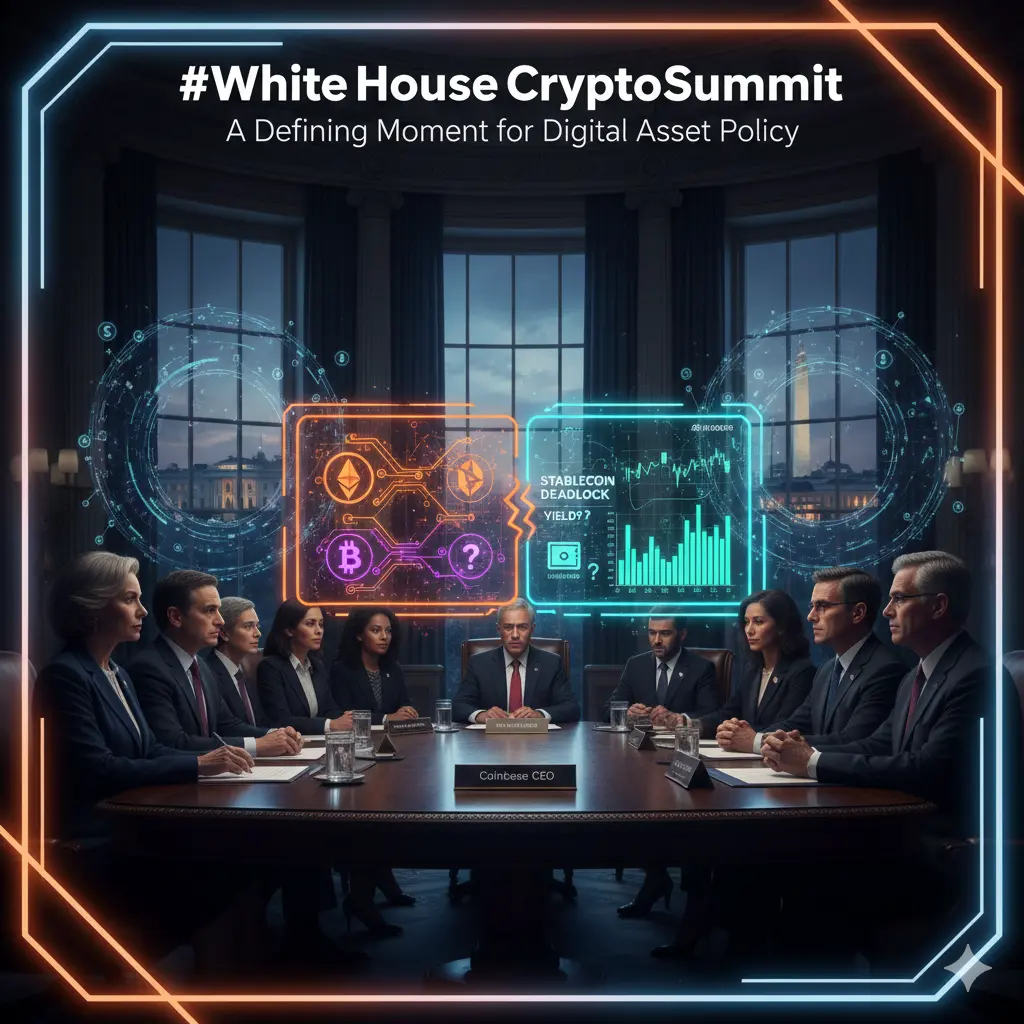
Despite hope for progress, the talks concluded without a breakthrough — especially on how stablecoins should be treated under federal law and whether yield-bearing features can be permitted. The core disputes between traditional financial institutions and digital asset companies remain unresolved for now. �
This summit was orchestrated by the White House’s digital assets council as part of broader efforts to advance the stalled Clarity Act — a proposed federal framework aimed at establishing clear and consistent rules for markets, platforms, and digital asset service providers in the U S
Key figures from the crypto industry, including executives from Coinbase and major banking groups, made it clear that Washington is now the table where industry and regulators must find common ground. �
At the same time, market reactions have been mixed. While volatility remains a factor in digital asset prices amid regulatory uncertainty, some institutional investors are increasing positions in crypto-related equities and infrastructure — signaling confidence in long-term engagement despite short-term noise. �
Why This Matters
What’s unfolding around the White House Crypto Summit is more than a single meeting:
1. Regulatory clarity is now a national priority.
Lawmakers, regulators, and industry leaders are actively shaping how digital assets will fit into mainstream financial markets.
2. Stablecoins are at the heart of the debate.
Whether these digital tokens can offer yield or will be restricted remains a sticking point — and a critical issue for investors and platforms alike.
3. Bipartisan attention is increasing.
Both sides of the aisle see digital assets as strategic economic and technological assets, though they diverge on how to govern them.
The summit underscored that policy in this space isn’t coming from the fringes of finance anymore — it’s being negotiated at the highest levels of government.
What to Watch Next
✔ Continued White House meetings as lawmakers seek a legislative compromise.
✔ Revised proposals on stablecoin oversight, market structure, and custody standards.
✔ Signals from financial regulators on enforcement and industry partnerships.
✔ Market response to regulatory trajectory — both institutional and retail.
In summary: The White House Crypto Summit has become a pivotal touchpoint for U S digital asset policy in 2026. While immediate consensus remains elusive, the very fact that these conversations are happening at the federal level — with real economic and legal implications — signals a new chapter in how digital assets are integrated into the global financial system.
repost-content-media
  • Reward
  • 32
  • Repost
  • Share
MuteVersevip:
To The Moon 🌕
View More
#白宫加密会议 Background: Cryptocurrency has grown into a trillion-dollar ecosystem, but the US faces challenges such as fragmented regulation, uncertain compliance, and market volatility. The White House Cryptocurrency Summit marks a key turning point for the industry.
Core impacts:
- Regulatory side: Clarify asset classifications, standardize compliance processes, resolve conflicts among multiple regulatory agencies, and clear obstacles for innovations like NFTs, DeFi, and stablecoins.
- Market side: Promote institutional adoption (bank custody, ETF approvals, diversified corporate treasuries), en
BTC0,5%
ETH-0,07%
XRP-0,83%
View Original
Happy Steed
Happy Steed开心马
MC:$3.39KHolders:1
0.00%
  • Reward
  • Comment
  • Repost
  • Share
Load More