


User_any

vip
No content yet
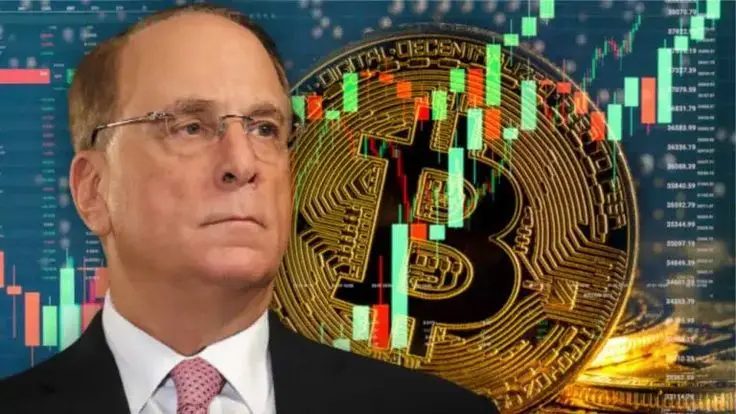
👉Larry Fink:Tokenization = the internet in 1996.
In his 2026 annual letter, BlackRock CEO Larry Fink described tokenization as a shift that will reshape the fundamental structure of finance, comparing it to the early days of the internet in 1996.
According to Fink, assets tokenized on the blockchain—stocks, bonds, ETFs—offer more accessible, fractional, and global investment opportunities. Digital wallets are transforming into investment portfolios; stablecoins are becoming the silent but critical infrastructure of this ecosystem.
With over $150 billion in digital assets, BlackRock is not jus
post-image
  • Reward
  • 2
  • Repost
  • Share
Sakura_3434vip:
2026 GOGOGO 👊
View More
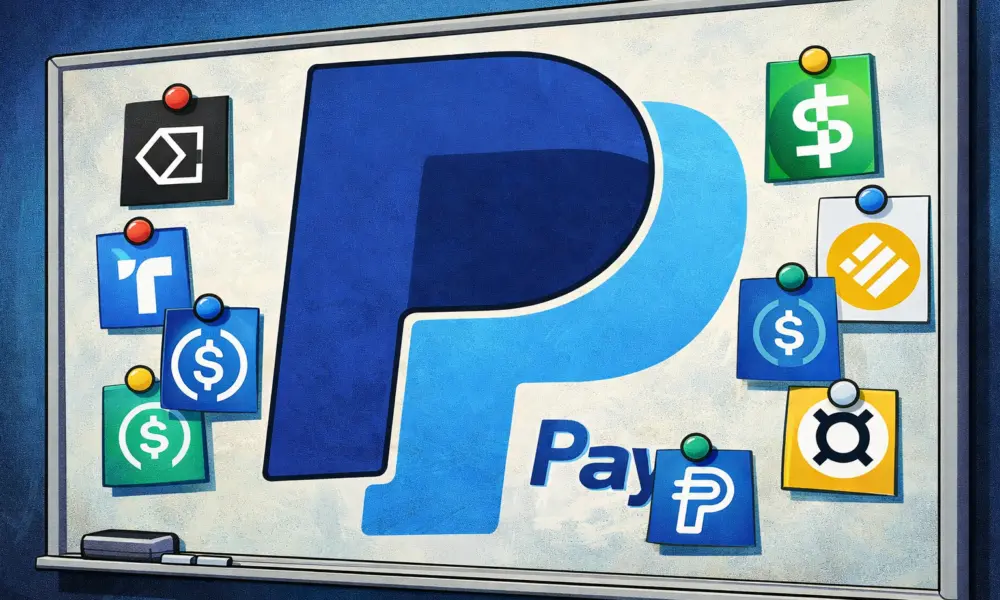
PayPal Launches Stablecoin Era on a Global Scale
PayPal has taken a groundbreaking step in digital payments by activating stablecoin payments in 70 countries. This move is no longer a pilot program, but a direct infrastructure implementation.
Users will no longer simply hold or exchange stablecoins; they will be able to use them like traditional money in international payments. This represents a major transformation, especially for regions with volatile currencies or limited banking infrastructure.
By implementing stablecoin integration on its global platform without waiting for regulatory unc
post-image
  • Reward
  • 3
  • Repost
  • Share
Ciauvip:
2026 GOGOGO 👊
View More
In summary
💥Coinbase has opposed the updated version of ClarityAct, which aims to limit stablecoin returns.
🕵️The company argues that the regulation, drafted under pressure from banks, could weaken competition in the sector.
👉The search for a compromise between the parties continues.
#StablecoinDeYieldDebateIntensifies
#USHouseAdvancesTokenizedSecurities
post-image
User_anyvip
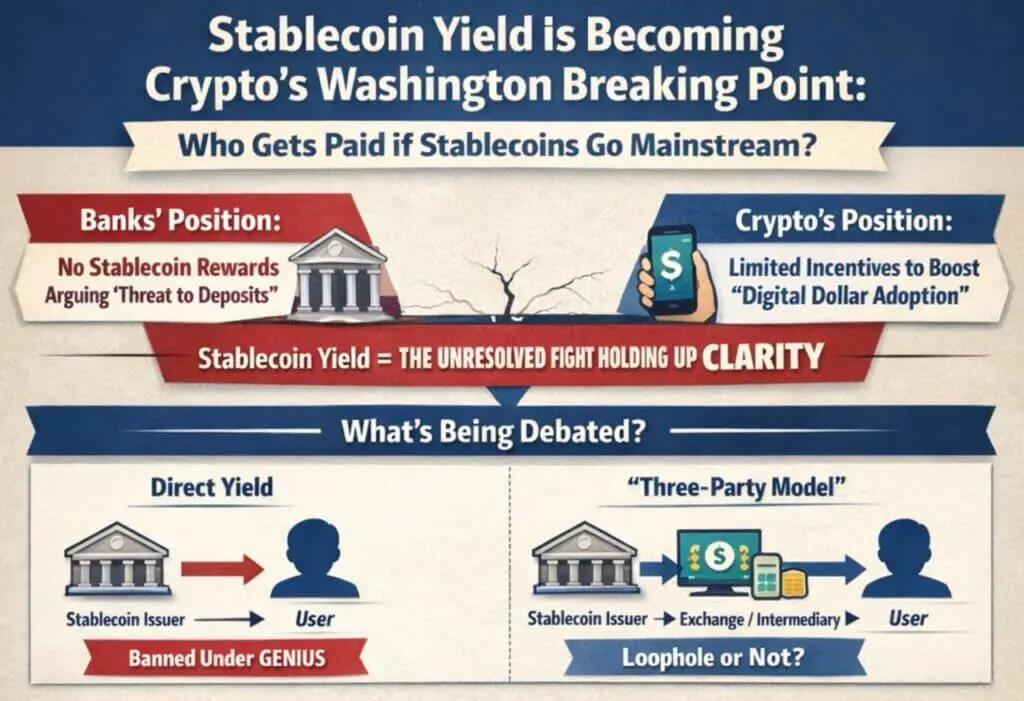
The CLARITY Act (Crypto Market Structure Act) negotiations in the US Senate are stalled due to a debate over whether yield-bearing stablecoins should be paid. Banks are demanding a complete ban, viewing yield-bearing stablecoins as a "deposit flight," while the crypto sector considers it a major obstacle to innovation and global competition. This debate will directly determine the future of the $281 billion stablecoin market.
Brief Background
The GENIUS Act, passed in 2025, imposed a direct yield ban on payment-oriented stablecoins. However, by 2026, yield-bearing models (like Ethereum USDe) had doubled the market. Banks predict a deposit loss of $182-908 billion by 2030, calling it "regulatory arbitrage."
Positions of the Parties
👉Banks:
Yield competes with traditional savings accounts and creates systemic risk. The American Bankers Association is demanding a complete ban.
👉Crypto Sector:
According to Coinbase, Circle, and Brian Armstrong, a ban would leave the US behind China and Europe. Yield increases liquidity and accelerates user adoption. "Anti-consumer and anti-innovation" backlash is growing.
Current Situation (March 2026)
- The Senate Banking Committee is discussing a ban on passive yield and limited permission for transaction-based rewards in closed-door meetings.
- The White House is seeking a compromise.
- Yield-bearing stablecoins have grown 10 times faster than the total market in the last 6 months (APY 4-8%).
The discussion summarizes the question of whether stablecoins will be "just a means of payment" or "yield-generating digital dollars."
🤔If a ban is implemented: US exports will slow, innovation will flee to Asia.
🤔 If a compromise is reached: A hybrid model with limited yield + transaction rewards will emerge; both stability and competition will prevail.
Conclusion
#StablecoinDeYieldDebateIntensifies represents a power struggle between Wall Street and crypto. Congress is expected to reach a compromise by May. Otherwise, both the US and global crypto markets will face uncertainty. A delicate balance remains between opportunities for consumers and systemic risks.
repost-content-media
  • Reward
  • 5
  • Repost
  • Share
Sakura_3434vip:
To The Moon 🌕
View More
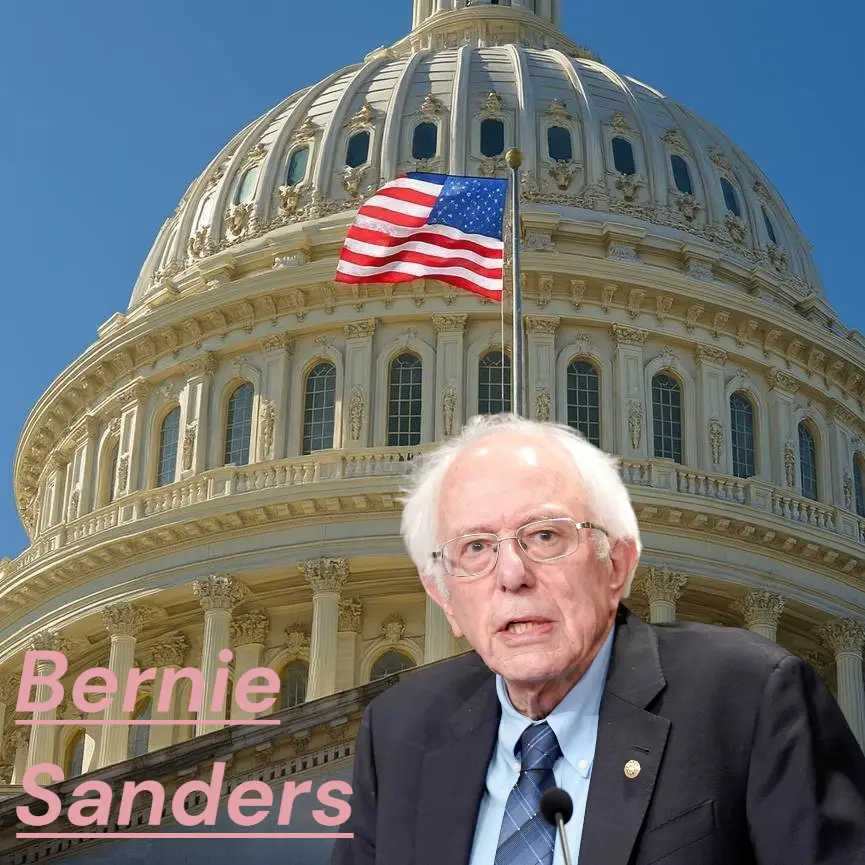
Bernie Sanders Takes a Strong Step for AI: Proposal to Put a Brake on Data Centers
As debates on regulating AI technologies intensify in the US, Bernie Sanders is preparing to take a noteworthy step. According to reports, Sanders is working on a bill that would halt the construction of new data centers until Congress adopts comprehensive AI regulations.
This initiative comes amid growing concerns about the energy consumption, environmental impact, and uncontrolled growth of the rapidly expanding AI sector. Data centers provide critical infrastructure for training and running large-scale AI mod
post-image
  • Reward
  • 5
  • Repost
  • Share
Sakura_3434vip:
To The Moon 🌕
View More
Tom Lee's Bitmine Company Makes Massive Ethereum Purchase
Bitmine Immersion Technologies, chaired by Fundstrat co-founder Tom Lee, continues its Ethereum accumulation at a rapid pace. According to recent information shared by on-chain data providers, the company purchased 50,000 Ethereum ($ETH) through the institutional crypto platform FalconX. The total value of this transaction is estimated at approximately $108.3 million.
This latest purchase is a continuation of Bitmine's aggressive accumulation strategy in recent times. According to the same sources, a total of 117,111 ETH was purchased i
ETH-4,29%
post-image
post-image
  • Reward
  • 5
  • Repost
  • Share
Sakura_3434vip:
LFG 🔥
View More
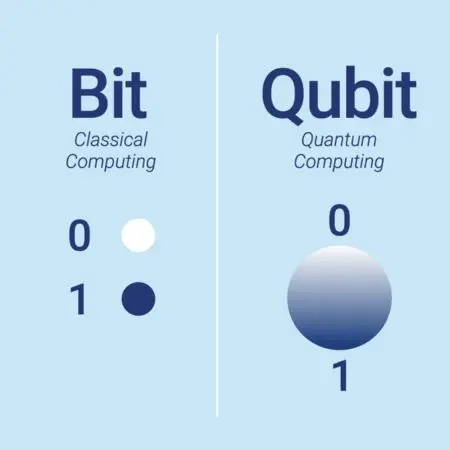
Quantum warnings from Google have ignited a new debate in the crypto market. The issue isn't just about price, but directly about security and the infrastructure of the future.
The development of quantum computers raises concerns that today's cryptographic systems may be vulnerable to breaches in the long term. This represents a new risk for all blockchain projects, especially Bitcoin and Ethereum.
Especially on the Ethereum side, developers are taking a more proactive approach. Quantum resilience and security architecture are increasingly prominent in future network updates. This positions Et
BTC-2,88%
ETH-4,29%
post-image
post-image
post-image
  • Reward
  • 3
  • 1
  • Share
discoveryvip:
LFG 🔥
View More
The claim that "6 trillion dollars have flowed out of gold due to the war," which has been rapidly spreading on social media in recent days, clearly does not align with existing data and largely contains misinterpretation or exaggeration. An examination of the size of the global gold market and ETF inflows clearly reveals that this figure is unrealistic.
First, let's start with the numerical reality. The total size of physically gold-backed ETFs worldwide is approximately $700 billion as of 2026. This is the most transparent and measurable part of the investment gold market. Therefore, a trill
BTC-2,88%
post-image
post-image
User_anyvip
#PreciousMetalsLeadGains
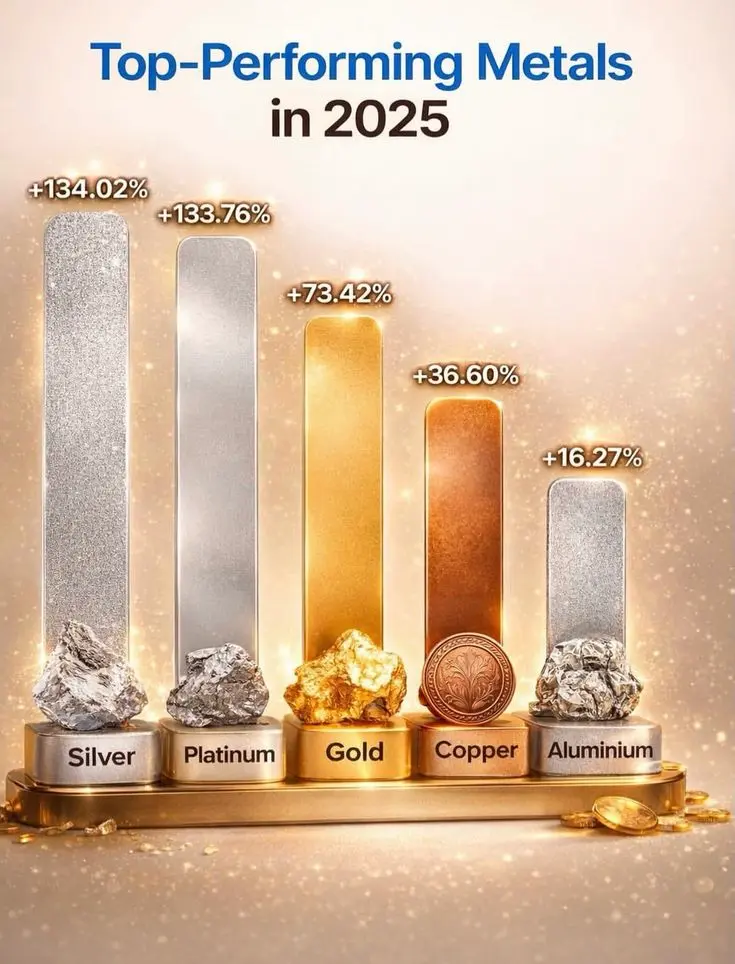
Precious metals are leading gains in commodity markets today. Gold prices surged sharply in early US trading, reaching around $4,550 per ounce, a rise of 1.65 percent. Silver also showed similar strong performance, rising to $72. Platinum gained approximately 2.93 percent. These developments were supported by a weakening US dollar index and falling bond yields.
Precious metals have experienced volatile movements in recent months, but the overall bull trend continues. Geopolitical risks, central bank purchases, and expectations of interest rate cuts are fueling this rally. According to analysis, liquidity crunch stemming from Iran has led to some selling, but the outlook could sharply improve once these sales cease. Gold mining indices rose 3.75 percent today, strengthening momentum in the sector.
Precious metals are outperforming other assets. Investors are turning to these metals in search of a safe haven. Gold has gained around 50 percent in the past year, confirming this long-term trend. Demand will continue to rise as global uncertainties persist.
Markets should be closely monitored. Precious metals offer investors long-term value preservation opportunities, and these gains can become permanent.
repost-content-media
  • Reward
  • 6
  • Repost
  • Share
GateUser-6857559evip:
thanks for the useful information
View More
Coinbase, in collaboration with Better Home & Finance, enables users to obtain loans for a down payment on a home by using digital assets like Bitcoin or USDC as collateral. In this model, users can take out a loan without selling their Bitcoin, and this loan replaces the cash down payment required in the traditional mortgage process. However, the actual home loan remains within the classic system and is issued according to Fannie Mae standards.
The system is two-part: the first part is a traditional mortgage, and the second part is a separate loan secured by cryptocurrency. Users are essentia
BTC-2,88%
USDC0,01%
post-image
post-image
  • Reward
  • 4
  • Repost
  • Share
discoveryvip:
LFG 🔥
View More
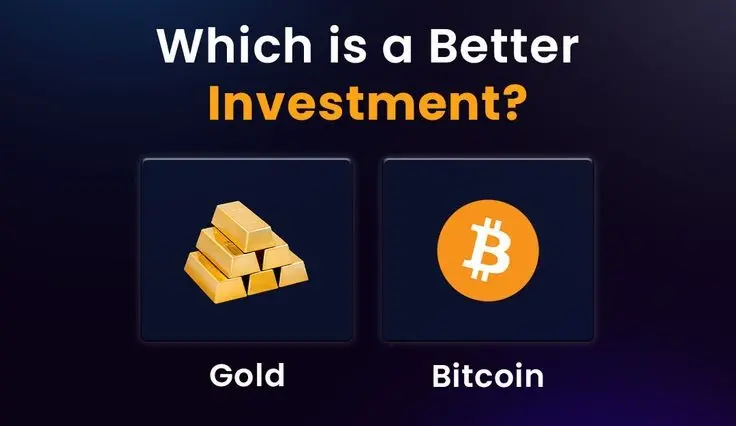
According to recent reports published by JPMorgan Chase analysts, a significant divergence in investor behavior has been observed following geopolitical tensions centered on Iran. In particular, the traditional parallel movement expected between Bitcoin and gold during times of crisis has been disrupted, with fund flows shifting in different directions.
Data shows that while there was an outflow of approximately 2.7% from SPDR Gold Shares, one of the largest gold ETFs, spot Bitcoin ETFs such as iShares Bitcoin Trust, managed by BlackRock, saw an inflow of approximately 1.5%. This indicates tha
BTC-2,88%
post-image
post-image
post-image
post-image
  • Reward
  • 4
  • Repost
  • Share
discoveryvip:
LFG 🔥
View More
Putin said a war with Iran could hit the global economy like COVID-19!
#USIranClashOverCeasefireTalks
post-image
User_anyvip
#USIranClashOverCeasefireTalks
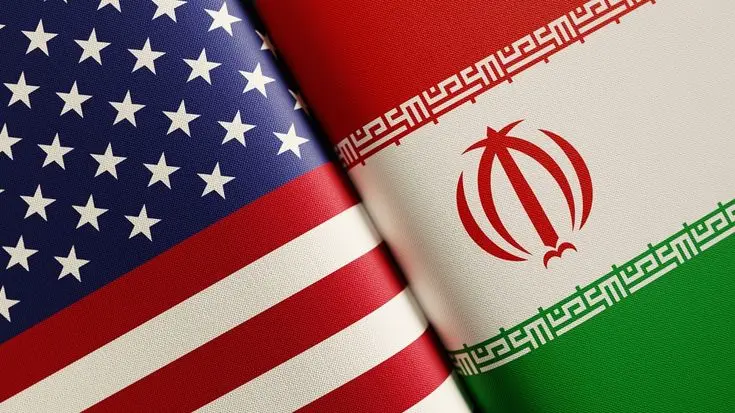
💥The US-Israel-Iran conflict, which erupted in the Middle East in February 2026, is at a critical diplomatic crossroads after almost four weeks of intense fighting. US President Donald Trump's 15-point ceasefire plan, conveyed through Pakistan, was rejected by Tehran as "unilateral and unjust." Iran, in turn, presented its own five-point counter-proposal. This development is profoundly shaking both the military violence and global energy markets.
The Path from Nuclear Crisis to War
The US-Iran negotiations, which began in 2025, were part of the Trump administration's "maximum pressure" policy. The International Atomic Energy Agency's (IAEA) December 2024 report stated that Iran had brought nuclear enrichment close to weapons-grade levels and had stockpiled large quantities of highly enriched uranium. On March 7, 2025, Trump gave Iran a two-month ultimatum, demanding that it completely halt its nuclear program, limit its ballistic missile activities, and abandon its proxy groups (Hamas, Hezbollah, Houthis).
Although negotiations continued indirectly in Oman, Rome, and Geneva, no progress was made. On February 28, 2026, the US and Israel launched large-scale air and missile attacks against Iran (including targeting high-ranking officials, including Supreme Leader Ali Khamenei), igniting the war. Iran effectively closed the Strait of Hormuz, blocking oil exports, and launched drone and missile attacks on Israel and the Gulf countries.
👉The US's 15-Point Plan
The plan, conveyed through the Pakistani Foreign Minister, primarily includes the following elements:
- Complete dismantling of Iran's nuclear program and permanent cessation of enrichment activities. - Limiting its ballistic missile program.
- Reopening of the Strait of Hormuz and guarantee of free passage for international ships.
- Cessation of Iran's support for regional proxy groups.
- In return, gradual lifting of sanctions and civilian nuclear cooperation.
Trump described Iranian leaders as "eager to make a deal" but warned that "if they don't, we will be their worst nightmare." The US is deploying an additional 1,000 paratroopers from the 82nd Airborne Division and 5,000 Marines to the region.
👉Iran's Five-Point Counter-Proposal
Tehran declared the US plan "maximalist and illogical." Iranian Foreign Minister Abbas Araghchi said, "There will be no direct talks with the US." Key points of Iran's counter-proposal:
- Immediate cessation of assassinations and attacks against Iranian officials.
- International guarantees against future military operations.
- Compensation for war damages.
- Recognition of Iran's sovereignty over the Strait of Hormuz.
- Inclusion of Lebanon in the ceasefire.
Iran has clearly stated that it will only end the war at its own time and on its own terms.
👀Current Military Situation and Conflicts
Conflicts continue to intensify. In the last 24 hours, Iran launched ballistic missile and rocket attacks on Tel Aviv, Haifa, and Nahariya; it also struck a fuel tanker at Kuwait International Airport. Israel struck targets in Tehran and Isfahan. Hezbollah continues its rocket barrage on northern Israel. US Defense Secretary Pete Hegseth increased military pressure with the statement, "We will continue to negotiate with bombs."
🤔Global Shockwave
The closure of the Strait of Hormuz threatens approximately 20% of the world's oil trade. Oil prices have risen to $105/barrel; global stock markets have declined. The petrochemical, plastics, technology, and tourism sectors are struggling with supply chain crises. European retailers are complaining about price shocks, while Cyprus is complaining about rising costs.
20% of the world's oil passes through this narrow passage. Iran's blockade directly affects global energy security. 🧐Diplomacy or a Bigger Conflict?
This conflict is not just a power struggle between two sides; it is also a summary of global energy balances, nuclear proliferation, and proxy wars in the Middle East. The US's "maximalist" approach seems to ignore Iran's sovereignty and security concerns. On the other hand, Iran's hardline stance is shaped by its internal political dynamics and the risk of economic collapse.
While mediation efforts by countries like Pakistan, Turkey, and Egypt are promising, the fact that both sides are acting with a "win-lose" rather than a "win-win" mentality reduces the likelihood of a ceasefire in the short term. Trump's call to "allow the passage of 10 oil tankers" is part of a strategy to increase economic pressure. However, Iran's claim to control the Strait of Hormuz will be the most critical and difficult aspect of any agreement.
While mediation efforts by countries like Pakistan, Turkey, and Egypt are promising, the fact that both sides are operating on a "win-lose" rather than a "win-win" principle reduces the likelihood of a ceasefire in the short term. Trump's call to "allow the passage of 10 oil tankers" is part of a strategy to increase economic pressure. However, Iran's claim to control the Strait of Hormuz will be the most critical and difficult stage of any agreement.
Possible Scenarios 🤝
- Short-term ceasefire: A softening is possible due to Iran's economic collapse and the US's military superiority; however, it will not be permanent unless Lebanon and proxy groups are included.
- Long-term war: If the Strait of Hormuz remains closed, oil prices could rise to $120-150/barrel, increasing the risk of a global recession.
- Regional expansion: The positions of Saudi Arabia, the UAE, and Turkey are critical; Turkey's mediating role is important both for diplomatic prestige and energy security.
In conclusion:
The #USIranClashOverCeasefireTalks hashtag is more than just a hashtag; it reflects the fragile balance of the Middle East in 2026. While diplomacy still seems possible, both sides have deep "red lines." Global actors, especially countries with mediating potential like Turkey, must take urgent steps to de-escalate the tension. Otherwise, a spark in the Strait of Hormuz could ignite not only the region but also the global economy.
repost-content-media
  • Reward
  • 3
  • Repost
  • Share
discoveryvip:
To The Moon 🌕
View More
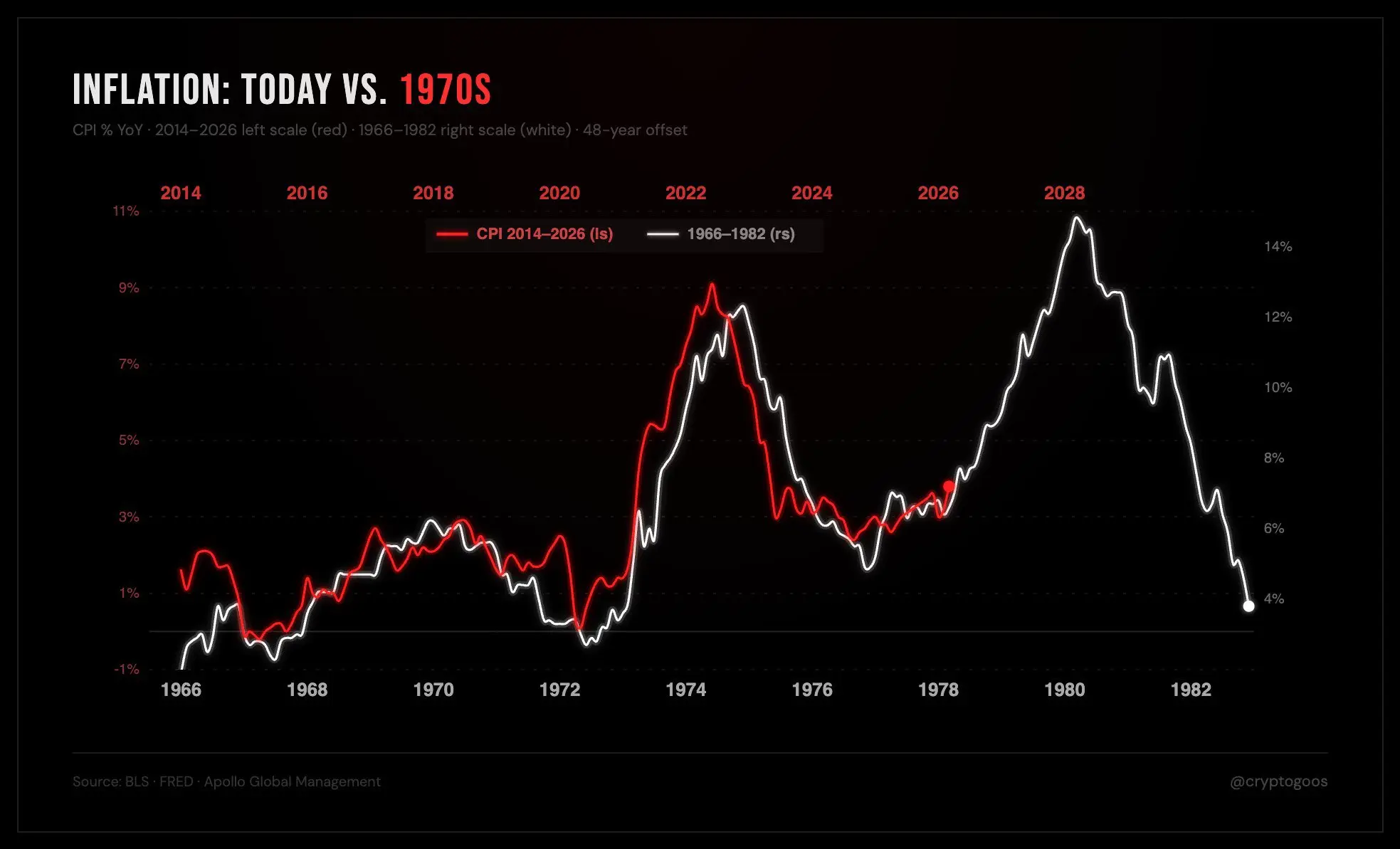
Recent assessments of the historical trajectory of US inflation data indicate that today's economic outlook bears similarities to certain periods in the past. In particular, an examination of Consumer Price Index data reveals a strong narrative suggesting that the volatile and high-inflation period observed between 1966 and 1982 resembles current conditions in some aspects. At the heart of these similarities lies the decisive role of energy prices and supply shocks.
During that historical period, the global economy was shaken by two major oil shocks: the 1973 Oil Crisis and the 1979 Oil Crisis
post-image
  • Reward
  • 4
  • Repost
  • Share
discoveryvip:
LFG 🔥
View More
#CryptoNews
Anchorage Digital, a company operating in the digital asset custody and financial infrastructure sector, has announced a significant new step in the cryptocurrency ecosystem by beginning to support the TRON network. This development is not only a technical integration but also considered a highly symbolic milestone in terms of the US regulatory framework. Anchorage Digital already operates as a federally licensed digital asset bank, making it the first institution to include a network like TRON within its regulatory scope.
This move stems from increasing regulatory pressure and ex
TRX-1%
post-image
  • Reward
  • 10
  • Repost
  • Share
discoveryvip:
LFG 🔥
View More
The Rycroft Review is an independent review report commissioned by the UK Government in December 2025 to strengthen political financing in the UK against foreign interference. Prepared by former senior civil servant Philip Rycroft and published on March 25, 2026, the 60-page report comprehensively addresses the risks of foreign actors (including individual threats from states such as Russia, China, and Iran, as well as allied countries) infiltrating UK democracy through financial channels. The report notes that the current political donation system is undergoing long-term erosion but is not in
post-image
post-image
User_anyvip
#UKToSuspendCryptoPoliticalDonations
The UK government announced it will suspend all political donations made in cryptocurrency as of March 25, 2026. This decision, announced in Parliament by Prime Minister Keir Starmer, follows a key recommendation from the independent review known as the Rycroft Review and aims to prevent foreign interference in democracy. The government stated that crypto assets could be used to channel untraceable funds into the political system and is implementing a temporary moratorium until regulators establish adequate oversight mechanisms. This measure will be presented as an addendum to the Representation of the People Bill and, subject to parliamentary approval, will be retroactive from March 25, 2026. Parties will be required to return any crypto donations received from that date within thirty days, otherwise they will face penalties.
The same package also limits donations from British citizens abroad to £100,000 annually, which will particularly affect parties that receive significant funding from overseas sources, such as Reform UK. Reform UK is currently the only mainstream party to accept crypto donations and recently received a transfer of £12 million from a Thailand-based donor. The Electoral Commission had previously requested wallet details from this party but received no response. The Rycroft report highlights that the rapid transaction nature of crypto donations, combined with jamming tools and AI-powered fractionalization methods, makes it difficult to verify the source, and notes that this risk could come from both hostile and allied countries.
This decision has caused widespread repercussions in the crypto sector, as transparency in political financing has long been a subject of debate in the UK. Previously, on March 18, 2026, the Joint Committee on National Security Strategy had called for an immediate moratorium, which the government quickly adopted and initiated the legislative process for. Experts say the moratorium is not a permanent ban, but rather a measure to prevent the use of cryptocurrency in the political arena until regulations mature. This development creates a new obstacle to the integration of crypto assets into the mainstream financial system, while also requiring investors and parties to reconsider their future donation strategies. This step taken in the UK to protect democracy sends an important signal about how crypto regulations will shape up globally and once again highlights the sector's need to strike a balance between transparency and compliance.
repost-content-media
  • Reward
  • 3
  • 1
  • Share
discoveryvip:
LFG 🔥
View More
#UKToSuspendCryptoPoliticalDonations
The UK government announced it will suspend all political donations made in cryptocurrency as of March 25, 2026. This decision, announced in Parliament by Prime Minister Keir Starmer, follows a key recommendation from the independent review known as the Rycroft Review and aims to prevent foreign interference in democracy. The government stated that crypto assets could be used to channel untraceable funds into the political system and is implementing a temporary moratorium until regulators establish adequate oversight mechanisms. This measure will be presen
post-image
post-image
  • Reward
  • 3
  • 1
  • Share
discoveryvip:
LFG 🔥
View More
Circle Freezes 16 Business Hot Wallets
US-based stablecoin giant Circle abruptly froze USDC balances in 16 business hot wallets on the night of March 23, 2026 . These wallets belonged to active companies such as exchanges, online casino platforms, forex providers, and payment processors. There was no suspicion of hacking or money laundering; the freeze was due to a sealed US civil case in New York. Details are still being kept confidential. The news, broken by on-chain detective ZachXBT on X, has shaken the crypto world and reignited the "centralized censorship" debate. For GATE Square readers
USDC0,01%
DEFI-11,7%
DYOR2,82%
post-image
post-image
post-image
  • Reward
  • 3
  • Repost
  • Share
discoveryvip:
LFG 🔥
View More
We have reached a critical milestone in the US journey to integrate blockchain into its capital markets. On March 25, 2026, the House Financial Services Committee held its historic hearing titled “Tokenization and the Future of Securities: Modernizing Our Capital Markets.” This hearing officially confirmed that tokenized securities are not just a trend, but the future of traditional finance. With bipartisan consensus, the message was delivered: “Tokenization is coming, and it is here.” This Congressional step is a turning point for the crypto and RWA (Real World Assets) ecosystem. For GATE Squ
WLFI-3,25%
post-image
post-image
post-image
  • Reward
  • 5
  • Repost
  • Share
discoveryvip:
LFG 🔥
View More
The CLARITY Act (Crypto Market Structure Act) negotiations in the US Senate are stalled due to a debate over whether yield-bearing stablecoins should be paid. Banks are demanding a complete ban, viewing yield-bearing stablecoins as a "deposit flight," while the crypto sector considers it a major obstacle to innovation and global competition. This debate will directly determine the future of the $281 billion stablecoin market.
Brief Background
The GENIUS Act, passed in 2025, imposed a direct yield ban on payment-oriented stablecoins. However, by 2026, yield-bearing models (like Ethereum USDe) h
ETH-4,29%
USDE-0,01%
post-image
post-image
post-image
User_anyvip
Coinbase, the largest cryptocurrency exchange in the US, sent a clear message to Senate offices this week: “We cannot support the latest stablecoin yield compromise of the CLARITY Act.” According to an exclusive report by Punchbowl News dated March 25, 2026, Coinbase representatives informed the Senate in a closed-door meeting on Monday that they had “significant concerns” about the new compromise text spearheaded by Senators Thom Tillis (R-NC) and Angela Alsobrooks (D-MD).
This development is not just an objection from one company; it creates a new and critical impasse in the Digital Asset Market CLARITY Act process, which has been moving forward with great hopes for months. Optimism peaked last week with Senator Cynthia Lummis’s statement that “99% resolved, bipartisan compromise coming soon.” Now, Coinbase’s resistance is jeopardizing the bill’s markup process in the Senate Banking Committee.
🕵️What Did the Compromise Propose, and Why Was Coinbase Against It?
The latest text prepared by the Tillis-Alsobrooks duo aimed to tighten stablecoin rewards to prevent "deposit flight," the biggest fear of banks:
- It completely banned balance-based yields,
- It treated all "economically equivalent" rewards like bank interest,
- It only allowed limited rewards based on active use or transactions.
Coinbase, however, argues that this language is too vague and restrictive. The company states that the annual rewards of around 3.5-4% it offers on stablecoins like USDC (approximately $1.35 billion in revenue in 2025) will be severely reduced, users will be deprived of these incentives, and innovation will be undermined. According to Coinbase, despite its claim to "protect innovation," the proposal actually puts crypto platforms at a disadvantage compared to traditional banks.
This is Coinbase's second major objection. In January 2026, a similar compromise led to the withdrawal of support and a postponement of the markup. Now, the division within the sector is deepening: some crypto companies are saying "let's compromise to save the law," while Coinbase and a few other big players want "clear rules without compromise."
Market Reaction and Time Pressure
Following the news, Coinbase (COIN) and Circle (CRCL) shares fell sharply. Analysts estimate that the probability of the CLARITY Act passing this year has fallen to 61%. The Senate Banking Committee markup, targeted for the end of April, is once again in jeopardy. With the congressional calendar tightening before the 2026 midterm elections, every delay reduces the chances of the law passing.
Senator Lummis' warning that "we can't wait until 2030" remains on the table. However, the banking lobby (ICBA, JPMorgan, Bank of America) continues to argue that stablecoin yields could attract trillions of dollars in deposits. Coinbase, on the other hand, emphasizes that these rewards strengthen dollar dominance and crypto innovation in the US. Win-Win or a New War?
This development shows that the biggest tension between crypto and traditional finance remains unresolved.
- Coinbase's stance: "Rewards that benefit the user must be protected; otherwise, regulation will be worse than the status quo."
- Bank's stance: "Stablecoins shouldn't erode our deposits."
- Other crypto players: "Let the law pass, then we'll fix it in court or through regulation."
Realistic view: Without bipartisan support, the filibuster obstacle cannot be overcome. Coinbase's resistance could kill the law or soften it further. However, a complete "rewards ban" will not pass the Senate.
In conclusion, the CLARITY Act is still alive but its pulse is weak. Coinbase's objection is putting negotiations back on the table. Senators, the Tillis-Alsobrooks team, and the crypto lobby will engage in intense discussions in the coming days. The April markup will either be cancelled or saved by a new compromise.
The US's dream of becoming the "digital asset capital of the world" is being tested once again in this stablecoin yield war. Coinbase's statement that "we can't support it yet" isn't just the voice of one company; it's a critical warning that will shape the future of the sector. We'll be watching – because 2030 is truly a long way off.
#ClarityActLatestDraft
#CreatorLeaderboard
repost-content-media
  • Reward
  • 3
  • 1
  • Share
discoveryvip:
LFG 🔥
View More
#USIranClashOverCeasefireTalks
💥The US-Israel-Iran conflict, which erupted in the Middle East in February 2026, is at a critical diplomatic crossroads after almost four weeks of intense fighting. US President Donald Trump's 15-point ceasefire plan, conveyed through Pakistan, was rejected by Tehran as "unilateral and unjust." Iran, in turn, presented its own five-point counter-proposal. This development is profoundly shaking both the military violence and global energy markets.
The Path from Nuclear Crisis to War
The US-Iran negotiations, which began in 2025, were part of the Trump administra
post-image
post-image
  • Reward
  • 10
  • 1
  • Share
discoveryvip:
LFG 🔥
View More
A development that shook the technology and entertainment world revealed the unexpected end of one of the most ambitious AI projects of recent years. The decision to shut down Sora, a text-to-video production model developed by OpenAI, also led to the cancellation of a billion-dollar strategic collaboration with The Walt Disney Company.
In fact, this partnership was seen as a turning point where AI could fundamentally change the entertainment industry. The plan was for over 200 characters from Disney's giant brands like Marvel, Pixar, and Star Wars to come to life in videos through Sora, using
post-image
User_anyvip
#OpenAIShutsDownSora
One of the most notable developments in the global AI ecosystem in 2026 was OpenAI's abrupt decision to shut down Sora, its video production platform that had quickly become a phenomenon. This project, terminated before even completing its first year, is considered not just the closure of a product, but also a significant turning point demonstrating the rapid shift in strategic priorities within the AI sector.
📉 Why was Sora shut down?
While OpenAI's decision appears sudden on the surface, there are multiple structural reasons behind it:
1. High cost and processing power pressure
Video production models like Sora require significantly higher computing power compared to text and images. The company's desire to shift its resources to more efficient areas was a decisive factor in this decision.
2. Strategic pivot
OpenAI is shifting its focus from consumer applications to larger-scale AI infrastructures, enterprise solutions, and robotics.
3. Legal and ethical risks (deepfake crisis)
Sora's ability to produce hyper-realistic videos led to serious controversy regarding copyright infringements and deepfake content production.
4. Content control and regulatory pressure
The risk of manipulation in some content produced on the platform increased the reaction of regulatory bodies and the industry.
5. Breakdown of major collaborations
The termination of some strategic partnerships, including a billion-dollar collaboration with Disney, weakened the project's sustainability.
⚖️ From success to closure: A very rapid rise, a very rapid end
Sora achieved massive viral success, reaching millions of users within days of its launch.
Cinematic video production from text
Social media-like content streaming
Potential for revolution in creative industries
However, this rapid growth also brought with it risks that were difficult to control.
👉 The market first priced in the “technological revolution”
👉 Then it questioned the “risks and sustainability”
This transition determined Sora’s fate.
📊 Sectoral impacts: What does this decision change?
Sora’s closure contains important signals not only for OpenAI but for the entire AI sector:
AI investments are being reshaped
Companies are now turning to more sustainable and revenue-generating models instead of “viral products”.
Competition in the video AI field will intensify
As OpenAI withdraws, Google, Meta, and independent startups will try to fill this gap.
The regulatory process may accelerate
Deepfake and copyright disputes may pave the way for stricter rules for video production AI.
The resource war (compute war) is deepening
Projects requiring high processing power directly affect companies’ strategic priorities.
🔮 Future perspective: Is Sora really over?
Although the Sora application is being shut down, the technology is not entirely abandoned.
Video production models will continue at the research level within OpenAI.
It will be used in the fields of “world simulation” and robotics.
It is expected to be integrated into more controlled and enterprise solutions.
This means:
👉 Sora is closing as a product.
👉 But the technology it represents is becoming part of larger projects.
🧭 Conclusion
OpenAI's decision to shut down Sora highlights the delicate balance between “rapid growth” and “sustainable innovation” in the world of artificial intelligence. This withdrawal, despite viral success, shows that technology companies are now focusing not only on what they can do, but also on what they can sustain.
In the short term, this development may create a gap in the field of video production AI. However, in the long term, it is expected to pave the way for more secure, regulated, and economically sustainable AI solutions.
In this context, the closure of Sora is not an end; On the contrary, it is considered a strong indication that artificial intelligence has entered a more mature stage of evolution.
repost-content-media
  • Reward
  • 20
  • Repost
  • Share
CryptoSelfvip:
Ape In 🚀
View More
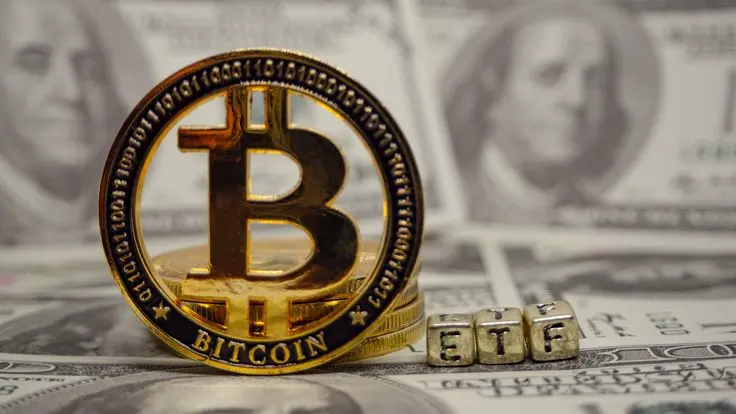
Bloomberg Senior ETF Analyst Eric Balchunas made an exciting announcement in a March 25, 2026, post on X: “Morgan Stanley Bitcoin ETF $MSBT has received official listing approval from the NYSE. This generally indicates that launch is very close.”
This development confirms that Wall Street giant Morgan Stanley has completed a critical procedural step towards listing its spot Bitcoin ETF, Morgan Stanley Bitcoin Trust, on the NYSE Arca. The New York Stock Exchange's (NYSE) official listing notification indicates that the product is ready to trade soon and that the process awaiting final SEC appro
BTC-2,88%
post-image
post-image
post-image
User_anyvip
💥Morgan Stanley's $10 Trillion Bitcoin Move
⚡Amy Oldenburg's Vision: "Not FOMO, but Infrastructure Revolution"
Morgan Stanley, one of Wall Street's most established players, is making history by directly entering the spot Bitcoin ETF market in March 2026. With approximately $10 trillion in assets under management, it is preparing to launch its own spot Bitcoin ETF as the first major bank in the US. This move is not just a product launch; it signals a fundamental paradigm shift at the intersection of traditional finance and digital assets. Amy Oldenburg, the bank's Head of Digital Asset Strategy, recently described this step as "not FOMO (fear of missing out), but the natural result of years of infrastructure modernization," offering a new perspective on the sector.
In her speech at the Digital Asset Summit on March 24, 2026, Oldenburg characterized the banks' entry into the crypto space as "part of years of financial infrastructure modernization." “Wall Street’s shift towards crypto isn’t driven by hype, but by long-term preparation,” said Oldenburg, highlighting Morgan Stanley’s journey beginning in 2021 with access to Bitcoin funds for wealthy clients, followed by the launch of spot Bitcoin ETFs via E*Trade in 2024, and now preparing to list its own ETF (MSBT) on the NYSE Arca. The bank filed for Bitcoin, Ethereum, and Solana ETFs in January 2026; and in mid-March, updated its S-1 form, announcing that MSBT would proceed with a 10,000-share creation unit, $1 million in seed capital, and Coinbase custody.
This development is quite significant from a data-driven perspective. The spot Bitcoin ETF market reached approximately $91-110 billion in assets under management (AUM) by March 2026; cumulative net inflows have exceeded $56 billion since 2024. BlackRock's IBIT leads with an AUM of around $58-61 billion, while Fidelity's FBTC is in the $13-14 billion range. The Bitcoin price is projected to be around $70,500-$71,000 on March 24, 2026, with the total Bitcoin holdings in ETFs amounting to 1.29 million BTC (6.16% of the total supply).
Morgan Stanley's move makes a critical difference here: Instead of distributing third-party ETFs, the bank creates its own product, internalizing the fee structure and directly opening its $8-10 trillion asset base to Bitcoin. As Oldenburg points out, 80% of ETF demand on the platform comes from self-directed investors; it's "still too early" for professional advisors. This situation validates the bank’s “managed and incremental” approach: first education, then portfolio integration, and finally advanced products such as tokenized shares (planned for the second half of 2026).
Why is Becoming the “First Big Bank” Important?
Morgan Stanley’s move represents the first direct entry from the banking sector into a market dominated by asset managers like BlackRock and Fidelity. While banks have previously supported crypto indirectly (futures, funds), taking on direct Bitcoin holding and custody responsibility with a spot ETF raises credibility and institutional standards in the eyes of regulators. This is where Oldenburg’s emphasis on “infrastructure modernization” comes into play: the bank has been investing in blockchain integration, custody solutions, and tokenized assets for years. This lays the groundwork not just for a Bitcoin ETF, but for future tokenized shares, bonds, and even real-world asset (RWA) trading.
The potential impact is enormous. According to analysts, even if Morgan Stanley's clients allocate just 2% of their mid-level crypto holdings, it could generate an additional $160 billion in demand – nearly double the current spot ETF AUM. This would accelerate institutional adoption of Bitcoin while also providing access to retail investors under the "trusted bank brand." However, there are risks: SEC approval is still pending, market volatility persists, and, as Oldenburg acknowledges, there's a significant gap in advisor training.
Ultimately, Amy Oldenburg's statement is not merely a defense; it's a manifesto for Wall Street's embrace of crypto. Morgan Stanley's entry into a spot Bitcoin ETF with its $10 trillion leverage is proclaiming 2026 the "year of institutional crypto." This move has the potential to transform Bitcoin from a speculative asset into an indispensable part of traditional portfolios. If Oldenburg's vision comes to fruition, we will see everything tokenized – from stocks to real estate – appearing on bank balance sheets in the coming years. This would be a turning point for the financial world. For investors, it's a new opportunity.
$BTC #CryptoMarketClimbs
#ETF
#CreatorLeaderboard
repost-content-media
  • Reward
  • 18
  • Repost
  • Share
CryptoSelfvip:
Ape In 🚀
View More
  • Pin