Peacefulheart

vip
Age 0.7 Yıl
Peak Tier 5
No content yet
#GatePreIPOsLaunchesWithSpaceX
The crypto industry is entering a new phase where traditional finance and blockchain ecosystems are increasingly overlapping. The announcement of “Gate Pre-IPOs Launches with SpaceX” has sparked major discussion across trading communities, signaling a conceptual bridge between private equity markets and digital asset platforms.
At the center of this narrative is Gate.io, a global cryptocurrency exchange that has been steadily expanding its offerings beyond spot trading and derivatives. Its latest focus on Pre-IPO access represents a shift toward connecting retai
RWA3,22%
MrFlower_XingChen
#GatePreIPOsLaunchesWithSpaceX
The crypto industry is entering a new phase where traditional finance and blockchain ecosystems are increasingly overlapping. The announcement of “Gate Pre-IPOs Launches with SpaceX” has sparked major discussion across trading communities, signaling a conceptual bridge between private equity markets and digital asset platforms.
At the center of this narrative is Gate.io, a global cryptocurrency exchange that has been steadily expanding its offerings beyond spot trading and derivatives. Its latest focus on Pre-IPO access represents a shift toward connecting retail users with early-stage investment opportunities that were previously limited to institutional investors.
The mention of SpaceX adds significant weight to the conversation, as SpaceX is one of the most valuable private aerospace companies in the world and often used as a benchmark for high-growth private market valuations.
Pre-IPO markets refer to the stage where private companies are valued and traded before going public through an IPO. Traditionally, this space is highly exclusive and limited to venture capital firms, hedge funds, and accredited investors.
Gate’s Pre-IPO concept aims to reduce this barrier by offering structured access through digital platforms, potentially allowing retail users to gain exposure to pre-listing valuation movements.
In many cases, these offerings are not direct equity ownership. Instead, they may include derivatives, tokenized exposure, or structured products linked to valuation performance.
From a broader perspective, this fits into the Real World Asset (RWA) trend, where traditional financial assets are being integrated into blockchain ecosystems for easier access and trading.
If this initiative is fully rolled out, it could allow users to participate in early-stage valuation growth cycles of major private companies before IPO events.
Reward & Incentive Structure (Important Update)
In similar Gate.io campaigns, reward systems are often introduced to attract participation. While exact details for this specific Pre-IPO campaign are not officially confirmed, typical reward structures may include:
USDT prize pools for early participants
Trading fee rebates for active users
Airdrop-style bonuses linked to campaign participation
Ranking-based rewards for top traders or contributors
Exclusive access perks for high-volume or early registrants
However, these rewards are usually conditional and depend on event rules, region eligibility, and participation requirements.
It is also important to note that rewards in such campaigns are often limited-time and require users to complete specific tasks such as registration, trading volume, or holding platform tokens.
Regulatory compliance is another key factor. Pre-IPO-related products must follow strict financial rules in many regions, meaning reward distribution may also be restricted depending on jurisdiction.
From a market perspective, adding reward incentives helps platforms increase engagement and liquidity during new product launches.
For users, this creates both opportunity and risk: opportunity in the form of incentives, and risk due to volatility, unclear valuation models, or limited liquidity in early-stage products.
The involvement of a major name like SpaceX increases visibility, but users should always differentiate between marketing narratives and officially verified investment products.
If successful, this model could inspire other exchanges to introduce similar Pre-IPO reward ecosystems, combining early investment exposure with gamified incentives.
Overall, #GatePreIPOsLaunchesWithSpaceX represents a growing trend where crypto platforms evolve into full financial ecosystems offering both investment access and reward-driven participation systems.
The long-term impact will depend on real product rollout, regulatory approval, and user adoption—but the direction of finance is clearly shifting toward more integrated and accessible markets.
#GatePreIPOsLaunchesWithSpaceX

repost-content-media
  • Reward
  • Comment
  • Repost
  • Share
#Gate13thAnniversaryLive
The 13th anniversary of Gate.io marks an important milestone in the evolution of one of the world’s leading cryptocurrency exchanges. It reflects over a decade of continuous development, innovation, and resilience across multiple market cycles, including periods of rapid growth as well as challenging downturns in the digital asset industry.
Since its establishment in 2013, Gate.io has expanded its ecosystem to support a wide range of digital assets and trading services, while also strengthening its focus on transparency, security, and regulatory alignment. Over the ye
MrFlower_XingChen
#Gate13thAnniversaryLive
The 13th anniversary of Gate.io marks an important milestone in the evolution of one of the world’s leading cryptocurrency exchanges. It reflects over a decade of continuous development, innovation, and resilience across multiple market cycles, including periods of rapid growth as well as challenging downturns in the digital asset industry.
Since its establishment in 2013, Gate.io has expanded its ecosystem to support a wide range of digital assets and trading services, while also strengthening its focus on transparency, security, and regulatory alignment. Over the years, it has grown from an early-stage platform into a globally recognized exchange serving users across different regions.
The anniversary celebration in Hong Kong highlights the platform’s global outlook and its commitment to bridging digital finance with broader cultural and financial ecosystems. Hong Kong, as an international financial hub, provides a meaningful setting for such a milestone, symbolizing the connection between traditional markets and emerging blockchain technology.
A notable aspect of this year’s celebration is the collaboration with Oracle Red Bull Racing, which reflects a shared emphasis on performance, precision, and continuous improvement. Such partnerships demonstrate Gate.io’s intention to align itself with globally respected brands that represent excellence and innovation.
Similarly, the association with FC Internazionale Milano further reflects a strategy of engaging with globally recognized institutions, strengthening its presence beyond the crypto industry and into mainstream sports and culture.
The anniversary activities, including exhibitions, brand showcases, and trading campaigns, emphasize community engagement and user participation. These initiatives highlight the importance of users and partners who have contributed to the platform’s growth and long-term success.
Trading events and reward-based campaigns, such as leaderboard competitions and token incentives, continue to play a role in encouraging active participation within the ecosystem. These programs are designed to recognize engagement and strengthen community involvement.
In addition, Gate.io’s continued focus on transparency through Proof of Reserves reinforces trust and accountability, which remain essential values in the digital asset industry.
Overall, this 13-year milestone represents not only a celebration of past achievements but also a forward-looking vision for the future of digital finance. It reflects the ongoing transformation of cryptocurrency platforms into comprehensive financial ecosystems that integrate technology, culture, and global markets.
On this occasion, sincere congratulations are extended to Gate.io on completing 13 successful years. Wishing continued growth, innovation, and success in the years ahead as it moves toward its next phase of development in the global financial landscape.
repost-content-media
  • Reward
  • Comment
  • Repost
  • Share
#US-IranTalksVSTroopBuildup
US–Iran Tensions: Ceasefire Talks vs Military Escalation Dynamics (April 2026 Overview)
The current situation between the United States and Iran represents one of the most complex geopolitical flashpoints of 2026. What is unfolding is not merely diplomatic tension, but an active and evolving conflict environment shaped by military action, economic pressure, and ongoing negotiations.
Overview of the Situation
The escalation began in late February 2026, when direct US–Israel military operations against Iranian targets marked a significant turning point. By March 2026
MrFlower_XingChen
#US-IranTalksVSTroopBuildup
US–Iran Tensions: Ceasefire Talks vs Military Escalation Dynamics (April 2026 Overview)
The current situation between the United States and Iran represents one of the most complex geopolitical flashpoints of 2026. What is unfolding is not merely diplomatic tension, but an active and evolving conflict environment shaped by military action, economic pressure, and ongoing negotiations.
Overview of the Situation
The escalation began in late February 2026, when direct US–Israel military operations against Iranian targets marked a significant turning point. By March 2026, strikes on Iranian nuclear facilities, including Natanz, triggered a strong retaliatory response from Iran, including disruptions to maritime routes and heightened tensions in the Strait of Hormuz—one of the world’s most critical oil transit chokepoints.
Following this, global energy markets reacted sharply, with oil prices rising due to fears of supply disruption.
Ceasefire and Diplomatic Efforts
In early April 2026, a fragile two-week ceasefire was established through mediation efforts led by Pakistan, Egypt, and Turkey. These diplomatic channels have continued to facilitate indirect communication between Washington and Tehran.
On April 11, formal negotiations were held in Islamabad, addressing key issues such as uranium enrichment limits, sanctions relief, regional security arrangements, and troop presence in the Middle East.
However, by April 13, talks collapsed without an agreement. The primary point of contention remains the duration and scope of uranium enrichment restrictions, with significant disagreement between both sides.
Despite this, diplomatic engagement has not fully ended, and mediators continue efforts to prevent further escalation ahead of the April 21 ceasefire deadline.
Current Military and Political Posture
While negotiations continue, military positioning in the region has intensified. Naval deployments and increased troop readiness suggest that all parties are maintaining strategic pressure while leaving room for potential negotiation outcomes.
At the same time, public political messaging remains mixed—combining expressions of optimism with continued defense posturing, reflecting a strategy of controlled ambiguity.
Key Points of Disagreement
The central issue remains Iran’s uranium enrichment program.
The United States is reportedly seeking a long-term freeze or severe limitation of enrichment activities.
Iran insists on maintaining what it considers sovereign rights over enrichment, proposing only temporary limitations.
Additional unresolved issues include sanctions relief mechanisms, regional proxy conflicts, and security guarantees in the Middle East.
Market and Economic Impact
Financial markets have responded strongly to developments in the region. Despite ongoing conflict, equity markets have shown resilience, with risk assets recovering on expectations of potential diplomatic progress.
Energy markets remain highly sensitive, particularly due to the strategic importance of the Strait of Hormuz, which handles a significant portion of global oil supply.
Investor sentiment reflects a balance between optimism for de-escalation and caution over potential renewed conflict.
Scenario Outlook
There are two primary scenarios moving forward:
1. Partial Diplomatic Progress A likely short-term extension of the ceasefire may occur, even without a full comprehensive agreement. This would reduce immediate escalation risk but leave core issues unresolved.
2. Renewed Escalation If negotiations fail completely, there is a credible risk of renewed military activity, particularly if maritime security or nuclear issues deteriorate further.
At present, neither full resolution nor full escalation appears to be the base-case outcome. Instead, the situation remains fluid and highly sensitive to diplomatic developments.
Market Implications Outlook
If diplomatic progress continues, markets may experience short-term volatility followed by stabilization, particularly in energy and risk assets. However, if talks break down, renewed volatility across global markets would be expected.
Overall sentiment remains highly reactive to headlines, with geopolitical developments acting as the primary short-term driver of price action across multiple asset classes.
Conclusion
The US–Iran situation in April 2026 represents a delicate balance between diplomacy and strategic pressure. While active negotiations continue, the underlying issues remain unresolved and structurally complex.
The coming days—especially around the ceasefire deadline—are likely to determine whether the situation moves toward de-escalation or renewed confrontation. For now, the global environment remains in a state of strategic uncertainty rather than resolution.
repost-content-media
  • Reward
  • Comment
  • Repost
  • Share
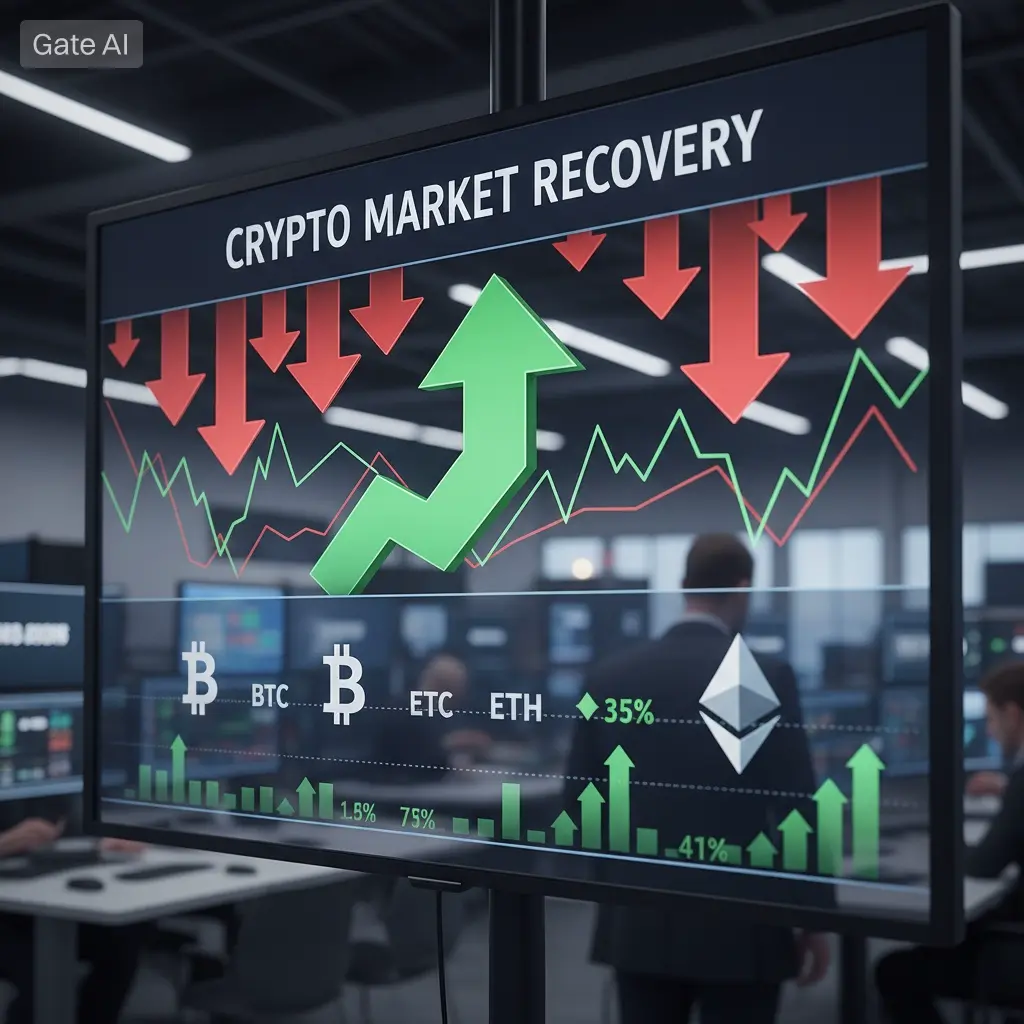
#CryptoMarketRecovery
Crypto Market Recovery: When Fear Peaks, Smart Money Moves First
A subtle but important shift is unfolding in the cryptocurrency market. Unlike previous cycles driven by hype and retail speculation, the current movement appears to be structurally driven, shaped more by accumulation and positioning than emotion or short-term narratives.
As of April 16, 2026, the Fear and Greed Index stands at 23, indicating an environment of extreme fear. Historically, such levels often reflect caution and risk aversion. However, market behavior during these phases frequently diverges fro
BTC0,33%
ETH-0,38%
MrFlower_XingChen
#CryptoMarketRecovery
Crypto Market Recovery: When Fear Peaks, Smart Money Moves First
A subtle but important shift is unfolding in the cryptocurrency market. Unlike previous cycles driven by hype and retail speculation, the current movement appears to be structurally driven, shaped more by accumulation and positioning than emotion or short-term narratives.
As of April 16, 2026, the Fear and Greed Index stands at 23, indicating an environment of extreme fear. Historically, such levels often reflect caution and risk aversion. However, market behavior during these phases frequently diverges from sentiment, as price action tends to lead emotional recovery rather than follow it.
Bitcoin: Structural Strength Emerging
Bitcoin is currently trading in a consolidated range between approximately $73,500 and $75,500, following a recovery from a prolonged downtrend. This price zone is increasingly being tested as a structural support area, suggesting a potential transition phase rather than a temporary rebound.
What distinguishes the current phase is not only price stability but also market participation dynamics. On-chain behavior indicates sustained accumulation from large holders, while exchange balances continue to decline. This combination typically reflects reduced selling pressure and tightening supply conditions.
Institutional participation is also playing a significant role. Continued inflows into Bitcoin-focused exchange-traded products signal longer-term positioning rather than speculative trading. Additionally, increased buying activity in U.S. markets suggests renewed confidence among large market participants.
Together, these signals indicate that the current phase is being driven more by accumulation than distribution.
Ethereum: Relative Strength and Ecosystem Growth
Ethereum is currently holding above the $2,300 level, but its more notable signal lies in relative performance. The ETH/BTC ratio has begun to strengthen after an extended period of weakness, often an early indicator of broader market rotation.
Institutional interest in Ethereum continues to expand, supported by inflows into investment products and growing recognition of its role as foundational blockchain infrastructure.
Beyond price action, Ethereum’s ecosystem continues to evolve through increased adoption in decentralized applications, stablecoin activity, and real-world asset tokenization. These developments reinforce its position as a core layer of digital financial infrastructure rather than purely a speculative asset.
Macro Environment: Gradual Stabilization
Recent global conditions have been shaped by geopolitical tensions and macroeconomic uncertainty, which temporarily pushed investors toward risk-off positioning. However, these pressures appear to be gradually stabilizing.
At the same time, regulatory discussions—particularly in the United States—are moving toward clearer frameworks for digital assets. This reduces long-standing uncertainty that has historically weighed on market sentiment.
Improving liquidity conditions are also contributing to renewed interest in risk assets, with crypto typically reacting earlier and more strongly than traditional markets during such transitions.
The Key Divergence: Price vs Sentiment
One of the most notable aspects of the current market environment is the clear divergence between sentiment and underlying structure.
A large portion of Bitcoin supply remains dormant for over a year
Exchange reserves continue to decline
Large holders are accumulating rather than distributing
Institutional flows remain positive
Despite these signals, overall sentiment remains deeply cautious.
This divergence is often observed in early recovery phases, where selling pressure has diminished but confidence has not yet returned.
Outlook: Early Phase of Transition
The market is currently at a critical structural point. Sustained stability above the current Bitcoin range could confirm continuation of the recovery phase rather than a temporary relief rally.
If this structure holds, capital rotation into broader altcoin markets may follow, particularly if Ethereum continues to show relative strength.
Upcoming macro and regulatory developments could act as catalysts, but the market’s current positioning suggests it is already structurally prepared to absorb them.
Conclusion
Early recovery phases are rarely driven by consensus. They are typically defined by accumulation under uncertainty, where stronger hands position ahead of broader sentiment shifts.
In the current environment, fear remains high—but structural indicators suggest the market may already be transitioning toward the next phase of expansion.
repost-content-media
  • Reward
  • Comment
  • Repost
  • Share
#WCTCTradingChallengeShare8MUSDT
WCTC Trading Challenge Season 8 – 8M USDT Prize Pool Overview
The WCTC 2026 Season 8 has officially launched, marking a major milestone in competitive trading and global crypto engagement. Coinciding with the 13th anniversary of Gate.io, this season represents a new level of scale, participation, and opportunity within the trading ecosystem. With an 8 million USDT prize pool, the event is designed to elevate competitive trading into a more structured and global experience.
Inclusive Competitive Structure
At its foundation, WCTC Season 8 is designed to be acces
MrFlower_XingChen
#WCTCTradingChallengeShare8MUSDT
WCTC Trading Challenge Season 8 – 8M USDT Prize Pool Overview
The WCTC 2026 Season 8 has officially launched, marking a major milestone in competitive trading and global crypto engagement. Coinciding with the 13th anniversary of Gate.io, this season represents a new level of scale, participation, and opportunity within the trading ecosystem. With an 8 million USDT prize pool, the event is designed to elevate competitive trading into a more structured and global experience.
Inclusive Competitive Structure
At its foundation, WCTC Season 8 is designed to be accessible to traders of all experience levels. It is not limited to professional or institutional participants. Instead, it encourages participation from beginners as well as advanced traders, creating a balanced and inclusive competitive environment. This structure allows participants to learn, adapt, and grow while actively engaging in real market conditions.
Multi-Format Competition Design
One of the most notable features of this season is its diversified competition format. The event includes:
Team battles that emphasize collaboration, coordination, and shared strategy
Individual competitions that highlight personal skill, analysis, and decision-making
1v1 championship matchups that focus on high-intensity, direct competition
This combination ensures that participants are tested across multiple dimensions of trading performance, including strategy, psychology, and execution.
Reward System and Incentives
Beyond the main prize pool, the competition introduces additional reward mechanisms such as mystery boxes and cash box incentives. These features enhance engagement by rewarding not only performance but also consistency, participation, and strategic activity throughout the event duration.
This layered reward system creates multiple opportunities for participants to benefit, even beyond traditional ranking-based prizes.
Learning and Skill Development
WCTC Season 8 is not solely focused on competition; it also serves as a learning environment. Participants are exposed to real-time market volatility, diverse trading strategies, and global competition dynamics. This exposure helps traders refine their skills, improve decision-making, and strengthen risk management practices under pressure.
Global Participation and Market Diversity
The competition brings together traders from different regions and backgrounds, making it a truly global event. This diversity enhances the competitive environment by introducing a wide range of trading styles, strategies, and market perspectives. As a result, participants gain valuable insight into how global traders interpret and respond to market conditions.
Risk Management and Discipline
In high-stakes trading environments, discipline is a critical factor for success. WCTC Season 8 emphasizes the importance of structured strategies, emotional control, and risk management. Traders who maintain consistency and avoid impulsive decisions are more likely to sustain performance over time.
Conclusion
WCTC Season 8 represents more than a trading competition. It is a structured platform where skill development, global participation, and financial opportunity intersect. With an 8 million USDT prize pool and multiple competition formats, it provides a dynamic environment for traders to test their abilities and grow under real market conditions.
As the season progresses, it is expected to deliver strong performances, competitive highlights, and valuable learning experiences for participants across the global trading community.
repost-content-media
  • Reward
  • Comment
  • Repost
  • Share
#USStocksHitRecordHighs
US Stocks Hit Record Highs: Will Crypto Follow or Diverge?
Global equity markets are currently showing strong momentum, with major indices such as the S&P 500 and Nasdaq reaching fresh all-time highs. This reflects sustained institutional risk appetite and continued confidence in corporate earnings, particularly within technology, artificial intelligence, and semiconductor sectors.
However, despite this strength in traditional markets, the cryptocurrency sector is not fully confirming the same breakout behavior. This divergence between equities and crypto is becoming o
BTC0,33%
MrFlower_XingChen
#USStocksHitRecordHighs
US Stocks Hit Record Highs: Will Crypto Follow or Diverge?
Global equity markets are currently showing strong momentum, with major indices such as the S&P 500 and Nasdaq reaching fresh all-time highs. This reflects sustained institutional risk appetite and continued confidence in corporate earnings, particularly within technology, artificial intelligence, and semiconductor sectors.
However, despite this strength in traditional markets, the cryptocurrency sector is not fully confirming the same breakout behavior. This divergence between equities and crypto is becoming one of the most closely watched macro signals in the current market cycle.
Market Structure: A Key Divergence
Equities are clearly in a breakout phase, while Bitcoin is currently trading in a consolidation range rather than trending upward in sync with traditional risk assets.
Historically, Bitcoin often follows Nasdaq-driven momentum, but typically with a delay. This lag phase is important because it can either lead to a strong catch-up rally or a period of further consolidation before the next expansion.
Why This Rally Is Different
Unlike previous cycles driven broadly by liquidity expansion, the current equity rally is more selective. Capital is primarily concentrated in high-growth sectors such as AI, semiconductors, and large-cap technology stocks.
This means liquidity is not evenly distributed across all risk assets. Instead, it is rotating within specific sectors of the equity market rather than flowing broadly into crypto and speculative assets.
Macro Conditions Still Matter
Despite strong equity performance, macroeconomic conditions remain mixed.
Treasury yields remain elevated, limiting liquidity expansion
Higher yields increase the cost of capital, reducing speculative flow into crypto
Energy prices remain relatively firm, keeping inflation expectations sticky
These factors continue to act as headwinds for immediate large-scale capital rotation into digital assets.
Bitcoin’s Current Position
Bitcoin is currently in a consolidation or “decision” phase rather than a clear trend phase. Price stability suggests underlying accumulation, but no confirmed breakout has occurred yet.
The market is effectively waiting for a catalyst, which could come from:
Sustained equity strength spilling into crypto markets
A decline in yields improving liquidity conditions
A technical breakout above key resistance levels with volume confirmation
Until one of these triggers appears, range-bound behavior is likely to continue.
Opportunity vs Risk Balance
This environment presents a complex psychological setup. Strong equity markets often create optimism, but crypto does not always move in sync. In some cases, lagging performance can lead to delayed upside. In other cases, it can signal continued consolidation or temporary distribution.
Because of this uncertainty, aggressive positioning in either direction carries elevated risk without confirmation.
What Institutional Investors Are Watching
Market participants are closely monitoring three key signals:
Whether equity markets can sustain new highs without correction
The behavior of bond yields at current elevated levels
Bitcoin’s reaction near key resistance zones
Alignment across these factors would likely support stronger risk rotation into crypto. Divergence could extend the consolidation phase.
Overall Market Interpretation
This is neither a clear bullish nor bearish phase for crypto. Instead, it represents a transitional structure where traditional markets are currently leading, and digital assets are awaiting confirmation.
Liquidity exists in the system, but it is unevenly distributed across asset classes, creating both opportunity and uncertainty.
Final Outlook
Equities are currently driving the cycle, but crypto has yet to confirm participation in the broader risk-on move. This creates a market environment where timing and confirmation matter more than early prediction.
If Bitcoin aligns with equity strength, the next expansion phase could accelerate quickly. If not, extended consolidation and volatility should be expected.
Final Thought
The key question facing markets is not whether conditions are bullish or bearish—but rather which asset class will lead the next phase of global liquidity rotation.
The answer to that will shape the next major move across both traditional and digital markets.
repost-content-media
  • Reward
  • Comment
  • Repost
  • Share
#AllbirdsPivotstoAI
Allbirds Pivot to AI: The Signal Behind the Noise
A surprising corporate transformation is unfolding in real time as Allbirds shifts from a consumer footwear brand into an artificial intelligence infrastructure player. The move has triggered intense market reaction, with the company’s stock experiencing a dramatic surge following its announcement of a full strategic pivot into AI compute services.
At the center of this shift is a complete business model reset. Allbirds has sold its core footwear assets and is repositioning itself as a GPU-as-a-Service and AI-native cloud i
MrFlower_XingChen
#AllbirdsPivotstoAI
Allbirds Pivot to AI: The Signal Behind the Noise
A surprising corporate transformation is unfolding in real time as Allbirds shifts from a consumer footwear brand into an artificial intelligence infrastructure player. The move has triggered intense market reaction, with the company’s stock experiencing a dramatic surge following its announcement of a full strategic pivot into AI compute services.
At the center of this shift is a complete business model reset. Allbirds has sold its core footwear assets and is repositioning itself as a GPU-as-a-Service and AI-native cloud infrastructure provider, a direction that aligns it with the rapidly expanding demand for AI compute power.
What the Pivot Actually Means
The company’s new direction—rebranded internally as “NewBird AI”—focuses on building infrastructure for artificial intelligence workloads rather than producing consumer goods.
According to recent filings and reports, the strategy includes:
Divesting its original footwear business
Raising approximately $50 million in financing to support transition
Acquiring high-performance GPU hardware
Offering compute capacity as a long-term leasing service
This effectively places the company in direct conceptual competition with emerging AI infrastructure providers rather than traditional retail brands.
Market Reaction: Narrative-Driven Surge
Following the announcement, Allbirds experienced an extreme valuation repricing event. The stock moved sharply higher in a short period, driven primarily by narrative momentum rather than established operational performance in the AI sector.
This reaction reflects a broader pattern seen in recent markets, where companies transitioning into AI-related business models often receive immediate speculative capital inflows, regardless of their prior industry experience.
However, analysts have also noted that such moves often resemble previous “narrative rebranding cycles,” where capital rapidly flows into AI-themed equities without immediate confirmation of underlying revenue generation.
Why Investors Are Paying Attention
Despite skepticism, the pivot highlights several real macro trends driving investor interest:
1. AI Compute Demand Expansion
The global demand for GPU infrastructure continues to grow rapidly, driven by training and deployment of large-scale AI models.
2. Scarcity of Compute Resources
Data center capacity and GPU supply remain constrained, making infrastructure plays potentially valuable if executed successfully.
3. Narrative Momentum in Equity Markets
Markets are currently highly sensitive to AI positioning, rewarding companies that align themselves with the sector—even during early transition stages.
Key Risks and Structural Questions
While the upside narrative is strong, several structural concerns remain:
Execution Risk: Allbirds has no historical background in AI infrastructure or cloud computing
Capital Intensity: Competing in GPU infrastructure requires significant long-term capital investment
Market Saturation Risk: Established players already dominate parts of the AI compute ecosystem
Narrative Decay: If operational progress does not follow, speculative momentum can reverse quickly
This creates a high-risk, high-volatility environment where valuation is heavily dependent on future credibility rather than current fundamentals.
Broader Market Implication: The “AI Repricing Cycle”
The Allbirds pivot is not an isolated case. It reflects a wider trend where traditional companies attempt to reposition themselves within the AI ecosystem to capture investor attention and revaluation potential.
This pattern suggests that AI is not only a technological shift but also a financial narrative engine reshaping how markets value growth, transformation, and future potential.
Conclusion: Signal or Speculation?
The transformation of Allbirds into an AI-focused entity represents more than a simple corporate pivot—it highlights how powerful the AI narrative has become in global capital markets.
On one side, there is genuine long-term demand for AI infrastructure. On the other, there is clear speculative acceleration driven by rebranding and repositioning rather than proven execution.
The key question moving forward is whether this transition evolves into a sustainable business model or remains part of a broader narrative-driven cycle.
For now, the market is not just evaluating earnings or products—it is pricing the possibility of reinvention itself.
repost-content-media
  • Reward
  • Comment
  • Repost
  • Share
#JaneStreetBets$7BonCoreWeave
Jane Street Bets $7B on CoreWeave: The Wall Street–AI Infrastructure Convergence Has Begun
A major structural shift is unfolding at the intersection of quantitative finance and artificial intelligence infrastructure. The recent $7 billion commitment by Jane Street to AI cloud provider CoreWeave signals more than a large commercial deal—it highlights how deeply AI compute is now embedded into financial market strategy itself.
This is not a typical vendor contract. It is a hybrid structure combining long-term cloud usage and direct equity investment, reflecting a g
MrFlower_XingChen
#JaneStreetBets$7BonCoreWeave
Jane Street Bets $7B on CoreWeave: The Wall Street–AI Infrastructure Convergence Has Begun
A major structural shift is unfolding at the intersection of quantitative finance and artificial intelligence infrastructure. The recent $7 billion commitment by Jane Street to AI cloud provider CoreWeave signals more than a large commercial deal—it highlights how deeply AI compute is now embedded into financial market strategy itself.
This is not a typical vendor contract. It is a hybrid structure combining long-term cloud usage and direct equity investment, reflecting a growing trend where financial institutions are becoming both customers and stakeholders in AI infrastructure platforms.
What the Deal Actually Includes
The agreement is structured in two parts:
Approximately $6 billion in multi-year AI cloud compute usage
A $1 billion equity investment in CoreWeave at around $109 per share
This brings the total commitment to roughly $7 billion, making it one of the largest known AI infrastructure deals involving a trading firm.
The cloud component gives Jane Street access to large-scale GPU infrastructure across multiple data centers, including next-generation NVIDIA-powered systems designed for advanced AI workloads.
Why a Trading Firm Needs AI Compute at This Scale
Jane Street is a quantitative trading powerhouse known for its heavy reliance on advanced algorithms, statistical models, and machine learning systems.
The scale of this deal suggests a key evolution:
Trading firms are no longer just users of financial data
They are now intensive consumers of AI compute infrastructure
Their models increasingly resemble large-scale machine learning systems used in frontier AI labs
In effect, Jane Street is operating more like an AI research organization than a traditional trading firm.
CoreWeave’s Position in the AI Infrastructure Stack
CoreWeave has rapidly emerged as one of the most important “neocloud” providers in the AI economy. Its business model is built around renting GPU compute at scale to companies training and deploying AI models.
This deal adds to a growing list of high-profile commitments from major AI players, reinforcing CoreWeave’s positioning as a key infrastructure layer in the AI supply chain.
Recent momentum includes:
Multi-billion-dollar contracts from leading AI labs
Expanding partnerships across tech and finance
Rapid revenue scaling driven by GPU demand
The latest agreement also strengthens investor confidence in long-term demand for high-performance compute.
Why This Is Bigger Than a Single Deal
This transaction reflects a broader macro trend: the convergence of finance and AI infrastructure.
Three major shifts are happening simultaneously:
1. AI compute is becoming a core financial input
Quantitative trading strategies increasingly rely on deep learning models requiring massive GPU resources.
2. Financial firms are becoming infrastructure buyers
Instead of relying solely on external models, firms are building internal AI systems at scale.
3. Infrastructure providers are becoming strategic assets
Companies like CoreWeave are no longer just service vendors—they are foundational components of global AI capacity.
Market Implications: A New Capital Flow Pattern
This deal also signals a change in capital flow dynamics within the AI sector:
Demand is no longer limited to tech companies and AI startups
Hedge funds and trading firms are now entering the compute race
GPU infrastructure is becoming a strategic asset class
This broadens the AI demand base and reinforces the long-term structural thesis for high-performance compute providers.
Risk Factors and Structural Concerns
Despite its scale, the deal introduces several important considerations:
Concentration risk: Heavy reliance on a small number of large clients
Capital intensity: Massive ongoing investment required for GPU infrastructure expansion
Cyclical exposure: AI demand cycles could impact utilization rates
Debt and financing pressure: Rapid scaling requires continuous capital access
These factors make the AI infrastructure sector both high-growth and structurally complex.
The Bigger Picture: AI Arms Race Expands
What is emerging is no longer just an AI technology race—it is a compute arms race.
Companies are competing not only on model intelligence, but on:
Access to GPUs
Speed of model training
Infrastructure scalability
Energy and data center capacity
The Jane Street–CoreWeave deal shows that even financial institutions are now part of this race.
Conclusion: A Structural Shift, Not a One-Off Event
The $7 billion commitment between Jane Street and CoreWeave is a clear signal that AI infrastructure has moved beyond the tech sector and into the core of global finance.
It represents a deeper transformation where:
Trading firms behave like AI labs
Infrastructure providers become strategic partners
Compute becomes a critical financial resource
This is not just a deal—it is a marker of how AI is reshaping capital markets, infrastructure economics, and the future architecture of quantitative finance.
repost-content-media
  • Reward
  • Comment
  • Repost
  • Share
#JaneStreetBets$7BonCoreWeave
Jane Street Bets $7B on CoreWeave: The Wall Street–AI Infrastructure Convergence Has Begun
A major structural shift is unfolding at the intersection of quantitative finance and artificial intelligence infrastructure. The recent $7 billion commitment by Jane Street to AI cloud provider CoreWeave signals more than a large commercial deal—it highlights how deeply AI compute is now embedded into financial market strategy itself.
This is not a typical vendor contract. It is a hybrid structure combining long-term cloud usage and direct equity investment, reflecting a g
MrFlower_XingChen
#JaneStreetBets$7BonCoreWeave
Jane Street Bets $7B on CoreWeave: The Wall Street–AI Infrastructure Convergence Has Begun
A major structural shift is unfolding at the intersection of quantitative finance and artificial intelligence infrastructure. The recent $7 billion commitment by Jane Street to AI cloud provider CoreWeave signals more than a large commercial deal—it highlights how deeply AI compute is now embedded into financial market strategy itself.
This is not a typical vendor contract. It is a hybrid structure combining long-term cloud usage and direct equity investment, reflecting a growing trend where financial institutions are becoming both customers and stakeholders in AI infrastructure platforms.
What the Deal Actually Includes
The agreement is structured in two parts:
Approximately $6 billion in multi-year AI cloud compute usage
A $1 billion equity investment in CoreWeave at around $109 per share
This brings the total commitment to roughly $7 billion, making it one of the largest known AI infrastructure deals involving a trading firm.
The cloud component gives Jane Street access to large-scale GPU infrastructure across multiple data centers, including next-generation NVIDIA-powered systems designed for advanced AI workloads.
Why a Trading Firm Needs AI Compute at This Scale
Jane Street is a quantitative trading powerhouse known for its heavy reliance on advanced algorithms, statistical models, and machine learning systems.
The scale of this deal suggests a key evolution:
Trading firms are no longer just users of financial data
They are now intensive consumers of AI compute infrastructure
Their models increasingly resemble large-scale machine learning systems used in frontier AI labs
In effect, Jane Street is operating more like an AI research organization than a traditional trading firm.
CoreWeave’s Position in the AI Infrastructure Stack
CoreWeave has rapidly emerged as one of the most important “neocloud” providers in the AI economy. Its business model is built around renting GPU compute at scale to companies training and deploying AI models.
This deal adds to a growing list of high-profile commitments from major AI players, reinforcing CoreWeave’s positioning as a key infrastructure layer in the AI supply chain.
Recent momentum includes:
Multi-billion-dollar contracts from leading AI labs
Expanding partnerships across tech and finance
Rapid revenue scaling driven by GPU demand
The latest agreement also strengthens investor confidence in long-term demand for high-performance compute.
Why This Is Bigger Than a Single Deal
This transaction reflects a broader macro trend: the convergence of finance and AI infrastructure.
Three major shifts are happening simultaneously:
1. AI compute is becoming a core financial input
Quantitative trading strategies increasingly rely on deep learning models requiring massive GPU resources.
2. Financial firms are becoming infrastructure buyers
Instead of relying solely on external models, firms are building internal AI systems at scale.
3. Infrastructure providers are becoming strategic assets
Companies like CoreWeave are no longer just service vendors—they are foundational components of global AI capacity.
Market Implications: A New Capital Flow Pattern
This deal also signals a change in capital flow dynamics within the AI sector:
Demand is no longer limited to tech companies and AI startups
Hedge funds and trading firms are now entering the compute race
GPU infrastructure is becoming a strategic asset class
This broadens the AI demand base and reinforces the long-term structural thesis for high-performance compute providers.
Risk Factors and Structural Concerns
Despite its scale, the deal introduces several important considerations:
Concentration risk: Heavy reliance on a small number of large clients
Capital intensity: Massive ongoing investment required for GPU infrastructure expansion
Cyclical exposure: AI demand cycles could impact utilization rates
Debt and financing pressure: Rapid scaling requires continuous capital access
These factors make the AI infrastructure sector both high-growth and structurally complex.
The Bigger Picture: AI Arms Race Expands
What is emerging is no longer just an AI technology race—it is a compute arms race.
Companies are competing not only on model intelligence, but on:
Access to GPUs
Speed of model training
Infrastructure scalability
Energy and data center capacity
The Jane Street–CoreWeave deal shows that even financial institutions are now part of this race.
Conclusion: A Structural Shift, Not a One-Off Event
The $7 billion commitment between Jane Street and CoreWeave is a clear signal that AI infrastructure has moved beyond the tech sector and into the core of global finance.
It represents a deeper transformation where:
Trading firms behave like AI labs
Infrastructure providers become strategic partners
Compute becomes a critical financial resource
This is not just a deal—it is a marker of how AI is reshaping capital markets, infrastructure economics, and the future architecture of quantitative finance.
repost-content-media
  • Reward
  • Comment
  • Repost
  • Share
#FoxPartnersWithKalshi
Fox and Kalshi Partnership: The Rise of Market-Based Information Systems
The integration between Fox Corporation and Kalshi represents a structural shift that extends far beyond a standard media partnership. It signals the emergence of a new informational layer where probability, financial markets, and media narratives begin to converge into a unified feedback system.
At the core of Kalshi’s model is its operation under the oversight of the Commodity Futures Trading Commission (CFTC), making it one of the few fully regulated platforms where real-world events can be trad
Original content no longer visible
  • Reward
  • Comment
  • Repost
  • Share
#USStocksHitRecordHighs The headline #USStocksHitRecordHighs reflects a powerful moment in global financial markets — where major US equity indices push into new territory, signaling renewed optimism, strong corporate earnings momentum, and expectations of continued economic resilience.
But record highs are not just numbers on a chart.
They represent a combination of liquidity, sentiment, macro policy expectations, and long-term investor positioning.
When markets hit record highs, it is not just about growth — it is about confidence in the future.
📊 The Core Drivers Behind Record Highs
US equ
post-image
  • Reward
  • 2
  • Repost
  • Share
AylaShinex:
2026 GOGOGO 👊
View More
#Gate13thAnniversary The #Gate13thAnniversary celebration marks a rare milestone in the crypto industry — a platform surviving and evolving through 13 years of extreme market cycles, regulatory changes, technological disruption, and global adoption waves.
In an industry where many platforms rise and disappear quickly, longevity itself becomes a powerful signal.
13 years in crypto is not just survival — it is continuous adaptation.
🌍 The Journey: From Early Exchange to Global Ecosystem
Over the past 13 years, Gate.io has evolved far beyond a simple trading venue.
In the early stage of crypto m
post-image
  • Reward
  • 1
  • Repost
  • Share
Yunna:
LFG 🔥
#WCTCTradingChallengeShare8MUSDT The #WCTCTradingChallengeShare8MUSDT is more than just a trading campaign — it represents a modern evolution of competitive crypto trading where skill, strategy, and discipline are directly tied to real financial rewards.
In an industry driven by volatility, challenges like this highlight one core truth:
In crypto, opportunity doesn’t just come from the market — it comes from performance.
🌍 What Is the WCTC Trading Challenge?
At its core, the WCTC Trading Challenge is a structured global competition designed to test traders across different skill levels while
  • Reward
  • 1
  • Repost
  • Share
Yunna:
LFG 🔥
#CryptoMarketRecovery The concept of crypto market recovery is never just about prices bouncing back. It represents something deeper — a shift in sentiment, liquidity returning to risk assets, institutional positioning, and the slow rebuilding of confidence after volatility.
Every recovery phase in crypto has its own identity. Some are fast “V-shaped” rebounds. Others are slow, grinding rebuilds. But all of them share one thing:
Recovery is not random — it is structural.
🌍 From Fear to Stabilization: The Market Cycle Reset
Crypto markets move in repeating cycles:
Expansion (bull runs)
Distrib
BTC0,33%
ETH-0,38%
DEFI-6,97%
MEME16,15%
post-image
  • Reward
  • 1
  • Repost
  • Share
Yunna:
LFG 🔥
#US-IranTalksVSTroopBuildup The tension between the United States and Iran has always been one of the most sensitive fault lines in global geopolitics. The current narrative of US-Iran talks vs troop buildup represents a classic dual-track strategy in international relations: negotiation on one side, deterrence on the other.
This is not a simple conflict story — it is a layered strategic game involving diplomacy, military positioning, regional allies, and global energy security.
🌍 The Core Situation: Two Tracks Running in Parallel
At the heart of the issue are two simultaneous developments:
post-image
  • Reward
  • 2
  • Repost
  • Share
AylaShinex:
2026 GOGOGO 👊
View More
#Gate13thAnniversaryLive The crypto industry moves fast — but very few platforms survive long enough to celebrate more than a decade of impact. The Gate 13th Anniversary Live event represents more than just a milestone. It reflects 13 years of evolution, survival through multiple market cycles, and continuous expansion in the world of digital assets.
This anniversary is not just a celebration — it’s a statement.
A statement that crypto exchanges are no longer early experiments… but global financial infrastructure.
🌐 From Early Exchange to Global Ecosystem
When Gate first entered the market ye
BTC0,33%
ETH-0,38%
DEFI-6,97%
post-image
  • Reward
  • 1
  • Repost
  • Share
Yunna:
LFG 🔥
#GatePreIPOsLaunchesWithSpaceX #GatePreIPOsLaunchesWithSpaceX


Gate’s Pre-IPO initiative continues to evolve rapidly, marking a new phase in the integration of crypto platforms with traditional private markets. Following the initial announcement, the program has now gained increased attention from both retail and institutional-style investors due to its structured design and high-profile exposure opportunities.
The most discussed element remains the SpaceX-linked Pre-IPO access ($SPCX), which has now become a focal point for market sentiment. This offering represents one of the strongest examp
GUSD-0,03%
post-image
  • Reward
  • 1
  • Repost
  • Share
Yunna:
LFG 🔥
#ArthurYiLaunchesOpenXLabs #ArthurYiLaunchesOpenXLabs
The launch of OpenX Labs by Arthur Yi represents more than just another venture initiative—it signals a structural shift in how capital, talent, and technology are converging in 2026. As artificial intelligence transitions from a high-growth sector into a foundational layer of the global economy, funds like OpenX Labs are positioning themselves not merely as investors, but as architects of the next digital era.
What makes this development particularly important right now is the maturity of AI infrastructure. The rapid evolution of machine
post-image
  • Reward
  • 7
  • Repost
  • Share
MingDragonX:
2026 GOGOGO 👊
View More
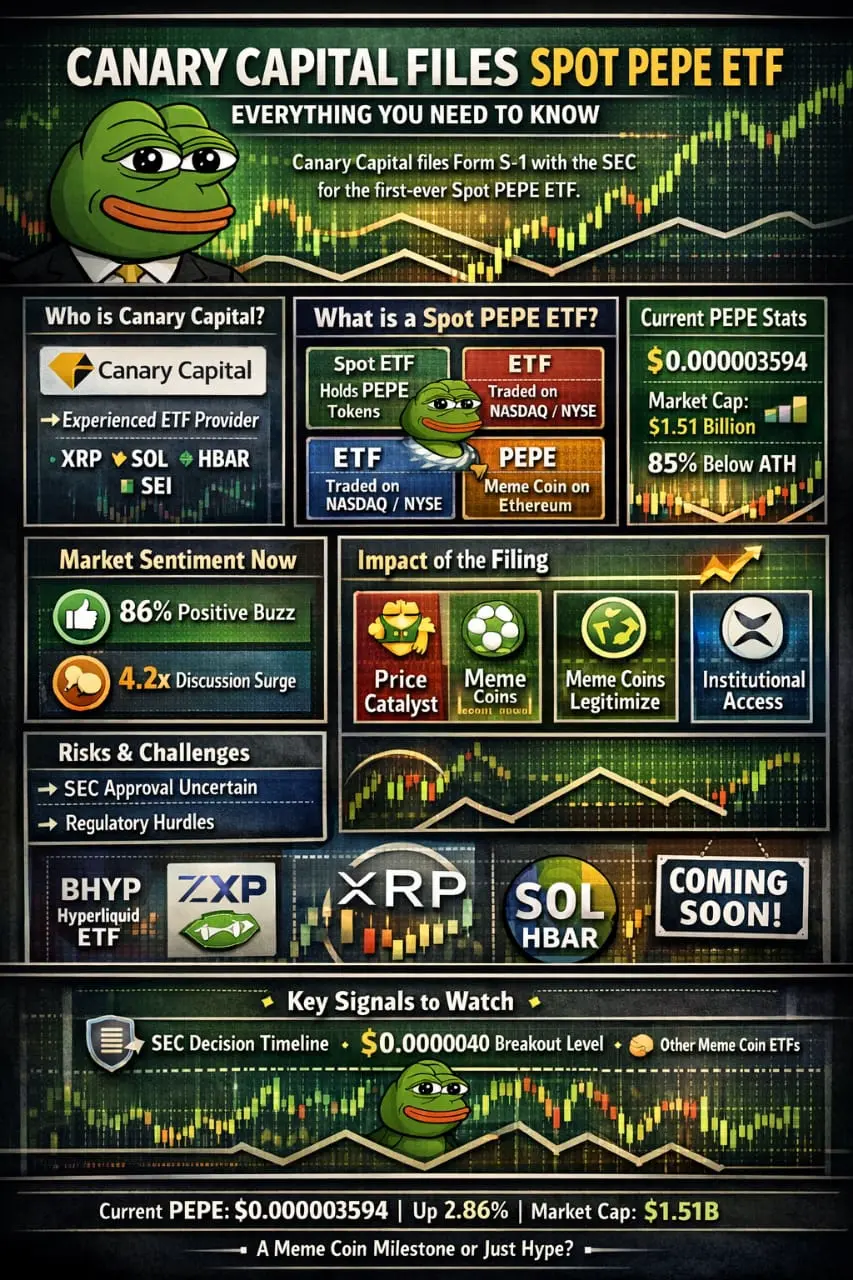
#CanaryFilesSpotPEPEETF #CanaryFilesSpotPEPEETF
Canary Capital’s Spot PEPE ETF Filing — Latest Developments, Deeper Insights & What Comes Next
The crypto market may have just crossed into a new era of risk acceptance and financial innovation. Following the April 8, 2026 filing, Canary Capital has officially pushed forward the idea of a Spot PEPE ETF, a move that could redefine how institutions interact with meme coins.
This is not just another ETF filing—it represents a shift in how far traditional finance is willing to go down the crypto risk curve.
📌 What’s New Since the Filing?
Since the
PEPE7,15%
BTC0,33%
ETH-0,38%
SOL4,92%
post-image
post-image
  • Reward
  • 12
  • Repost
  • Share
MingDragonX:
LFG 🔥
View More
#GateSquareAprilPostingChallenge
The April 2026 Gate Square Posting Challenge is officially live, and it’s one of the most engaging community reward events hosted by Gate.io this year. Designed to boost creator activity and reward social engagement, this campaign gives both new and existing users a chance to earn daily rewards simply by posting and interacting on Gate Square.
One of the biggest highlights of this event is the 100% winning chance for new users. If you’re posting on Gate Square for the first time, you are guaranteed to receive a reward—making i
post-image
  • Reward
  • 8
  • Repost
  • Share
MingDragonX:
2026 GOGOGO 👊
View More
  • Pin