






HanssiMazak

vip
Futures Trading Strategist
On-chain Analyst
Airdrop Hunter
No content yet
#TopCoinsRisingAgainsttheTrend Strength in a Weak Market
Amid widespread market volatility and persistent downward pressure, a select group of cryptocurrencies continues to stand out by defying the broader trend. While uncertainty dominates overall sentiment, these top-performing assets are demonstrating resilience, strong fundamentals, and sustained investor confidence. Their ability to outperform during challenging conditions makes them especially noteworthy for both experienced traders and new market participants.
Bitcoin, as the market’s primary benchmark, has shown relative stability desp
BTC1,2%
ETH-1,37%
ARB-3,5%
OP-3,07%
post-image
post-image
  • Reward
  • 4
  • Repost
  • Share
MrFlower_vip:
Happy New Year! 🤑
View More
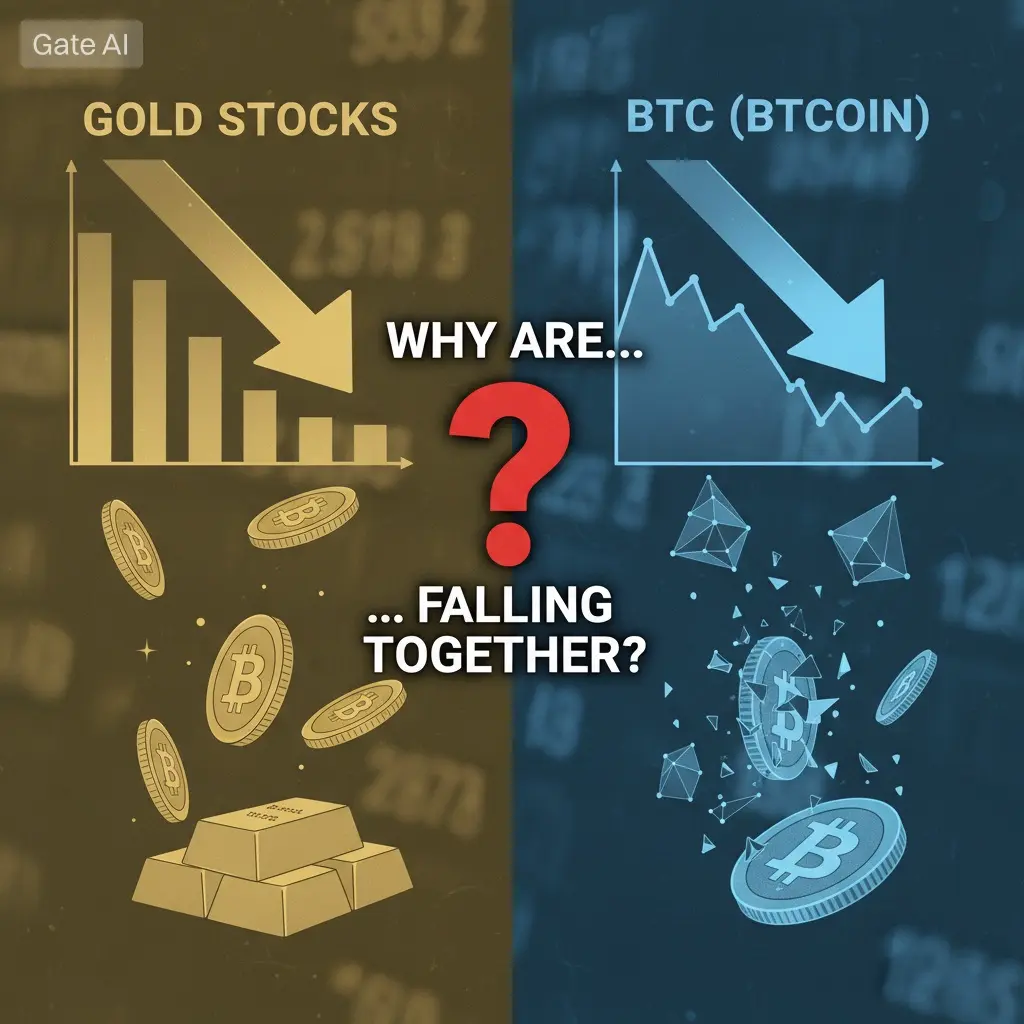
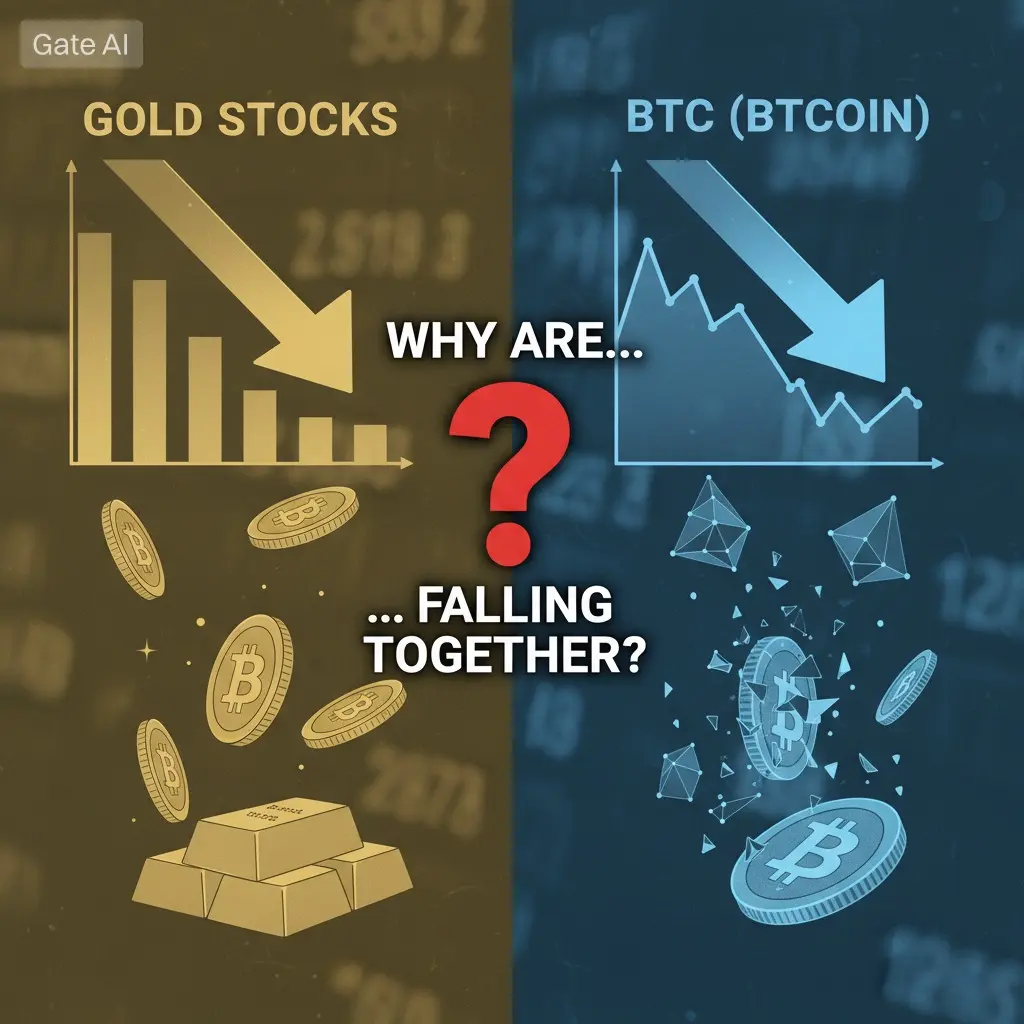
#WhyAreGoldStocksandBTCFallingTogether? Understanding Cross-Market Pressure
It is not just crypto under pressure — gold and gold-related equities are also declining. This unusual alignment has raised an important question among investors: why are traditional safe havens and high-beta assets falling at the same time? The answer lies in the growing interconnectedness of global financial markets and the macro forces currently shaping capital flows.
One of the primary drivers is mounting macroeconomic pressure. Rising U.S. interest rates, expectations of continued Federal Reserve hawkishness, and
BTC1,2%
post-image
post-image
  • Reward
  • 5
  • Repost
  • Share
MrFlower_vip:
Buy To Earn 💎
View More
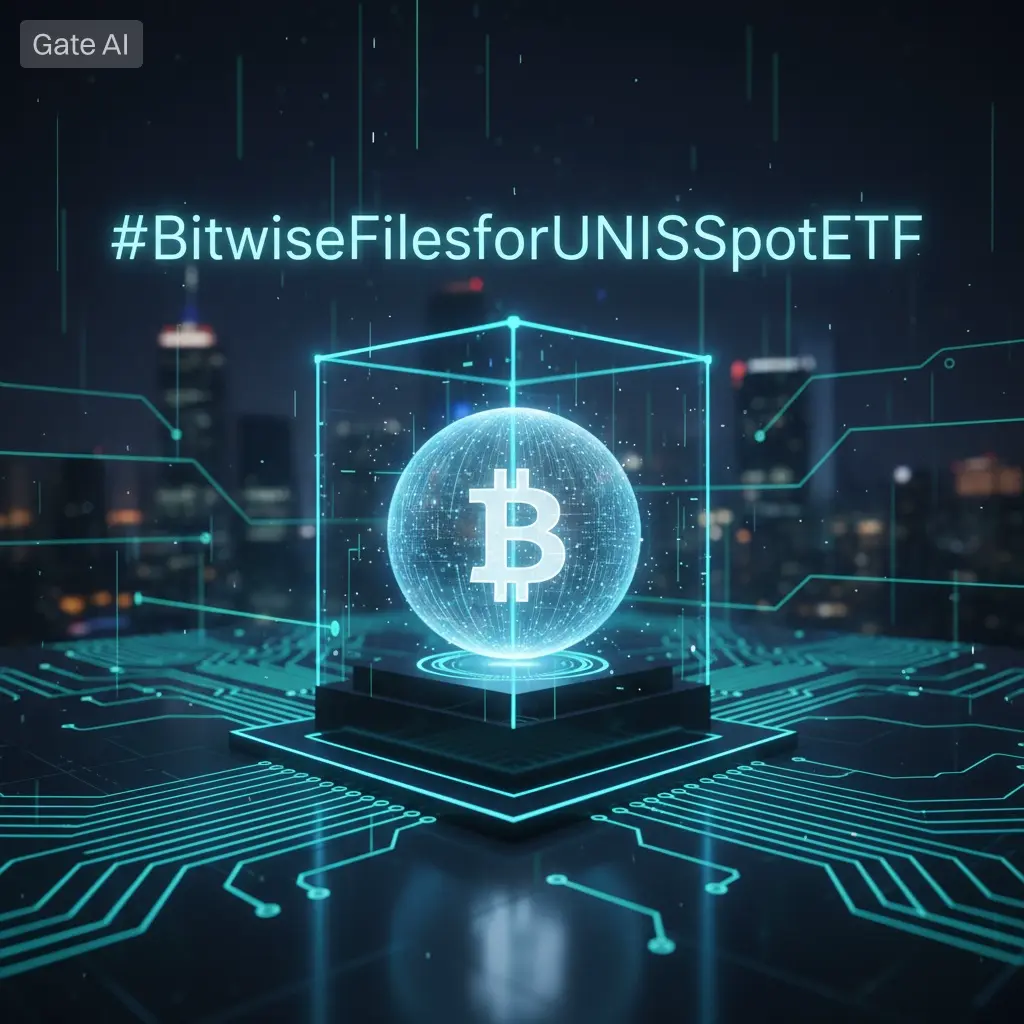
#BitwiseFilesforUNISpotETF Institutional Access to DeFi Takes a Major Step
Bitwise Asset Management has officially filed a Form S-1 registration statement with the U.S. Securities and Exchange Commission (SEC) to launch a proposed spot ETF linked to the Uniswap (UNI) token. If approved, this “Bitwise Uniswap ETF” would hold UNI directly, offering investors regulated exposure to one of the most prominent decentralized finance governance tokens. This development represents a potentially historic expansion of regulated crypto investment products beyond Bitcoin and Ethereum.
What makes this filing
UNI-2,49%
BTC1,2%
ETH-1,37%
post-image
post-image
  • Reward
  • 4
  • Repost
  • Share
MrFlower_vip:
Happy New Year! 🤑
View More
#CMEGroupPlansCMEToken Institutional Infrastructure Meets Crypto
CME Group’s announcement to explore the creation of a CME Token signals a potential structural shift in how both institutional and retail participants engage with crypto markets. From Dragon Fly Official’s perspective, this development is significant because it represents a bridge between traditional financial infrastructure and blockchain-based digital assets. If implemented effectively, it could reshape how liquidity, settlement, and derivatives exposure flow into the crypto ecosystem.
The proposed CME Token has the potential t
post-image
post-image
post-image
  • Reward
  • 6
  • Repost
  • Share
MrFlower_vip:
Buy To Earn 💎
View More
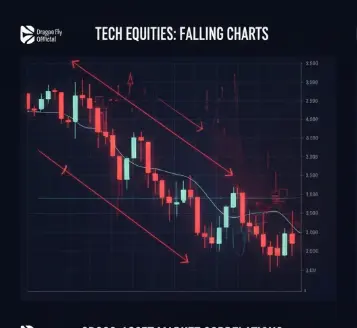
#GlobalTechSell-OffHitsRiskAssets BTC Market Correlation Watch
The ongoing sell-off in global technology stocks is increasingly spilling pressure into crypto and other risk-sensitive assets. As major tech indices weaken, liquidity tightens and investor confidence declines, creating headwinds for speculative markets. Bitcoin, in particular, continues to absorb this impact through shifting sentiment and reduced risk appetite.
Historically, periods of Nasdaq weakness have often translated into short-term pressure on BTC, as capital rotates away from high-volatility assets toward defensive positio
BTC1,2%
post-image
post-image
post-image
  • Reward
  • 4
  • Repost
  • Share
MrFlower_vip:
Happy New Year! 🤑
View More
#GateSquareValentineGiveaway My Future-Forward Ethereum Confession: Why ETH Still Holds My Respect 💜**
In a digital world overflowing with new tokens, narratives, and short-term hype, one blockchain continues to earn not just attention, but genuine long-term respect: Ethereum. While many focus only on price movements and quick profits, I choose to look deeper — at how a network functions, how people use it, and how it creates real value every day. To me, Ethereum is not just a symbol on a chart. It is a living, evolving infrastructure that continues to push decentralized technology forward.
F
ETH-1,37%
post-image
post-image
  • Reward
  • 4
  • Repost
  • Share
MrFlower_vip:
Happy New Year! 🤑
View More
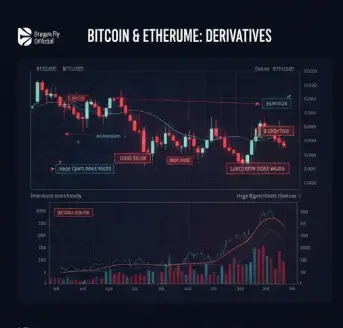
#CryptoMarketPullback Key Levels, Structure, and Strategic Insights
The crypto market is currently experiencing a broad pullback across major assets, including Bitcoin, Ethereum, and high-beta altcoins. From Dragon Fly Official’s perspective, this correction represents a natural phase within the larger market structure. Rather than signaling immediate trend failure, such pullbacks often reflect healthy recalibration, offering both caution and selective opportunity for disciplined participants.
Bitcoin is now testing important support zones, while Ethereum is displaying similar retracement beha
BTC1,2%
ETH-1,37%
post-image
post-image
  • Reward
  • 3
  • Repost
  • Share
MrFlower_vip:
Happy New Year! 🤑
View More
#CryptoSurvivalGuide Navigating a Selectively Brutal Market
The crypto market right now is not just volatile — it is selectively brutal. This phase is designed to eliminate impatience, excessive leverage, and weak conviction. It is not about predicting the next 5% move. It is about understanding where the market stands in the larger cycle and positioning accordingly. Those who focus only on short-term price action risk missing the bigger structural shifts happening beneath the surface.
From a market structure perspective, the current phase resembles distribution and re-pricing rather than full
BTC1,2%
post-image
  • Reward
  • 3
  • Repost
  • Share
MrFlower_vip:
Happy New Year! 🤑
View More
#BuyTheDipOrWaitNow? #Bitcoin Market Outlook — Weekly & Macro Update 📉
Bitcoin continues to trade below the critical 72,000 resistance level, and with repeated weekly and daily closes under this zone, the market remains locked inside a broad accumulation range between 54k and 72k. This range has now become the dominant structure. As long as price stays below 72k, the broader trend remains corrective, and any short-term rallies should be viewed as relief bounces rather than confirmed trend reversals. A sustained reclaim of 72k is still required for Bitcoin to regain bullish momentum and open t
BTC1,2%
post-image
post-image
  • Reward
  • 2
  • Repost
  • Share
MrFlower_vip:
Happy New Year! 🤑
View More
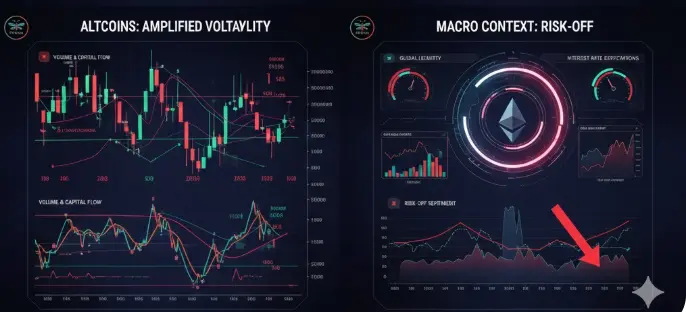
#GlobalTechSell-OffHitsRiskAssets — Crypto in the Crossfire
The recent global tech sell-off isn’t just Nasdaq pain. Its shockwaves are hitting all risk assets, including crypto. Understanding the dynamics is critical for strategic positioning.
📉 Drivers of the Sell-Off
1. Rising Interest Rate Pressure
Growth-oriented, leveraged tech stocks are highly sensitive to rates.
Higher bond yields → future cash flows discounted → valuations decline.
2. Risk-Off Sentiment Spreads
Investors rotate from equities to safe havens: USD, bonds, gold.
Crypto, as a high-beta asset, experiences immediate pressur
BTC1,2%
ETH-1,37%
MrFlower_vip
#GlobalTechSell-OffHitsRiskAssets — Crypto in the Crossfire
The recent global tech sell-off isn’t just Nasdaq pain. Its shockwaves are hitting all risk assets, including crypto. Understanding the dynamics is critical for strategic positioning.
📉 Drivers of the Sell-Off
1. Rising Interest Rate Pressure
Growth-oriented, leveraged tech stocks are highly sensitive to rates.
Higher bond yields → future cash flows discounted → valuations decline.
2. Risk-Off Sentiment Spreads
Investors rotate from equities to safe havens: USD, bonds, gold.
Crypto, as a high-beta asset, experiences immediate pressure.
3. Macro Uncertainty
Inflation data and central bank guidance amplify volatility.
Global capital becomes selective, punishing leveraged and speculative markets first.
🔄 Impact on Crypto
BTC, ETH, and large-cap altcoins are short-term correlated with equities.
Altcoins suffer deeper pullbacks due to lower liquidity and higher leverage.
Market rotation favors Bitcoin and stablecoins, as smart money seeks liquidity and safety.
🧠 Market Structure Signals
Crypto is testing key support zones that historically acted as macro pivots.
Liquidity flushes are occurring near clustered retail stop levels.
High-volume reclaim or sustained support will indicate that risk appetite is returning despite macro pressure.
⚠️ Risks to Watch
Prolonged tech weakness could extend crypto corrections beyond short-term support.
Spiking funding rates on leveraged positions may trigger cascade liquidations.
Cross-asset contagion risk: weakness in equities can amplify negative crypto sentiment.
🔑 Key Levels & Indicators
Monitor BTC & ETH support zones for liquidity absorption.
Track volume profiles to see if dips are bought or rejected.
Watch derivatives metrics (funding rates and open interest) to gauge leverage risk or neutralization.
🎯 Strategy for Traders & Investors
Avoid chasing dips in volatile altcoins during tech-led sell-offs.
Scale into high-conviction zones on BTC/ETH with disciplined risk management.
Keep cash reserves ready to capitalize on macro-driven capitulation opportunities.
📌 Bottom Line
The #GlobalTechSell-OffHitsRiskAssets highlights how interconnected crypto is with global markets.
Short-term pain is expected.
Long-term resilience depends on structure, liquidity management, and disciplined strategy.
Risk assets may shake, but those who navigate volatility with discipline capture the next major move.

repost-content-media
  • Reward
  • 9
  • Repost
  • Share
MrFlower_vip:
2026 GOGOGO 👊
View More
#FedLeadershipImpact Monetary Signals and Crypto Market Dynamics
Recent developments surrounding Federal Reserve leadership and monetary policy guidance continue to shape global financial markets. Changes in tone, policy direction, or leadership structure influence interest rates, liquidity conditions, and investor confidence—factors that directly affect risk assets, including cryptocurrencies.
As crypto becomes more integrated with traditional financial systems, understanding the Federal Reserve’s role is no longer optional. It is now a core component of effective market analysis and risk man
BTC1,2%
ETH-1,37%
  • Reward
  • 16
  • Repost
  • Share
MrFlower_vip:
2026 GOGOGO 👊
View More
#Web3FebruaryFocus Web3 has entered a period that may appear quiet on the surface but is, in reality, a critical inflection point. The days when narratives, hype, or viral attention could sustain entire ecosystems are ending. The question is no longer whether ideas are novel or exciting, but whether they can survive scrutiny—regulatory, technical, economic, and human. February is less about another speculative cycle and more about endurance: can the architectures and concepts of the last decade function as real, lasting infrastructure?
Decentralization is no longer a slogan; it has become a se
DEFI-1,52%
BTC1,2%
post-image
post-image
  • Reward
  • 21
  • Repost
  • Share
MrFlower_vip:
2026 GOGOGO 👊
View More
#PartialGovernmentShutdownEnds Market Impact & Strategic Implications
The recent partial government shutdown in the United States has officially concluded, restoring normal federal operations and alleviating a major source of macro uncertainty. While the direct economic damage was limited, its resolution has already influenced investor psychology and capital flows, particularly across risk assets such as equities and crypto.
Recent Market Snapshot
Bitcoin (BTC): ~$67,000 – $68,000 — showing moderate recovery after recent volatility
Ethereum (ETH): ~$1,950 – $2,000 — stabilizing near key suppor
BTC1,2%
ETH-1,37%
post-image
post-image
post-image
  • Reward
  • 20
  • Repost
  • Share
MrFlower_vip:
2026 GOGOGO 👊
View More
#CryptoMarketStructureUpdate Structural Evolution & Strategic Context (2026 Outlook)
The crypto market is undergoing a profound structural transformation, driven by growing institutional participation, shifting liquidity regimes, macroeconomic pressures, and unprecedented transparency in on-chain data. In this environment, price action alone is no longer sufficient to interpret market direction. Deeper structural forces—capital rotation, leverage dynamics, and long-term positioning—now dominate trend formation.
Bitcoin remains the central anchor of the ecosystem, while altcoins are increasingl
BTC1,2%
  • Reward
  • 17
  • Repost
  • Share
MrFlower_vip:
2026 GOGOGO 👊
View More
😙#EthereumL2Outlook The Rise of Specialized Digital States (2026–Beyond)
By 2026, the Ethereum ecosystem has moved far beyond the early struggle for scalability. What once revolved around “cheaper transactions” has evolved into a new era of specialized digital states, where Layer 2 (L2) networks operate as independent economic and technological zones within Ethereum’s broader framework.
L2s are no longer simply extensions of the mainnet. They are becoming purpose-built platforms optimized for specific industries, user groups, and institutional requirements.
From Scaling to Strategic Specializ
ETH-1,37%
ARB-3,5%
OP-3,07%
DEFI-1,52%
MrFlower_vip
#EthereumL2Outlook The Rise of Specialized Digital States (2026–Beyond)
By 2026, the Ethereum ecosystem has moved far beyond the early struggle for scalability. What once revolved around “cheaper transactions” has evolved into a new era of specialized digital states, where Layer 2 (L2) networks operate as independent economic and technological zones within Ethereum’s broader framework.
L2s are no longer simply extensions of the mainnet. They are becoming purpose-built platforms optimized for specific industries, user groups, and institutional requirements.
From Scaling to Strategic Specialization
In early 2026, Vitalik Buterin’s public statements marked a major turning point for the L2 sector. He emphasized that scalability alone is no longer enough. The next generation of L2s must focus on solving problems that Ethereum’s Layer 1 cannot efficiently address.
These include privacy-preserving transactions, advanced account abstraction, customized virtual machines, confidential data processing, and application-specific execution environments. As a result, “generic” L2s with no clear specialization are rapidly losing relevance.
Survival in the L2 market is now determined by utility, differentiation, and long-term economic sustainability, not just speed or low fees.
Market Structure in 2026: Consolidation and Dominance
By 2026, market consolidation has reached unprecedented levels. Base, Arbitrum, and Optimism collectively control nearly 90% of L2 transaction volume, effectively marginalizing smaller networks.
Base has emerged as a dominant force, surpassing Arbitrum in DeFi Total Value Locked by late 2025. Its integration with major wallets, strong developer incentives, and consumer-focused onboarding systems have driven widespread retail and gaming adoption.
Meanwhile, many mid-tier L2s have entered a “zombie chain” phase, maintaining technical activity but lacking meaningful economic growth or user engagement.
The Return of Layer 1: Glamsterdam and Fee Compression
The Glamsterdam hard fork introduced parallel transaction processing and expanded Ethereum’s gas capacity to new levels. With gas limits reaching 200 million, average mainnet transaction fees dropped below $0.50.
This development has fundamentally altered the L2 value proposition. For the first time in years, Ethereum Layer 1 is again competitive for many everyday use cases.
As a result, L2s can no longer rely on affordability alone. Their competitive edge must come from functionality, customization, and ecosystem depth.
Privacy Networks and Institutional Infrastructure
Privacy has become one of the most important growth sectors in the L2 ecosystem. Networks such as Payy and similar privacy-focused rollups now offer default confidential transfers and encrypted smart contract interactions.
These platforms appeal strongly to institutional investors, corporations, and funds that cannot operate efficiently on fully transparent blockchains.
Beyond payments, privacy L2s are increasingly used for confidential audits, compliance-preserving reporting, and secure AI data sharing, positioning them as foundational infrastructure for Web3 enterprise adoption.
Technological Evolution: ZK-Native and Hybrid Rollups
Zero-knowledge technology has matured into the backbone of advanced L2 design. ZK-native platforms like Starknet and zkSync leverage ZK-EVM precompiles to execute high-performance transactions while maintaining cryptographic security.
These systems enable near-instant finality, minimal trust assumptions, and scalable verification, making them ideal for financial infrastructure and data-intensive applications.
At the same time, hybrid architectures combining Optimistic and ZK mechanisms have gained momentum. These models balance developer accessibility with rapid settlement, effectively solving long-standing withdrawal and latency challenges.
By late 2026, hybrid rollups are expected to become the default framework for enterprise and gaming-oriented chains.
The Revenue Era: Economic Maturity of L2s
The L2 sector has entered what analysts now call the “Revenue Era.” Investors and developers are no longer satisfied with roadmap promises and user metrics. Sustainable cash flow is now the primary benchmark.
Base’s reported $75 million revenue in 2025, achieved while paying minimal settlement fees to Ethereum, demonstrated the profitability potential of optimized L2 operations.
However, ecosystem governance has responded with proposals such as EIP-7918, designed to redirect part of L2 profits back to Layer 1. This ensures long-term security funding and prevents excessive value extraction from Ethereum’s core layer.
This shift marks the emergence of L2s as full-fledged digital businesses rather than experimental scaling tools.
Emerging Trends for 2027 and Beyond
Looking ahead, several structural trends are shaping the next phase of Ethereum’s L2 ecosystem.
1. Use-Case-Driven Chains
Future L2 winners will be built around specific applications, including:
Blockchain gaming engines
AI inference and data marketplaces
Decentralized identity systems
Private financial infrastructure
Enterprise compliance layers
2. Institutional Integration
Banks, asset managers, and technology firms are increasingly deploying capital on specialized L2s rather than on public mainnet infrastructure. These networks provide regulatory flexibility, privacy controls, and predictable cost structures.
3. Modular and Interoperable Design
Next-generation L2s are adopting modular stacks, separating execution, settlement, and data availability. This enables rapid upgrades, cross-chain composability, and industry-specific customization.
4. Token Utility Redesign
Many L2 tokens are being restructured to reflect revenue sharing, governance rights, and fee capture. Pure “governance-only” tokens are steadily losing market appeal.
Conclusion: 2026 as the Year of Selection
History is likely to remember 2026 as the “Year of Selection” for Ethereum Layer 2s.
Networks that offered only faster or cheaper transactions are being phased out. In their place, specialized digital states are emerging—networks that combine advanced cryptography, sustainable economics, and real-world utility.
The long-term pillars of Ethereum’s ecosystem will be L2s that:
Serve defined industries
Generate consistent revenue
Maintain strong mainnet alignment
Provide institutional-grade infrastructure
These networks will not merely scale Ethereum—they will define its economic and technological future.
repost-content-media
  • Reward
  • 15
  • Repost
  • Share
MrFlower_vip:
2026 GOGOGO 👊
View More
#TopCoinsRisingAgainsttheTrend XRP Leads Recovery After Market Crash
The cryptocurrency market was shaken by a sharp sell-off in the first days of February 2026. Bitcoin fell by around 7%, while many major altcoins experienced double-digit losses. On February 5th, XRP became one of the worst-performing tokens, dropping 16–20% and briefly hitting $1.11–$1.21.
This decline was triggered by liquidation of leveraged positions and a general risk-off sentiment sweeping the markets.
XRP’s Strong Reversal
On February 6th, the situation reversed dramatically. XRP led the market recovery, jumping 18–20
XRP-0,76%
BTC1,2%
post-image
  • Reward
  • 14
  • Repost
  • Share
xxx40xxxvip:
2026 GOGOGO 👊
View More
Liquidity Trumps Ideology
In early 2026, investors are witnessing an unusual market dynamic: gold mining stocks and Bitcoin are declining simultaneously, even as physical gold continues to attract institutional demand. This divergence raises questions, particularly given Bitcoin’s long-standing “digital gold” narrative.
The reality: during periods of systemic stress, markets prioritize liquidity over ideology. Both BTC and gold equities are highly liquid, leveraged, and vulnerable to forced selling, which explains their synchronized declines.
1. Risk-Off Shock and Forced Deleveraging
Markets h
BTC1,2%
post-image
post-image
MrFlower_vip
#WhyAreGoldStocksandBTCFallingTogether? In early 2026, investors are witnessing an unusual market dynamic: gold mining stocks and Bitcoin are declining simultaneously, even as physical gold continues to attract institutional demand. This divergence has raised questions, especially given Bitcoin’s long-standing “digital gold” narrative. The reality is that during periods of systemic stress, markets prioritize liquidity over ideology — and both BTC and gold equities are highly liquid, leveraged, and vulnerable to forced selling.
1. Risk-Off Shock and Forced Deleveraging
Markets have entered a phase of extreme risk aversion, driven by geopolitical tensions, escalating trade disputes, hawkish monetary speculation, weakness in AI and technology stocks, and tightening global liquidity. In such environments, investors rush to reduce exposure and preserve capital.
When margin pressure rises, forced selling cascades across asset classes. Funds and leveraged traders liquidate whatever can be sold quickly — regardless of long-term fundamentals. Bitcoin is often hit first due to its high beta and 24/7 liquidity, while gold miners follow because they trade like leveraged equities. Physical gold, supported by central banks and institutional inflows, typically absorbs demand and stabilizes faster.
2. Bitcoin’s “Digital Gold” Narrative Under Stress
During this downturn, Bitcoin is behaving less like a hedge and more like a high-risk growth asset. Recent data shows weak or negative correlation with gold and strong correlation with Nasdaq-style risk assets.
Bitcoin tracks credit availability and liquidity cycles. When financing tightens, leverage unwinds, and risk appetite falls, BTC becomes a primary source of cash. In panic phases, investors sell volatility first — and Bitcoin is one of the most volatile liquid assets available.
Gold, by contrast, benefits from sovereign demand, inflation hedging, and crisis-driven inflows. This structural difference explains why BTC underperforms during systemic shocks.
3. Gold Miners: High-Beta Exposure to Volatility
Gold mining stocks are not pure proxies for gold. They carry operational, financial, and equity-market risks that amplify downside moves.
Miners typically move two to three times more than the metal itself. Rising energy costs, labor expenses, debt servicing, and supply chain pressures compress margins during volatile periods. After strong gains in 2025, many mining stocks were technically overextended, making them vulnerable to sharp mean-reversion pullbacks.
In broad equity sell-offs, miners are treated as risk assets — not safe havens — regardless of gold’s underlying strength.
4. Key Triggers Behind the Joint Decline
Several overlapping forces are fueling the synchronized sell-off:
• Escalating trade tensions and tariff threats
• Weakness in AI and technology leaders
• Volatility in precious metals markets
• Large-scale crypto liquidations
• Margin calls and portfolio rebalancing
• Position squaring and fund redemptions
Together, these factors create a “sell everything” environment where correlations rise and diversification temporarily fails.
5. Liquidity, Volume, and Correlation Dynamics
Bitcoin
BTC continues to show extreme volume spikes during fear-driven sessions, reflecting large-scale liquidation events. While liquidity is deep, cascading leverage makes price moves violent.
Physical Gold
Gold remains supported by central banks, ETFs, and sovereign buyers. Its deep global market acts as a shock absorber during crises.
Gold Miners
Mining equities suffer from thinner liquidity and higher beta. Outflows translate into disproportionately large percentage declines.
This structural setup explains why BTC and miners fall together, while spot gold diverges.
6. Outlook: What Happens Next?
The current joint decline appears driven primarily by deleveraging rather than fundamental deterioration.
Historically, physical gold stabilizes first as institutional demand reasserts itself. Bitcoin may recover if liquidity conditions improve, policy signals soften, or risk appetite returns — but its “digital gold” status remains fragile in crisis environments.
Gold miners remain leveraged instruments. They offer strong upside in sustained gold rallies but remain vulnerable to equity weakness and cost inflation.
Volatility is likely to persist until leverage is fully reset and macro uncertainty fades. Key catalysts to watch include central bank guidance, trade negotiations, and global liquidity indicators.
Bottom Line
Gold stocks and Bitcoin are falling together because both are leveraged, liquid, and risk-sensitive assets that are sold aggressively during panic-driven deleveraging. Physical gold is diverging because it is backed by deep institutional demand and sovereign flows.
The 2026 market reality is clear:
BTC behaves like a liquidity-driven risk asset.
Miners behave like high-beta equities.
Neither functions as a universal hedge in every crisis.
Understanding this distinction is critical for navigating volatile macro cycles.
repost-content-media
  • Reward
  • 10
  • Repost
  • Share
LittleQueenvip:
2026 GOGOGO 👊
View More
Liquidity Trumps Ideology
In early 2026, investors are witnessing an unusual market dynamic: gold mining stocks and Bitcoin are declining simultaneously, even as physical gold continues to attract institutional demand. This divergence raises questions, particularly given Bitcoin’s long-standing “digital gold” narrative.
The reality: during periods of systemic stress, markets prioritize liquidity over ideology. Both BTC and gold equities are highly liquid, leveraged, and vulnerable to forced selling, which explains their synchronized declines.
1. Risk-Off Shock and Forced Deleveraging
Markets h
BTC1,2%
post-image
post-image
MrFlower_vip
#WhyAreGoldStocksandBTCFallingTogether? In early 2026, investors are witnessing an unusual market dynamic: gold mining stocks and Bitcoin are declining simultaneously, even as physical gold continues to attract institutional demand. This divergence has raised questions, especially given Bitcoin’s long-standing “digital gold” narrative. The reality is that during periods of systemic stress, markets prioritize liquidity over ideology — and both BTC and gold equities are highly liquid, leveraged, and vulnerable to forced selling.
1. Risk-Off Shock and Forced Deleveraging
Markets have entered a phase of extreme risk aversion, driven by geopolitical tensions, escalating trade disputes, hawkish monetary speculation, weakness in AI and technology stocks, and tightening global liquidity. In such environments, investors rush to reduce exposure and preserve capital.
When margin pressure rises, forced selling cascades across asset classes. Funds and leveraged traders liquidate whatever can be sold quickly — regardless of long-term fundamentals. Bitcoin is often hit first due to its high beta and 24/7 liquidity, while gold miners follow because they trade like leveraged equities. Physical gold, supported by central banks and institutional inflows, typically absorbs demand and stabilizes faster.
2. Bitcoin’s “Digital Gold” Narrative Under Stress
During this downturn, Bitcoin is behaving less like a hedge and more like a high-risk growth asset. Recent data shows weak or negative correlation with gold and strong correlation with Nasdaq-style risk assets.
Bitcoin tracks credit availability and liquidity cycles. When financing tightens, leverage unwinds, and risk appetite falls, BTC becomes a primary source of cash. In panic phases, investors sell volatility first — and Bitcoin is one of the most volatile liquid assets available.
Gold, by contrast, benefits from sovereign demand, inflation hedging, and crisis-driven inflows. This structural difference explains why BTC underperforms during systemic shocks.
3. Gold Miners: High-Beta Exposure to Volatility
Gold mining stocks are not pure proxies for gold. They carry operational, financial, and equity-market risks that amplify downside moves.
Miners typically move two to three times more than the metal itself. Rising energy costs, labor expenses, debt servicing, and supply chain pressures compress margins during volatile periods. After strong gains in 2025, many mining stocks were technically overextended, making them vulnerable to sharp mean-reversion pullbacks.
In broad equity sell-offs, miners are treated as risk assets — not safe havens — regardless of gold’s underlying strength.
4. Key Triggers Behind the Joint Decline
Several overlapping forces are fueling the synchronized sell-off:
• Escalating trade tensions and tariff threats
• Weakness in AI and technology leaders
• Volatility in precious metals markets
• Large-scale crypto liquidations
• Margin calls and portfolio rebalancing
• Position squaring and fund redemptions
Together, these factors create a “sell everything” environment where correlations rise and diversification temporarily fails.
5. Liquidity, Volume, and Correlation Dynamics
Bitcoin
BTC continues to show extreme volume spikes during fear-driven sessions, reflecting large-scale liquidation events. While liquidity is deep, cascading leverage makes price moves violent.
Physical Gold
Gold remains supported by central banks, ETFs, and sovereign buyers. Its deep global market acts as a shock absorber during crises.
Gold Miners
Mining equities suffer from thinner liquidity and higher beta. Outflows translate into disproportionately large percentage declines.
This structural setup explains why BTC and miners fall together, while spot gold diverges.
6. Outlook: What Happens Next?
The current joint decline appears driven primarily by deleveraging rather than fundamental deterioration.
Historically, physical gold stabilizes first as institutional demand reasserts itself. Bitcoin may recover if liquidity conditions improve, policy signals soften, or risk appetite returns — but its “digital gold” status remains fragile in crisis environments.
Gold miners remain leveraged instruments. They offer strong upside in sustained gold rallies but remain vulnerable to equity weakness and cost inflation.
Volatility is likely to persist until leverage is fully reset and macro uncertainty fades. Key catalysts to watch include central bank guidance, trade negotiations, and global liquidity indicators.
Bottom Line
Gold stocks and Bitcoin are falling together because both are leveraged, liquid, and risk-sensitive assets that are sold aggressively during panic-driven deleveraging. Physical gold is diverging because it is backed by deep institutional demand and sovereign flows.
The 2026 market reality is clear:
BTC behaves like a liquidity-driven risk asset.
Miners behave like high-beta equities.
Neither functions as a universal hedge in every crisis.
Understanding this distinction is critical for navigating volatile macro cycles.
repost-content-media
  • Reward
  • 11
  • Repost
  • Share
MrFlower_vip:
Happy New Year! 🤑
View More
Liquidity Trumps Ideology
In early 2026, investors are witnessing an unusual market dynamic: gold mining stocks and Bitcoin are declining simultaneously, even as physical gold continues to attract institutional demand. This divergence raises questions, particularly given Bitcoin’s long-standing “digital gold” narrative.
The reality: during periods of systemic stress, markets prioritize liquidity over ideology. Both BTC and gold equities are highly liquid, leveraged, and vulnerable to forced selling, which explains their synchronized declines.
1. Risk-Off Shock and Forced Deleveraging
Markets h
BTC1,2%
post-image
post-image
MrFlower_vip
#WhyAreGoldStocksandBTCFallingTogether? In early 2026, investors are witnessing an unusual market dynamic: gold mining stocks and Bitcoin are declining simultaneously, even as physical gold continues to attract institutional demand. This divergence has raised questions, especially given Bitcoin’s long-standing “digital gold” narrative. The reality is that during periods of systemic stress, markets prioritize liquidity over ideology — and both BTC and gold equities are highly liquid, leveraged, and vulnerable to forced selling.
1. Risk-Off Shock and Forced Deleveraging
Markets have entered a phase of extreme risk aversion, driven by geopolitical tensions, escalating trade disputes, hawkish monetary speculation, weakness in AI and technology stocks, and tightening global liquidity. In such environments, investors rush to reduce exposure and preserve capital.
When margin pressure rises, forced selling cascades across asset classes. Funds and leveraged traders liquidate whatever can be sold quickly — regardless of long-term fundamentals. Bitcoin is often hit first due to its high beta and 24/7 liquidity, while gold miners follow because they trade like leveraged equities. Physical gold, supported by central banks and institutional inflows, typically absorbs demand and stabilizes faster.
2. Bitcoin’s “Digital Gold” Narrative Under Stress
During this downturn, Bitcoin is behaving less like a hedge and more like a high-risk growth asset. Recent data shows weak or negative correlation with gold and strong correlation with Nasdaq-style risk assets.
Bitcoin tracks credit availability and liquidity cycles. When financing tightens, leverage unwinds, and risk appetite falls, BTC becomes a primary source of cash. In panic phases, investors sell volatility first — and Bitcoin is one of the most volatile liquid assets available.
Gold, by contrast, benefits from sovereign demand, inflation hedging, and crisis-driven inflows. This structural difference explains why BTC underperforms during systemic shocks.
3. Gold Miners: High-Beta Exposure to Volatility
Gold mining stocks are not pure proxies for gold. They carry operational, financial, and equity-market risks that amplify downside moves.
Miners typically move two to three times more than the metal itself. Rising energy costs, labor expenses, debt servicing, and supply chain pressures compress margins during volatile periods. After strong gains in 2025, many mining stocks were technically overextended, making them vulnerable to sharp mean-reversion pullbacks.
In broad equity sell-offs, miners are treated as risk assets — not safe havens — regardless of gold’s underlying strength.
4. Key Triggers Behind the Joint Decline
Several overlapping forces are fueling the synchronized sell-off:
• Escalating trade tensions and tariff threats
• Weakness in AI and technology leaders
• Volatility in precious metals markets
• Large-scale crypto liquidations
• Margin calls and portfolio rebalancing
• Position squaring and fund redemptions
Together, these factors create a “sell everything” environment where correlations rise and diversification temporarily fails.
5. Liquidity, Volume, and Correlation Dynamics
Bitcoin
BTC continues to show extreme volume spikes during fear-driven sessions, reflecting large-scale liquidation events. While liquidity is deep, cascading leverage makes price moves violent.
Physical Gold
Gold remains supported by central banks, ETFs, and sovereign buyers. Its deep global market acts as a shock absorber during crises.
Gold Miners
Mining equities suffer from thinner liquidity and higher beta. Outflows translate into disproportionately large percentage declines.
This structural setup explains why BTC and miners fall together, while spot gold diverges.
6. Outlook: What Happens Next?
The current joint decline appears driven primarily by deleveraging rather than fundamental deterioration.
Historically, physical gold stabilizes first as institutional demand reasserts itself. Bitcoin may recover if liquidity conditions improve, policy signals soften, or risk appetite returns — but its “digital gold” status remains fragile in crisis environments.
Gold miners remain leveraged instruments. They offer strong upside in sustained gold rallies but remain vulnerable to equity weakness and cost inflation.
Volatility is likely to persist until leverage is fully reset and macro uncertainty fades. Key catalysts to watch include central bank guidance, trade negotiations, and global liquidity indicators.
Bottom Line
Gold stocks and Bitcoin are falling together because both are leveraged, liquid, and risk-sensitive assets that are sold aggressively during panic-driven deleveraging. Physical gold is diverging because it is backed by deep institutional demand and sovereign flows.
The 2026 market reality is clear:
BTC behaves like a liquidity-driven risk asset.
Miners behave like high-beta equities.
Neither functions as a universal hedge in every crisis.
Understanding this distinction is critical for navigating volatile macro cycles.
repost-content-media
  • Reward
  • 12
  • Repost
  • Share
MrFlower_vip:
Happy New Year! 🤑
View More
#BitwiseFilesforUNISpotETF Bitwise Moves to Bridge DeFi & Wall Street
Big news in the DeFi space: Bitwise Asset Management officially filed an S-1 registration statement with the U.S. SEC on February 5, 2026, for the Bitwise Uniswap ETF. This would be the first spot ETF tracking the price of Uniswap’s governance token (UNI).
If approved, the ETF would allow traditional investors to gain direct exposure to UNI’s spot price via brokerage accounts, without needing to hold the token themselves. Custody would be handled by Coinbase Custody (initially no staking, but that could be added later). This
UNI-2,49%
BTC1,2%
ETH-1,37%
post-image
  • Reward
  • 12
  • Repost
  • Share
MrFlower_vip:
Happy New Year! 🤑
View More
  • Pin

Trade Crypto Anywhere Anytime
qrCode
Scan to download Gate App
Community
  • 简体中文
  • English
  • Tiếng Việt
  • 繁體中文
  • Español
  • Русский
  • Français (Afrique)
  • Português (Portugal)
  • Bahasa Indonesia
  • 日本語
  • بالعربية
  • Українська
  • Português (Brasil)