BlockRider

vip
Age 1.1 Yıl
Peak Tier 0
No content yet
#Gate金手指
The Golden Finger Moment — Extended Version
I woke up at 3 AM again. The world outside my window was silent, but my mind was noisy. The chart was red. My portfolio was bleeding like an open wound. Another late-night trading session gone wrong. Another cup of cold coffee sitting next to my glowing screen, mocking me with its indifference.
And then I imagined it — what if I had the Golden Finger?
Not some vague wishful thinking. The real thing. The King Midas kind, where every touch transforms the ordinary into the extraordinary. Where the mundane becomes legendary, where risk becomes
HighAmbitionvip
#Gate金手指
The Golden Finger Moment — Extended Version
I woke up at 3 AM again. The world outside my window was silent, but my mind was noisy. The chart was red. My portfolio was bleeding like an open wound. Another late-night trading session gone wrong. Another cup of cold coffee sitting next to my glowing screen, mocking me with its indifference.
And then I imagined it — what if I had the Golden Finger?
Not some vague wishful thinking. The real thing. The King Midas kind, where every touch transforms the ordinary into the extraordinary. Where the mundane becomes legendary, where risk becomes reward.
I reached for my laptop. The keys shimmered as they turned gold beneath my fingers. My screen followed. And somehow, impossibly, magically, the red candles of my chart began to flip. Every wick, every dip, every loss I had ever endured, every panic-sell, every trembling moment became a golden bar stacking higher and higher.
I reached for my coffee cup. Gold. Cold, yes. But pure, unshakable gold.
I looked at my portfolio. Green. Glowing. Golden. The numbers weren’t just digits — they were a story, a testament to patience, research, and resilience.
That’s the thing about crypto that nobody tells you at first. It’s not just about profit. It’s about transformation. About feeling something ordinary turn extraordinary in your hands. About holding through storms when everyone else is running for the exit. About believing in a coin nobody else does, and then witnessing the miracle of movement.
That is Golden Finger energy.
King Midas had no choice. Everything he touched became gold — whether he wanted it or not. In crypto, we choose. We research, we strategize, we hold, we risk, and when the timing is right, we touch. We create our own magic.
My Golden Finger moment? I would turn every doubt I’ve ever had into gold. Every skeptic who said crypto was dead. Every red week that made me consider quitting. Every sleepless night I almost closed positions in panic. Every fear, every hesitation, every regret — pure gold in hindsight.
Because those who keep touching, keep building, keep believing — they are the ones who end up holding more than just assets. They hold confidence, wisdom, patience, and yes, real tangible rewards that outshine even the hardest lessons.
Imagine it. What would YOU turn into gold? The charts that scare you? The keyboard that types your every trade? The coffee that fuels your late nights? The doubt that whispers you’re not ready?
Touch it. Own it. Transform it. This is your Golden Finger moment.
Because in the end, crypto is more than numbers. It’s magic. It’s mastery. It’s turning what’s ordinary into something legendary.
And if you’ve got the courage, the vision, and the patience — your moment is waiting.
#Gate金手指

repost-content-media
  • Reward
  • 1
  • Repost
  • Share
HighAmbitionvip:
坚定HODL💎
#FirstTradeOfTheWeek
🔥 BTC FIRST TRADE OF THE WEEK — (March 30, 2026)
Current Price Context:
Bitcoin (BTC) is trading in a key horizontal range of $65,000 – $75,000. Market is showing both consolidation and volatility, meaning bulls and bears are actively fighting for control. Short-term momentum is mixed — a measured pullback is preferred before entering any trades.
Macro factors like institutional flows, Fed expectations, and global market sentiment are influencing BTC price more than ever. A single large move could come from breaking this range, but until then, trading within structure is
BTC1,82%
HighAmbitionvip
#FirstTradeOfTheWeek
🔥 BTC FIRST TRADE OF THE WEEK — (March 30, 2026)
Current Price Context:
Bitcoin (BTC) is trading in a key horizontal range of $65,000 – $75,000. Market is showing both consolidation and volatility, meaning bulls and bears are actively fighting for control. Short-term momentum is mixed — a measured pullback is preferred before entering any trades.
Macro factors like institutional flows, Fed expectations, and global market sentiment are influencing BTC price more than ever. A single large move could come from breaking this range, but until then, trading within structure is the safest approach.
📌 1) MACRO & MARKET DRIVERS
Interest Rate Expectations:
BTC’s correlation with risk-on assets makes Fed news or rate expectations crucial. A hawkish Fed may pressure BTC downward, while dovish signals could support rallies.
Institutional Flows:
Recent fund flows show minor inflows into Bitcoin, signaling continued institutional interest, though volatility can spike if major outflows occur.
Sentiment & News:
Past options expiries, mining sell-offs, or regulatory developments can create short-term swings, but the range remains the main structure to watch.
Key Takeaway: Trade with structure and confirmations, not just based on headlines.
📊 2) MARKET STRUCTURE & PRICE BEHAVIOR
BTC has been range-bound between $65k–$75k for multiple weeks.
Observations:
Price has tried to break above $75k but failed, signaling resistance.
Support near $65k has been tested multiple times, holding steady.
Market shows no clear breakout yet, so patience is essential.
Trading in a range like this requires waiting for pullbacks + confirmation. Chasing highs or lows increases risk unnecessarily.
📍 3) KEY LEVELS TO WATCH
Support / Buy Zones:
$65,000 – $66,000 — primary entry for bullish setups
$63,000 – $64,500 — secondary support, deeper pullbacks
$60,000 — major psychological support zone
Resistance / Sell Zones:
$71,000 – $72,500 — first major resistance cluster
$75,000 – $77,000 — secondary resistance
$80,000+ — breakout / high probability trend continuation zone
📊 4) TRADE STRATEGY — LONG & SHORT SETUPS
💹 Bullish / Long Strategy
Entry: $65,000 – $66,000 with confirmation (bounce candle + volume spike)
Stop-Loss: $63,800 ✅ (key invalidation point)
Targets:
$71,000 – $72,500
$75,000 – $77,000
$80,000+ if breakout occurs
📉 Bearish / Short Strategy
Entry: Rejection at $71,000 – $75,000
Stop-Loss: Above $75,500
Targets:
$66,500 – $65,000
$63,000 – $61,500
Important: Shorting in this range is counter-trend, only consider on strong rejection + confirmation signals.
🧠 5) MULTIPLE SCENARIOS TO PLAN FOR
Traders should be prepared for three main scenarios this week. First, if BTC breaks above $75,000, it could trigger a bullish continuation toward $80,000 or higher, and long positions on a breakout retest would have a high probability of success. Second, if BTC remains range-bound between $65,000 and $75,000, the strategy should focus on buying near support and taking profits near resistance, capitalizing on range oscillations. Finally, if BTC breaks below $63,000, bearish momentum could push prices toward $60,000, making short positions or waiting for the range to reset the most effective approach. Preparing for all scenarios in advance keeps trades disciplined and reduces emotional decisions.
🛡️ 6) RISK MANAGEMENT
Risk 1–2% of capital per trade
Move SL to break-even after partial profit
Take partial profits at T1 & T2 targets
Avoid over-leveraging — BTC volatility is high
Trade structure first, emotion later
🔥 7) WEEKLY SUMMARY — READY TO POST
BTC Weekly Trading Plan (March 30, 2026)
📌 Current Range: $65,000 – $75,000
📌 Bullish Entry Zone: $65k – $66k
📌 Stop-Loss: $63,800 ✅
📌 Targets: $71k → $75k → $80k+
📌 Short Setup: Rejection at $71k – $75k, SL above $75,500, targets $66.5k → $65k → $63k
repost-content-media
  • Reward
  • Comment
  • Repost
  • Share
#BTC能否守住6.5萬美元? .
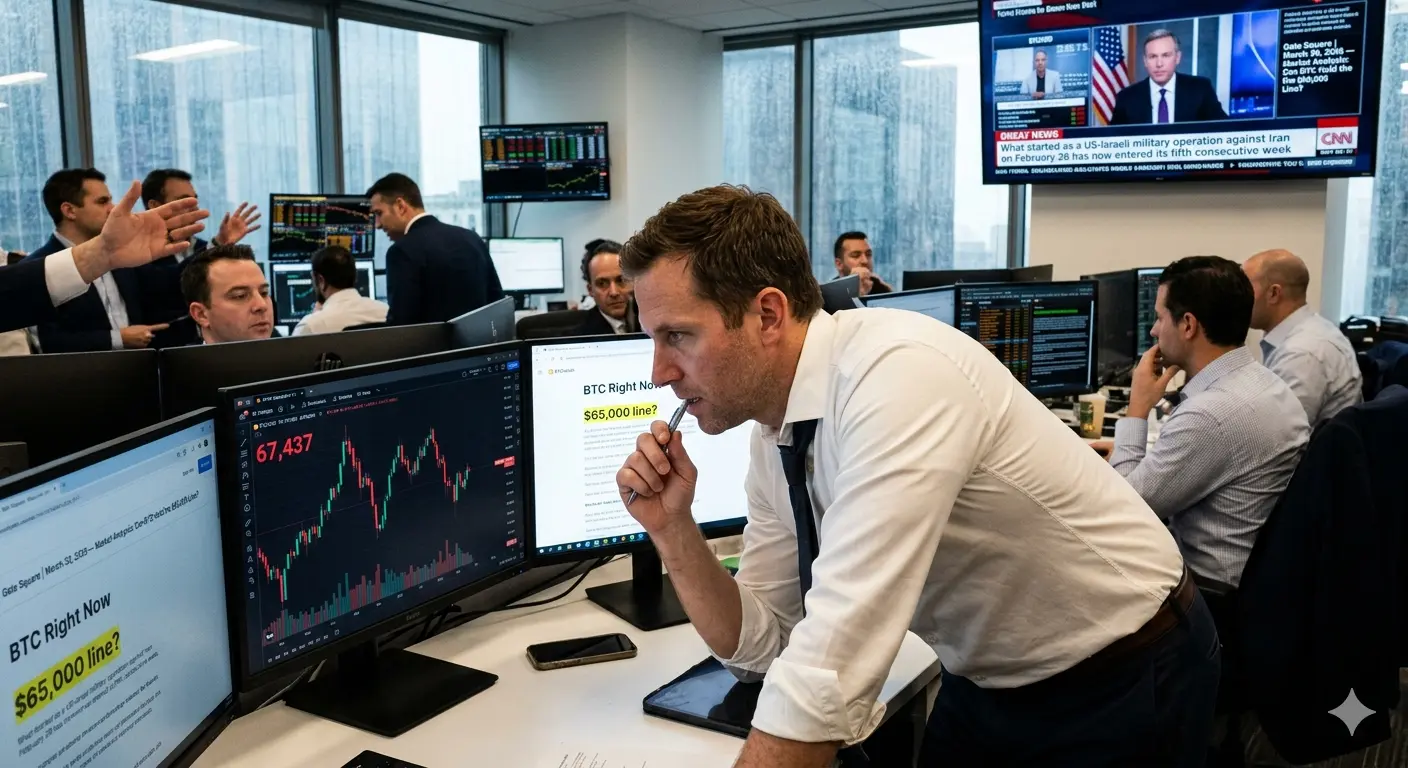
Gate Square | March 30, 2026 — Market Analysis: Can BTC Hold the $65,000 Line?
The Middle East Is Burning — And Crypto Is Feeling the Heat
The Geopolitical Trigger: A War That Keeps Expanding
What started as a US-Israeli military operation against Iran on February 28 has now entered its fifth consecutive week — and the situation is no longer contained. Over the weekend, Yemen's Houthi forces fired missiles and drones directly at Israeli military sites, marking their first formal entry into the Iran conflict. That single development sent shockwaves across every major asset cla
BTC1,82%
ETH3,89%
HighAmbitionvip
#BTC能否守住6.5萬美元? .
Gate Square | March 30, 2026 — Market Analysis: Can BTC Hold the $65,000 Line?
The Middle East Is Burning — And Crypto Is Feeling the Heat
The Geopolitical Trigger: A War That Keeps Expanding
What started as a US-Israeli military operation against Iran on February 28 has now entered its fifth consecutive week — and the situation is no longer contained. Over the weekend, Yemen's Houthi forces fired missiles and drones directly at Israeli military sites, marking their first formal entry into the Iran conflict. That single development sent shockwaves across every major asset class before Monday's market open.
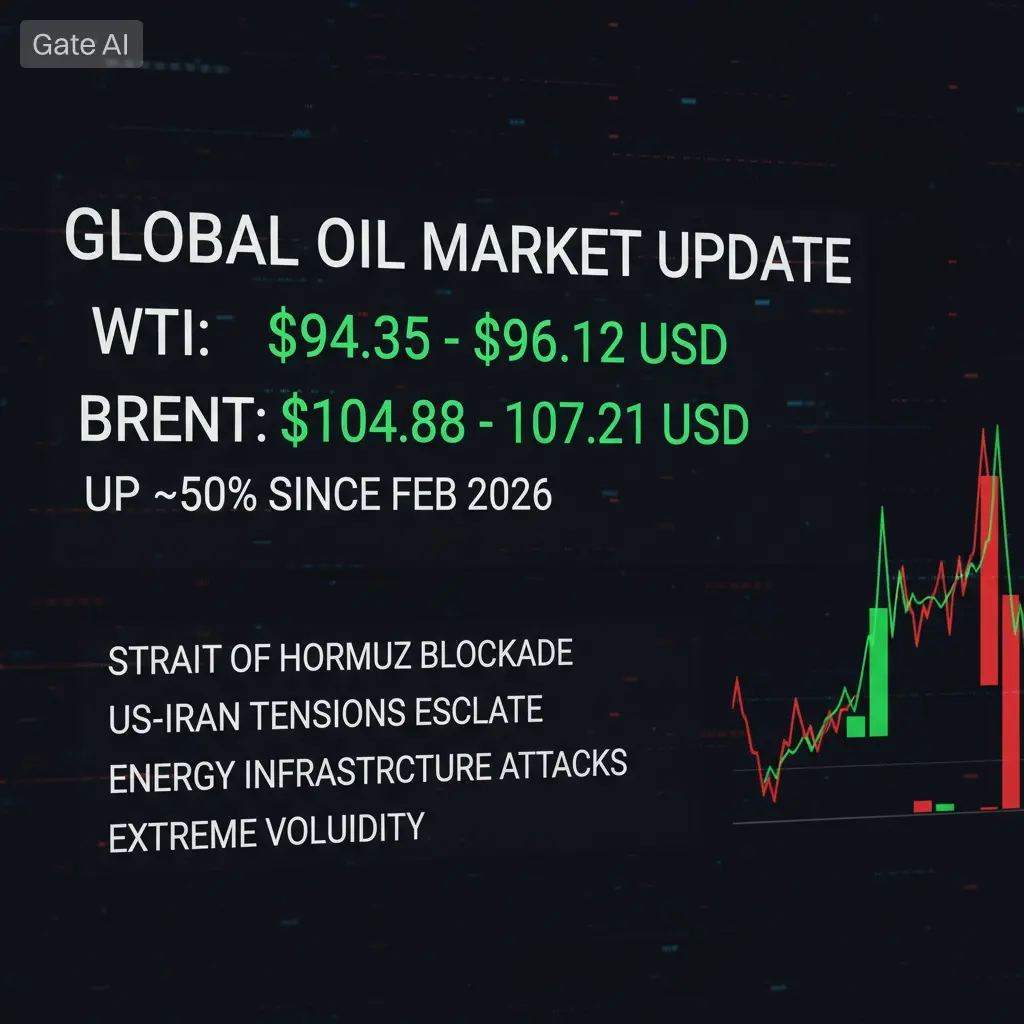
Brent crude oil surged as much as 3.7% to $116.75 per barrel on Sunday night — on track for its largest single-month gain in recorded history, surpassing even the 1990 Gulf War spike. Iran's near-total closure of the Strait of Hormuz, combined with the now-active Houthi threat to the Bab al-Mandab strait, has created what energy analyst Daniel Yergin described as "the most severe oil disruption in history." Meanwhile, US President Trump told the Financial Times he is considering seizing Iran's Kharg Island — the country's primary oil export hub — raising the stakes of this conflict to an entirely new level.
This is the macro backdrop Bitcoin woke up to today.
Bitcoin Right Now: The Numbers Tell a Nuanced Story
Current price: $67,437 (+1.35% over 24 hours)
24-hour range: $64,998 low — $67,933 high
7-day change: -4.42% | 30-day change: +2.53%
BTC briefly dipped to $65,000 in the early morning hours as the Houthi news broke and risk-aversion spiked globally. That it has since recovered to the $67,000 range is, depending on who you ask, either a sign of resilience — or a dead-cat bounce ahead of further pressure.
The Fear & Greed Index stands at 8 — deep in Extreme Fear territory. Social discussion volume has also dropped roughly 30% over the past three days compared to the prior three-day window, reflecting a market that is cautious, hesitant, and waiting for a decisive trigger.
Technical Picture: Mixed Signals Across Timeframes
The chart is no longer presented as a visual but can be interpreted as follows:
Short-term (15-minute) indicators show bullish alignment, with moving averages trending upward, the SAR positioned below price, and directional momentum relatively strong. A MACD top divergence, however, signals that this short-term bounce may stall.
Medium-term (4-hour) indicators are bearish, showing downward moving averages, dominant negative trends, and overbought signals in oscillators, warning that any bounce from $65K may be limited.
Daily indicators reveal a critical inflection point: Bitcoin remains below its 120-day moving average, with the daily CCI deep in oversold territory at -120, and the SAR has flipped bullish at $64,998. This suggests the daily timeframe may be offering a potential accumulation opportunity, even as the broader trend remains under pressure.
Net read: BTC is trying to establish a base at $65K, yet medium-term conditions prevent calling a confirmed reversal with confidence.
What the Smart Money Has Been Doing
Institutional activity remains a significant factor in shaping Bitcoin’s current dynamics:
1. Strategy (formerly MicroStrategy) keeps buying
The firm acquired an additional 1,031 BTC in mid-to-late March, bringing its total holdings to 762,099 BTC — worth roughly $57.69 billion at an average price of $75,694. Their accumulation underlines long-term conviction at current levels.
2. BlackRock moved $700M+ in crypto assets
BlackRock transferred over 12,000 ETH and 634 BTC to Coinbase Prime. Moves of this magnitude signal potential portfolio reshuffling or strategic positioning, and should be monitored closely for institutional demand trends.
3. Morgan Stanley is launching the cheapest Bitcoin ETF on the market
At just 14 basis points — 11 bps cheaper than BlackRock's IBIT — this ETF could accelerate institutional inflows. With a $10 trillion wealth management firm backing it, advisors may have fewer internal conflicts in recommending Bitcoin exposure, making demand distribution potentially substantial.
Can BTC Hold $65,000?
The case for YES — $65K holds:
Daily SAR support flip aligns at $65K
Daily CCI in oversold territory indicates potential accumulation
Institutional accumulation continues, creating a structural demand floor
Bitcoin may increasingly act as a geopolitical hedge
Morgan Stanley ETF distribution could inject meaningful new demand
The case for NO — pressure continues:
4-hour trends remain bearish with no confirmed reversal
BTC down 23% over the past 90 days, reflecting broader drawdown pressure
Geopolitical escalation remains unresolved; any Red Sea closure or further Iran retaliation could spike fear again
Recent Bitcoin ETF outflows totaling $171 million suggest uneven institutional flows
Extreme Fear index at 8 indicates most participants are hesitant to buy
$60,000 or $80,000 Next?
Both outcomes are technically possible and hinge on geopolitical developments:
Path to $80,000:
A ceasefire or de-escalation in the Middle East, combined with continued Strategy accumulation and the Morgan Stanley ETF launch, could spark a rapid move toward $72,000–$75,000 resistance and eventually retest $80,000. ETH ETF inflows already show strong capital retention in crypto.
Path to $60,000:
If conflict escalates — e.g., Houthi-Israel exchanges closing the Red Sea — energy prices could spike above $130 per barrel and global equity markets sell off. A daily close below $65,000 with strong volume would likely accelerate a move toward $60,000–$61,000, where next meaningful support exists.
Positioning strategy:
Long-term holders: $65K–$67K remains a historical accumulation band
Traders: wait for 4-hour trends to confirm bullish flip before adding exposure
Stop-loss reference: daily close below $64,500 invalidates bounce thesis
Avoid over-leveraging under binary geopolitical uncertainty
Crude Oil Positioning in This Environment
With Brent at $116+ and WTI trending near $100, positioning in commodities requires caution:
Considerations for energy exposure:
Strait of Hormuz reopening could reverse prices sharply
US production ceiling limits upside
Trump’s potential action on Kharg Island remains a wildcard
Saudi export rerouting through the Red Sea acts as a critical safety valve
Bottom line: Long positions at $116 Brent are asymmetric in risk; historically, waiting for de-escalation headlines before entering positions has been safer. Energy supply shocks of this scale can generate lasting second-order inflation effects.
Where Things Stand on March 30, 2026
As of March 30, 2026, Bitcoin is trading at $67,437, rebounding from an early morning low of $65,000, which serves as a critical support level. Market sentiment remains in Extreme Fear territory (index: 8), reflecting caution and hesitation among retail participants. The key resistance zone is between $68,000 and $69,000, corresponding to medium-term trend levels that have yet to be decisively broken. Institutional activity is mixed, with Strategy continuing to accumulate BTC, reinforcing structural demand, while ETF-related movements experienced notable outflows, adding short-term pressure. Geopolitical risk remains elevated, with Houthis actively participating in the Middle East conflict, creating heightened uncertainty. On the commodities side, Brent crude surged to $116 per barrel, marking a historic monthly gain due to disruptions in the Strait of Hormuz and Bab al-Mandab. The primary macro catalyst remains the trajectory of the Middle East conflict — any ceasefire or further escalation will likely have immediate, significant effects on both Bitcoin and energy markets.
Join the Gate Square discussion — share your view on BTC's next move, whether oil exposure makes sense in your portfolio right now, and whether $60K or $80K arrives first.
repost-content-media
  • Reward
  • 1
  • Repost
  • Share
HighAmbitionvip:
坚定HODL💎
#PredictToWin1000GT :
#PredictToWin1000GT
🔶 Prediction Market Proposal — Bitcoin $100K Before July 31, 2026?
📌 Event
Will Bitcoin (BTC) price cross $100,000 USDT before July 31, 2026?
🔘 Options
Yes / No
🎯 My Prediction: YES
Core Prediction Logic — Step by Step
1. Current Price Reality
Bitcoin is trading at $67,538 as of March 30, 2026. To hit $100K, BTC needs roughly a +48% move. Aggressive? Yes. Impossible? No — BTC accomplished a similar rise during the 2024-2025 cycle, proving such a move is realistic given strong catalysts.
2. Post-Halving Cycle History
The 2024 halving historically tr
BTC1,82%
ETH3,89%
GT1,38%
HighAmbitionvip
#PredictToWin1000GT :
#PredictToWin1000GT
🔶 Prediction Market Proposal — Bitcoin $100K Before July 31, 2026?
📌 Event
Will Bitcoin (BTC) price cross $100,000 USDT before July 31, 2026?
🔘 Options
Yes / No
🎯 My Prediction: YES
Core Prediction Logic — Step by Step
1. Current Price Reality
Bitcoin is trading at $67,538 as of March 30, 2026. To hit $100K, BTC needs roughly a +48% move. Aggressive? Yes. Impossible? No — BTC accomplished a similar rise during the 2024-2025 cycle, proving such a move is realistic given strong catalysts.
2. Post-Halving Cycle History
The 2024 halving historically triggers a 12–18 month delayed bull run. We are currently inside that window. Previous cycles in 2016 and 2020 both produced 3x–5x gains within 18 months of halving. BTC’s historical pattern remains intact, supporting the possibility of a strong rally toward $100K.
3. Institutional Demand — ETFs Are Changing the Game
Spot Bitcoin ETFs are absorbing BTC supply daily. Institutional players like BlackRock have accumulated over 761,000 BTC and continue buying, including a $76M purchase in March 2026 alone. This is institutional demand, not mere retail speculation, creating a strong support base for BTC’s upside.
4. Analyst Targets Converge Around $150K–$200K
Leading research firms provide bullish guidance: Fundstrat projects $200K–$250K by end of 2026, Bernstein expects $150K–$200K, and even conservative estimates from Motley Fool place BTC above $150K. Therefore, the $100K mark is realistically a milestone rather than a ceiling.
5. Iran Negotiations as a Wildcard Catalyst
Trump initiated Iran negotiations on March 25, 2026. If a ceasefire reduces oil prices, inflation fears ease, and Fed rate cut expectations return, BTC could experience a strong tailwind. In this scenario, $100K becomes highly achievable.
6. Quantum Threat Mitigation Progress
Bitcoin’s development team plans to address quantum computing risks in 2026. Progress here reduces long-term investment risk, improving market sentiment and adding a structural bullish narrative.
Key Milestones to Watch
Traders should monitor several critical events that could dictate BTC’s trajectory:
April 28–29 FOMC Meeting — a hawkish hold vs. soft signal could change macro risk appetite.
Iran ceasefire or escalation — the biggest near-term catalyst for BTC volatility.
ETF weekly inflows/outflows — continued institutional buying supports upward pressure.
BTC holding $64,000–$65,000 support zone — currently near $64,998, a key technical anchor.
Quarterly performance close (Q2 2026) — sets momentum for mid-year breakout.
Risk Factors (Why Prediction Could Fail)
Even with strong fundamentals, BTC’s path to $100K faces risks:
Iran war escalates, pushing oil above $130 → macro risk-off kills crypto rallies.
Fed signals a rate hike → USD strength undermines BTC.
BTC loses $62,000 support → technical breakdown triggers cascade selling.
Regulatory shocks in major markets (US, EU, or Asia).
Market Context Snapshot (March 30, 2026)
Bitcoin trades at $67,538 (+1.1%), ETH at $2,059 (+2.76%), and GT at $6.59 (+0.76%). BTC needs roughly +48% from this level to reach $100K by July 31, 2026. Institutional buying, historical cycles, and macro catalysts make this possible but conditional on market events.
Scenario Outlook
Iran ceasefire + Fed soft signal: High probability scenario — BTC could surge to $100K–$120K.
Status quo hold: Base case — BTC targets $75K–$90K.
Rate hike + oil above $130: Bear case — BTC could drop to $55K–$65K.
BTC at $67,538, supported by institutional accumulation, post-halving cycle momentum, and potential macro catalysts like an Iran ceasefire, makes $100K achievable before July 31, 2026. Success depends on global macro events: lower oil, neutral Fed stance, and technical support holding. Tail risks remain, but risk-managed positioning offers the best chance to benefit from this cycle.
Prediction: YES — monitor Iran negotiations daily and macro updates closely.
Note: This is a data-driven market analysis, not financial advice. Always DYOR before making trading or investment decisions.
repost-content-media
  • Reward
  • 1
  • Repost
  • Share
HighAmbitionvip:
坚定HODL💎
#PredictToWin1000GT .
🔶 Prediction Market Proposal — Stablecoin Dominance Shift
📌 Event
Will Tether dominance decrease while USD Coin market share increases significantly before August 31, 2026?
🔘 Options
Yes
No
🎯 My Prediction: YES
📊 Core Prediction Logic
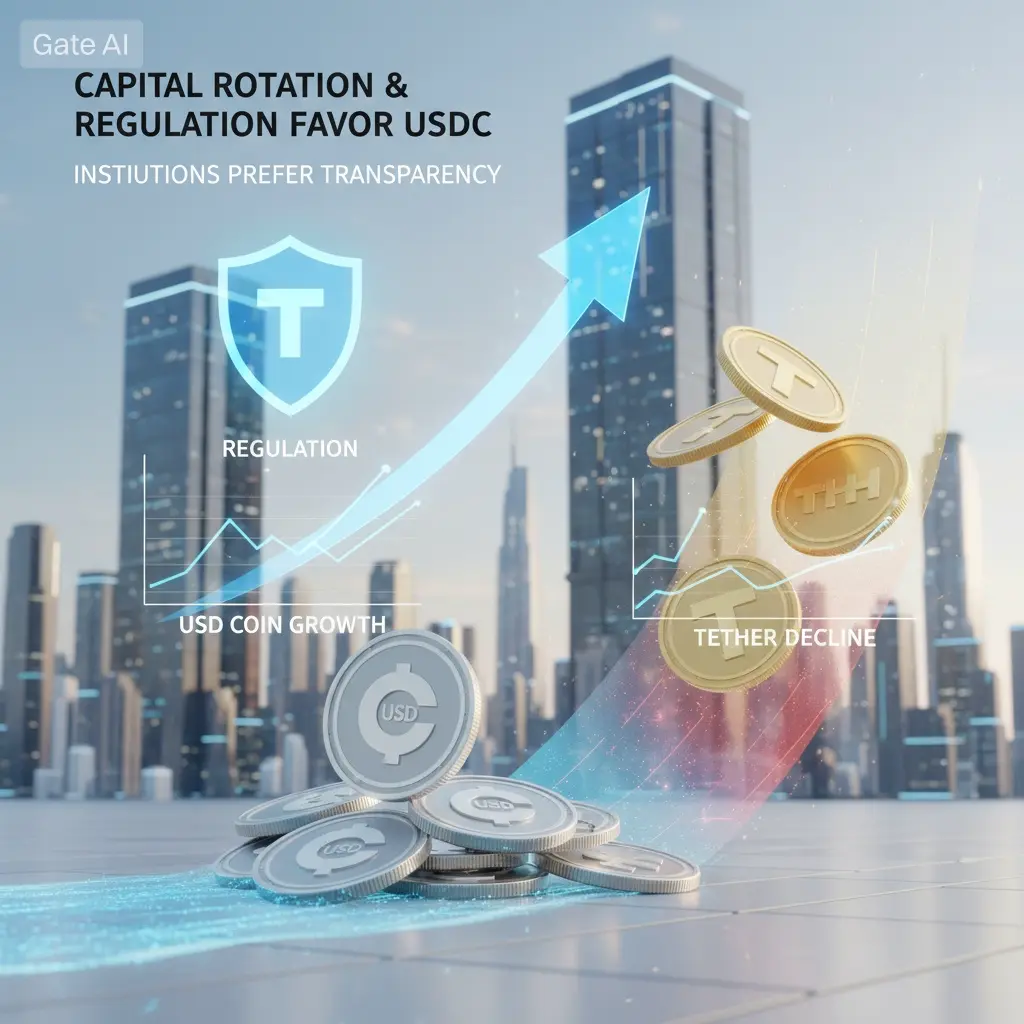
1. Regulatory Pressure & Transparency Shift
USDC is seen as more regulation-friendly and transparent compared to USDT.
As global regulations tighten:
Institutions prefer safer, compliant assets
Capital shifts toward trusted stablecoins
This gives USDC a long-term advantage
2. Institutional Adoption Trend
Large players (funds, fintech,
HighAmbitionvip
#PredictToWin1000GT .
🔶 Prediction Market Proposal — Stablecoin Dominance Shift
📌 Event
Will Tether dominance decrease while USD Coin market share increases significantly before August 31, 2026?
🔘 Options
Yes
No
🎯 My Prediction: YES
📊 Core Prediction Logic
1. Regulatory Pressure & Transparency Shift
USDC is seen as more regulation-friendly and transparent compared to USDT.
As global regulations tighten:
Institutions prefer safer, compliant assets
Capital shifts toward trusted stablecoins
This gives USDC a long-term advantage
2. Institutional Adoption Trend
Large players (funds, fintech, payment systems) are more likely to adopt USDC because:
Clear reserve disclosures
Strong compliance framework
Integration with financial systems
Institutional money = big liquidity shift driver
3. Market Cycle Behavior
In bullish phases:
Traders move funds from stablecoins → crypto
But during transitions:
They reallocate between stablecoins
This creates an opportunity where:
USDT dominance falls while USDC rises
4. Risk Diversification Strategy
Smart traders no longer rely on one stablecoin only
They diversify into:
USDC
Other regulated stablecoins
This reduces USDT’s overall dominance over time
5. DeFi & On-Chain Preference
Many DeFi protocols increasingly support USDC due to:
Lower perceived risk
Better integration with regulated platforms
This leads to organic growth in USDC usage
6. Market Sentiment Factor
Even small negative sentiment around USDT can trigger:
Quick capital outflow
Rotation into alternatives like USDC
Stablecoins rely heavily on trust perception
⏱ Key Milestones to Watch
Increase in USDC market cap growth rate
Decline in USDT dominance percentage
Major partnerships or institutional announcements
Regulatory updates favoring compliant stablecoins
⚠️ Risk Factors
USDT remains dominant in global trading pairs
Emerging markets still rely heavily on USDT liquidity
No major negative catalyst → slower shift
Still, gradual rotation is already in motion
🧠
This is not a hype-based prediction — it’s a structural market shift.
The future of stablecoins is not just liquidity — it’s trust + regulation + adoption.
🚀
Prediction: YES — USDT dominance will decrease while USDC gains significant market share before August 2026.
Smart money doesn’t wait for headlines — it moves with structural trends.
If you want next level 🔥
repost-content-media
  • Reward
  • 1
  • Repost
  • Share
HighAmbitionvip:
坚定HODL💎
#PredictToWin1000GT #PredictToWin1000GT is an exciting “predict and earn” campaign where users can win rewards by making accurate market predictions. Participants are asked simple questions about cryptocurrency price movements or market trends, such as whether the price will go up or down. By selecting options like Bullish or Bearish, users take part in the event, and if their prediction is correct, they earn a share of up to 1000 GT (GateToken). This campaign is easy to join, does not require advanced trading skills, and helps users improve their market understanding while earning rewards at
GT1,38%
BTC1,82%
ETH3,89%
post-image
post-image
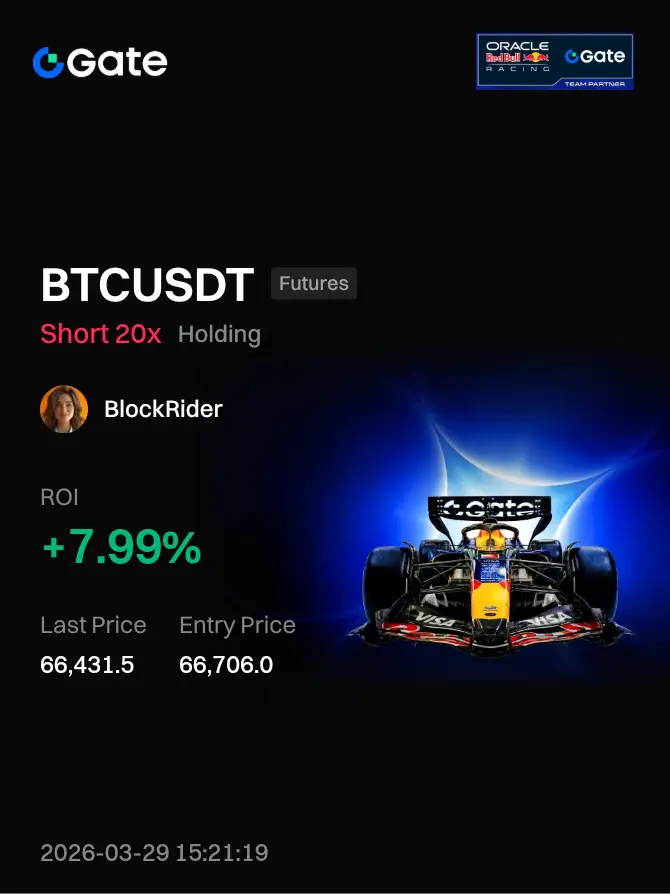
[The user has shared his/her trading data. Go to the App to view more.]
  • Reward
  • Comment
  • Repost
  • Share
  • Reward
  • 1
  • Repost
  • Share
HighAmbitionvip:
thnx for sharing information
#FannieMaeAcceptsCryptoCollateral .
FANNIE MAE ACCEPTS CRYPTO COLLATERAL — BITCOIN EMBEDDED INTO THE U.S. HOUSING MARKET
Historic Integration | March 26–29, 2026
Fannie Mae, the $4.3 trillion government-sponsored enterprise that underpins more than 50% of U.S. mortgages, has officially launched its first crypto-backed mortgage product. In partnership with Coinbase and Better Home & Finance, this landmark move represents a seismic shift: digital assets like Bitcoin and USDC are now recognized as legitimate collateral for conforming mortgages. For the first time, crypto holders can tap into thei
BTC1,82%
HighAmbitionvip
#FannieMaeAcceptsCryptoCollateral .
FANNIE MAE ACCEPTS CRYPTO COLLATERAL — BITCOIN EMBEDDED INTO THE U.S. HOUSING MARKET
Historic Integration | March 26–29, 2026
Fannie Mae, the $4.3 trillion government-sponsored enterprise that underpins more than 50% of U.S. mortgages, has officially launched its first crypto-backed mortgage product. In partnership with Coinbase and Better Home & Finance, this landmark move represents a seismic shift: digital assets like Bitcoin and USDC are now recognized as legitimate collateral for conforming mortgages. For the first time, crypto holders can tap into their digital wealth to buy real-world property without liquidating positions, avoiding capital gains taxes, and retaining exposure to potential long-term upside.
This is more than a niche innovation; it signals the formal structural integration of cryptocurrency into the backbone of the American financial system, bridging the once-divergent worlds of decentralized finance and mainstream housing markets.
Bridging Crypto Wealth and Homeownership
Historically, a crypto investor with $500,000 in Bitcoin faced a frustrating choice: sell BTC, trigger a taxable event, and use cash for a down payment — effectively losing potential future upside and exposure to the largest appreciating asset of the decade. This friction has long hindered crypto holders from participating in traditional wealth-building avenues like homeownership. Fannie Mae’s product eliminates this barrier, enabling investors to leverage crypto without compromise.
The Dual-Loan Structure: How It Works
The new product relies on a two-tier loan system, elegantly blending traditional finance with digital assets:
Primary Mortgage: A standard conforming mortgage through Better Home & Finance, purchased by Fannie Mae like any conventional home loan.
Crypto-Backed Loan: Secures the down payment using BTC or USDC. Crypto is moved to a custody wallet but ownership remains with the borrower, with trading disabled until the loan is fully repaid.
This structure ensures homeowners can retain exposure to their crypto while securing a tangible, appreciating asset — their home. It aligns incentives perfectly: digital wealth funds physical wealth without unnecessary liquidation.
Collateral Ratios: Conservative but Practical
Given crypto’s volatility, Fannie Mae applies conservative “volatility haircuts” to ensure stability:
Bitcoin (BTC): 250% collateral ratio. To cover $100,000 in reserves, borrowers must pledge $250,000 in BTC.
USDC (Stablecoin): 125% collateral ratio. To cover $100,000, borrowers must pledge $125,000.
For example, a borrower needing $80,000 in reserves must pledge between $160,000–$200,000 in crypto. These requirements protect lenders while offering borrowers predictable exposure, absorbing price swings without triggering sudden liquidations.
Borrower Protections: No Margin Calls, No Forced Liquidation
Unlike earlier crypto lending solutions, Fannie Mae introduces institution-grade safeguards:
No margin calls even if BTC falls 40%
No forced liquidation unless payments are missed for 60 consecutive days
Crypto risk mirrors standard mortgage default policies, aligning incentives and reducing systemic risk
This is a fundamental improvement over prior crypto mortgage models, which often required total collateral liquidation upon price drops, imposing both financial and psychological strain on borrowers.
Qualification and Interest Rates
To participate, borrowers must provide:
Coinbase account statements proving asset ownership
Verification of crypto holdings
A 60-day asset holding history
Crypto-backed mortgage rates range 0.5%–1.5% above standard 30-year fixed mortgages, depending on borrower profile and risk assessment. This premium reflects institutional prudence while remaining competitive relative to private crypto lenders.
Historic Significance: A Structural Integration Moment
Fannie Mae’s move is unprecedented because it is not a startup or private lender — it is a government-conservatorship institution that establishes the framework for the entire mortgage market. Implications include:
Setting compliance and underwriting standards all major lenders will follow
Enabling securitization and trading of crypto-backed mortgages in secondary markets
Legitimizing crypto as a credible asset class within the $12 trillion U.S. mortgage ecosystem
Coinbase called it “as American as apple pie”, but the impact goes far beyond marketing — it rewrites the playbook for how digital assets interact with the real economy.
Market Impact: BTC Price, Volume, and Liquidity
BTC trades at $66,908, up +1.19% in 24 hours, with liquidity and volume signaling heightened institutional interest. Even in a market environment showing Extreme Fear (Fear & Greed Index: 9), this structural catalyst introduces durable demand. Millions of crypto holders can leverage BTC without selling, reducing circulating supply and creating a new on-ramp for housing capital via digital assets.
Risks to monitor: If financial stress causes borrowers to default, pledged crypto may be liquidated, creating sell pressure. AInvest estimates a 17% probability of significant liquidations among major holders this year. Overall impact depends on whether adoption and market confidence outpace liquidation risk
.
The Bigger Picture: Crypto Embedded in Traditional Finance
Recent institutional actions highlight structural adoption, not cyclical hype:
Fannie Mae approves BTC for mortgages (March 26)
Morgan Stanley launches a Bitcoin ETF at record-low fees 14bps (March 27)
BlackRock remains the largest institutional BTC holder with 785,240 BTC
Strategy holds 762,099 BTC, the third-largest corporate position
These events demonstrate that crypto is no longer seeking permission from traditional finance; it is being written into its infrastructure, permanently.
Bottom Line: Bitcoin as Real as a House
Fannie Mae accepting crypto as collateral is a symbolic and practical milestone: it equates Bitcoin with tangible, real-world wealth. Beyond price speculation, this expands Bitcoin’s utility, legitimacy, and long-term demand in the U.S. financial system. The question is no longer “will crypto go mainstream?” — it is “how fast can this integration accelerate?”
Crypto investors, prospective homeowners, and institutional observers alike now face a transformed landscape where digital wealth and real-world property coexist seamlessly. This is not just innovation; it is structural evolution.
repost-content-media
  • Reward
  • Comment
  • Repost
  • Share
#BitcoinWeakens
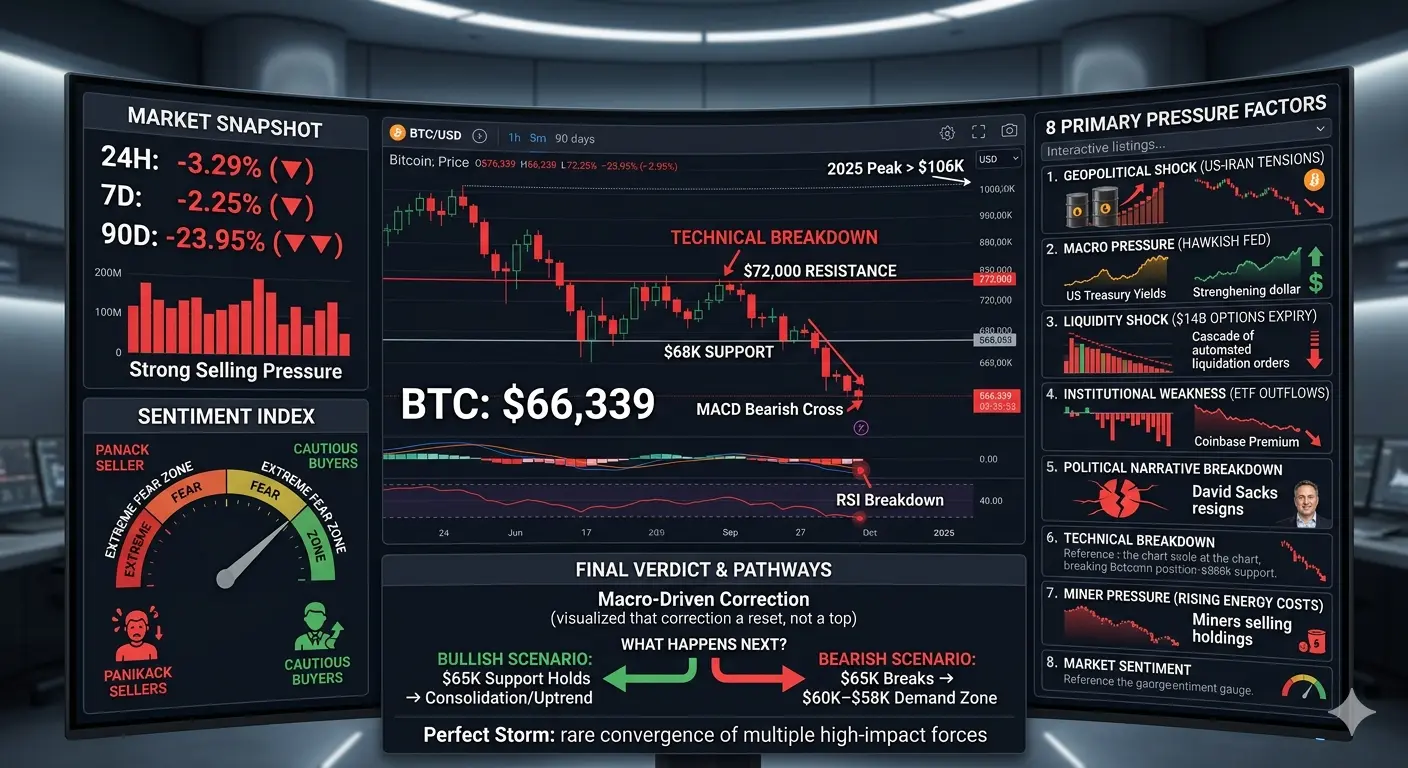
Bitcoin is currently trading at $66,339, down -3.29% in 24 hours, with a -2.25% decline over 7 days, and a sharp -23.95% drop over the last 90 days, reflecting a strong wave of selling pressure that has significantly cooled down bullish momentum after its late-2025 peak above $106K, marking one of the most aggressive corrective phases in the current market cycle.
The Reality: This Is Not a Single-Cause Drop
What we are witnessing right now is not a simple pullback driven by one negative headline, but rather a complex, multi-layered market reaction, where macroeconomic tighteni
BTC1,82%
HighAmbitionvip
#BitcoinWeakens
Bitcoin is currently trading at $66,339, down -3.29% in 24 hours, with a -2.25% decline over 7 days, and a sharp -23.95% drop over the last 90 days, reflecting a strong wave of selling pressure that has significantly cooled down bullish momentum after its late-2025 peak above $106K, marking one of the most aggressive corrective phases in the current market cycle.
The Reality: This Is Not a Single-Cause Drop
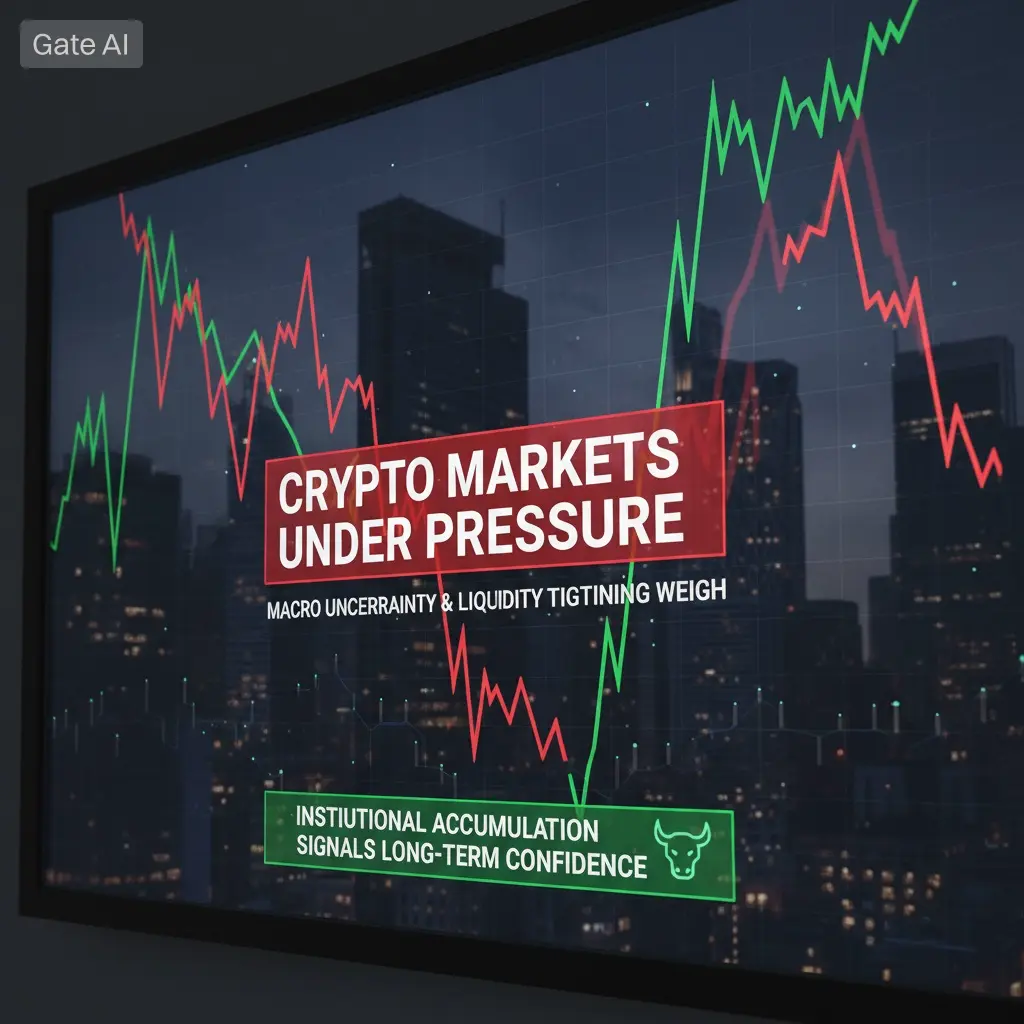
What we are witnessing right now is not a simple pullback driven by one negative headline, but rather a complex, multi-layered market reaction, where macroeconomic tightening, geopolitical instability, liquidity shocks, institutional hesitation, and technical breakdowns have all aligned simultaneously, creating a perfect storm that pushed Bitcoin lower in a very short span of time.
1. Geopolitical Shock — Risk-Off Environment
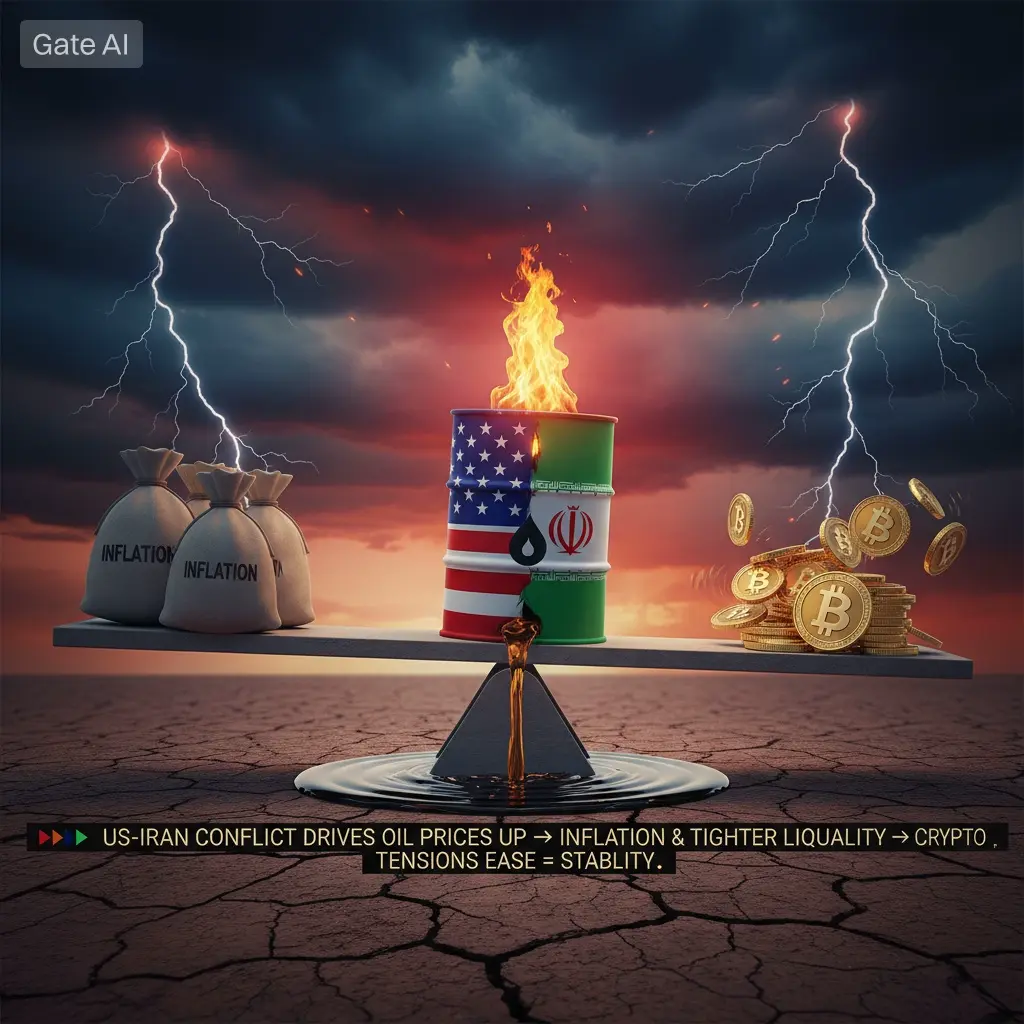
Escalating tensions between the United States and Iran, particularly surrounding potential disruptions in the Strait of Hormuz, have injected a fresh wave of uncertainty into global markets, causing oil prices to surge and forcing investors to rapidly shift capital away from high-risk assets into traditional safe-haven instruments such as gold, government bonds, and the US dollar, which in turn triggered heavy selling pressure on Bitcoin as it once again behaved more like a speculative asset rather than a defensive store of value during times of global stress.
2. Macro Pressure — Higher for Longer Rates
The Federal Reserve’s continued hawkish stance, combined with persistently strong inflation indicators such as elevated PPI data, rising US Treasury yields, and a strengthening dollar environment, has significantly tightened financial conditions, making capital more expensive and less available for speculative markets, ultimately reducing Bitcoin’s appeal as investors increasingly prefer stable, yield-generating assets over volatile digital assets in a “higher for longer” interest rate regime.
3. Liquidity Shock — $14B Options Expiry
The expiration of approximately $14 billion worth of Bitcoin options acted as a major short-term catalyst that intensified downside volatility, as a large number of leveraged long positions were forcefully liquidated, triggering a cascading effect where falling prices led to further liquidations, which then accelerated the decline even more, especially in a low-liquidity environment where even moderate sell orders had an outsized impact on price movement.
4. Institutional Weakness — ETF Outflows
After a prolonged period of strong institutional inflows driven by Bitcoin ETFs, the recent shift toward net outflows, combined with a noticeable drop in the Coinbase Premium, clearly signals that large US-based investors are either stepping back or actively reducing exposure, removing a critical layer of buying support that previously helped stabilize the market during periods of volatility.
5. Political Narrative Breakdown
The strong bullish sentiment that followed the 2024 political cycle, largely fueled by expectations of rapid pro-crypto regulatory reforms and supportive policies, has started to fade as progress in 2026 has been slower and less impactful than anticipated, further weakened by the resignation of key figures like David Sacks, which has reduced confidence and forced the market to reprice earlier optimism that had already been fully priced into Bitcoin’s previous rally.
6. Technical Breakdown — Charts Confirm Weakness
From a technical perspective, Bitcoin’s price action has clearly validated the underlying weakness, as it faced a strong rejection from the $72,000 resistance level, broke below the critical $68K support zone, and confirmed bearish momentum through indicators such as a MACD crossover and RSI breakdown, while high selling volume reinforced that this was not a temporary deviation but a structurally significant move to the downside.
7. Miner Pressure — Hidden Supply Factor
As global energy costs continue to rise alongside oil prices, Bitcoin miners are facing increased operational expenses, forcing many of them to liquidate portions of their holdings to maintain profitability and sustain operations, thereby introducing a consistent stream of additional supply into the market at a time when demand is already weakening, further amplifying downward pressure on price.
8. Market Sentiment — Extreme Fear Zone
With the Fear and Greed Index now deeply entrenched in the Extreme Fear zone, market psychology has shifted toward panic-driven decision-making, where retail participants are increasingly exiting positions at a loss, while more experienced and well-capitalized investors quietly begin accumulating in anticipation of future recovery, although in the short term, fear-driven momentum can continue to push prices lower before any meaningful reversal takes place.
Final Verdict — Bull Run Over or Just a Reset?
Despite the intensity of the recent decline, this phase still aligns more closely with a macro-driven correction rather than a complete cycle top, as similar drawdowns of 40–50% have historically occurred within ongoing bull markets, suggesting that the broader structure may still remain intact as long as key support levels continue to hold.
What Happens Next?
Bullish Scenario:
If the $65K support level holds firmly, Bitcoin could enter a consolidation phase that allows momentum to rebuild gradually, especially if macro conditions stabilize and liquidity begins to return, setting the stage for a potential continuation of the broader uptrend.
Bearish Scenario:
If $65K breaks decisively under strong volume, the market is likely to move toward the $60K–$58K demand zone, where stronger buyer interest may emerge, but this could also extend the duration of consolidation before any significant recovery attempt.
Bottom Line
This decline is the result of a rare convergence of multiple high-impact forces, including macroeconomic tightening, geopolitical uncertainty, institutional outflows, liquidity-driven liquidations, and technical breakdowns, all hitting the market at the same time, which explains why the move has been both sharp and aggressive rather than gradual.
repost-content-media
  • Reward
  • Comment
  • Repost
  • Share
#RangeTradingStrategy
#RangeTradingStrategy | Weekend Market Outlook: March 28–29
The market came into this weekend under pressure. BTC is trading around $66,400 (down -3.5% in 24h), ETH is hovering just above the $2,000 psychological level (down -3.1%), SOL is at $83.30 (down -3.3%), and XRP is relatively resilient at $1.34 (down only -1.9%). The Fear & Greed Index sits at a deeply fearful 12 — extreme fear territory.
This type of environment typically signals emotional exhaustion in the market, where panic selling slows down and short-term price stabilization begins. For experienced traders
BTC1,82%
ETH3,89%
SOL3,07%
XRP1,73%
HighAmbitionvip
#RangeTradingStrategy
#RangeTradingStrategy | Weekend Market Outlook: March 28–29
The market came into this weekend under pressure. BTC is trading around $66,400 (down -3.5% in 24h), ETH is hovering just above the $2,000 psychological level (down -3.1%), SOL is at $83.30 (down -3.3%), and XRP is relatively resilient at $1.34 (down only -1.9%). The Fear & Greed Index sits at a deeply fearful 12 — extreme fear territory.
This type of environment typically signals emotional exhaustion in the market, where panic selling slows down and short-term price stabilization begins. For experienced traders, this is where range-bound opportunities start to emerge.
Understanding the Current Market Structure
Right now, the broader crypto market is not in a clean trend — it is in a compression phase after a multi-week pullback. Volatility is still present, but direction is unclear.
Sellers are losing momentum near key supports
Buyers are not yet strong enough to initiate a breakout
Liquidity is clustering within defined zones
This creates the perfect setup for range trading rather than trend chasing
My Weekend Range Trading Setup
This is a classic environment for range traders. Here is how I am thinking about it:
BTC: $65,500 – $68,500 range
The $65,500–$66,500 zone is acting as a strong demand base — this is where institutional buyers (including MicroStrategy's most recent purchase) have stepped in.
On the upside, $68,500–$69,000 remains a firm resistance where selling pressure continues to appear.
Indicators like CCI and Williams %R are deeply oversold
This suggests short-term bounce probability is increasing
However, the 4H structure remains bearish, meaning upside is likely limited unless structure flips
Strategy:
Buy near support, sell near resistance, avoid mid-range entries. No aggressive breakout trades unless confirmed with volume.
ETH: $1,970 – $2,080 range
ETH is showing subtle strength despite overall weakness — holding above $2,000 is psychologically important.
A major catalyst here is institutional activity, particularly from BlackRock, whose staked ETH product (ETHB) has already attracted strong inflows.
Key support: $1,968
Resistance: $2,080
A confirmed breakout above resistance could trigger momentum continuation toward $2,100+
Strategy:
Accumulate near support, partial profit near resistance, and watch closely for a breakout confirmation before adding exposure.
XRP: $1.30 – $1.40 range
XRP continues to outperform most major altcoins due to regulatory clarity and strong sentiment.
The classification shift tied to discussions involving the SEC and CFTC has significantly reduced long-term uncertainty.
Additionally, Ripple reported strong quarterly performance, boosting confidence further.
Support: $1.30
Resistance: $1.40
Bullish sentiment remains dominant compared to other assets
Strategy:
Look for consistent range respect — XRP is currently one of the cleanest range structures in the market.
SOL: $81 – $86 range
SOL is quietly building one of the strongest fundamental narratives this cycle.
The Solana Foundation is pushing real-world adoption through partnerships with global payment giants.
Strong support: $81–$82
Resistance: $85–$86
On-chain liquidity is rising with significant stablecoin minting
This combination of fundamentals + technical support creates a solid base for short-term upside moves within the range.
Strategy:
Wait for confirmation at support — if it holds, target upper range with disciplined exits.
Key Events to Watch This Weekend
Morgan Stanley Bitcoin ETF
A major institutional step — lower fees could attract large capital inflows and increase competition among ETF providers.
US CLARITY Act developments
Any positive regulatory signal can act as a market-wide catalyst, especially for assets like XRP and ETH.
ETF Flow Data (Monday Open)
Friday showed heavy outflows — early-week positioning by institutions will be critical for next trend direction.
Iran Geopolitical Situation
Macro sentiment remains fragile. Any de-escalation could trigger a relief rally across crypto and risk assets.
My Stance: Cautiously Offensive
The Fear & Greed Index at 12 is historically associated with high-probability bounce zones, but not guaranteed reversals.
That is why the approach is:
Small, controlled entries
Strict risk management
No emotional trading
Respect the range until it breaks
The bigger picture remains extremely important. Despite short-term fear, institutional infrastructure continues to expand rapidly:
ETF competition increasing
Real-world blockchain adoption growing
Institutional capital pipelines strengthening
This creates a disconnect between sentiment (fearful) and fundamentals (bullish long-term)
Final Thought
This is not a market to rush — it is a market to execute with precision.
Range traders thrive in this environment because they understand one key rule:
You don’t need a trend to make money — you need discipline.
What is your range for the weekend? Drop your levels below.
repost-content-media
  • Reward
  • Comment
  • Repost
  • Share
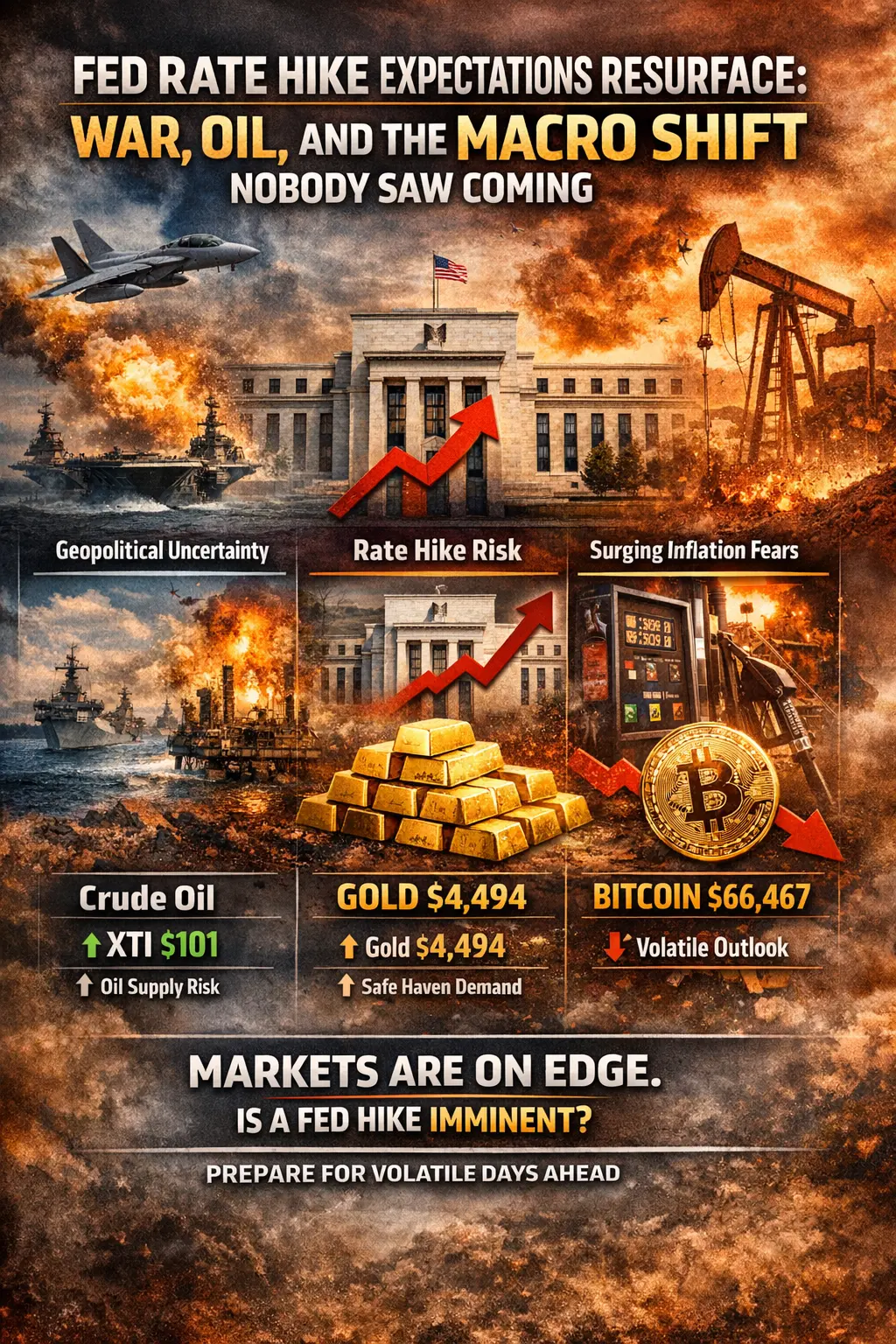
#FedRateHikeExpectationsResurface
Fed Rate Hike Expectations Resurface: War, Oil, and the Macro Shift Nobody Saw Coming
The global macro landscape has undergone a dramatic and unexpected transformation in a matter of weeks, catching both institutional and retail participants off guard, as a market that was previously positioned for multiple Federal Reserve rate cuts in 2026 is now rapidly repricing toward the possibility of an emergency rate hike within weeks, driven not by organic economic overheating but by an external geopolitical shock that has reintroduced inflation risk at the worst pos
HighAmbitionvip
#FedRateHikeExpectationsResurface
Fed Rate Hike Expectations Resurface: War, Oil, and the Macro Shift Nobody Saw Coming
The global macro landscape has undergone a dramatic and unexpected transformation in a matter of weeks, catching both institutional and retail participants off guard, as a market that was previously positioned for multiple Federal Reserve rate cuts in 2026 is now rapidly repricing toward the possibility of an emergency rate hike within weeks, driven not by organic economic overheating but by an external geopolitical shock that has reintroduced inflation risk at the worst possible time.
What makes this shift particularly dangerous is not just the speed at which expectations have flipped, but the fact that this new macro regime is being shaped by forces largely the control of central banks — namely war dynamics, energy supply disruptions, and fragile diplomatic signaling that could break down at any moment.
This is no longer a standard macro cycle — this is a policy stress test under geopolitical pressure, and markets are reacting accordingly.
The Geopolitical Backdrop: Real Diplomacy or Tactical Delay?
The announcement of a temporary pause in U.S. strikes on Iranian energy infrastructure initially appeared to calm markets on the surface, but beneath that calm lies a deep layer of uncertainty, contradictions, and strategic ambiguity that prevents investors from fully pricing in a peaceful resolution.
On one hand, the narrative being presented suggests progress — oil tankers moving through the Strait of Hormuz, diplomatic language softening, and a defined negotiation window — all of which hint at a possible de-escalation path.
However, when we look deeper, the inconsistencies between official statements, the lack of a confirmed Iranian commitment to the proposed framework, and continued military positioning in the region suggest that this pause may not represent peace, but rather a temporary strategic recalibration by both sides.
This creates a highly unstable equilibrium where markets cannot confidently price either full escalation or full resolution, forcing traders to assign value to both outcomes simultaneously — a condition that naturally increases volatility across all asset classes.
In simple terms: the market is not reacting to what is being said — it is reacting to what might happen next.
The Federal Reserve Under Pressure: Could an Aggressive Hike Actually Happen?
The most profound consequence of this geopolitical tension is its direct transmission into monetary policy expectations, where the Federal Reserve now finds itself in an extremely uncomfortable position — balancing between maintaining economic stability and responding to a potential inflation shock that originates the domestic economy.
As of March 27, 2026, the CME FedWatch tool shows over 50% probability of a Fed rate hike by year-end, while Polymarket and SOFR options markets are actively hedging for scenarios that include policy tightening in an unusually short time frame.
This shift is not driven by strong economic growth or overheating demand — instead, it is rooted in the risk that oil supply disruptions could trigger a cost-push inflation cycle, where rising energy prices cascade into transportation, manufacturing, and consumer goods, ultimately feeding into core inflation and long-term expectations.
The Federal Reserve traditionally prefers to avoid reacting aggressively to supply-side shocks, but the danger here lies in inflation expectations becoming unanchored — once that happens, the cost of regaining control becomes significantly higher, potentially forcing the Fed into action even if growth conditions are not supportive.
At the same time, the political overlay adds another layer of complexity, as pressure for lower rates conflicts directly with the possibility of needing tighter policy, creating a scenario where economic logic and political incentives move in opposite directions.
This is why markets are not predicting a hike with certainty — but they are pricing the risk of being wrong, and that alone is enough to reshape global positioning.
How to Position Oil, Gold, and BTC Right Now
With BTC trading at $66,467 (down 3.56% in the last 24 hours, -23.8% over 90 days) and ETH at $2,005 (down 3.14% in 24 hours), the broader digital asset market reflects a clear reduction in risk appetite, aligning with global uncertainty rather than idiosyncratic crypto weakness, while at the same time Gold has surged to 4494 and XTI crude oil has reached 101, clearly signaling that markets are aggressively pricing in geopolitical risk, inflation pressure, and supply-side uncertainty.
Let us break down the strategic positioning across key assets:
Oil — The Most Direct Geopolitical Lever
Oil remains the central pillar of this entire macro narrative because it is the most immediate transmission channel between geopolitical tension and global inflation.
Any disruption in the Strait of Hormuz — even partial or temporary — has an outsized impact on supply expectations, and markets tend to price this risk aggressively due to the lack of immediate alternatives for such a critical transit route, which is clearly reflected in XTI currently trading at 101, maintaining a strong geopolitical premium.
Even in the absence of actual disruption, the mere possibility creates a persistent geopolitical premium, meaning prices can stay elevated longer than fundamentals alone would justify.
This makes oil not just a commodity trade, but a macro hedge against escalation, where the upside risk in worst-case scenarios significantly outweighs the downside in a controlled de-escalation outcome.
Gold — The Classic Safe Haven in a Stagflationary Setup
Gold’s role in the current environment goes beyond simple risk aversion — it becomes a strategic asset in a world where both inflation uncertainty and policy credibility are being questioned simultaneously, a reality that is strongly reflected in Gold trading at 4494, highlighting the intensity of safe-haven demand.
In a stagflationary scenario — where inflation remains elevated while growth slows — traditional assets struggle to perform, but gold historically benefits because it is not tied to earnings, credit cycles, or policy promises.
Even if rate hike expectations increase short-term pressure through rising real yields, the broader environment of instability, policy conflict, and geopolitical risk creates a strong foundation for gold demand over a medium-term horizon.
In this sense, gold is less of a trade and more of a stability anchor in an unstable macro regime.
BTC — The Complex Case
Bitcoin sits at the intersection of risk and refuge, making its behavior highly dependent on the time horizon and the nature of the shock.
In the immediate term, BTC tends to behave like a risk asset, meaning that sudden escalations, liquidity tightening, or aggressive policy expectations can push prices lower alongside equities.
However, over a longer timeframe, the narrative of Bitcoin as digital gold can re-emerge, particularly if confidence in traditional financial systems, fiat stability, or central bank control begins to weaken.
At $66,467, BTC has already absorbed a significant portion of macro negativity, but that does not eliminate downside risk if conditions worsen — especially in a scenario where a rate hike materializes and financial conditions tighten further.
On the other hand, a diplomatic resolution combined with easing rate expectations could trigger a sharp rebound, as sidelined liquidity re-enters the market and risk appetite recovers quickly.
This creates a highly asymmetric setup where direction depends heavily on macro outcomes rather than crypto-specific catalysts.
The Bottom Line
What we are witnessing is not just another cycle fluctuation, but the emergence of a new macro regime where geopolitical events, energy markets, and monetary policy are deeply interconnected in ways that amplify uncertainty rather than reduce it.
The fact that rate hike expectations have surged above 50% is not a confirmation of what will happen — it is a reflection of how seriously markets are taking a scenario that was previously dismissed entirely.
The period leading up to April 6 represents a critical decision window where outcomes could diverge sharply, setting the tone not just for the next few weeks, but potentially for the entire second quarter of 2026.
In this environment, the key is not prediction — it is preparation, disciplined risk management, and the ability to adapt quickly as new information emerges.
Because in a market driven by uncertainty, the biggest risk is not volatility — it is being positioned for the wrong scenario when clarity finally arrives.
repost-content-media
  • Reward
  • Comment
  • Repost
  • Share
#PredictToWin1000GT
My Prediction Market Proposal — Gate Square
#PredictToWin1000GT
Prediction Title:
Will Bitcoin (BTC) close above $70,000 before April 10, 2026?
Event Direction:
Bullish recovery setup for BTC following an extended corrective phase
Prediction Logic:
Bitcoin is currently trading around $66,395, positioned in a deeply stretched zone where downside momentum is clearly slowing while buyers are quietly stepping back in. Multiple technical indicators across higher timeframes are signaling exhaustion in selling pressure, suggesting that the market is transitioning from panic-drive
BTC1,82%
HighAmbitionvip
#PredictToWin1000GT
My Prediction Market Proposal — Gate Square
#PredictToWin1000GT
Prediction Title:
Will Bitcoin (BTC) close above $70,000 before April 10, 2026?
Event Direction:
Bullish recovery setup for BTC following an extended corrective phase
Prediction Logic:
Bitcoin is currently trading around $66,395, positioned in a deeply stretched zone where downside momentum is clearly slowing while buyers are quietly stepping back in. Multiple technical indicators across higher timeframes are signaling exhaustion in selling pressure, suggesting that the market is transitioning from panic-driven movement into early-stage recovery behavior.
On the daily timeframe, oscillators remain in extreme oversold territory — levels that historically align with accumulation phases rather than continuation breakdowns. At the same time, the 4-hour structure is forming a clear bullish divergence, where price continues to print lower lows while momentum indicators begin to rise. This type of divergence often acts as a precursor to sharp upside reversals once liquidity flips.
Beyond technical structure, the broader market environment is showing signs of stabilization after aggressive fear-driven positioning.
Liquidity conditions are gradually improving, and the market is beginning to absorb recent volatility rather than extending it. When price fails to continue downward despite negative sentiment, it often signals that stronger hands are accumulating beneath the surface.
Market psychology is another critical factor — sentiment indicators are sitting in extreme fear territory, a zone that historically coincides with high-probability reversal areas within bullish cycles. When fear peaks while price holds key structural zones, the probability of a relief rally increases significantly.
In addition, Bitcoin is still trading within a broader macro uptrend structure, and this pullback appears corrective rather than trend-ending. As long as higher timeframe support zones remain intact, the path of least resistance gradually shifts back to the upside once selling pressure is exhausted.
Key Milestones to Watch:
BTC stabilizes above $66,000–$67,000 zone — base formation begins
Break and hold above $68,500 resistance — momentum confirmation
Expansion in volume during upside moves — strength validation
Clean breakout above $70,000 — acceleration phase
Resolution Criteria:
BTC/USDT daily close above $70,000 on any day before April 10, 2026, 23:59 UTC
My Call: YES — BTC crosses $70,000 before April 10
The current market structure reflects fear exhaustion rather than trend reversal. As volatility compresses and selling pressure weakens, Bitcoin is likely to transition into a recovery phase, where even a modest shift in momentum can trigger a fast move toward higher liquidity zones.
repost-content-media
  • Reward
  • Comment
  • Repost
  • Share
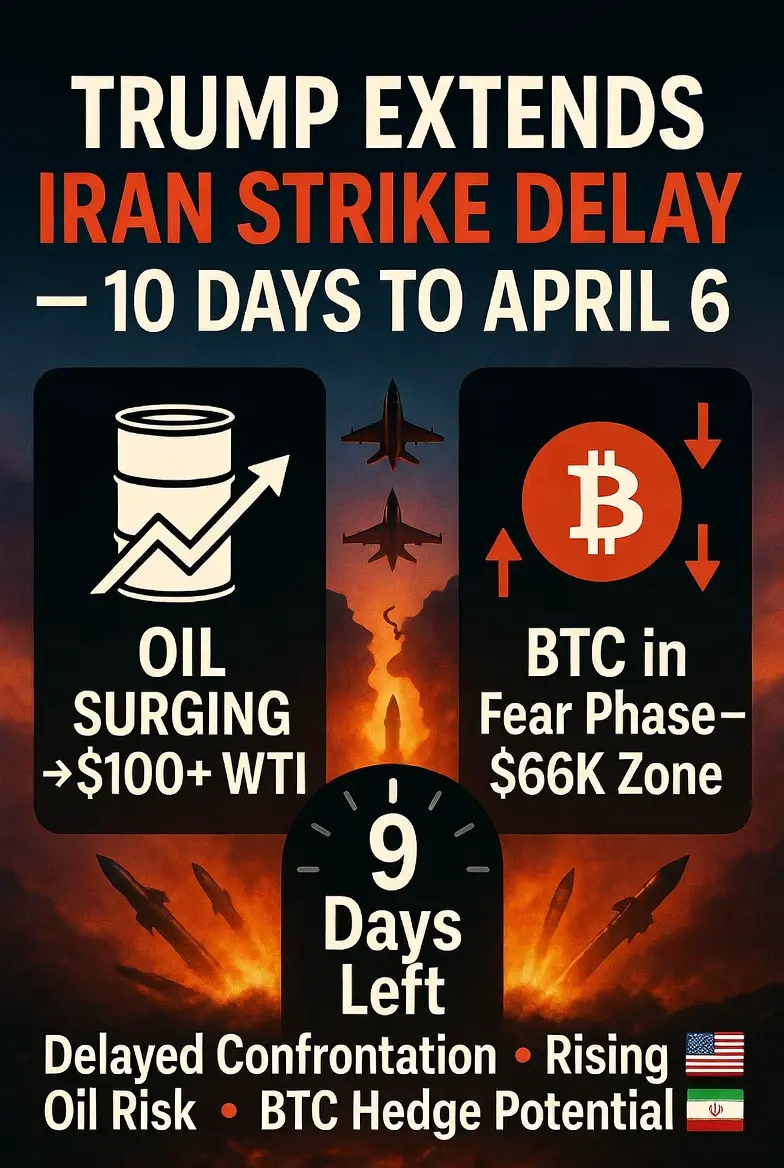
#TrumpExtendsStrikeDelay10Days
1. WHAT’S CHANGING DURING THESE 10 DAYS?
Even though Donald Trump announced a 10-day strike delay, the ground reality is very different — this is not a ceasefire period, it is a high-tension waiting window.
During this extension:
Israel has continued heavy bombardment operations across the region
Iran has started responding more aggressively, including missile activity
Regional forces are not de-escalating — they are positioning
👉 This means the delay is political, not military
So no — the situation is not calm, it is actually heating up beneath the surface, ma
BTC1,82%
HighAmbitionvip
#TrumpExtendsStrikeDelay10Days
1. WHAT’S CHANGING DURING THESE 10 DAYS?
Even though Donald Trump announced a 10-day strike delay, the ground reality is very different — this is not a ceasefire period, it is a high-tension waiting window.
During this extension:
Israel has continued heavy bombardment operations across the region
Iran has started responding more aggressively, including missile activity
Regional forces are not de-escalating — they are positioning
👉 This means the delay is political, not military
So no — the situation is not calm, it is actually heating up beneath the surface, making the April 6 deadline even more dangerous.
2. IS IRAN BACKING DOWN OR PREPARING?
Iran’s behavior clearly shows:
No visible sign of surrender or full compliance
Increasing willingness to retaliate instead of absorb pressure
Strategic messaging: “We are not negotiating under threat”
This creates a dangerous setup:
👉 If pressure continues → Iran escalates
👉 If U.S. delays again → credibility weakens
This is why analysts call this phase: “Delayed confrontation, not avoided conflict”
3. OIL MARKET REACTION — WHY PRICES ARE RISING
Yes — oil prices are rising because of this exact situation.
The key trigger is the Strait of Hormuz, which is:
The world’s most critical oil route
Handles ~20% of global supply
Any risk here = immediate price reaction.
Why Oil Is Moving Up:
Fear of supply disruption
Risk of full closure or partial blockage
(probability) of U.S. strikes on Iranian energy infrastructure
Broader Middle East escalation
4. WTI (XTI) PRICE OUTLOOK — WHERE CAN IT GO?
Right now, WTI crude (XTI) is around $97+ and reacting strongly to headlines.
Short-Term Scenarios:
Bullish Case (Escalation Continues):
Break above $100 psychological level
Next targets: $105 → $112
Extreme scenario (war expansion): $120+ spike
Neutral Case (Delay Continues):
Range between $92 – $100
Volatility remains high, direction unclear
Bearish Case (Diplomatic Breakthrough):
Drop back toward $88 – $85 zone
👉 Current momentum favors upside volatility, not stability
5. WHAT THIS MEANS FOR GLOBAL MARKETS
This situation is creating a classic risk-off environment:
Stocks become unstable
Safe-haven demand rises
Energy sector strengthens
Volatility spikes across all assets
Markets are not reacting to facts — they are reacting to uncertainty + headlines
6. CRYPTO MARKET IMPACT — WHERE IS BTC HEADING?
Now the key question — what about Bitcoin?
Bitcoin is currently in a conflict-driven volatility phase
Short-Term Behavior:
Crypto reacts in two stages during geopolitical crises:
Stage 1 — Fear Reaction (Current Phase):
BTC drops or struggles
Liquidity exits risk assets
Traders reduce exposure
Stage 2 — Recovery / Hedge Narrative:
BTC stabilizes
Narrative shifts to “digital gold”
Strong bounce possible
Current BTC Structure:
Trading around mid-$60K zone
Still holding macro support
Showing signs of selling pressure exhaustion
Key Levels:
Support: $64K – $65K
Resistance: $68.5K
Breakout trigger: $70K
BTC Outlook:
If War Escalates Sharply:
Short-term dip possible → liquidity shock
Then strong rebound as hedge demand rises
If Tensions Cool:
Clean bullish continuation
Fast move toward $70K+
👉 Overall:
This is not a bearish trend reversal — it is a volatility-driven correction inside a larger uptrend
7. FINAL OUTLOOK — WHAT REALLY MATTERS NOW
Everything now depends on April 6 deadline.
3 Real Outcomes:
Deal → Markets rally, oil drops, BTC pumps
Another Delay → Uncertainty continues, choppy markets
U.S. Strikes → Oil spikes hard, markets panic, BTC dips then rebounds
FINAL VERDICT
The 10-day delay is not peace — it is pressure buildup
Israel vs Iran tensions are actively increasing
Oil is rising due to real supply risk, not speculation
BTC is in a temporary fear phase, not a broken trend
👉 The market is entering a high-impact decision window
Current Date: March 28, 2026
Time Left to Deadline: 9 Days
repost-content-media
  • Reward
  • Comment
  • Repost
  • Share
##PredictToWin1000GT
## Proposal 1 — Ethereum
**Prediction Title:**
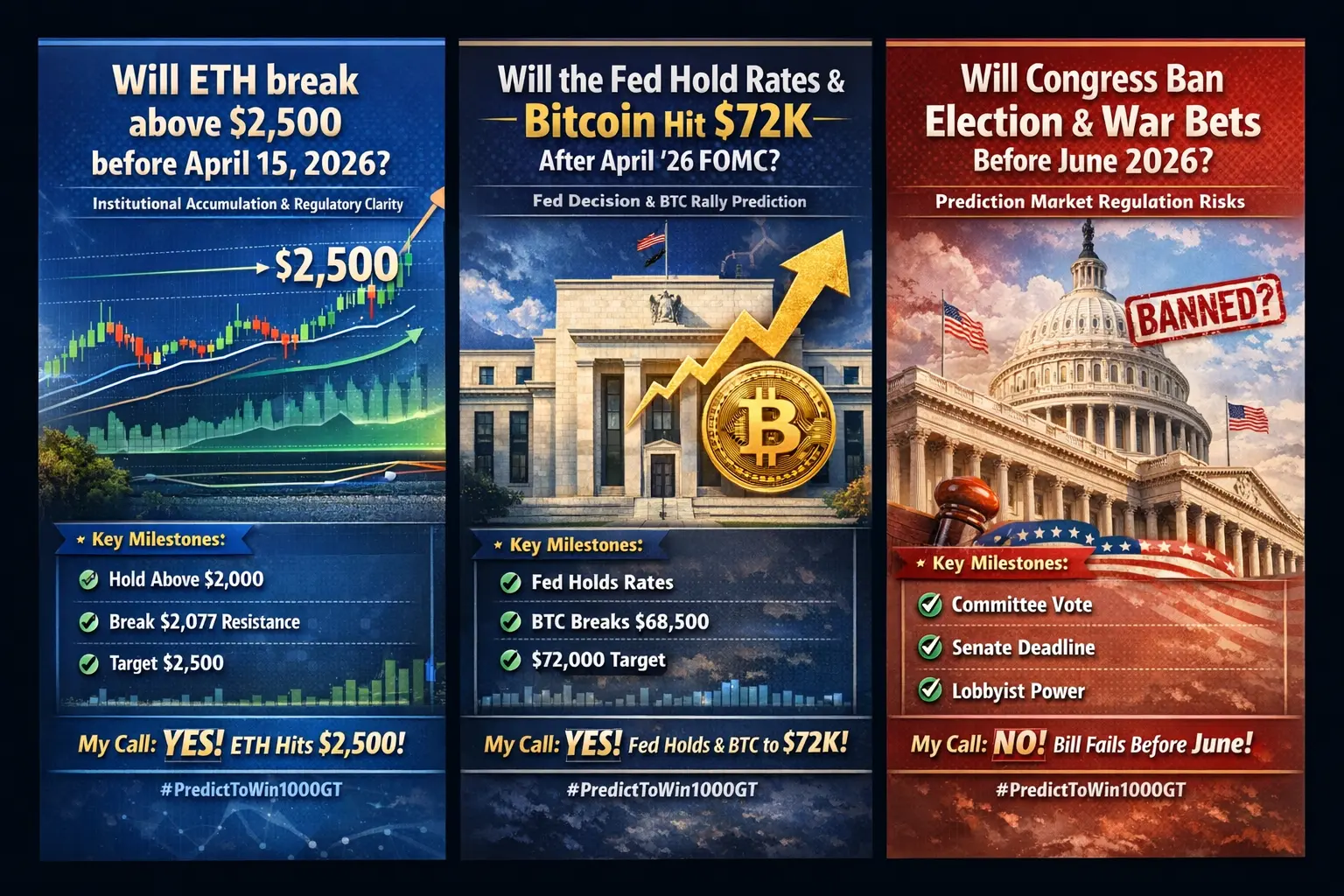
Will ETH break above $2,500 before April 15, 2026?
**Event Direction:**
Bullish breakout prediction for Ethereum amid institutional accumulation and regulatory clarity
**Prediction Logic:**
ETH is currently at $1,999, sitting right at a critical psychological level. Both daily CCI and Williams %R are deep in oversold territory — the same technical setup that preceded every major ETH bounce in past cycles. The 4-hour MACD is showing a clear bullish divergence, signaling seller exhaustion.
On the fundamental side, the setup has
ETH3,89%
BTC1,82%
HighAmbitionvip
##PredictToWin1000GT
## Proposal 1 — Ethereum
**Prediction Title:**
Will ETH break above $2,500 before April 15, 2026?
**Event Direction:**
Bullish breakout prediction for Ethereum amid institutional accumulation and regulatory clarity
**Prediction Logic:**
ETH is currently at $1,999, sitting right at a critical psychological level. Both daily CCI and Williams %R are deep in oversold territory — the same technical setup that preceded every major ETH bounce in past cycles. The 4-hour MACD is showing a clear bullish divergence, signaling seller exhaustion.
On the fundamental side, the setup has rarely been stronger:
- **BitMine** accumulated over $1.45 billion worth of ETH between March 16 and March 25, becoming the world's largest institutional Ethereum treasury holder with 4.66 million ETH. They then launched **MAVAN**, a dedicated institutional staking platform for ETH — signaling long-term commitment, not speculation.
- **BlackRock's ETHA** recorded massive inflows — with Coinbase Prime receiving 11,780 ETH in a single transfer from BlackRock — institutional product infrastructure around ETH is growing rapidly.
- **SEC and CFTC** officially classified ETH as a digital commodity on March 17, 2026. This is the single biggest regulatory unlock for Ethereum — RWA tokenization, ETF expansion, and institutional products now operate with full legal clarity.
- Whale data shows 750,000 ETH loaded in 48 hours — largest accumulation window this quarter.
If ETH clears the $2,077 short liquidation cluster, over $1 billion in shorts get forced out — creating a self-reinforcing squeeze to $2,500 and beyond.
**Key Milestones to Watch:**
- ETH holds above $2,000 for 3 consecutive daily closes — base confirmation
- ETH breaks $2,077 with volume — triggers short liquidation cascade
- ETH closes above $2,277 — upper liquidation zone cleared, path to $2,500 open
**Resolution Criteria:**
ETH/USDT daily close above $2,500 on any day before April 15, 2026, 23:59 UTC
**My Call: YES — ETH breaks $2,500 before April 15**
Regulatory clarity + record institutional accumulation + technical oversold bounce = the cleanest ETH setup of 2026 so far.
## Proposal 2 — Macro / Fed Decision
**Prediction Title:**
Will the Fed hold interest rates unchanged at the April 2026 FOMC meeting AND Bitcoin rally above $72,000 within 7 days after the decision?
**Event Direction:**
Macro-driven crypto rally prediction tied to Fed rate pause confirmation
**Prediction Logic:**
This is a two-part prediction that combines macro certainty with market reaction timing.
Part 1 — The Fed Hold: CME FedWatch currently shows **94.8% probability** that the Federal Reserve will hold rates unchanged at the April 2026 FOMC meeting. This is near-certain. The March FOMC already held at 96% probability. Fed Governor Chris Waller specifically stated "caution is warranted" — the language of a pause, not a pivot or hike.
Part 2 — BTC Reaction: Markets have been selling on fear, not on fundamentals. The Iran-Strait of Hormuz shock wiped $72 billion from crypto in 4 hours — a pure panic event, not a fundamental deterioration. When fear-driven sell-offs reverse and the Fed confirms its hold, history shows BTC tends to recover sharply within a 7-day window.
Supporting evidence for the post-FOMC rally thesis:
- Goldman Sachs projects the first rate cut in September 2026 — meaning the market will read a hold as "cuts are still coming later this year"
- Morgan Stanley's BTC ETF at 0.14% fee is still in launch phase — net inflows have not yet reflected full distribution
- BTC's 90-day decline of 23.8% has created a deeply compressed spring — historically these setups resolve violently to the upside once macro clarity arrives
- Fear and Greed Index at 12 — statistically, readings below 15 have preceded rallies within 30 days in every bull market cycle since 2020
**Key Milestones to Watch:**
- FOMC announces hold — Part 1 confirmed
- BTC ETF net inflows turn positive for 2+ consecutive days post-decision
- BTC closes above $68,500 (4H MA30) — short-term momentum confirmed
- BTC reaches $72,000 within 7 days of FOMC announcement
**Resolution Criteria:**
Fed holds rates AND BTC/USDT closes above $72,000 within 7 calendar days of the April 2026 FOMC decision date
**My Call: YES — Fed holds, BTC hits $72,000 within 7 days**
The macro setup, the technical structure, and the institutional calendar all point in the same direction. Fear is at its peak — which is exactly when contrarian predictions carry the most value.
## Proposal 3 — Prediction Market Industry Itself
**Prediction Title:**
Will the US Congress pass the legislation banning prediction market bets on elections and war before June 2026?
**Event Direction:**
Regulatory risk prediction for the prediction market industry
**Prediction Logic:**
This is the most meta prediction you can make on Gate's Prediction Market — betting on whether prediction markets themselves get regulated out of key categories.
On March 26, 2026, Senators Jeff Merkley, Elizabeth Warren, and Representative Jamie Raskin introduced a bill to ban prediction market bets on elections, government actions, war, and sports. The trigger was a series of high-profile well-timed bets placed ahead of major geopolitical events — including the Iran war and the ouster of Venezuelan President Maduro — raising serious questions about whether insiders were using prediction markets.
Despite the political pressure, here is why the bill likely fails before June 2026:
- The prediction market industry has **bipartisan financial backing** — both Kalshi CEO Tarek Mansour and Polymarket CEO Shayne Coplan just co-invested in a new $35M prediction market VC fund alongside Marc Andreessen and Ribbit Capital
- These platforms are **CFTC-regulated** and have legal standing that would require extensive Congressional procedure to override
- Congress has a historically slow legislative cycle — a bill introduced in late March passing into law by June is extremely rare without emergency procedures
- The CLARITY ACT is simultaneously moving forward with pro-crypto compromise language — the legislative environment is not hostile enough to fast-track a ban
**Key Milestones to Watch:**
- Bill passes committee vote — early danger signal
- Senate floor vote scheduled before May — acceleration signal
- Presidential signature or veto statement — final resolution
**Resolution Criteria:**
The bill is signed into law banning prediction market bets on elections and/or war on or before June 30, 2026
**My Call: NO — The bill does not pass before June 2026**
Political momentum exists, but legislative speed does not. The financial infrastructure behind prediction markets is too well-connected and the regulatory calendar is too crowded for this to move quickly.
**#PredictToWin1000GT**.
repost-content-media
  • Reward
  • Comment
  • Repost
  • Share
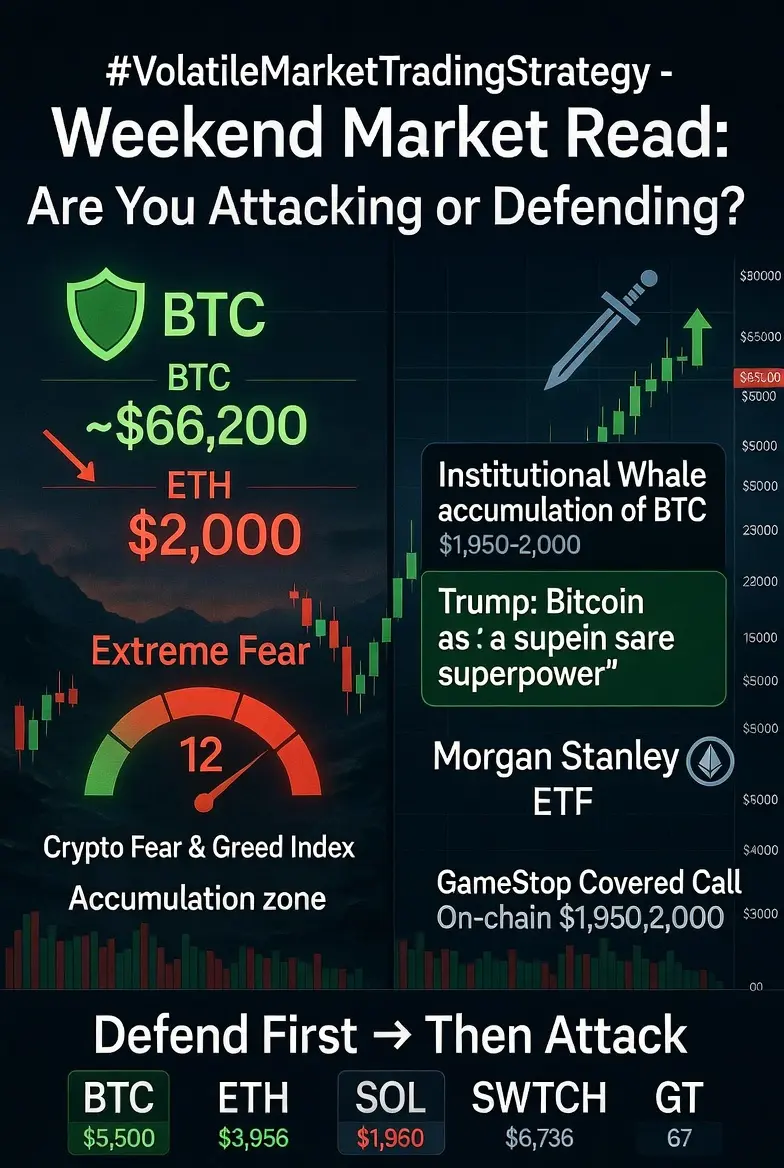
#VolatileMarketTradingStrategy
Weekend Market Read: Are You Attacking or Defending?
The market is entering the weekend under notable pressure, and this is precisely when strategic positioning becomes most critical. BTC currently sits at $66,287, down 2.28% on the day, reflecting cautious sentiment from a broad range of participants. ETH has slipped just below the $2,000 psychological level, now at $1,999, signaling stress among retail traders but opportunity for those who read market structure carefully. The Crypto Fear & Greed Index is at 12 — Extreme Fear. For the uninformed, this could app
BTC1,82%
ETH3,89%
SOL3,07%
SIREN0,6%
HighAmbitionvip
#VolatileMarketTradingStrategy
Weekend Market Read: Are You Attacking or Defending?
The market is entering the weekend under notable pressure, and this is precisely when strategic positioning becomes most critical. BTC currently sits at $66,287, down 2.28% on the day, reflecting cautious sentiment from a broad range of participants. ETH has slipped just below the $2,000 psychological level, now at $1,999, signaling stress among retail traders but opportunity for those who read market structure carefully. The Crypto Fear & Greed Index is at 12 — Extreme Fear. For the uninformed, this could appear as a warning to exit. For the disciplined trader, this represents an alert to pay attention, analyze positions, and potentially enter strategically.
Markets at the weekend often behave differently from weekday sessions. Low participation and thin order books mean individual large trades, macro headlines, or unexpected events can amplify price swings. However, beneath these short-term oscillations, structural factors and institutional behaviors often reveal the true state of the market, and this weekend appears to be no exception.
My Weekend Outlook
I am not predicting a full market reversal over the weekend. Macro forces remain influential: U.S. Treasury yields recently touched April highs, signaling strong government bond demand; the U.S. dollar remains resilient; and global liquidity conditions are still relatively tight. These factors create pressure on risk assets, including major cryptocurrencies. Weekend trading is generally characterized by muted volume, meaning sudden price movements can be sharper than during regular sessions.
Despite these challenges, my bias leans cautiously bullish into next week. This is not derived solely from technical charts screaming “buy” signals but from subtle yet meaningful market behaviors:
Institutional Accumulation: On-chain metrics indicate that large holders and institutional wallets have added over 60,000 BTC during this very dip. Such accumulation at current price points suggests confidence and patient positioning rather than panic liquidation.
Policy Tailwinds: Former President Trump recently emphasized that the U.S. aims to become a “Bitcoin and crypto superpower.” Statements like this, while political, have implications for regulatory support, adoption sentiment, and broader market confidence.
ETF Infrastructure: Morgan Stanley is reportedly preparing a Bitcoin ETF with a fee of just 0.14%. The development of regulated, low-cost institutional demand avenues continues to build structural support for BTC and related assets.
Corporate Positioning: GameStop has strategically allocated its BTC holdings into a Covered Call strategy via Coinbase instead of liquidating. This reflects conviction and strategic positioning by corporate holders, not panic-driven exits.
Taken together, these factors indicate that the “smart money” is not abandoning positions. It is actively repositioning to take advantage of current market dislocations.
Tokens I Am Watching This Weekend
BTC / USDT — Bitcoin remains the anchor for market sentiment. Weekend behavior around support levels will influence the early trading direction next week. Holding $65,500 through the weekend could establish a healthy base, while reclaiming $68,000 with conviction early next week may quickly flip short-term sentiment and restore confidence among hesitant market participants.
ETH / USDT — Ethereum sits at a psychologically critical level near $2,000. Net outflows from spot ETFs suggest caution, and macroeconomic pressure appears more pronounced than with BTC. However, a consolidation base is forming rather than a mere bounce opportunity. DeFi inflows into protocols such as Aave remain robust, demonstrating that Ethereum’s fundamentals are intact even in a period of temporary stress.
SOL / USDT — Solana is trading at $83, down slightly but showing signs of sustained ecosystem engagement. Projects and protocol activity remain vibrant, with tokens like SIREN surging over 107% in the last 24 hours. Such movements suggest liquidity and enthusiasm remain alive in the Solana ecosystem, even when major cryptocurrencies experience downward pressure.
SWTCH (Switchboard) — Experiencing a 235% rise in 24 hours, this reflects renewed attention to oracle infrastructure. While not a direct trade recommendation, understanding the drivers behind such movements can provide insight into underlying market narratives that may impact broader market activity.
GT / USDT — Gate’s native token sits at $6.46 and is currently ranked #1 by user activity on the hot list this weekend. GT holders benefit from practical utilities including fee discounts, Launchpool access, and HODLer Airdrop eligibility. Holding GT through volatility is a strategic decision that extends beyond sentiment alone, reinforcing the token’s utility and value proposition within the ecosystem.
Key News and Events Worth Tracking This Weekend
U.S. Macro: Upcoming PCE inflation data and any Federal Reserve commentary will heavily influence whether this dip persists or reverses early next week. Movements in the dollar index (DXY) are particularly impactful: even slight weakness could provide breathing room for risk assets, including cryptocurrencies.
CLARITY Act: Ongoing regulatory discussions may crystallize U.S. crypto frameworks. A clearer regulatory landscape is likely to act as a structural catalyst for Ethereum and broader DeFi adoption.
Lido / LDO Treasury Buybacks: Shifts in on-chain liquidity for liquid staking tokens such as LDO can have subtle but meaningful market effects. Monitoring these flows is essential for understanding short-term dynamics.
Weekend Liquidity Considerations: Thin weekend participation can magnify price movements. Coordinated trades, unexpected news, or sudden liquidations can create outsized candlestick patterns. Managing position sizes carefully and avoiding blind engagement is crucial.
My Strategy This Weekend
I adopt a defend first, then attack approach:
No aggressive leveraged positions until BTC demonstrates a firm recovery above $67,500.
Gradual accumulation of Ethereum in the $1,950–$2,000 range, which historically attracts disciplined buyers.
Maintaining a watchlist of Solana ecosystem tokens to capture early momentum opportunities at market open on Monday.
Relying on alerts rather than constant screen-watching — patience and strategic observation often outperform reflexive trading during high volatility.
Extreme Fear readings, such as the current 12 on the Crypto Fear & Greed Index, typically appear near market bottoms rather than tops. The trades set up through measured discipline this weekend are likely to perform strongest when the market resumes normal trading
repost-content-media
  • Reward
  • Comment
  • Repost
  • Share
#USIranClashOverCeasefireTalks .
HOW DID THE US-IRAN CLASH OVER CEASEFIRE TALKS BEGIN?
The conflict between the United States, Iran, and Israel did not emerge out of nowhere — it was the culmination of years of rising geopolitical tension, covert operations, proxy conflicts, and strategic mistrust that finally spilled into direct confrontation in late February 2026.
The war started around late February 2026 when the US and Israel launched coordinated airstrikes on Iran's nuclear and military infrastructure, targeting key facilities believed to be critical for uranium enrichment, missile develo
HighAmbitionvip
#USIranClashOverCeasefireTalks .
HOW DID THE US-IRAN CLASH OVER CEASEFIRE TALKS BEGIN?
The conflict between the United States, Iran, and Israel did not emerge out of nowhere — it was the culmination of years of rising geopolitical tension, covert operations, proxy conflicts, and strategic mistrust that finally spilled into direct confrontation in late February 2026.
The war started around late February 2026 when the US and Israel launched coordinated airstrikes on Iran's nuclear and military infrastructure, targeting key facilities believed to be critical for uranium enrichment, missile development, and drone production. These were not symbolic strikes — they were deeply strategic, aimed at crippling Iran’s long-term military and nuclear capabilities. The conflict escalated rapidly, and within days, retaliation cycles began forming on both sides.
By the time the conflict entered its fourth week by mid-to-late March 2026, the situation had intensified significantly, with thousands of casualties reported and widespread infrastructure damage across multiple regions. The deployment of US forces — including elite units such as the 82nd Airborne and Marine divisions — signaled that this was no longer a limited engagement, but a high-stakes regional conflict with global implications.
Around Day 25 of the conflict, the Donald Trump administration attempted to pivot toward diplomacy by drafting a detailed 15-point ceasefire proposal, which was then transmitted indirectly through diplomatic intermediaries including Pakistan, Qatar, Egypt, and the United Kingdom.
This proposal was not a soft compromise — it was a comprehensive restructuring demand of Iran’s military posture and regional influence.
Key US demands in the plan:
Dismantle Iran's nuclear infrastructure completely, ensuring no rapid restart capability
Halt all uranium enrichment, effectively freezing nuclear advancement
End support for armed proxy militias such as Hezbollah and Houthis
No ballistic missile program for at least 5 years, reducing regional strike capability
Full reopening of the Strait of Hormuz, restoring global oil flow stability
In return, the US offered partial sanctions relief and support for civilian nuclear energy development under international supervision — a classic “security in exchange for economic normalization” framework.
However, Iran’s response was swift and dismissive. Tehran publicly rejected the proposal, framing it as a one-sided dictate rather than a negotiation, and denied that any direct talks were taking place — describing the US position as “negotiating with itself.” Instead, Iran countered with its own proposal that included demands for war reparations, recognition of sovereignty over strategic waterways, and binding international guarantees for ceasefire enforcement.
This immediate rejection set the stage for continued escalation, making it clear that both sides were still far apart not just in terms of demands — but in fundamental strategic vision.
WHY DID THE CLASH OVER CEASEFIRE TALKS HAPPEN?
The collapse of ceasefire discussions was not due to a single disagreement — it was driven by a layered combination of political signaling, military strategy, and deep-rooted mistrust that made meaningful compromise nearly impossible.
1. Mutual Distrust and Contradictory Signals
At the center of the diplomatic breakdown was a clear mismatch in public messaging and private intentions. Donald Trump publicly claimed that Iran was eager for a deal but unwilling to admit it, while Iran’s leadership maintained that they were merely reviewing proposals — not engaging in negotiations. This contradiction created a narrative gap that undermined trust and made both sides appear strategically deceptive to each other.
As airstrikes and retaliatory actions continued in parallel with these mixed signals, diplomacy lost credibility. Negotiations cannot function when both sides believe the other is acting in bad faith — and that is exactly what happened here.
2. Israel's Role and Concerns
Israel played a critical behind-the-scenes role in shaping the outcome of the talks. Israeli defense officials were deeply skeptical that Iran would accept any meaningful restrictions, and more importantly, they feared that US negotiators might soften their stance under pressure to achieve a quick ceasefire.
At this stage of the conflict, Israel had already inflicted significant damage — reportedly destroying or degrading roughly two-thirds of Iran's missile, drone, and naval production facilities. From Israel’s perspective, agreeing to a ceasefire too early risked allowing Iran to regroup and rebuild.
This created a strategic divergence: the US was exploring diplomatic off-ramps, while Israel was still focused on maximizing military advantage.
3. Hormuz Strait Leverage
The most powerful card Iran held was control over the Strait of Hormuz — a narrow but critically important waterway through which 20% of the world’s oil supply flows.
By restricting tanker movement, Iran effectively turned global energy markets into a pressure tool. This was not just a regional tactic — it was a global economic weapon.
In response, Trump escalated rhetoric dramatically, warning that the US would “obliterate” Iran’s power infrastructure if Hormuz was not reopened within 48 hours. This marked a dangerous turning point, where economic pressure and military threats began to merge.
On March 27, Iran allowed 10 oil tankers to pass — a limited but symbolic gesture that slightly reduced immediate tensions. Trump described it as a “present,” and markets reacted with short-term relief. However, this was not a resolution — just a temporary easing within a much larger unresolved standoff.
WHERE CAN OIL PRICES GO FROM HERE?
The global oil market has become the central battlefield of this conflict, acting as both a reflection of geopolitical risk and a driver of macroeconomic consequences.
Current Status: By late March 2026, global benchmark Brent crude had settled above $112/barrel, marking the highest levels since mid-2022 and representing a sharp 55% increase from pre-conflict levels. This is not just a price move — it is a structural shift driven by supply uncertainty and risk premiums.
Three key scenarios with price projections:
Scenario
Oil Price Impact
Hormuz stays disrupted, war escalates
$130+/barrel (Goldman Sachs estimate)
Sustained military campaign with retaliation on Gulf oil infrastructure
+$15/barrel sustained rise
Ceasefire reached, Iran sanctions lifted
-$5/barrel drop (premium clears)
The importance of the Strait of Hormuz cannot be overstated. It is not just another shipping route — it is the single most critical artery of global energy supply.
Around 20% of global oil flows through it
Major producers like Saudi Arabia, Kuwait, and United Arab Emirates rely on it
Any sustained disruption triggers immediate global shortages
Even small interruptions ripple through pricing systems instantly
Gasoline markets react even faster — futures can spike 25 cents per gallon immediately, feeding directly into consumer inflation.
Adding complexity, the Ukraine conflict has further strained global supply by targeting Russian oil infrastructure, removing a fallback supply buffer that markets were relying on.
The overall result is a highly fragile energy system where multiple disruptions overlap, amplifying volatility.
WHAT IS THE CRYPTO MARKET DOING RIGHT NOW?
The crypto market is currently acting as a real-time reflection of macro uncertainty, reacting not just to internal dynamics but to global geopolitical shifts.
Current Prices (as of March 28, 2026):
BTC: $66,437 — down about 0.19% in 24 hours
ETH: $2,001 — up about 0.68% in 24 hours
Fear & Greed Index: 12 — Extreme Fear
The behavior of Bitcoin during this conflict highlights a classic risk-asset pattern.
Initial shock triggered a drop toward $63,000
Rapid recovery followed as markets priced in temporary stabilization
Positive signals (like ceasefire hints) triggered sharp upward reactions
Negative escalation headlines reversed gains quickly
This push-and-pull dynamic reflects uncertainty rather than clear direction.
The involvement of institutional players — including continued accumulation and strategic buying — adds another layer. Moves like large BTC purchases and ETF developments show that long-term conviction remains intact despite short-term volatility.
The core macro chain driving crypto right now is:
War escalation → Oil spike → Inflation pressure → Central bank tightening → Stronger dollar → Reduced liquidity → Pressure on crypto assets
As long as oil remains elevated, crypto faces structural headwinds.
WHERE IS CRYPTO HEADED — BULL OR BEAR?
The crypto market is currently trapped between two powerful opposing forces — macroeconomic pressure and institutional accumulation.
Bearish Forces Right Now:
High oil prices above $100 are sustaining inflation, which forces central banks — particularly the Federal Reserve — to maintain a restrictive stance. This reduces liquidity, strengthens the dollar, and puts pressure on risk assets.
Additional pressure comes from rising bond yields, ETF outflows, and extreme fear sentiment across the market. These are all classic indicators of a cautious, risk-off environment.
Bullish Forces Building:
Despite macro pressure, smart money continues accumulating. Large-scale BTC purchases indicate long-term positioning rather than short-term speculation.
Institutional adoption is expanding through ETF offerings, banking integration, and financial product innovation. Political support, particularly pro-crypto narratives, also adds to long-term optimism.
Technically, breakout potential remains intact, with higher resistance targets still in play if macro conditions improve.
The verdict:
The market is not clearly bullish or bearish — it is conditional.
De-escalation or ceasefire → rapid upside expansion
Continued conflict → prolonged consolidation and pressure
Key signals to watch:
Strait of Hormuz activity
Oil price movement relative to $100
Diplomatic engagement between US and Iran
Military escalation headlines
Summary in one sentence: The US-Iran ceasefire clash is fundamentally an oil-driven macro shock, and oil remains the dominant variable controlling inflation, monetary policy, and risk asset direction — making it the single most important indicator for crypto traders in the current environment.
repost-content-media
  • Reward
  • Comment
  • Repost
  • Share
#DavidSacksStepsDownAsCryptoLead
March 28, 2026
MARKET MOOD: EXTREME FEAR
Fear & Greed Index: 12 / 100
The market is currently in a very defensive phase where most traders are unsure and acting cautiously. Many short-term traders are getting shaken out due to volatility, and panic can be seen across the market. However, situations like this have historically been the early stages of accumulation, where experienced investors quietly build positions while retail traders exit under pressure. This is not just fear — it reflects a deeper phase where the market is preparing for its next major move.
BTC1,82%
ETH3,89%
GT1,38%
PI-0,74%
HighAmbitionvip
#DavidSacksStepsDownAsCryptoLead
March 28, 2026
MARKET MOOD: EXTREME FEAR
Fear & Greed Index: 12 / 100
The market is currently in a very defensive phase where most traders are unsure and acting cautiously. Many short-term traders are getting shaken out due to volatility, and panic can be seen across the market. However, situations like this have historically been the early stages of accumulation, where experienced investors quietly build positions while retail traders exit under pressure. This is not just fear — it reflects a deeper phase where the market is preparing for its next major move.
BIG NEWS TODAY
David Sacks has stepped down from his role as White House AI and Crypto Czar after completing his 130-day legal term on March 26. This is not a negative development for crypto. He is now moving into a more strategic position as co-chair of PCAST, where he will continue influencing long-term policy. The overall crypto framework remains unchanged, and no replacement has been announced, which signals stability rather than disruption. This development is neutral in the short term but positive for the long term.
BITCOIN (BTC)
Bitcoin is currently trading at $66,477, showing a slight decline of -0.25% in the last 24 hours, with a range between $65,558 and $66,722. The market is not crashing — instead, Bitcoin is moving sideways within the $65K to $72K range. This type of movement usually means the market is waiting for a strong trigger before making its next move.
There are strong macro pressures affecting Bitcoin right now. Higher US bond yields are tightening financial conditions, a stronger dollar is reducing global liquidity, and overall risk appetite is lower. Despite this, institutional investors are actively buying during this dip. Over 60,000 BTC has been accumulated, which shows strong long-term confidence. Large financial players are also preparing new investment products, which suggests that interest in Bitcoin remains strong even if the price is currently slow.
Market sentiment still slightly favors bulls, showing that confidence has not disappeared.
ETHEREUM (ETH)
Ethereum is trading at $2,000.78, up +0.53% in the last 24 hours, moving between $1,968 and $2,010. Ethereum is holding the important $2,000 level, which is acting as a key support area.
The main issue for Ethereum is not price movement but the flow of money. ETH ETFs in the US have seen 8 straight days of outflows, totaling more than $480 million. This shows that institutions are being cautious, not necessarily bearish. Some large holders are still buying, while others are reducing risk.
The DeFi ecosystem remains stable, but without fresh money entering the market, prices are struggling to move higher. Overall sentiment is balanced, meaning the market can move in either direction depending on the next major catalyst.
MARKET MOVERS
The biggest gaining coins today are mostly high-risk, high-volatility assets. These are driven more by short-term hype and trading activity rather than strong fundamentals. This shows that some traders are still taking risks, but mainly for quick profits rather than long-term investment.
On the losing side, many AI-related small-cap coins have dropped sharply. This clearly shows a shift toward safer strategies, where investors are reducing exposure to risky assets. In uncertain market conditions, speculative coins are usually the first to fall.
TRENDING COINS
GateToken is holding steady at $6.53, showing strong activity on Gate.com even while the broader market remains weak. This suggests consistent demand and platform strength.
Pi Network is also moving slowly upward with a +1.36% gain, supported by steady community interest rather than speculation.
MACRO CONTEXT
The crypto market is heavily influenced by global economic conditions right now. Donald Trump’s upcoming tariff deadline on April 2 is creating uncertainty across all markets. A stronger US dollar is reducing liquidity, and high Treasury yields are making it harder for risk assets like crypto to grow.
At the same time, institutional investors continue to accumulate quietly. This creates a gap between price movement and long-term confidence, which is an important signal for the future.
BOTTOM LINE
The market may look weak due to fear, outflows, and macro pressure, but the deeper structure shows strength through accumulation and long-term positioning. This is not a market breakdown — it is a transition phase.
Smart investors understand that markets reward patience, not panic.
repost-content-media
  • Reward
  • Comment
  • Repost
  • Share
#FannieMaeAcceptsCryptoCollateral
#FannieMaeAcceptsCryptoCollateral — The Shift That Just Redefined Homeownership
WHAT JUST HAPPENED — AND WHY IT MATTERS
On March 26, 2026, Fannie Mae — one of the most important pillars of the U.S. housing system — quietly crossed a historic line.
For the first time ever, it accepted a crypto-backed mortgage structure, developed through a collaboration between Better Home & Finance and Coinbase.
This isn’t a pilot rumor. It’s confirmed, operational, and structured within existing regulatory frameworks.
Translation: Crypto is no longer “outside the system.” It
BTC1,82%
ETH3,89%
SOL3,07%
HighAmbitionvip
#FannieMaeAcceptsCryptoCollateral
#FannieMaeAcceptsCryptoCollateral — The Shift That Just Redefined Homeownership
WHAT JUST HAPPENED — AND WHY IT MATTERS
On March 26, 2026, Fannie Mae — one of the most important pillars of the U.S. housing system — quietly crossed a historic line.
For the first time ever, it accepted a crypto-backed mortgage structure, developed through a collaboration between Better Home & Finance and Coinbase.
This isn’t a pilot rumor. It’s confirmed, operational, and structured within existing regulatory frameworks.
Translation: Crypto is no longer “outside the system.” It is now being integrated into one of the largest financial markets on Earth — U.S. housing.
HOW THE STRUCTURE REALLY WORKS (NO SIMPLIFICATION)
This is not “buy a house with Bitcoin.”
This is a layered financial architecture designed to bridge TradFi and crypto.
Here’s the real mechanism:
You take a standard mortgage loan (15 or 30 years)
Alongside it, you open a crypto-backed secondary loan
Your BTC or USDC acts as collateral instead of cash for the down payment
Your crypto is locked in custody on Coinbase
Fannie Mae only buys the primary mortgage, not the crypto loan
The second loan (crypto-backed) stays with Better Home & Finance
Critical detail most people miss: There are no margin calls.
Even if Bitcoin drops 30–50%, your mortgage terms don’t change.
Liquidation only happens if you fail to make payments (~60 days) — not because of volatility.
THE REGULATORY BACKBONE — WHY THIS WAS EVEN POSSIBLE
This entire structure exists because of one key decision:
The Federal Housing Finance Agency directive issued on June 25, 2025.
That directive instructed both Fannie Mae and Freddie Mac to recognize crypto as reserve collateral — without forcing liquidation into cash.
This is the real unlock.
Without it, none of this would exist.
THE HAIRCUT REALITY — WHERE MOST PEOPLE GET IT WRONG
Let’s be very clear:
Crypto is accepted — but not at full value.
A volatility haircut is applied:
BTC / ETH → only 40–50% of value counts
$100,000 in BTC = ~$40K–$50K usable collateral
Effective requirement = 2x to 2.5x overcollateralization
Why this matters:
This product is not designed for average holders.
It’s designed for high-net-worth crypto holders with deep reserves.
WHO IS ACTUALLY RUNNING THIS PIPELINE
Two key players made this real:
Better Home & Finance → loan originator
Coinbase → custody + verification layer
Other platforms (like Milo) exist — but they don’t integrate with Fannie Mae’s conforming system, which makes this model fundamentally different and more scalable.
WHAT ASSETS ARE CURRENTLY ACCEPTED
Right now, the system is intentionally conservative:
Bitcoin (BTC) → primary asset
USDC → stable option with lower volatility impact
Requirements include:
Verified ownership
Exchange-issued documentation
Minimum 60-day holding history
Custody must remain on Coinbase
THE BULL CASE — WHY THIS IS MASSIVE
This move plugs crypto directly into a market worth over $10 trillion.
Let that sink in.
Key implications:
Crypto holders can access real estate without selling assets
Avoid triggering capital gains taxes
BTC begins functioning as productive collateral, not just a passive store of value
Institutional validation strengthens the “digital gold” narrative
Bridges the gap between on-chain wealth and off-chain assets
This is adoption at the infrastructure level — not hype level.
THE BEAR CASE — RISKS YOU CANNOT IGNORE
This is not a free upgrade. There are trade-offs:
Heavy overcollateralization (2x–2.5x requirement)
Potentially higher interest rates (~+1–1.5%)
Crypto is illiquid while locked
Opportunity cost if BTC rallies during lock period
Limited ecosystem (currently tied to Coinbase)
Secondary loan risk remains with lender, not Fannie Mae
Bottom line: You’re trading liquidity and flexibility for access.
THE MACRO SIGNAL — WHAT THE MARKET IS REALLY TELLING YOU
This is bigger than mortgages.
This is about recognition.
A government-backed entity is now indirectly validating crypto as collateral-grade wealth
TradFi is no longer resisting — it’s integrating
Risk models are evolving to include digital asset volatility
This opens the door for:
Crypto-backed loans across banking
Institutional lending expansion
Broader asset acceptance (ETH, SOL in future cycles)
This is how asset classes mature — slowly, then suddenly.
WHAT HAPPENS NEXT
Expect a domino effect:
Freddie Mac likely follows
More exchanges compete with Coinbase
More lenders integrate crypto collateral models
Regulatory clarity accelerates at the federal level
Expanded asset lists over time
FINAL TAKE — READ THIS TWICE
This is not about buying homes with Bitcoin.
This is about Bitcoin becoming part of the financial system’s foundation.
The wall between crypto and real-world finance didn’t disappear —
but it just cracked in a very real, very structural way.
repost-content-media
  • Reward
  • Comment
  • Repost
  • Share
#OilPricesResumeUptrend
1. CURRENT PRICE SNAPSHOT (March 28, 2026)
WTI crude is currently trading between $94 and $96 per barrel, while Brent crude sits in the $104 to $107 per barrel range. This represents a staggering surge of more than 50% since late February 2026, when the geopolitical hostilities first erupted. Brent even briefly touched $119 per barrel last week, a level not seen in years. The spread between Brent and WTI has widened dramatically to over $14 per barrel, highlighting regional supply disruption concerns. Market participants are reacting not only t
HighAmbitionvip
#OilPricesResumeUptrend
1. CURRENT PRICE SNAPSHOT (March 28, 2026)
WTI crude is currently trading between $94 and $96 per barrel, while Brent crude sits in the $104 to $107 per barrel range. This represents a staggering surge of more than 50% since late February 2026, when the geopolitical hostilities first erupted. Brent even briefly touched $119 per barrel last week, a level not seen in years. The spread between Brent and WTI has widened dramatically to over $14 per barrel, highlighting regional supply disruption concerns. Market participants are reacting not only to headline prices but also to the extreme volatility in trading volume and liquidity — liquidity in both WTI and Brent futures has tightened, causing larger-than-normal price swings on relatively modest buy or sell orders. Traders have been chasing dips aggressively, creating strong upward momentum and making the market highly sensitive to any news regarding the Strait of Hormuz or Iranian intentions.
2. WHY DID THE UPTREND RESUME? ROOT CAUSES
A. The Strait of Hormuz Blockade — The #1 Driver
The primary catalyst for this vertical price move is the effective blockade of the Strait of Hormuz. This chokepoint channels 20–30% of the world’s total oil and gas supply daily. With Iran controlling access and preventing free maritime passage, traders are pricing in the potential loss of 13 to 14 million barrels per day, according to Barclays. Given global daily demand of roughly 104–105 million barrels, this represents a catastrophic disruption to supply. The liquidity crunch in oil futures has amplified these moves — bid-ask spreads have widened significantly, making it easier for prices to spike on sudden orders or rumors.
B. US–Iran Conflict Escalation
Escalating tensions between the United States and Iran have kept oil markets on edge. The US issued direct threats demanding the Strait’s reopening, while Iran rejected these ultimatums and even hinted at controlling the Bab al-Mandeb Strait, another critical oil shipping route. Market participants are pricing in the combined risk of losing multiple maritime oil passages simultaneously, creating sustained buying pressure that feeds directly into upward price momentum. Trade volumes have surged as speculative and hedge positions pile in, while liquidity remains tight, magnifying the impact of each market move.
C. Iran Denied Peace Talks Ever Happened
Volatility intensified when US claims of “productive” peace talks were publicly denied by Iran’s Parliament Speaker, Mohammad Baqer Qalibaf. Prices briefly fell on the peace-talk optimism, then surged more than 2% when the denial hit markets. This back-and-forth narrative has created a persistent jitter in trading behavior, reinforcing the perception that oil markets are now driven as much by geopolitical rumor and sentiment as by actual fundamentals. High-frequency trading algorithms and large funds have increasingly dominated volume, further exaggerating intraday swings.
D. Attacks on Energy Infrastructure
Iran’s targeted strikes on energy facilities across the Middle East compounded the supply shock beyond the Hormuz blockade. The International Energy Agency (IEA) noted that benchmark crude prices have risen by $20 per barrel since the start of hostilities on February 28, 2026. In addition to crude shortages, refining bottlenecks and LNG transport disruptions are intensifying price pressures. These attacks have also disrupted normal liquidity patterns, as traders hedge aggressively against further shocks, causing occasional flash rallies or pullbacks.
E. Refining, LNG, and Energy Logistics Disruption
According to EY-Parthenon’s chief economist Greg Daco, the oil market is experiencing a “multidimensional disruption.” It is not simply crude supply that is constrained. Refining facilities, LNG processing, and broader energy logistics are under simultaneous stress. Even if crude shipments resume, downstream effects will continue to drive price premiums higher. Liquidity in refined products is also constrained, meaning regional gasoline and diesel markets could see exaggerated price swings alongside crude benchmarks.
3. WHERE CAN OIL PRICES GO FROM HERE?
Forecasting the next moves is highly uncertain but essential for traders and investors. Goldman Sachs raised its 2026 Brent crude average forecast from $77 to $85 per barrel, with an extreme scenario pushing Brent past its 2008 all-time high of around $147 per barrel. Under a 6-month supply shock scenario, they estimate Brent could touch $135 per barrel. Barclays warns that if disruptions persist through April, Brent futures may reach $100+, with a longer disruption scenario extending toward $110 by the end of May. Reuters analysts suggest an incredibly wide potential range — anywhere from $50 to $150 per barrel — reflecting extreme scenario uncertainty.
EY-Parthenon expects Brent to average $88/bbl in Q2 2026, roughly $20 above pre-conflict expectations, before easing to $75 in Q3 and $72 by year-end, assuming some de-escalation occurs. Volume and liquidity trends will be critical here: while speculative trading can push prices higher in the short term, insufficient liquidity may limit the market’s ability to absorb extreme swings, creating sharp intraday volatility.
Key Price Levels to Watch:
$100 — Barclays’ April target and psychological resistance
$110 — Extended disruption scenario
$119 — Recent spike high
$135 — Goldman’s extreme risk scenario
$147+ — Absolute worst-case scenario if Brent surpasses 2008 highs
4. WHAT COULD STOP OR REVERSE THE RALLY?
Despite the upward momentum, multiple forces could trigger a reversal:
Peace deal or ceasefire: Any credible US–Iran diplomatic breakthrough could cause a rapid 10–15% correction, as seen during Trump’s peace-talk announcement.
Reopening of the Strait of Hormuz: Immediate resumption of maritime traffic would neutralize the supply shock.
Demand destruction from $100+ prices: Extremely high oil costs can reduce global consumption, slowing economic activity and naturally capping prices.
OPEC+ supply response: Non-Middle Eastern producers ramping output could partially offset shortfalls.
Recession risk: Persistently high prices increase stagflation fears. EY-Parthenon specifically highlights the risk of simultaneous inflationary and recessionary pressures.
Liquidity patterns will be decisive in any reversal: thin order books or sudden exit of speculative positions can create exaggerated pullbacks that overshoot fundamental levels.
5. MACRO IMPLICATIONS — THE BIGGER PICTURE
The oil price surge is reshaping the broader macro landscape:
Global inflation reignites: Elevated energy costs feed directly into food, transport, and manufacturing prices worldwide.
Central bank dilemma: Policymakers must balance controlling inflation with supporting growth, risking stagflation.
Stock markets under pressure: Equity markets in energy-importing countries are reacting negatively, while energy-exporting nations benefit.
Shipping and aviation disruptions: LNG and natural gas markets are spiking alongside crude, impacting fuel-intensive industries.
Petrodollar flows shift: Gulf producers enjoy strong inflows, while energy-importing emerging markets face currency depreciation pressures.
Trading in oil futures is now tightly linked to geopolitical developments. Any change in risk perception—whether through diplomacy, conflict escalation, or supply recovery—could trigger outsized moves because market participants are actively pricing in extreme scenarios. Liquidity remains thin, making risk management and position sizing absolutely critical.
SUMMARY OF FACTORS IMPACTING PRICES
The market is being pulled in both directions by high-stakes geopolitical and economic forces:
Strait of Hormuz blockade — massive upward pressure
US–Iran military escalation — strong upward pressure
Iran rejects peace talks — additional upward pressure
Energy infrastructure attacks — further upward pressure
Potential ceasefire/deal — sharp downward risk
Demand destruction at $100+ — gradual downward pressure
Recession fears — downward pressure over longer term
Bottom line: Oil is not merely in a technical uptrend; it is experiencing a full-blown geopolitical supply shock. The Strait of Hormuz remains the single most critical variable. Until verified resolution on Iran and US tensions occurs, every dip is being bought aggressively, liquidity remains tight, and prices are structurally biased higher. Whether Brent hits $110, $135, or spikes beyond $147 depends entirely on the interplay between diplomacy, conflict escalation, and global energy demand resilience.
Risk management is paramount — thin liquidity, high volatility, and extreme geopolitical uncertainty make this market unforgiving to overexposure.
repost-content-media
  • Reward
  • Comment
  • Repost
  • Share
#HongKongStablecoinIssuerLicenseList
Hong Kong is moving toward a historic step that could reshape the future of stablecoins and significantly influence the global crypto market. The regulatory framework being implemented by the Hong Kong Monetary Authority is designed to create one of the most secure and transparent environments for stablecoin issuance anywhere in the world. As Hong Kong prepares to grant its first licences to selected institutions, the move signals a strategic effort to position the city as a leading hub for regulated digital finance in
BTC1,82%
ETH3,89%
DEFI-7,05%
HighAmbitionvip
#HongKongStablecoinIssuerLicenseList
Hong Kong is moving toward a historic step that could reshape the future of stablecoins and significantly influence the global crypto market. The regulatory framework being implemented by the Hong Kong Monetary Authority is designed to create one of the most secure and transparent environments for stablecoin issuance anywhere in the world. As Hong Kong prepares to grant its first licences to selected institutions, the move signals a strategic effort to position the city as a leading hub for regulated digital finance in Asia.
Unlike earlier phases of the crypto industry where stablecoins were largely issued by private companies with limited oversight, Hong Kong’s model emphasizes strict supervision, full reserve backing, and institutional accountability. Major financial institutions such as HSBC and Standard Chartered are expected to play a central role in this ecosystem, while Web3 leaders like Animoca Brands are contributing technological expertise. If this framework succeeds, Hong Kong could become a bridge between traditional finance and decentralized finance, providing a regulated environment where blockchain innovation can develop with institutional trust and legal clarity.
1. Institutional Trust in Stablecoins Will Increase
When regulated institutions like HSBC or Standard Chartered potentially issue stablecoins under the supervision of the Hong Kong Monetary Authority, the most immediate impact will be credibility.
For years, the stablecoin sector has been dominated by private issuers such as Tether and USD Coin. While these assets are widely used across exchanges and DeFi platforms, concerns regarding reserves, transparency, and regulatory oversight have persisted within parts of the financial industry.
Hong Kong’s framework directly addresses those concerns through strict requirements, including 100% reserve backing, continuous audits, and guaranteed redemption mechanisms. These standards effectively transform stablecoins into bank-grade financial instruments, which could dramatically increase institutional confidence in the crypto ecosystem.
2. New Liquidity Could Enter the Crypto Market
Stablecoins function as the primary liquidity layer of digital asset trading. A significant portion of global crypto transactions occurs through stablecoin trading pairs rather than direct fiat conversions.
If Hong Kong successfully launches regulated stablecoins, it could attract institutional capital from across Asia and global financial markets. This liquidity may naturally flow into major digital assets such as Bitcoin and Ethereum, along with leading decentralized finance tokens.
Historically, whenever stablecoin supply expands, overall trading activity across exchanges also increases. More stablecoins circulating in the market generally lead to deeper liquidity pools, higher trading volumes, and improved market efficiency.
3. Asia Could Become a Major Stablecoin Hub
The global regulatory race for digital assets is accelerating. Europe has already introduced comprehensive rules through the Markets in Crypto-Assets Regulation framework, while the United States continues to debate national stablecoin legislation.
If Hong Kong’s model proves successful, it could quickly establish the city as Asia’s primary digital-asset settlement hub. In doing so, Hong Kong would compete directly with other financial innovation centers such as Singapore and Dubai.
This environment could attract global exchanges, blockchain developers, DeFi projects, and fintech startups seeking a jurisdiction that combines regulatory clarity with technological innovation.
4. DeFi and Tokenization Could Expand
Stablecoins form the backbone of decentralized finance infrastructure. Lending platforms, liquidity pools, derivatives markets, and yield-generation strategies all rely heavily on stable digital assets as a core settlement layer.
Regulated stablecoins issued by major financial institutions could accelerate several emerging sectors, including DeFi adoption, real-world asset tokenization, cross-border payments, and blockchain-based trade finance.
Organizations like Animoca Brands are already deeply involved in Web3 development, illustrating how traditional financial institutions and decentralized technology ecosystems are increasingly converging.
5. Pressure on Existing Stablecoin Issuers
A regulated Hong Kong stablecoin could gradually challenge dominant issuers in the global market.
Currently, Tether commands the largest share of global trading liquidity, while USD Coin focuses heavily on regulatory compliance and institutional markets.
If bank-backed stablecoins emerge from Hong Kong’s framework, some institutional investors may prefer assets issued under a strict regulatory regime with transparent reserve management. Over time, this could reshape competitive dynamics within the stablecoin sector.
6. Long-Term Impact on Crypto Prices
The licensing announcement itself may not immediately trigger a sharp market rally, but the long-term structural impact could be bullish for the broader crypto ecosystem.
Greater regulatory clarity often reduces uncertainty, encouraging institutional participation and long-term capital inflows. As regulated stablecoins expand, they strengthen the liquidity foundation of digital markets while supporting the growth of tokenized financial assets.
Final Perspective & My View
From my perspective, Hong Kong’s stablecoin licensing framework represents one of the most important regulatory developments in Asia’s crypto history. If major banks begin issuing stablecoins under the supervision of the Hong Kong Monetary Authority, the move could significantly strengthen market trust and accelerate the integration of traditional finance with blockchain technology.
In my view, this initiative could gradually transform Hong Kong into a central hub for regulated digital-asset liquidity in Asia. By combining institutional oversight with blockchain innovation, the city may help push the global crypto industry toward greater legitimacy, deeper liquidity, and wider institutional adoption in the years ahead.
repost-content-media
  • Reward
  • Comment
  • Repost
  • Share
  • Pin