

Trade
Basic
Futures
Futures
Hundreds of contracts settled in USDT or BTC
TradFi
Gold
Trade global traditional assets with USDT in one place
Options
Hot
Trade European-style vanilla options
Unified Account
Maximize your capital efficiency
Demo Trading
Futures Kickoff
Get prepared for your futures trading
Futures Events
Participate in events to win generous rewards
Demo Trading
Use virtual funds to experience risk-free trading
Earn
Launch
CandyDrop
Collect candies to earn airdrops
Launchpool
Quick staking, earn potential new tokens
HODLer Airdrop
Hold GT and get massive airdrops for free
Launchpad
Be early to the next big token project
Alpha Points
Trade on-chain assets and enjoy airdrop rewards!
Futures Points
Earn futures points and claim airdrop rewards
Investment
Simple Earn
Earn interests with idle tokens
Auto-Invest
Auto-invest on a regular basis
Dual Investment
Buy low and sell high to take profits from price fluctuations
Soft Staking
Earn rewards with flexible staking
Crypto Loan
0 Fees
Pledge one crypto to borrow another
Lending Center
One-stop lending hub
VIP Wealth Hub
Customized wealth management empowers your assets growth
Private Wealth Management
Customized asset management to grow your digital assets
Quant Fund
Top asset management team helps you profit without hassle
Staking
Stake cryptos to earn in PoS products
Smart Leverage
New
No forced liquidation before maturity, worry-free leveraged gains
GUSD Minting
Use USDT/USDC to mint GUSD for treasury-level yields

More


Trending Topics
View More78.55K Popularity
5.69K Popularity
1.8K Popularity
2.88K Popularity
7K Popularity



Pin
#CryptoMarketWatch
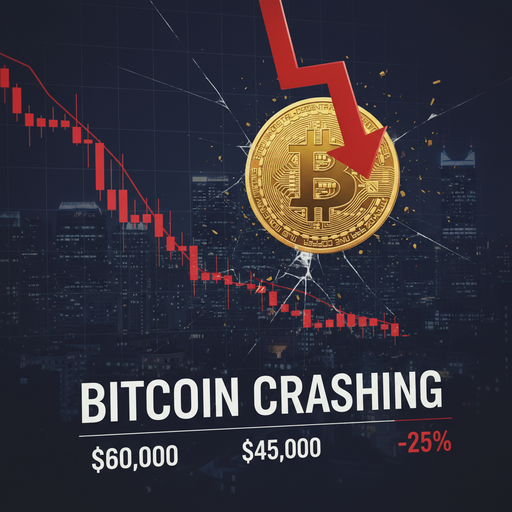
The crypto market in early 2026 is navigating one of its most volatile phases in recent memory, with clear tension between bullish and bearish participants creating heightened uncertainty and trading opportunities. Bitcoin continues to hover near its critical support zone of $72,000–$74,000, while Ethereum and most major altcoins have seen deeper retracements, particularly those lacking strong liquidity or robust fundamentals. On-chain data highlights contrasting behaviors: long-term holders are steadily accumulating, signaling underlying structural support, while short-term traders and whales are actively rotating positions, increasing volatility around resistance zones. Exchange inflows and outflows indicate periods of distribution followed by accumulation, reflecting a market in search of directional consensus. This divergence between short-term speculative pressure and long-term accumulation is driving both sharp intraday swings and extended sideways consolidation across the broader market.
Investors are now monitoring a complex set of signals to gauge future price action. Technical indicators such as moving averages, trendlines, and Fibonacci retracement levels remain crucial for identifying potential entry and exit points, especially around historically tested support and resistance zones. Derivatives metrics like funding rates, open interest, and leverage ratios are providing insights into potential liquidation risks. For instance, positive funding rates may indicate excessive long positioning, suggesting vulnerability to sudden corrections, whereas spikes in open interest can precede rapid moves as crowded trades unwind. On-chain metrics, including wallet activity, staking trends, and network transaction volumes, are giving a clearer picture of genuine demand versus speculative flow, helping identify whether accumulation by long-term holders is sufficient to counter short-term selling pressure. Additionally, macro factors such as interest rate policy, USD strength, and equity correlations continue to influence crypto risk appetite, as institutional and retail participants increasingly integrate macroeconomic context into their strategies.
Market positioning reflects this divergence. Bulls are gradually scaling positions during dips, relying on structural on-chain signals like long-term holder accumulation, declining exchange balances, and historical support zones as confirmation of market stability. Their strategies involve using dips to accumulate high-quality assets, particularly Bitcoin and Ethereum, while observing volume-supported rebounds for timing further scaling. Cautious traders, in contrast, are maintaining liquidity in stablecoins, reducing leverage exposure, or hedging positions through derivatives to manage risk. This tactical difference contributes to intraday volatility but also creates opportunities for traders able to read both the on-chain and technical signals accurately. The interplay between bullish accumulation and bearish pressure is effectively shaping the current market as a range-bound, yet high-potential, environment.
From a strategic standpoint, the current phase demands a multi-layered, risk-aware approach. Investors should scale positions based on the confluence of technical confirmation, on-chain support, and macro indicators, while continuously monitoring derivatives activity to anticipate potential volatility spikes. Maintaining flexibility and liquidity is crucial, allowing participants to adjust exposure dynamically as conditions evolve. Risk management should involve clearly defined stop-loss thresholds near critical support levels and diversified allocation across assets with strong adoption and robust fundamentals. Additionally, understanding whale and institutional behavior is essential, as large-scale movements and liquidity rotations often precede significant market shifts.
Looking deeper, macroeconomic factors remain a critical driver of crypto sentiment in early 2026. Fed policies, interest rate expectations, and dollar strength influence liquidity and risk-on behavior. For instance, a hawkish Fed stance or rising bond yields can suppress speculative flows into crypto, while dovish signals or stable rates may encourage accumulation and renewed bullish momentum. Institutional participants are increasingly integrating these macro factors into their strategies, using derivatives and hedging to navigate periods of heightened uncertainty. Tracking these movements provides insights into potential structural shifts in market positioning, which can prelude major price swings.
In conclusion, the crypto market is currently defined by volatility, structural divergence, and uncertainty, with bulls and bears locked in a dynamic contest. Successful navigation requires integrating technical analysis, on-chain metrics, derivatives positioning, and macroeconomic insights. Investors who balance risk and opportunity through data-driven strategies, maintain flexibility, and observe market structure carefully are better positioned to capitalize on short-term swings while benefiting from long-term accumulation trends. Strategic patience, informed decision-making, and awareness of both micro and macro signals are essential to navigate this environment effectively.