

Trade
Basic
Futures
Futures
Hundreds of contracts settled in USDT or BTC
Options
HOT
Trade European-style vanilla options
Unified Account
Maximize your capital efficiency
Demo Trading
Futures Kickoff
Get prepared for your futures trading
Futures Events
Participate in events to win generous rewards
Demo Trading
Use virtual funds to experience risk-free trading
Earn
Launch
CandyDrop
Collect candies to earn airdrops
Launchpool
Quick staking, earn potential new tokens
HODLer Airdrop
Hold GT and get massive airdrops for free
Launchpad
Be early to the next big token project
Alpha Points
NEW
Trade on-chain assets and enjoy airdrop rewards!
Futures Points
NEW
Earn futures points and claim airdrop rewards
Investment
Simple Earn
Earn interests with idle tokens
Auto-Invest
Auto-invest on a regular basis
Dual Investment
Buy low and sell high to take profits from price fluctuations
Soft Staking
Earn rewards with flexible staking
Crypto Loan
0 Fees
Pledge one crypto to borrow another
Lending Center
One-stop lending hub
VIP Wealth Hub
Customized wealth management empowers your assets growth
Private Wealth Management
Customized asset management to grow your digital assets
Quant Fund
Top asset management team helps you profit without hassle
Staking
Stake cryptos to earn in PoS products
Smart Leverage
NEW
No forced liquidation before maturity, worry-free leveraged gains
GUSD Minting
Use USDT/USDC to mint GUSD for treasury-level yields

More

Stock Tokenization Depth Research Report: Start of the Second Bull Run Growth Curve
2025-07-24 13:37
From SEC defendant to Wall Street bell ringer, the remarkable "Gatesun" powerfully interprets the game of thrones.
2025-07-24 07:59
Trending Topics
View More7.89K Popularity
577.02K Popularity
80.42K Popularity
7.2K Popularity
7.94K Popularity
Hot Gate Fun
View More- MC:$3.67KHolders:10.00%
- MC:$3.67KHolders:10.00%
- MC:$3.67KHolders:10.00%
- MC:$3.67KHolders:10.00%
- MC:$3.67KHolders:10.00%


Pin
The daily trading volume of Bitfrog exceeds that of BAYC, and the current BTC NFT is popular in one article
1. The BTC NFT market is hot, with TOP 10 NFT weekly trading volume exceeding 600 BTC
As the Ordinals market continues to be hot, BTC NFTs have caused a boom several times, and the trading volume of BTC NFTs in a single day once exceeded the trading volume of ETH NFTs. In addition to the high-popularity BRC-20 assets, NFTs in the BTC ecosystem have also performed well, hitting new highs in terms of trading volume and the price of top NFTs. For example, BItcoin Frog was also out of the circle for a time, with the price breaking through a new high of 0.5 BTC ($20500), and the single-day trading volume exceeded that of ETH square blue chips such as BAYC, which attracted everyone’s attention to BTC ecological NFTs.
According to iDclub market data, the top 10 BTC NFTs traded more than 600 BTC ($24M) in a week last week. Earlier NFT collections such as Bitcoin Ape and Bitcoin Punks are regaining market attention, while newer collections such as Goosinals and OrdiRocks are also making a splash in the market, with rising stars such as Fuzzy Fox and BitDogs directly entering the weekly trading volume TOP 10 。
Although many people have played a lot of inscriptions, those who are new to the Bitcoin Ordinals ecosystem may not know much about BTC NFTs, and they also don’t know the difference between BTC NFTs and ETH Fang NFTs, and how to buy BTC NFT assets and so on.
In order to help you have a deeper understanding of BTC NFT, today iDclub will share with you about BTC NFT, and this article will introduce BTC NFT from the following aspects.
What is a BTC NFT? BTC What are the features of NFTs? **What is the difference between BTC NFTs and ETH NFTs?
2. What is a BTC NFT?How is it minted?
BTC NFTs are NFTs issued on the BTC chain, or digital artifacts on the BTC chain. Different from ETH Fang or other public chain NFTs, the core lies in the difference in issuance and storage methods.
The process of BTC’s NFT asset issuance is to upload any data (text/picture/video, etc.) to the BTC chain through BTC transfer. This process is the process of attaching information and data to the smallest unit of BTC, “satoshi”, which is also known as “inscription”. In general, BTC NFTs are dominated by inscriptions of text, pictures, and video file format data.
BTC NFTs are based on the Ordinals protocol and BTC UTXO’s trading model. The Ordinals protocol was proposed by BTC developer Casey Rodarmor in December 2022 and will number BTC smallest unit, satos, in the order in which they are mined. BTC NFTs, as well as other inscriptions, are tracked and resolved relying on Satoshi’s number.
Whereas, in the UTXO trading model, each UTXO has multiple satoshis (to prevent dust attacks, there is a minimum transaction limit). The inscription NFT is the process of UTXO transactions, in which information such as pictures are attached to the UTXO in the transaction process, and the minting process is completed when the on-chain transaction is completed. This is the process of NFT inscription, as well as the minting process of all inscriptions and BRC-20.
In addition BTC the cost of NFT minting is related to the size and minting speed, BTC the larger the image or video data of the NFT, the higher the gas fee, and the higher the minting fee. In the case of Bitcoin Ape, for example, the cost of minting Bitcoin Ape in HD quality is more than $5 million.
At present, BTC NFTs are divided into project party issuance and individual issuance. Issuance by the project team: The project team will prepare the NFT materials that need to be issued and submit them to the launchpad platform, and the launchpad will issue the NFTs. BTC NFT will allow users to disclose mint when it is first issued, mint is divided into paid or free, users get NFT after mint is successful, and when NFT mint is finished, users can buy and sell through the secondary trading market to obtain it. Individual issuance: The user can make an inscription in the trading market, and the inscription is also an NFT, and the NFT engraved by the user’s personal inscription also supports listing and selling.
3. What are the characteristics of BTC NFT
Uniqueness: BTC NFTs burn data on “satoshims”, and each “satosashi” has its own number, which is unique. For example, the number 001 Satoshi, when the data is engraved on this 001 “Satoshi”, it means that this data only exists on the 001 Satoshi, and when the inscription is completed, the Satoshi with the data will also become an inscription NFT, and the inscription also has a unique number. Therefore, BTC NFTs have uniqueness, a unique inscription number, and a unique bound Satoshi number.
Traceability: BTC NFT burns pictures, audios, etc. on Satoshi, only the most original inscription process, the transaction contains the engraved pictures or videos and other data, and the subsequent NFT transfer does not contain pictures, audio or other data, but through the on-chain UTXO transaction history query, it can always be traced back to the original data of the BTC NFT.
Permanent: The initial minting record of BTC NFT is securely stored on the BTC blockchain, and the data is permanently stored on the chain once burned. It has the characteristics of tamper-proof and immutable. Perpetual existence on BTC blockchain.
4. Differences between BTC NFTs and ETH NFTs
**1. The difference in the storage method determines whether it is truly permanent and cannot be tampered with. **
BTC’s NFT essentially attaches arbitrary data to the BTC’s “satoshi”, while ETH’s NFT does not require any attachment, and any data itself is an ETH NFT asset. BTC’s NFT data only exists on the BTC blockchain and is completely immutable, while ETH NFTs exist off-chain.
NFTs on ETH Square typically point to off-chain data on Interplanetary File (FIL: a decentralized file storage system). It’s a bit like a hard drive for blockchain – changes can be made using dynamic metadata. To illustrate this, some NFT projects update the metadata of individual NFTs to improve image quality. They may even require their holders to click the “Refresh Metadata” button on OpenSea for new, higher-quality images.
In Musk’s interview in November this year, there was a paragraph about NFTs that said: Interestingly, NFTs aren’t even on the blockchain, it’s just a URL pointing to a JPEG, and you should at least encode the JPEG into the blockchain. If the company hosting the image goes out of business, you don’t own the image anymore.
But BTC NFTs completely break this problem, and the Ordinals protocol’s BTC-based system allows artworks and media to be fully and securely recorded on BTC blockchains, providing an alternative to NFTs compared to the ETH Fang model. This means that NFTs will remain available as long as the BTC network is still functioning.
2. Creator Royalties & Volume
BTC NFTs are different from ETH NFTs, BTC NFTs do not have a smart contract function, and creators cannot earn royalties from them, but can benefit from selling them on the marketplace.
The maximum supply of BTC is 21 million, which means that theoretically there are only 21 trillion “satosos” at most, so there is an upper limit on the number of NFTs in BTC and no upper limit on the number of NFTs in ETH. In addition to this, there are many differences between BTC and ETH NFTs, BTC does not support smart contracts, and ETH’s programming language supports the writing of smart contracts.
3. Rare Attributes
ETH Fang NFT is defined by the project party, and each element of the NFT defines the rarity attribute by setting the quantity. Although in BTC’s NFTs, the project party also defines the rarity attribute, the current market is not sensitive to the project party’s definition of rarity.
At the same time, the rarity of satoshis is defined in the Ordinas protocol. So NFTs with BTC are partly defined based on their rarity. There are a portion of NFT collections that will be released exclusively on Rare Satoshi. On the other hand, like early NFTs, NFTs that were minted earlier have a relatively small inscription number and are also considered NFTs with rare attributes.
4. Differences in issuance
BTC NFT issuance method is that the project party submits NFT information to the launchpad, which is issued by the launchpad, and if the project party has a whitelist after issuance, users with the whitelist can go to mint in advance, and ordinary users can go to mint when the mint is public. mint is paid and not paid, and mint that does not pay only needs to pay on-chain gas fees.
ETH NFTs are usually released using smart contracts, developers define the properties and behaviors of NFTs, such as names, descriptions, owners, etc., write smart contract code through Solidity, and after writing the code, developers can use the Remix integrated development environment to test and deploy the contract. After the contract is successfully deployed, developers can use the ETH Wallet to create and trade NFTs. Once created, users can use the wallet to connect to the ETH network and interact with the contract. Such as buying or selling NFTs, viewing the ownership record of NFTs, etc.
4. What are the classic BTC NFT series?(In no particular order)
1)Bitcoin Frogs
Bitcoin Frogs consists of 10,000 generative frogs, which are sold through Free mint and are also the first original 10K NFT collection on Bitcoin. As of the end of history, the floor price has exceeded 0.5 BTC, exceeding 20,000 US dollars. Up to now, the total transaction volume has exceeded 1,000 BTC (40 million US dollars), and there are more than 4,400 holding addresses. It is the most popular NFT series on BTC.
2)Bitcoin Punks
Bitcoin Punks is the first NFT project to use the Ordinals protocol and successfully upload CryptoPunk from ETH Square to BTC, allowing players to mint for free, all in less than 24 hours. (Bitcoin Punks) has the lowest number of inscriptions of any 10k collection in BTC serial number, ranging from 89 to 34, 399. As of now, Bitcoin Punks has an average floor price of 0.058 BTC, a total trading volume of 167 BTC, and more than 6,200 holding addresses.
3)Bitcoin Rocks
Bitcoin Rocks is a collection of NFTs with a total supply of 100 and an inscription number of 71-247, which is highly collectible because the inscription number is extremely small. Last traded for 3.9 BTC.
4)TwelveFold
TwelveFold is a collection of NFTs issued by Yuga Labs on Bitcoin. The total supply is 300. According to the official statement, the works represent an entire art project and will have no other use, nor will they interact with or be related to any previous, ongoing, or future ETH-based Yuga projects.
5)Ordinal Maxi Biz (OMB)
Ordinal Maxi Biz (OMB) is the top rare Satoshi NFT project, with all collectibles inscribed on Block 9 and a total supply of 2,100 NFTs. As of December, Ordinal Maxi Biz (OMB) has a floor price of 0.565 BTC, with a total trading volume of more than 800 BTC and about 1,234 holding addresses.
5. What platforms can be traded BTC NFT
1) iDclub
iDclub is a professional Ordinals trading marketplace and one of the earliest platforms to enter the Ordinals ecosystem, with very cheap minting fees and transaction fees, providing the most cost-effective Ordinals NFT trading services.
2) Magic Eden on Bitcoin
Magic Eden On Bitcoin is a professional NFT trading platform for Magic Eden in the BTC chain ecological vertical, supporting the issuance and trading of NFT assets in the Ordinals ecosystem.
3)Okx Web3
Okx Web3 is a non-custodial, decentralized multi-chain wallet with a built-in transaction aggregator DEX for cross-chain currency swaps, and a heterogeneous multi-chain aggregation trading platform (which supports the trading service of Ordinals NFT.
4)unisat
UniSat is a BTC wallet as well as a browser extension wallet. At the same time, Unisat also has a comprehensive Ordinals trading marketplace that offers the trading of Ordinals NFTs.
6. How to Sell and Buy NFTs
NFTs can be bought and sold on the marketplace, and the following tutorial shows you how to buy and sell NFTs on iDclub.io in detail
1) Preliminary Preparation
Before operating, you need to install the wallet plug-in in your browser (Google Chrome is recommended), and the list of wallets supported by iDclub PC is as follows:
Unisat Wallet
Xverse Wallet
OKX Wallet
2) How to Buy NFTs
Once you’re on the detail page, purchase the NFT. Bulk purchases are supported, up to 25 at a time. 3.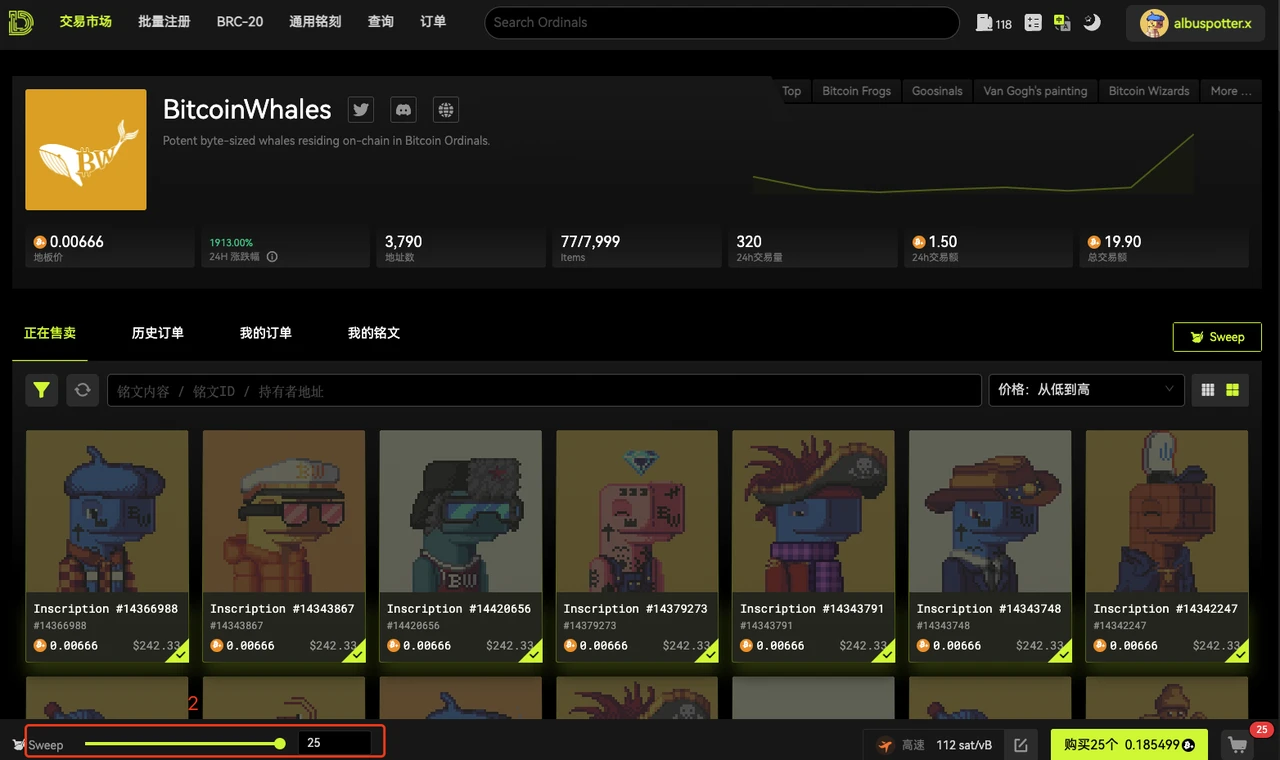
The transaction fee rate (GAS fee) for confirming the purchase is high-speed by default, and it supports customization (⚠️ the custom GAS fee cannot be too low, which will cause the transaction confirmation time to be too long), click Buy after confirmation 4.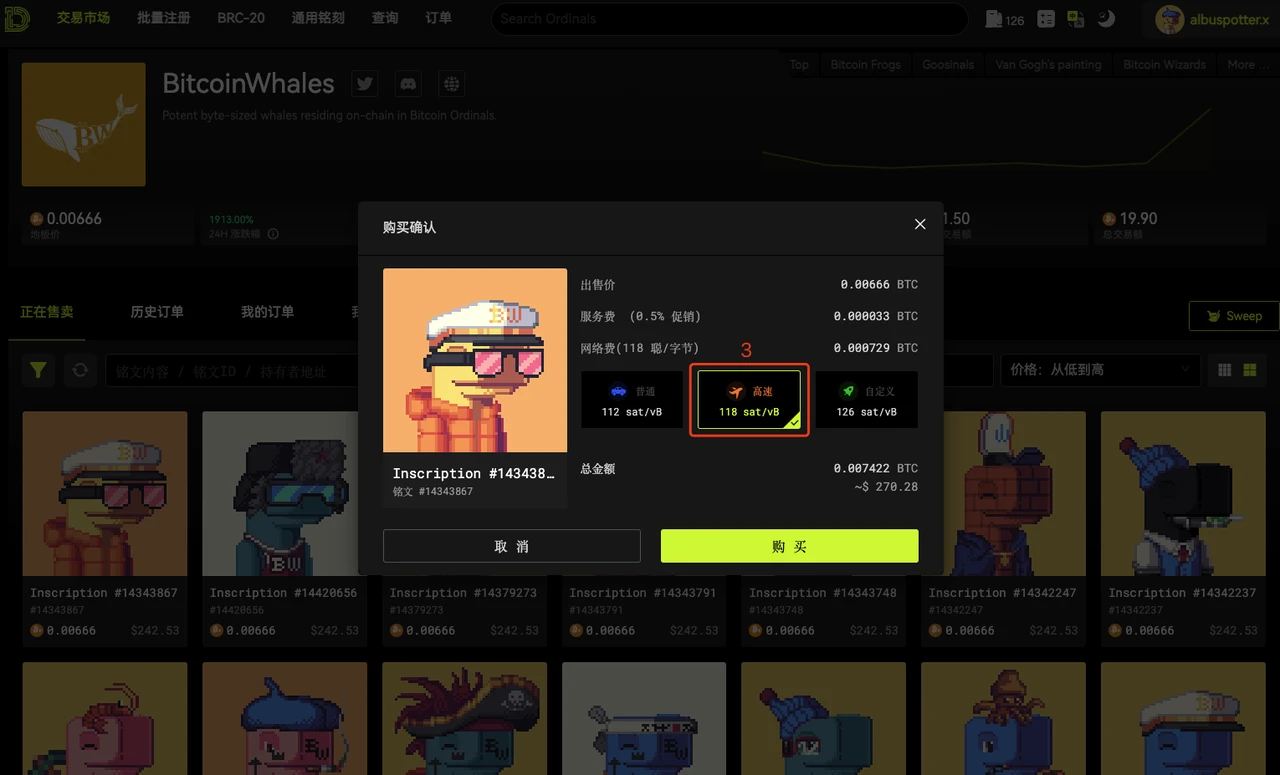
When purchasing, the wallet will pop up to confirm, click confirm after the information is confirmed, and wait for the confirmation on the chain after confirmation, and the purchase is completed ✅
For more Ordinals expertise and information, you can also follow us on Twitter: @idclub_ord or join us on Discord at discord.gg/idclub
iDclub is a professional Ordinals marketplace. iDclub entered the Ordinlas ecosystem in February, and launched inscription casting tools in March, with more than 25% of the platform’s inscription minting volume, about 10 million sheets. The domain marketplace was launched in July, the NFT marketplace in August, and the BRC 20 marketplace in September. It is now a complete Ordinals trading market integrating primary minting and secondary trading, and the trading volume of the trading market has exceeded 1,000 BTC.
Website:
X:_ord
Discord:
【Disclaimer】The market is risky, and investment needs to be cautious. This article does not constitute investment advice, and users should consider whether any opinions, views or conclusions contained herein are appropriate to their particular circumstances. Invest accordingly at your own risk.