
The U.S. Securities and Exchange Commission (SEC) and the Commodity Futures Trading Commission (CFTC) officially signed a Memorandum of Understanding on Wednesday, agreeing to establish closer coordination mechanisms in financial market regulation. Both agencies explicitly stated that, with the rise of cryptocurrencies, on-chain automation, and digital infrastructure, traditional jurisdiction boundaries have continued to blur, making this a “critical moment” to take coordinated action.
Core Commitment of the Memorandum: From Turf Wars to Collaborative Cooperation
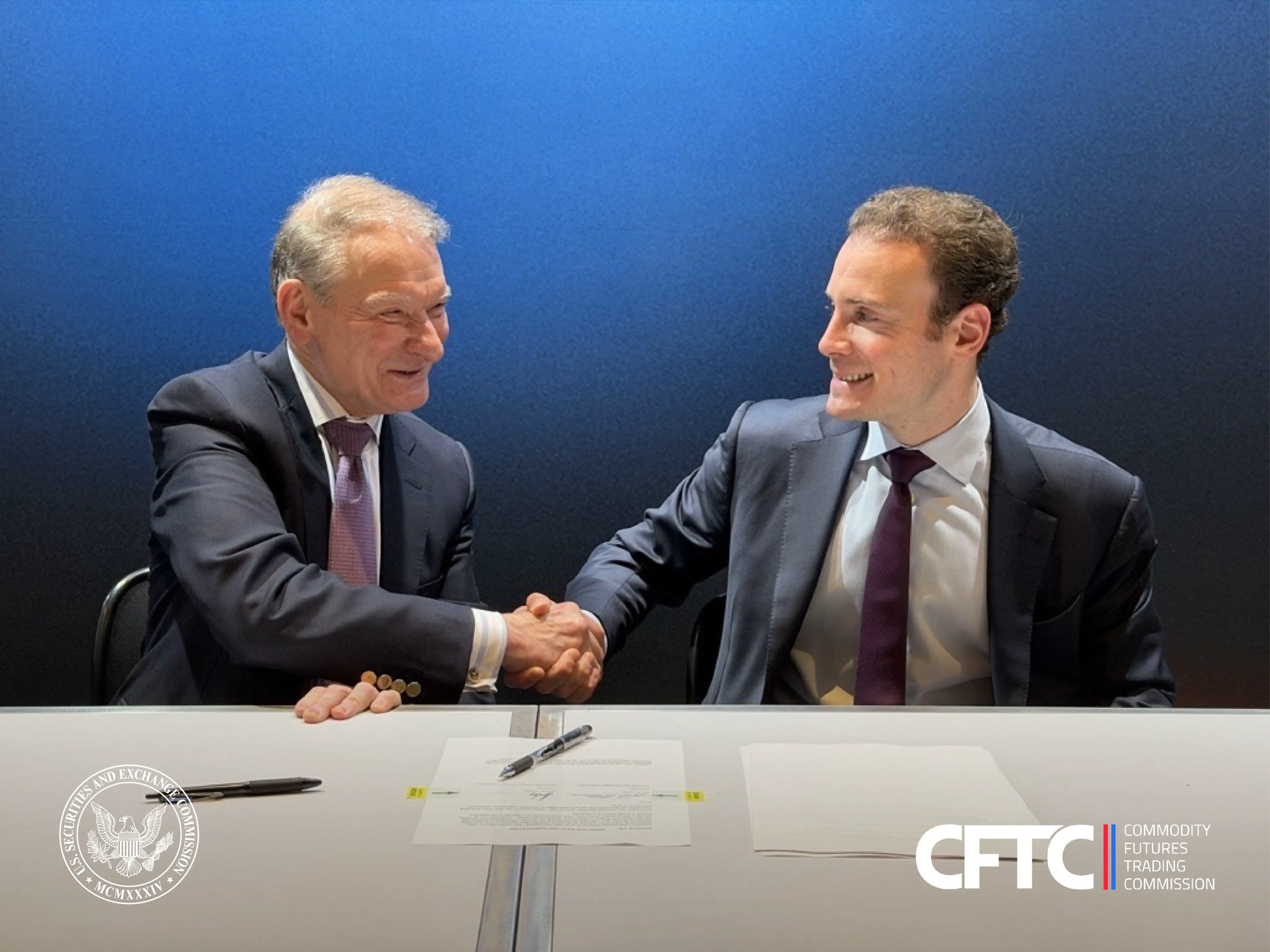
(Source: Mike Selig X)
Long-standing regulatory jurisdiction disputes between the SEC and CFTC revolve around the seemingly simple yet practically complex question: “Is this asset a security or a commodity?” The emergence of cryptocurrencies has made this issue even more complicated—the same token can be classified as different asset types depending on the context, leading to inconsistent or even conflicting compliance requirements for industry participants.
The core commitments of this memorandum include two levels. First, both agencies will strive to provide regulatory clarity based on the “technology-neutral principle,” ensuring that regulation does not differ due to technological form. Second, they will share information and data on issues involving “joint regulatory interests” to better fulfill their respective regulatory responsibilities, rather than acting independently or opposing each other.
Minimal Effective Dose: A Fundamental Shift in Regulatory Philosophy
The most notable aspect of this memorandum is the clear declaration by both agencies to adopt a “Minimum Effective Dose” (MED) regulatory strategy. Borrowed from pharmacology—referring to the lowest dose of a drug that produces the desired therapeutic effect—in the regulatory context, it means both agencies commit to regulating with the least market intervention necessary to achieve regulatory goals.
This philosophical shift stems from a sober recognition of the international competitiveness of U.S. financial innovation. Both agencies state they are committed to fostering innovation while maintaining market integrity and remaining competitive in global markets. Beneficiaries include:
- Trading Platforms and Clearinghouses: Existing cross-platform operations will gain clearer compliance boundaries.
- Data Repositories: Regulatory jurisdiction over on-chain data will be more clearly defined.
- Collective Investment Tools: Funds and ETF-like crypto products will face more unified regulatory standards.
- Dealers and Intermediaries: Entities operating across securities and derivatives frameworks will no longer need to navigate conflicting compliance requirements.
Practical Significance for the Cryptocurrency Industry
The signing of this memorandum occurs against the backdrop of both agencies having already adopted a series of pro-cryptocurrency policies: establishing dedicated crypto working groups and advisory committees to support the ongoing development of cryptocurrencies, AI, and other emerging technologies in the U.S., aligning with the Trump administration’s goal of making the U.S. the “Global Crypto Capital.”
The memorandum specifically mentions that both agencies are committed to providing a “suitable regulatory framework” for crypto assets, indicating that industry participants can expect clearer policy guidance on the classification of cryptocurrencies in the future, reducing the need to make major business decisions in legal gray areas. This aligns closely with the legislative direction of the currently pending Senate “CLARITY Act.”
Frequently Asked Questions
Q: What exactly does the “turf war” between the SEC and CFTC refer to?
For a long time, the SEC has jurisdiction over “securities,” while the CFTC oversees “commodities” (including commodity futures and derivatives). Since crypto assets do not fully fit into either traditional category, both agencies claim jurisdiction over certain tokens or crypto-related activities, leading to duplicated registration requirements, inconsistent compliance standards, and legal uncertainty. This significantly hampers innovation and the U.S.'s global competitiveness.
Q: What practical impact does the “Minimum Effective Dose” regulatory strategy have on crypto companies?
In practice, this means the SEC and CFTC pledge to prioritize “necessity” over “ability” when creating rules, avoiding imposing restrictions beyond what is needed to achieve regulatory objectives. For crypto companies, this theoretically translates to fewer redundant compliance burdens, faster regulatory approval processes, and clearer business boundaries, allowing them to operate confidently within the U.S. legal framework.
Q: Does this memorandum render the “CLARITY Act” unnecessary?
No, the memorandum and the CLARITY Act serve different roles. The memorandum is an administrative coordination document between two regulatory agencies, outlining how they will cooperate but not legally changing existing laws. If passed, the CLARITY Act would explicitly define the regulation of crypto assets through legislation, providing stronger legal certainty and permanence. The memorandum can be seen as a transitional arrangement to fill regulatory gaps during the legislative process.
Disclaimer: The information on this page may come from third parties and does not represent the views or opinions of Gate. The content displayed on this page is for reference only and does not constitute any financial, investment, or legal advice. Gate does not guarantee the accuracy or completeness of the information and shall not be liable for any losses arising from the use of this information. Virtual asset investments carry high risks and are subject to significant price volatility. You may lose all of your invested principal. Please fully understand the relevant risks and make prudent decisions based on your own financial situation and risk tolerance. For details, please refer to
Disclaimer.
Related Articles
Bank of America Delays BOJ Rate Hike Expectations to June Amid Middle East Tensions
Gate News message, April 23 — Bank of America economists and strategists have adjusted their forecast for the Bank of Japan's next interest rate hike, now expecting the central bank to tighten monetary policy in June rather than April, citing Middle East tensions as a key factor affecting the
GateNews36m ago
White House Economic Adviser Hassett Envisions Rate Cuts Alongside Balance Sheet Reduction
Hassett says the Fed could cut rates while shrinking its balance sheet.
Gate News, April 22, quotes Hassett, director of the White House National Economic Council, who envisions the Federal Reserve cutting interest rates while reducing its balance sheet.
GateNews4h ago
USD Index Retreats 2.3% as Risk-Off Sentiment Fades and Rate-Cut Bets Intensify
Gate News message, April 22 — The U.S. dollar index has fallen approximately 2.3% from its March peak, marking its worst monthly performance since August 2025, as easing Middle East tensions reduce safe-haven demand and expectations for Federal Reserve rate cuts intensify.
Major financial
GateNews10h ago
Turkey's Central Bank Maintains Policy Rate at 37%
Gate News message, April 22 — Turkey's Central Bank held its policy rate, the one-week repo rate, steady at 37% on April 22. The overnight lending rate remained unchanged at 40%.
GateNews10h ago
71 of 103 Economists Expect Fed to Cut Rates at Least Once in 2026
Reuters survey finds 71 of 103 economists expect the Fed to cut rates at least once this year, signaling market bets on easing amid ongoing economic conditions.
Abstract: A Reuters poll of economists shows widespread expectation of at least one Federal Reserve rate cut this year, reflecting market pricing of potential monetary loosening amid persistent economic conditions.
GateNews12h ago
Trump Signals Openness: Consider a Currency Swap With the UAE, Extending “Wartime Dollar Diplomacy” Further
CNBC reported that Trump publicly said he would help if needed, considering establishing a currency swap channel with the UAE, marking the White House’s first public response on the issue. The UAE central bank governor visited the U.S. last week to raise the possibility, but the actual decision still rests with the U.S. Federal Reserve. Fighting in the Strait of Hormuz disrupts dollar liquidity; if it goes ahead, it would broaden the impact of dollar diplomacy and on crypto, stablecoins, and global inflation/exchange rates.
ChainNewsAbmedia15h ago


