Coixa launches public beta on Pi Network, marking the transformation of the Pi ecosystem towards an application-oriented blockchain. This mobile-first DEX supports PI token trading, swapping, and liquidity pools, with the TVL of the PI/USDT trading pair reaching significant levels. Community leaders support early builders, driving Pi from a mining network to a practical utility platform.
Breakthrough in Practicality of the Pi Ecosystem
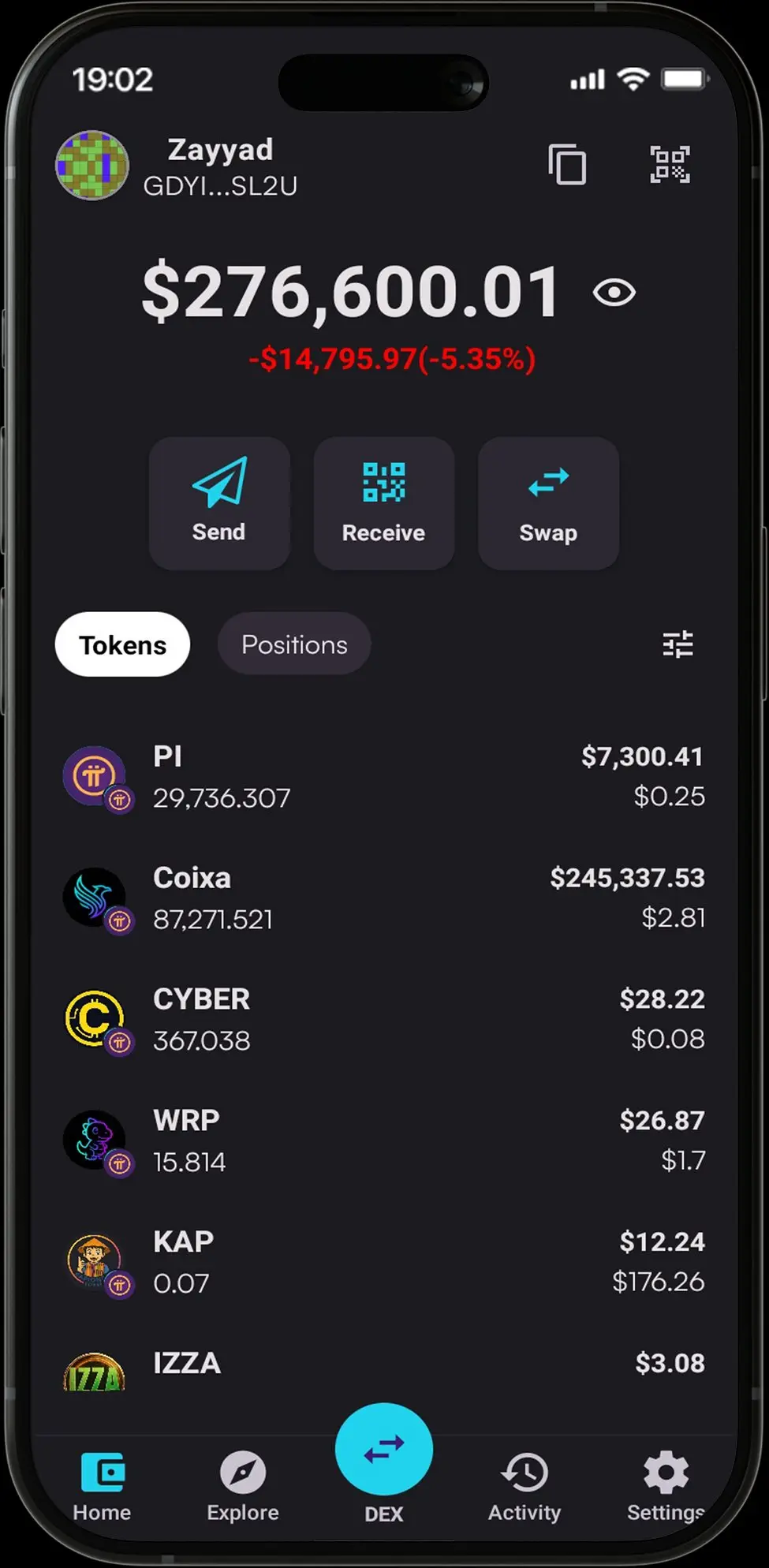
(Source: Pi Network Moderator)
The launch of Coixa addresses a long-standing core challenge faced by Pi Network: how to give real utility to the PI tokens held by over 50 million registered users. Since its online debut, the Pi community has been waiting for applications that can provide real use cases for PI. As one of the first native DeFi applications, Coixa offers holders a direct way to use their tokens beyond just holding or transferring.
This mobile-first DEX is deeply optimized for the characteristics of Pi users. Pi Network’s uniqueness lies in its large mobile user base, most of whom participate in mining via mobile apps. Coixa continues this mobile-first philosophy, allowing users to engage in DeFi trading without switching to a desktop environment. This seamless experience lowers the barrier to DeFi participation, enabling Pi miners who have never interacted with decentralized finance to easily get started.
The features of the public beta cover core DeFi scenarios. Users can view real-time wallet balances, execute buy and sell operations on the PI/Coixa trading platform, use token swap functions to convert between different assets, and participate in liquidity pools to earn yields. Among these, the PI/USDT trading pair is the most notable, providing a stablecoin trading pair that bridges PI with fiat currency value, making price discovery and value storage more feasible.
Core Features and Differentiation of Coixa
Mobile-First Design: An optimized mobile interface tailored for Pi users, enabling all DeFi operations without a desktop environment
Native Token Integration: Deep integration of PI tokens, supporting multiple trading pairs such as PI/USDT, PI/Coixa
Liquidity Mining Mechanism: Users can earn yields by providing liquidity, transforming passive holding into active participation
Community-Driven Development: Developed by builders within the Pi community, supported by local leaders rather than external parachute projects
The rapid growth of TVL demonstrates strong user interest and genuine engagement, rather than hollow hype. In the crypto space, TVL is a key indicator of the health of DeFi protocols, representing user trust in locking funds into smart contracts. Coixa’s ability to attract substantial locked assets during the testing phase proves the strong demand within the Pi community for native applications.
Grassroots Builders Drive Ecosystem Evolution
The success of Coixa owes much to the efforts of builders within the Pi Network community. Community leaders like @fen_leng have played a crucial role in this development process. They not only help early projects scale but also promote collaboration among different builders, ensuring the ecosystem’s development aligns with user needs.
This grassroots development model contrasts sharply with many blockchain ecosystems. On mature public chains like Ethereum or Solana, DeFi protocols are often developed by professional teams with venture capital backing. In contrast, Pi Network’s applications are primarily built by community members—Pi miners and holders—who have a more direct understanding of user needs.
The advantage of this model lies in the strong connection between applications and the community. When developers are also part of the target user base, product design tends to be more aligned with actual needs. Coixa’s mobile-first approach, simplified operations, and deep integration with PI tokens reflect this “user-develops-for-users” philosophy.
Community support also provides valuable feedback loops for early projects. The beta release allows a broader user base to test the product, identify issues, and suggest improvements. This iterative process is difficult to achieve in closed development environments but naturally occurs in open, community-driven models. Public support from Pi Network DEX and other community leaders further accelerates this positive cycle.
Strategic Shift from Mining Network to Application Ecosystem
Coixa’s addition marks a key node in Pi Network’s strategic transformation. Initially, Pi attracted many users through its innovative mobile mining model, but a simple mining mechanism cannot sustain long-term ecosystem development. Tokens only gain real value when they have practical use cases, and DeFi applications are essential infrastructure for providing such scenarios.
This transformation is not instantaneous. After mainnet launch, Pi Network faces a complex transition from a closed testing environment to an open ecosystem. Many early miners are accustomed to obtaining PI at zero cost and may lack experience in paying transaction fees or participating in DeFi protocols. The launch of applications like Coixa is essentially an educational process, teaching users how to conduct real economic activities on the blockchain.
From a macro perspective, the success of Coixa could attract more developers to build on Pi Network. A healthy blockchain ecosystem requires diverse application layers, including DeFi, NFTs, gaming, and social apps. As a pioneer, Coixa not only demonstrates the technical feasibility of Pi Network but also provides a reference case and potential collaboration opportunities for future developers.
As DeFi infrastructure matures, Pi Network may attract integration with external projects. For example, cross-chain bridging protocols could connect Pi to other blockchain ecosystems, stablecoin issuers might issue assets on Pi, and oracle services could provide external data for smart contracts. These integrations will further expand the use cases for PI tokens and promote the evolution of the entire ecosystem into a mature application-oriented blockchain.
Disclaimer: The information on this page may come from third parties and does not represent the views or opinions of Gate. The content displayed on this page is for reference only and does not constitute any financial, investment, or legal advice. Gate does not guarantee the accuracy or completeness of the information and shall not be liable for any losses arising from the use of this information. Virtual asset investments carry high risks and are subject to significant price volatility. You may lose all of your invested principal. Please fully understand the relevant risks and make prudent decisions based on your own financial situation and risk tolerance. For details, please refer to
Disclaimer.
Related Articles
Singapore's Foreign Minister Deploys Custom AI Assistant on Raspberry Pi Using Claude Code
Gate News message, April 27 — Singapore's Foreign Minister Vivian Balakrishnan recently announced he has built a custom AI assistant system, which he calls "the diplomat's second brain," running on a Raspberry Pi 5 (a credit-card-sized microcomputer). The system integrates with his WhatsApp and
GateNews19h ago
Pi Network launches the PiRC1 token framework, banning projects that have no real-world applications from issuing tokens
Pi Network unveiled the Pi Token Design Framework PiRC1 on April 22 as part of the Protocol V22 upgrade. PiRC1’s core rule is: only projects that already have deployable applications within the Pi ecosystem and that have real user demand are eligible to issue tokens. Token proceeds do not flow to the project team; instead, they flow into a perpetual liquidity pool anchored by Pi Coin to prevent rug-pull behavior.
MarketWhisper04-24 03:27
OpenClaw 2026.4.22 Unifies Plugin Lifecycle Across Codex and Pi Harnesses, Reduces Plugin Load Time by Up to 90%
Gate News message, April 23 — OpenClaw, an open-source AI Agent platform, released version 2026.4.22 on April 22, with its biggest change being the alignment of Codex harness and Pi harness lifecycles. Previously, plugins behaved inconsistently across the two harness pathways, with some hooks
GateNews04-23 14:41
Pi Network releases an opinion solicitation draft for PiRC2, opening contract review for the testnet subscription
Pi Network core team released the second Pi Request for Comments draft (PiRC2) on April 23, announcing that the testnet will open subscription smart contracts for technical review and community feedback, and inviting developers to test the subscription feature integration, review contract design, and identify potential vulnerabilities. As of the time of reporting, the PI token is about $0.17, unchanged from the previous day.
MarketWhisper04-23 05:15
Pi Network founder May 7 discussed human identity verification in the AI era at Consensus 2026
Pi Network founder Nicolas Kokkalis will attend the Consensus 2026 conference in Miami on May 7, joining an expert panel to discuss online human identity verification issues in the age of artificial intelligence (AI). According to the official event schedule, this panel discussion will bring together experts in the fields of identity, privacy, and digital trust.
MarketWhisper04-21 06:20


