On November 5, 2025, seven leading Ethereum protocols—Aave Labs, Aragon, Curve, Lido Labs Foundation, Spark Foundation, The Graph Foundation, and Uniswap Foundation—jointly launched the Ethereum Protocol Advocacy Alliance (EPAA), aimed at providing technical expertise for global cryptocurrency policy development. The alliance is dedicated to protecting over $100 billion in on-chain assets, with core principles emphasizing protocol neutrality, on-chain transparency, innovation flexibility, and permissionless access. EPAA collaborates closely with partners like the DeFi Education Fund to ensure that regulations keep pace with the evolving blockchain landscape amid increasingly strict global oversight.
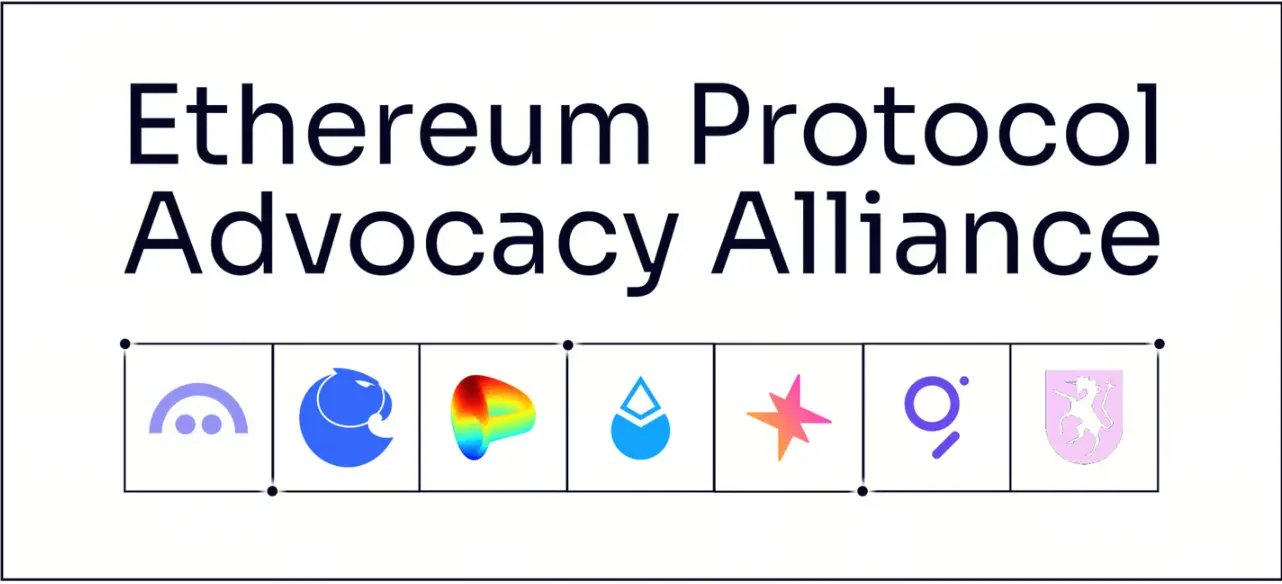
As decentralized finance (DeFi) and blockchain technology rapidly advance, the Ethereum community has decided to establish a new organization—the Ethereum Protocol Advocacy Alliance (EPAA)—to promote policy understanding and standardization of blockchain protocols. The alliance aims to coordinate policy efforts among core protocol teams, ensuring that decentralized protocols remain undisturbed and fostering positive changes related to financial and technical compliance. As stakeholders become more focused on aligning regulatory frameworks with technological development, the formation of EPAA marks a new phase of policy dialogue for the DeFi ecosystem.
Event Overview
Over the past decade, builders of Ethereum and other blockchain projects have worked to create resilient, global, and verifiable blockchain systems. These systems have played a significant role in DeFi, managing assets exceeding $100 billion. However, at the policy level, centralized institutions often wield disproportionate influence through lobbying efforts, leading to misunderstandings and neglect of the underlying technology and principles behind these protocols.
To address this challenge, the Ethereum community launched the Ethereum Protocol Advocacy Alliance (EPAA). The alliance seeks to coordinate policy efforts among protocol developers, helping policymakers better understand the benefits of decentralized protocols and ensuring that regulatory frameworks support the growth of decentralized finance.
Goals and Mission of the Alliance
EPAA’s goal is to involve core protocol builders in policy discussions, safeguarding the neutrality and permissionless nature of decentralized protocols from excessive government regulation. The alliance aims to leverage technical expertise and practical experience to promote awareness of decentralized technologies in policymaking, ensuring blockchain’s compliance and sustainable development.
Policy and Technical Background
Policy Challenges in DeFi
With the rapid growth of blockchain technology, especially on the Ethereum platform, DeFi is becoming a vital part of the global financial system. However, current regulatory frameworks are not fully adapted to these emerging technologies. Unlike traditional financial institutions, decentralized protocols lack a single controlling entity, presenting unique regulatory challenges—such as balancing compliance requirements with maintaining neutrality and decentralization principles.
EPAA’s Policy Objectives
EPAA’s policy stance includes key points such as:
- Protecting Protocol Layer Neutrality: Decentralized, non-custodial open-source protocols form the foundation of DeFi and must remain neutral and permissionless. Regulations should not interfere with the code or development processes of protocols.
- Promoting On-Chain Transparency as a Compliance Path: On-chain data offers real-time, verifiable compliance sources. Regulators should not require duplicative off-chain reporting or treat decentralized infrastructure as intermediaries needing registration, reporting, or disclosure.
- Maintaining Innovation Flexibility: Regulatory standards should align with current protocol operations and avoid overly broad or rigid requirements that could stifle technological innovation.
- Ensuring Global Permissionless Access: Decentralized protocols should operate worldwide without being segmented by regional regulations, maintaining cross-border usability and interoperability.
Market and Industry Analysis
Policy Challenges for DeFi Protocols
DeFi protocols like Ethereum, Uniswap, and Aave often face regulatory scrutiny due to their decentralized nature. While they offer enhanced privacy and financial freedom, achieving unified regulation across different jurisdictions remains a challenge. Ensuring compliance without compromising decentralization is a key concern.
Market Significance of EPAA
The establishment of EPAA provides a centralized platform for policy dialogue among decentralized protocols. Its technical and industry expertise helps policymakers understand the unique advantages of decentralization. This move demonstrates that the Ethereum community and other blockchain builders recognize that technological innovation requires not only technical evolution but also effective policy support.
Expert and Institutional Perspectives
Support from the Ethereum Foundation
Tomasz K. Stańczak, Co-Executive Director of the Ethereum Foundation, stated: “Initiatives like the Ethereum Protocol Advocacy Alliance (EPAA) reflect the growing importance of stakeholder roles within the Ethereum ecosystem. The Ethereum Foundation supports community-led advocacy and coordination efforts and appreciates EPAA’s work.” This highlights the community’s proactive stance on policy engagement.
Views from Protocol Builders
Anthony Leutenegger, CEO of Aragon, remarked, “We’ve seen firsthand the technical and practical complexities involved in building on-chain systems. Bringing together the most reputable protocol teams helps ensure that regulatory outcomes are feasible for builders driving this space forward.”
Concerns from Decentralized Projects
Brian Nistler, General Counsel of the Uniswap Foundation, emphasized, “Uniswap has faced unnecessary regulatory scrutiny before—so we understand the importance of builders having a seat at the table when policies for DeFi are being crafted.”
Potential Impact and Future Outlook
Future Policy Impacts
As DeFi ecosystems expand, policy influence will grow more significant. EPAA’s work aims to ensure decentralized protocols can continue developing without undue regulatory interference. Collaborating with policymakers, protocol builders can secure long-term technological growth and help regulators understand how decentralized systems foster innovation in finance.
Long-term Significance for DeFi
The formation of EPAA not only serves as an educational platform for policymakers but also signifies that DeFi is entering mainstream policy and regulatory discussions. As more builders join, EPAA is poised to become a key driver of DeFi development in the coming years.
The emergence of the Ethereum Protocol Advocacy Alliance represents a crucial step for the blockchain industry in addressing policy and regulatory challenges. As decentralized protocols see increasing adoption worldwide, balancing decentralization principles with compliance will be a central issue. EPAA’s efforts provide practical solutions, helping decentralized protocols find their place within future regulatory frameworks.
Conclusion: DeFi Enters a New Era of Policy Leadership
With the launch of EPAA, the DeFi industry is entering a new policy-driven phase. Through the efforts of protocol builders, DeFi can continue to innovate while gaining better policy support globally. EPAA will play a vital role in future policy dialogues, shaping the future of decentralized finance. For developers, investors, and policymakers alike, this marks a pivotal moment for advancing blockchain technology. As policies mature, decentralized financial systems are poised to achieve broader adoption and recognition worldwide.
Disclaimer: The information on this page may come from third parties and does not represent the views or opinions of Gate. The content displayed on this page is for reference only and does not constitute any financial, investment, or legal advice. Gate does not guarantee the accuracy or completeness of the information and shall not be liable for any losses arising from the use of this information. Virtual asset investments carry high risks and are subject to significant price volatility. You may lose all of your invested principal. Please fully understand the relevant risks and make prudent decisions based on your own financial situation and risk tolerance. For details, please refer to
Disclaimer.
Related Articles
Bitmine Raises ETH Staking to 70% of Holdings With $320M Latest Push
Gate News message, April 24 — Bitmine, the largest Ethereum treasury company led by Tom Lee, staked approximately $320 million worth of ether over the past 24 hours, bringing its total staked holdings to over 70% of its overall position.
The company moved roughly 75,600 ETH to a major CEX for
GateNews9m ago
Hyperliquid Trader neoyokio.eth Averages Down CHIP Position to $3.4M at $0.098
Gate News message, April 24 — Hyperliquid trader neoyokio.eth added to their 3x leveraged CHIP long position earlier today, increasing holdings from $2.2 million to $3.4 million with an average entry price of $0.098, according to Hyperinsight monitoring. The position is currently underwater by
GateNews2h ago
Ripple RLUSD Gains Wanchain Bridge Support Across XRPL, Ethereum, and Cardano
Gate News message, April 24 — Ripple's RLUSD stablecoin has expanded its cross-chain reach after Wanchain added bridge support for the asset. The integration enables RLUSD transfers across the XRP Ledger, Ethereum, Cardano, and Wanchain networks, creating multiple interoperability routes for users m
GateNews2h ago
Ethereum Spot ETF 10-Day Inflow Streak Ends With $75.936M Net Outflow
Gate News message, April 24 — Ethereum spot ETFs recorded a total net outflow of $75.936 million yesterday (April 23), ending a 10-day streak of consecutive net inflows, according to SoSoValue data.
Grayscale Ethereum Mini Trust ETF (ETH) led inflows with $19.758 million in net deposits, bringing i
GateNews3h ago
Belarus: Crypto banks can use 26 digital assets and conduct 11 types of business
According to a report by the Belarusian news agency BelTA on April 23, Alexander Yegorov, First Deputy Chairman of the National Bank of Belarus, announced at the “2026 Digital Bank” conference that the Belarusian crypto-banking framework allows the use of 26 cryptocurrencies and 11 types of operations, as set out in accordance with Belarusian Decree No. 19, “On certain regulatory issues in the field of crypto banks and digital tokens.”
MarketWhisper4h ago
Grayscale Ethereum Staking Mini ETF Records $337M Inflows in Q1, Leads U.S. ETP Providers
Gate News message, April 24 — Grayscale's Ethereum Staking Mini ETF attracted $337 million in inflows during the first quarter of 2026, ranking first among U.S. ETP providers, according to Grayscale CEO Peter Mintzberg posting on X. The achievement reflects strong institutional demand for Ethereum s
GateNews4h ago


