After this Halving, Bitcoin only rose by about 46%, and the anticipated surge after the Halving did not occur.
Written by: Green But Red
Compiled by: ShenChao TechFlow
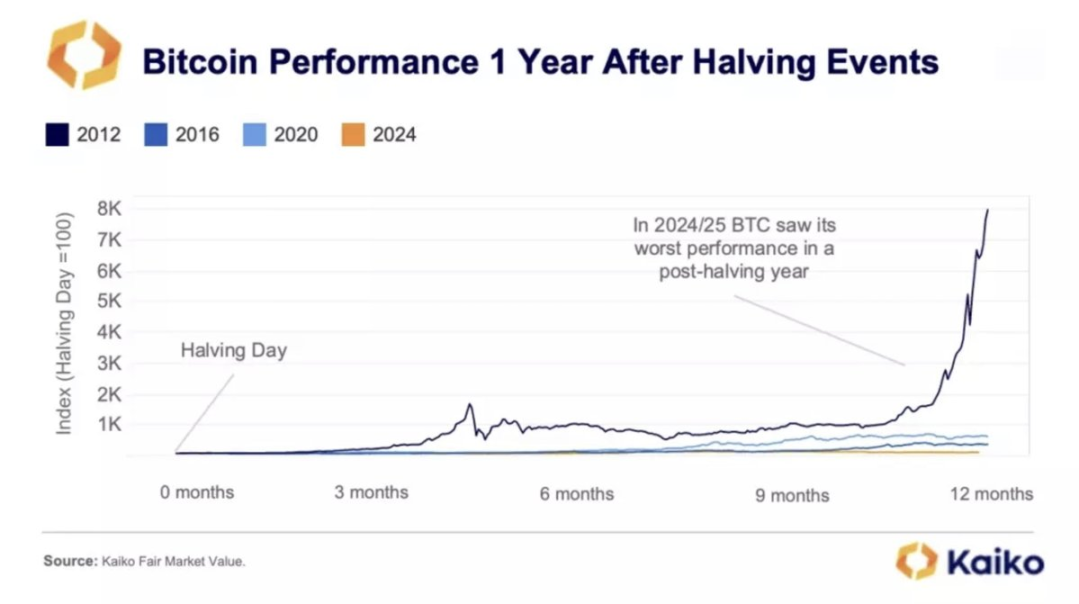
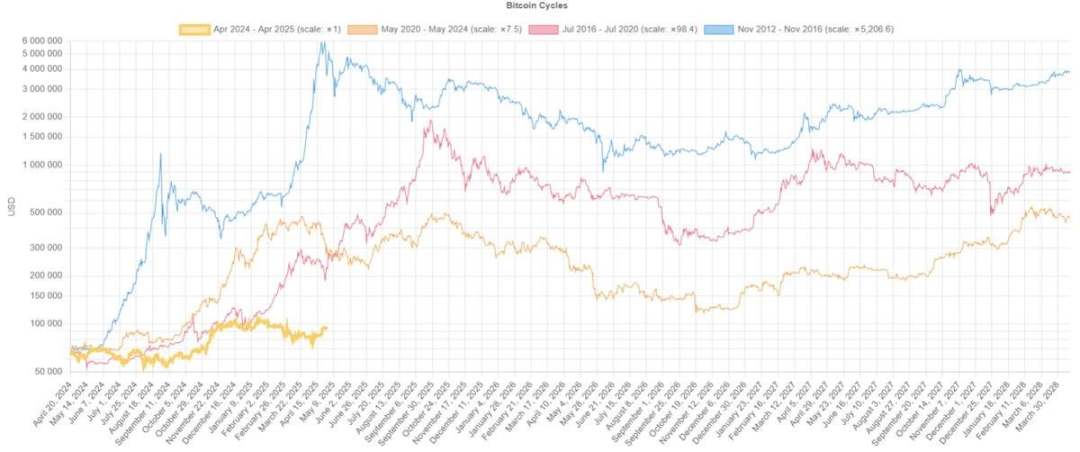
One whole year after the fourth Bitcoin Halving, its performance is surprising: the Bitcoin price has only risen by 46%, and the current trading price is about 10% lower than its historical high. This is the weakest performance after all previous halvings.
Historical Cycles and Current Comparisons
Looking back at history, after the Halving in 2012, the price of Bitcoin surged by 7000%; the Halvings in 2016 and 2020 brought increases of 291% and 541%, respectively. However, this time, after the Halving, Bitcoin has only risen by about 46%, and the anticipated surge after the Halving has not occurred.
The Impact of Market Maturity and Macroeconomic Factors
One reason for the poor performance this time is the increase in uncertainty in the macro economy. The tense global situation and new tariff policies have made investors more cautious. The Economic Policy Uncertainty Index (EPU) is much higher than in previous cycles, reflecting a market environment that is increasingly risk-averse.
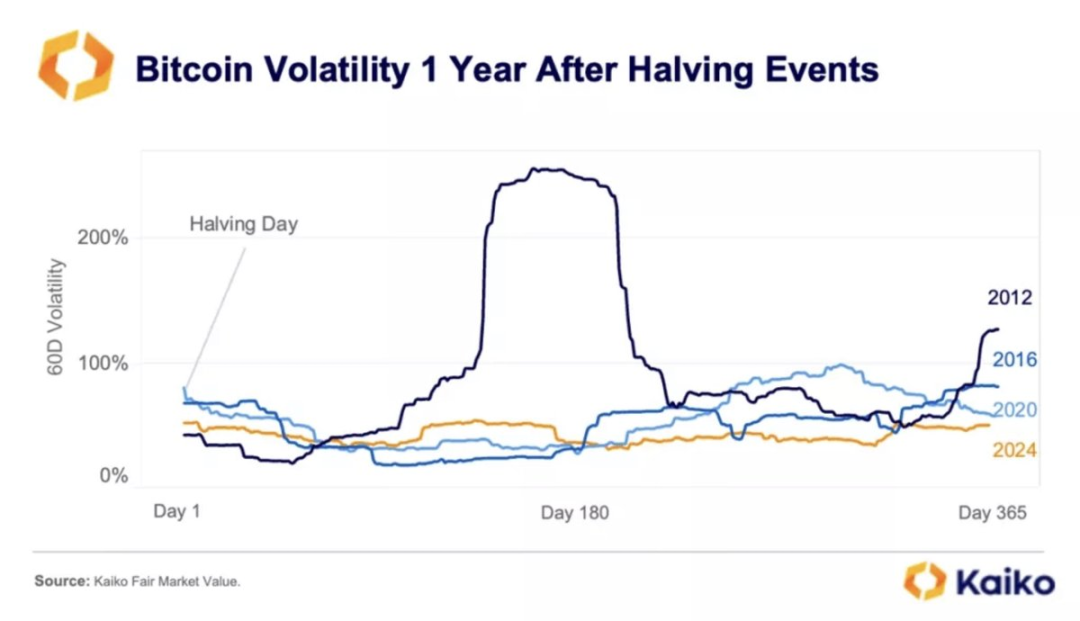
At the same time, the Bitcoin market is gradually maturing. Compared to the early days, its volatility has significantly decreased, and the profit potential for long-term holders is no longer as pronounced. Nowadays, significantly driving the price rise requires more capital investment, and the market’s sensitivity to price has weakened.
Institutionalization and Changing Market Structure
Institutional investors play a larger role than ever before. The rise of spot ETFs and corporate investments has made the market more stable, but also more sensitive to macro trends.
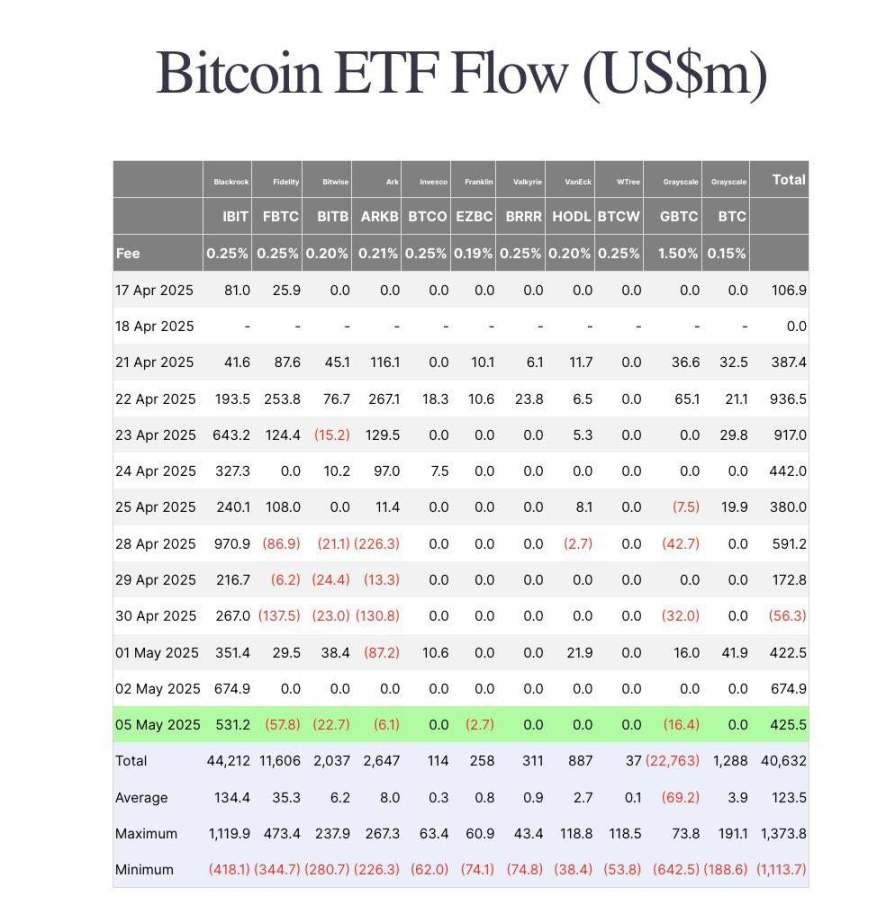
Institutional investors buy in when prices drop and take profits during rebounds, thus smoothing out the price fluctuations of Bitcoin. For example, in early May 2025, Bitcoin ETF attracted $425.5 million in inflows, demonstrating institutional interest in Bitcoin.
Mining and Production Costs
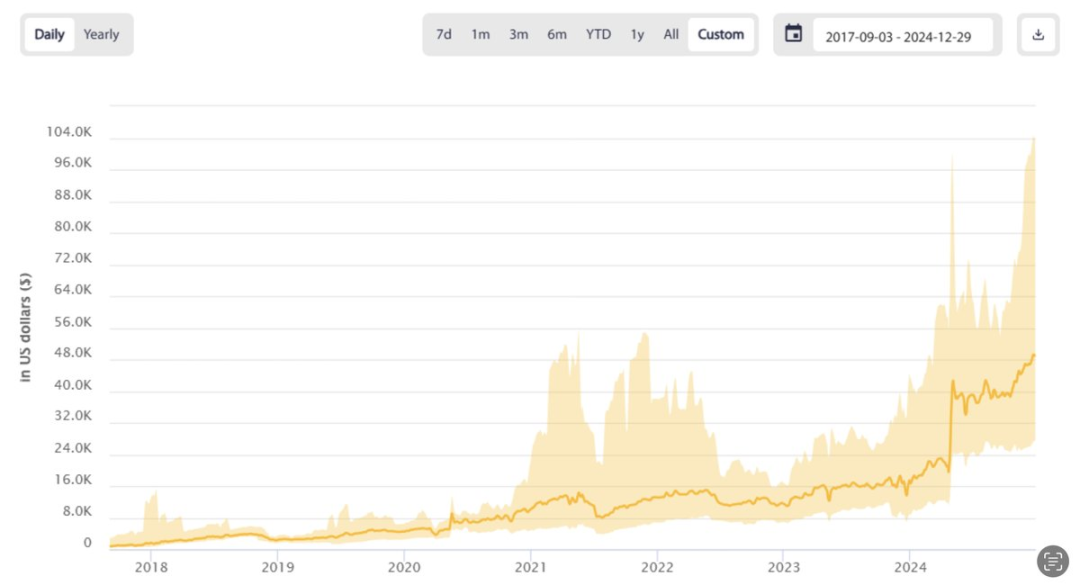
Bitcoin mining still has profit potential. Currently, the average cost to mine one Bitcoin is about 49,887 dollars. The pace of hardware efficiency improvements has slowed, allowing miners to use existing equipment for a longer time, thereby reducing the pressure to frequently upgrade equipment.
Outlook and Forecast
Experts have differing views on future developments. Some predict that Bitcoin may experience a period of consolidation or adjustment before resuming a sustainable bull market — this may only happen after breaking the $100,000 mark. Others, however, are more optimistic, expecting that by the end of 2025, the price of Bitcoin will reach between $120,000 and $200,000.
Although the explosive rise seen in past cycles has not been realized, Bitcoin is entering a new stage of more stable and sustainable growth, which may be a healthier long-term development path.
Disclaimer: The information on this page may come from third parties and does not represent the views or opinions of Gate. The content displayed on this page is for reference only and does not constitute any financial, investment, or legal advice. Gate does not guarantee the accuracy or completeness of the information and shall not be liable for any losses arising from the use of this information. Virtual asset investments carry high risks and are subject to significant price volatility. You may lose all of your invested principal. Please fully understand the relevant risks and make prudent decisions based on your own financial situation and risk tolerance. For details, please refer to
Disclaimer.


