Bitwise Chief Investment Officer Matt Hougan’s latest report states that the four-year cycle driven by Bitcoin halving has become invalid. The three major drivers—Bitcoin halving, interest rate fluctuations, and surges—have significantly weakened in influence or are reversing. Since the approval of the Bitcoin spot ETF in January 2024, the market has entered a “decade-long endurance battle,” with retail investors fixated on short-term volatility and falling into despair, while institutions forecast stablecoins surpassing $3 trillion by 2030.
Why Is the Impact of Bitcoin Halving Rapidly Diminishing?
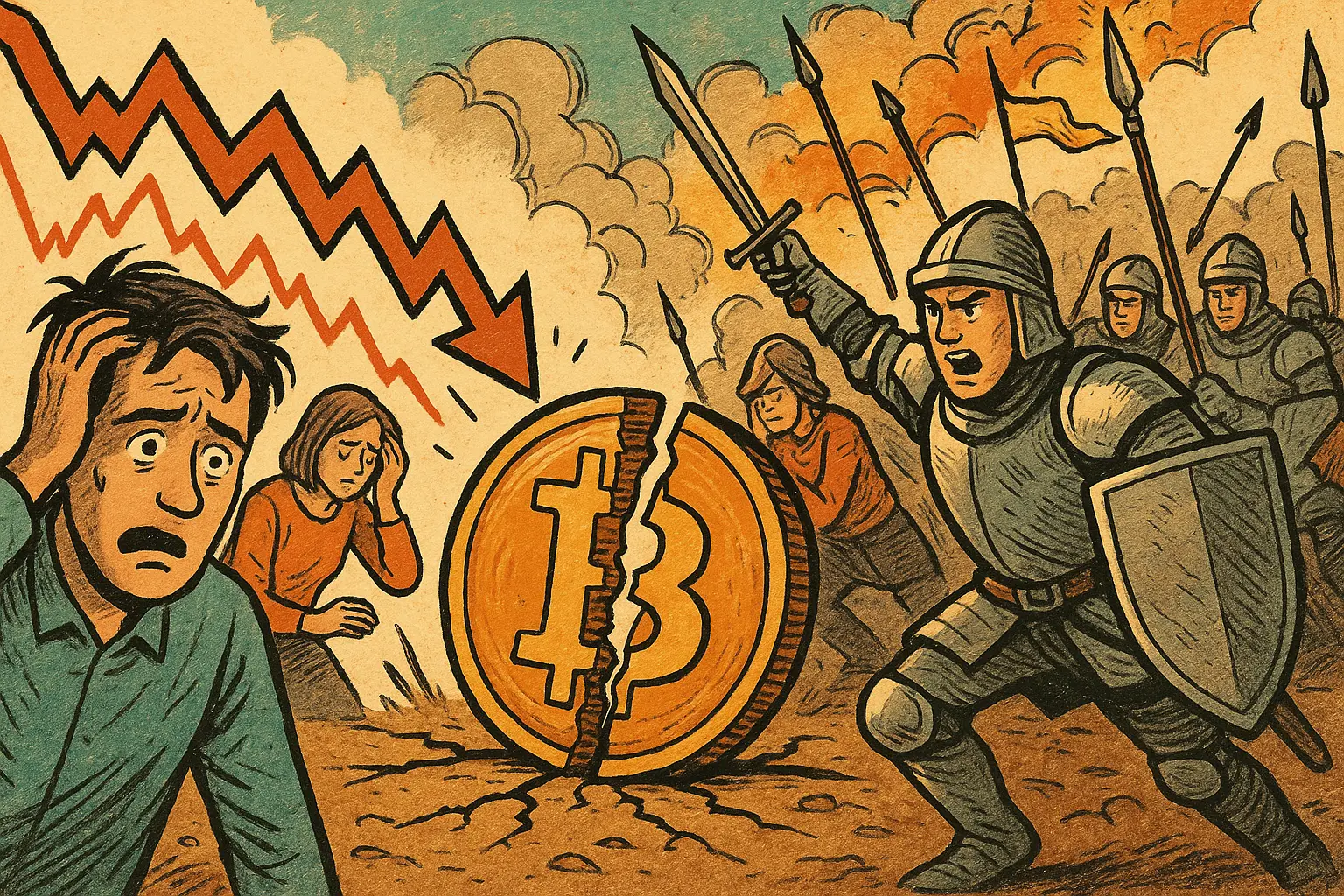
Bitcoin halving was once the core driver of the four-year cycle. The Bitcoin blockchain’s mining rewards are halved every four years, and the slowdown in supply growth theoretically should push prices higher. This logic proved effective in early cycles: after the 2012 halving, Bitcoin surged 5530% in 2013; after the 2016 halving, it rose 1349% in 2017; and following the 2020 halving, it increased 57% in 2021.
However, a closer look reveals a critical issue: the gains after each halving are declining exponentially. From 5530% to 1349% to 57%, the decline is astonishing. The reason is simple: when Bitcoin’s market cap was only a few billion dollars, reducing supply had a huge marginal impact on price; but once the market cap exceeds $2 trillion, the supply change from halving is diluted by the massive existing market.
The latest halving in April 2024 exemplifies this. The mining reward per block dropped from 6.25 BTC to 3.125 BTC, but this has had minimal actual impact on market supply and demand. The reason is that daily trading volume has reached hundreds of billions of dollars, and the newly mined Bitcoin is a drop in the ocean compared to secondary market trading volume. Institutional investors buying Bitcoin daily via ETFs often purchase amounts far exceeding the total daily production of miners worldwide. The decisive influence of halving on prices has become a thing of the past.
More importantly, the approval of the Bitcoin spot ETF in January 2024 has completely changed the game. ETFs provide institutional investors with a compliant and convenient investment channel, with capital inflows far surpassing any previous period. When hundreds of millions or even billions of dollars flow into the market weekly through ETFs, the supply reduction from halving is no longer the main issue. Therefore, using Bitcoin halving as the core basis for predicting market cycles is no longer valid in 2026.
Interest Rate Cycles and Market Frenzy Both Reverse
The second major driver of the four-year cycle is interest rate fluctuations. The two interest rate hikes in 2018 and 2022 triggered market corrections in the crypto space. When the Federal Reserve aggressively raises rates, risk assets come under pressure, with highly volatile cryptos bearing the brunt. This logic has been repeatedly validated in the past two cycles, leading investors to reflexively associate “rate hike cycle = crypto winter.”
But the interest rate environment in 2026 is entirely different. U.S. inflation has fallen from a peak of 9% in 2022 to around 3%, and the Fed has begun a rate-cutting cycle. Lower interest rates mean reduced borrowing costs and improved liquidity, which is positive for risk assets. If rates continue to decline in 2026, this will starkly contrast with the rate-hiking environments of the past two crash years. This reverse macro backdrop undermines the logic of “failing in the fourth year.”
The third major driver is the market cycle of surges and crashes. Years of sharp declines (2014, 2018, 2022) have always been followed by strong rally years. During market frenzy, fraud and speculative bubbles proliferate, and their bursts—such as the 2018 crackdown on ICOs and the 2022 collapse of FTX—directly triggered market crashes.
However, 2025 did not see the kind of frenzy and surge typical of previous cycles. Although Bitcoin hit a new all-time high, the gains were moderate and rational, without retail investors rushing in, Meme coins skyrocketing, or leverage surging—classic bubble features. This “slow bull” pattern indicates that the market has not yet accumulated enough bubbles to burst, lacking the internal momentum for a sharp crash.
The State of the Three Major Drivers of the Four-Year Cycle in 2026
Bitcoin halving: influence has declined from 5530% to 57%, ETF capital flows dominate market supply and demand, halving is no longer the main variable
Interest rate environment: shifting from rate hikes to rate cuts, macro environment turns from negative to positive, reversing historical logic
Market frenzy: 2025’s gains are moderate and rational, bubbles have not yet accumulated, lacking internal conditions for a crash
The Long-Term Battle: Positive and Negative Forces
The so-called long-term battle involves two forces: a strong, persistent, and gradually advancing positive driver, countered by intermittent, intense but short-lived negative shocks. The positive drivers include institutional investors accelerating their deployment, ongoing regulatory improvements, concerns over fiat currency devaluation, and real-world applications like stablecoins and asset tokenization.
These trends aim to revolutionize traditional systems such as capital markets, global payment networks, and the international monetary system, and will take more than a decade to fully materialize. Early signs are evident everywhere: billions of dollars flowing into Bitcoin ETFs, steadily advancing crypto-related legislation in Congress, and rapid expansion of stablecoins and tokenized markets.
Negative shocks include macroeconomic impacts, margin calls on leveraged positions, and malicious events like hacking, scams, and exit scams. The market crash on October 10, 2025, is a typical example: a macro shock triggered a large-scale liquidation of leveraged crypto positions. The impact cycle of such negative shocks usually lasts weeks or months, with rapid onset but limited duration.
Retail investors fall into deep despair, while many institutional investors remain optimistic. The root of this divergence lies in their different time horizons. Retailers focus on the aftermath of the October liquidation, while institutions look forward to 2030, when stablecoin assets are expected to surpass $3 trillion. Both perspectives are valid, just based on different time scales.
Disclaimer: The information on this page may come from third parties and does not represent the views or opinions of Gate. The content displayed on this page is for reference only and does not constitute any financial, investment, or legal advice. Gate does not guarantee the accuracy or completeness of the information and shall not be liable for any losses arising from the use of this information. Virtual asset investments carry high risks and are subject to significant price volatility. You may lose all of your invested principal. Please fully understand the relevant risks and make prudent decisions based on your own financial situation and risk tolerance. For details, please refer to
Disclaimer.
Related Articles
Iran requires oil tankers to pay Bitcoin tolls for the Strait of Hormuz: where geopolitics and cryptocurrency intersect
Iran has set up a tiered toll system in the Strait of Hormuz, requiring tankers to pay a toll of $1 per barrel in RMB or cryptocurrency. This move is reshaping global energy trade and the cryptocurrency market landscape.
InstantTrends11m ago
Adam Back: Bitcoin’s quantum threat is still far off, but the migration window has already opened
Blockstream CEO Adam Back said in an interview that quantum computers have not yet threatened the Bitcoin network, but the industry needs to prepare in advance by migrating keys to a quantum-resistant format. He mentioned that his research team is pushing forward on related work; post-quantum cryptography has already entered the implementation stage. The challenge faced is how to complete the migration in an orderly way.
GateNews33m ago
BTC up 0.78% in 15 minutes: leveraged capital moves in and spot buy pressure converges to drive the rally
From 2026-04-08 13:00 to 13:15 (UTC), the BTC price recorded a +0.78% return. The price fluctuated between 72067.5 and 72789.2 USDT, with a range amplitude of 1.00%. During this period, market volatility exceeded the usual levels of the same timeframe, trading activity rose noticeably, and overall market attention increased.
The main driving force behind this unusual move was the concentrated inflow of leveraged funds into the futures market. Within the event window, BTC futures open interest (OI) increased by 8.09% in a single day. Spot and derivatives market trading volume rose 12% month-over-month compared with the previous hour, indicating
GateNews47m ago
Iran to Implement Bitcoin Payment for Tanker Transit Tolls
Gate News message, according to the Financial Times, Hosseini stated that Iran will charge tanker transit tolls in Bitcoin. This marks a shift in the country's payment methods for maritime transit fees.
GateNews57m ago
Cango discloses selling 2,000 BTC in March, and its Bitcoin holdings drop to 1,025.69 BTC
Gate News , April 8, U.S.-listed Bitcoin miner Cango released a March operational update report. The report shows that in March, the company produced 27.98 BTC from self-mining and completed a strategic sale of 2,000 bitcoins, with the proceeds used to repay BTC-backed loans. As of the end of March, the company’s outstanding Bitcoin-backed loan total was $30.6 million, and its Bitcoin reserves fell to 1,025.69 BTC.
GateNews1h ago
Bitcoin ETF Sees Bank-Level Players: A Deep Dive into Morgan Stanley MSBT Listing
Morgan Stanley Bitcoin Spot ETF (MSBT) began trading on the NYSE Arca on April 8, becoming the first large commercial bank in the U.S. to launch a Bitcoin ETF. The 0.14% fee rate set a new market low record.
InstantTrends1h ago


