

Trade
Basic
Futures
Futures
Hundreds of contracts settled in USDT or BTC
TradFi
Gold
Trade global traditional assets with USDT in one place
Options
Hot
Trade European-style vanilla options
Unified Account
Maximize your capital efficiency
Demo Trading
Futures Kickoff
Get prepared for your futures trading
Futures Events
Participate in events to win generous rewards
Demo Trading
Use virtual funds to experience risk-free trading
Earn
Launch
CandyDrop
Collect candies to earn airdrops
Launchpool
Quick staking, earn potential new tokens
HODLer Airdrop
Hold GT and get massive airdrops for free
Launchpad
Be early to the next big token project
Alpha Points
Trade on-chain assets and enjoy airdrop rewards!
Futures Points
Earn futures points and claim airdrop rewards
Investment
Simple Earn
Earn interests with idle tokens
Auto-Invest
Auto-invest on a regular basis
Dual Investment
Buy low and sell high to take profits from price fluctuations
Soft Staking
Earn rewards with flexible staking
Crypto Loan
0 Fees
Pledge one crypto to borrow another
Lending Center
One-stop lending hub
VIP Wealth Hub
Customized wealth management empowers your assets growth
Private Wealth Management
Customized asset management to grow your digital assets
Quant Fund
Top asset management team helps you profit without hassle
Staking
Stake cryptos to earn in PoS products
Smart Leverage
New
No forced liquidation before maturity, worry-free leveraged gains
GUSD Minting
Use USDT/USDC to mint GUSD for treasury-level yields

More


Trending Topics
View More273.66K Popularity
882.93K Popularity
10.64M Popularity
104.9K Popularity
563.44K Popularity





Pin
Japanese and South Korean stock markets open higher and continue to rise, with Samsung Electronics up 5%, and the FTSE China A50 Index futures opening up 0.13%.
On February 19, driven by a rebound in technology stocks and positive U.S. economic data, U.S. stocks performed well overnight, leading to a general rise in Asian markets. Geopolitical tensions pushed oil prices higher, and after posting the largest single-day gain since October last year, crude oil continued its upward momentum.
Australian and Japanese stock markets strengthened, with South Korea’s benchmark index reaching a new all-time high. The previous trading day saw major Wall Street indices close higher, with the S&P 500 up 0.6% and the tech-heavy Nasdaq 100 up 0.8%.
The strong rebound in the technology sector indicates that market concerns over the disruptive impact of artificial intelligence are gradually easing, and investors are entering the market at lows to seize opportunities in stocks with valuations returning to reasonable levels. Paul Stanley, managing partner at Granite Bay Wealth Management, said that the sell-off in software stocks may be “excessive,” as it is largely an instinctive reaction where investors are trying to determine which companies in AI will win and which will lose. He stated:
In the currency markets, the dollar rebounded from recent lows, while the yen remained under pressure. The latest Federal Reserve meeting minutes showed clear disagreements among policymakers regarding the future path of interest rates. The minutes hinted that even with the new chair taking office in May, pushing for rate cuts could face significant resistance.
Corpay Asia-Pacific currency strategist Peter Dragicevic said:
Key market movements are as follows:
The Seoul Composite in South Korea rose 3%, hitting a record high. Samsung Electronics surged over 4%, with reports of negotiations for HBM4 at $700 per unit.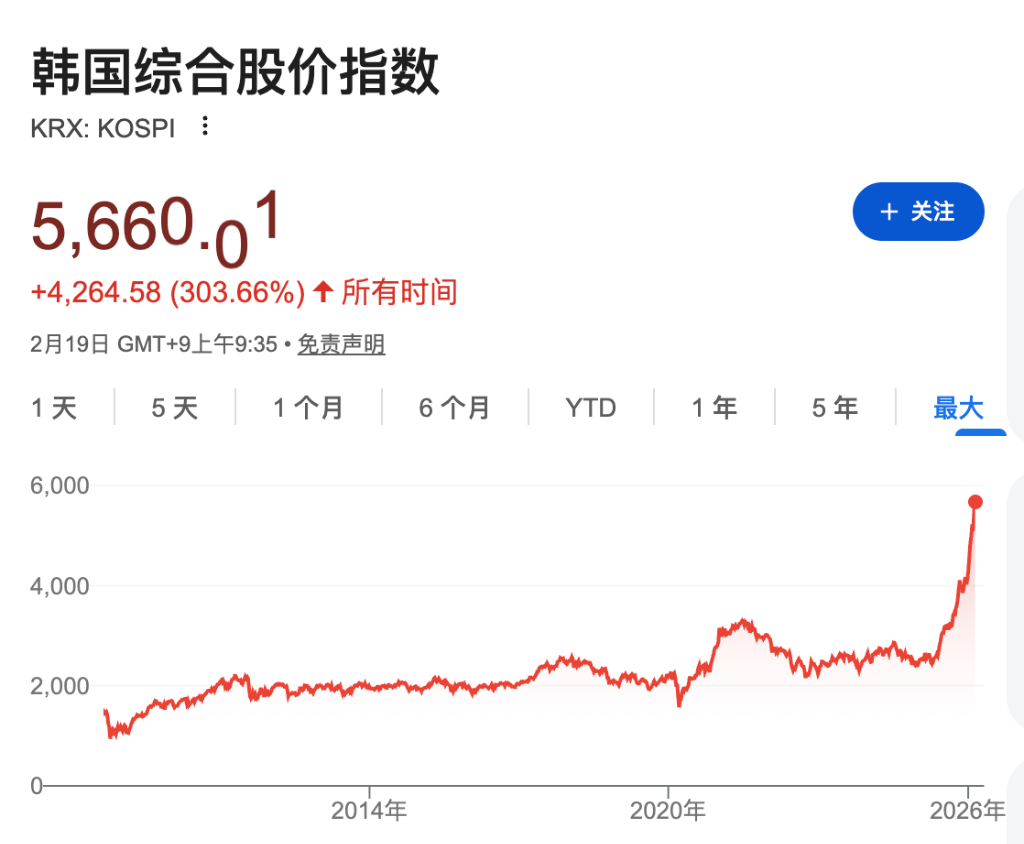
Dragged down by the recent decline in U.S. Treasuries, Japanese government bond futures continued to weaken. The traditional correlation between the two markets makes it difficult for Japan to shake off external pressures.
Investors are closely watching the upcoming 20-year government bond auction later today, with a scale of about 800 billion yen. Citi strategist Tomohisa Fujiki believes that the upside for ultra-long-term bonds is limited, and demand may only be a short-term phenomenon, expected to gradually fade by the end of March.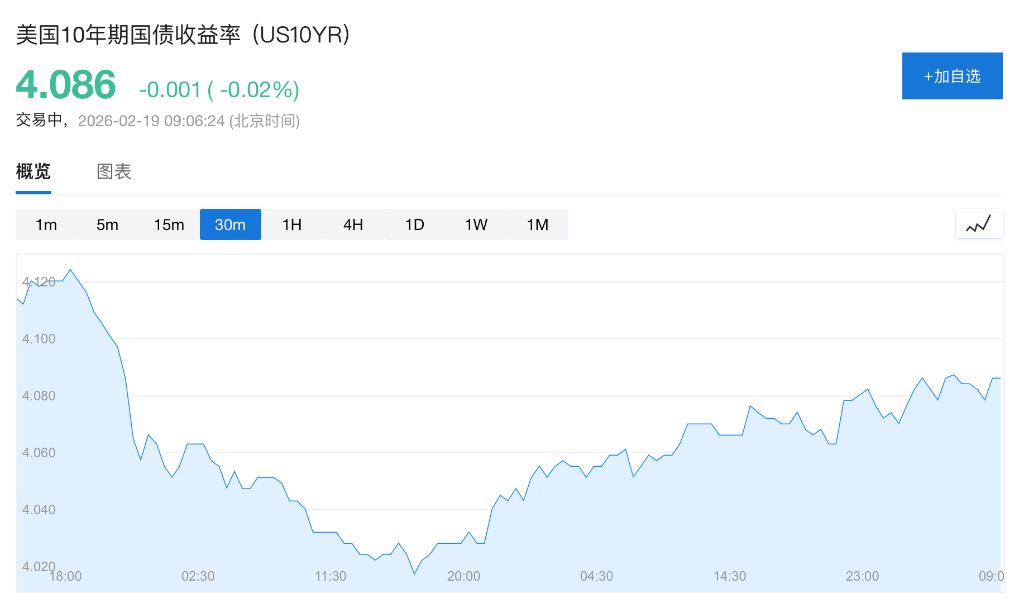
The dollar continues to strengthen, putting pressure on the yen. During Thursday’s Asian session, USD/JPY stabilized around 154.6, down from the overwhelming victory in the recent election by Prime Minister Fumio Kishida, which saw the pair at around 152.
On the news front, the Trump administration announced a $36 billion investment project, the first of Japan’s previously pledged $550 billion investment plan to the U.S.
For a long time, the yen has remained weak due to low domestic interest rates and concerns over fiscal deficits. However, recent market optimism about Japan’s economic growth prospects has provided some support for the yen.
ING Global Research Director Chris Turner said:
Due to escalating risks of conflict between the U.S. and Iran, gold’s appeal as a safe-haven asset has increased, with prices edging higher in Asian morning trading. Spot gold rose briefly by 0.2%, reaching $4,986 per ounce.
InTouch Capital Markets analysts noted that concerns about a potential U.S.-Iran war are heating up again. Citing media reports, they said that given the bleak prospects for a deal, the Trump administration might prefer conflict with Iran, with the possibility of joint action with Israel being the most likely scenario.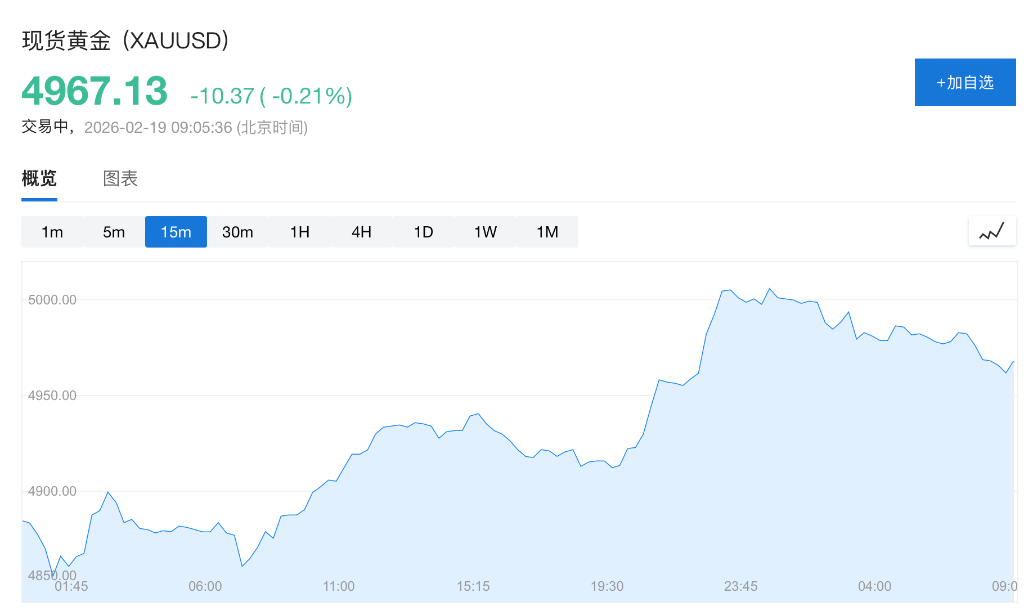
Geopolitical tensions have intensified, and oil prices surged then stabilized. Reports earlier indicated that U.S. military intervention in Iran could occur sooner than expected, reigniting supply concerns.
Wednesday’s close data showed WTI crude oil rose 4.6% to above $65, while Brent crude returned to the $70 mark, reaching a more than two-week high. Axios reported that U.S. military operations could last for several weeks, and Israel is actively pushing plans to overthrow the Iranian regime. The rapid escalation of geopolitical risks is now a dominant short-term driver of oil prices.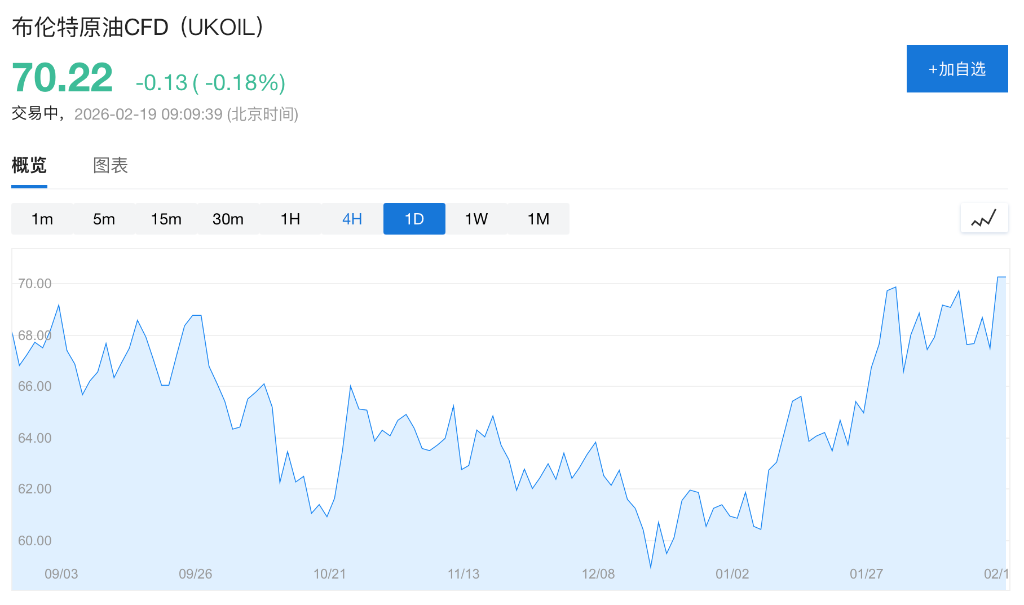
Risk Disclaimer and Terms of Liability
Market risks are inherent; please invest cautiously. This article does not constitute personal investment advice and does not consider individual users’ specific investment goals, financial situations, or needs. Users should consider whether any opinions, views, or conclusions herein are suitable for their particular circumstances. Investment is at your own risk.