Author: Gu Yu, ChainCatcher
After several months, the Layer 1 blockchain track has recently seen another funding round valued at $1 billion or more. The high-performance parallel Layer 1 blockchain Pharos announced a new round of capital cooperation with GCL New Energy Holdings, a listed company on the Hong Kong Stock Exchange. GCL New Energy invested in Pharos at a valuation of $950 million, with an amount of $24.73 million.
GCL New Energy is a well-known private photovoltaic power generation company in China, mainly engaged in the development, construction, operation, and management of solar power plants. This aligns closely with Pharos’s focus on RWA (Real-World Assets) development, making this a strategic deal beneficial to both parties.
However, this transaction has raised many questions in the market. In the current sluggish secondary market, can Layer 1 and RWA projects still achieve valuations of $1 billion or more in the primary market? Would listed companies easily invest in such high-risk assets?
Mutually Binding Betting Agreement
Many details hidden within the complex announcements indicate that this is not a typical direct financing deal. Instead, it is a bundled transaction involving mutual investments, staged deliveries, and market cap betting, with all core conditions firmly controlled by GCL New Energy. If any condition is not met, the entire deal becomes a non-binding document with no substantive effect.
Specifically, Pharos’s subscription for GCL New Energy shares is a pre-commitment investment, allowing it to subscribe for up to 183.48 million new shares at HKD 1.05 each, worth about HKD 150 million. This price is approximately 15% below GCL New Energy’s current price of HKD 1.23.
While this seems advantageous for Pharos, GCL New Energy is clearly experienced in financial maneuvers. The subscription is subject to five strict delivery thresholds, and if any of these conditions are not met, all subsequent deliveries will be terminated. The entire agreement is valid for only 18 months. The investment is split into five tranches, with unlocking conditions tied to the listing performance of Pharos Token:
-
The first tranche (50%) will only be delivered if Pharos Token is successfully approved for listing on relevant Web3 exchanges and the opening price is not lower than the company’s agreed investment price (based on a $950 million valuation). If listing fails or the price drops at opening, the company can refuse to proceed.
-
The second tranche (12.5%) will only be delivered if, within the first three months of listing, the daily average FDV (Fully Diluted Valuation) does not fall below $760 million.
Subsequent tranches have similar unlocking conditions, mainly based on the average FDV over different periods: months four to six, seven to nine, and ten to twelve.
Once Pharos Token meets the delivery conditions, the subscription for GCL New Energy shares will take effect, and GCL New Energy’s subscription will also become effective, with the same unlocking ratio.
In other words, after Pharos Token’s successful listing, Pharos will immediately deliver HKD 75 million worth of shares to GCL New Energy, while GCL New Energy, at a valuation of $950 million, will acquire tokens worth about HKD 96.73 million.
For GCL New Energy, this is almost a risk-free deal. It can obtain HKD 75 million in share subscription funds and, if Pharos Token performs well, can also acquire tokens worth nearly HKD 100 million at the initial opening valuation, with significant profit potential.
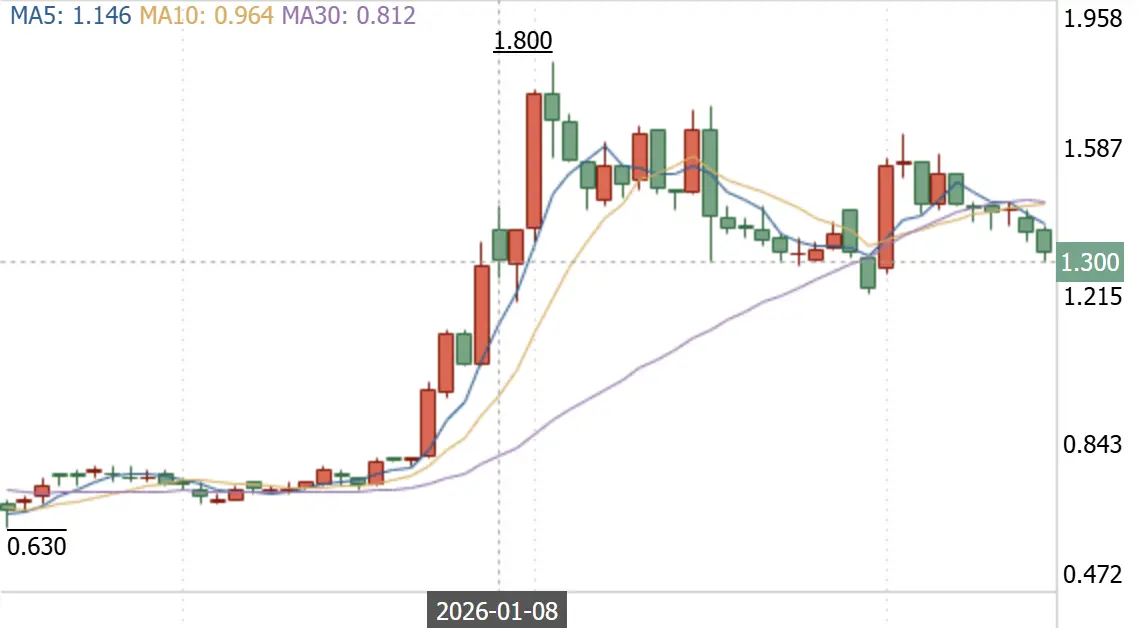
This positive outlook is already reflected in the stock price. Although GCL New Energy first announced the partnership with Pharos on January 8, its stock price had already risen sharply a week earlier, from HKD 0.8 to HKD 1.3 on the announcement date, and later peaked at HKD 1.8 before declining. In the trading market, this pattern resembles typical “pump and dump” behavior.
Another potential issue is that Pharos previously disclosed a total fundraising of only $8 million, equivalent to HKD 62.61 million. Even if the pre-investment conditions are met, this funding gap could be a challenge for Pharos.
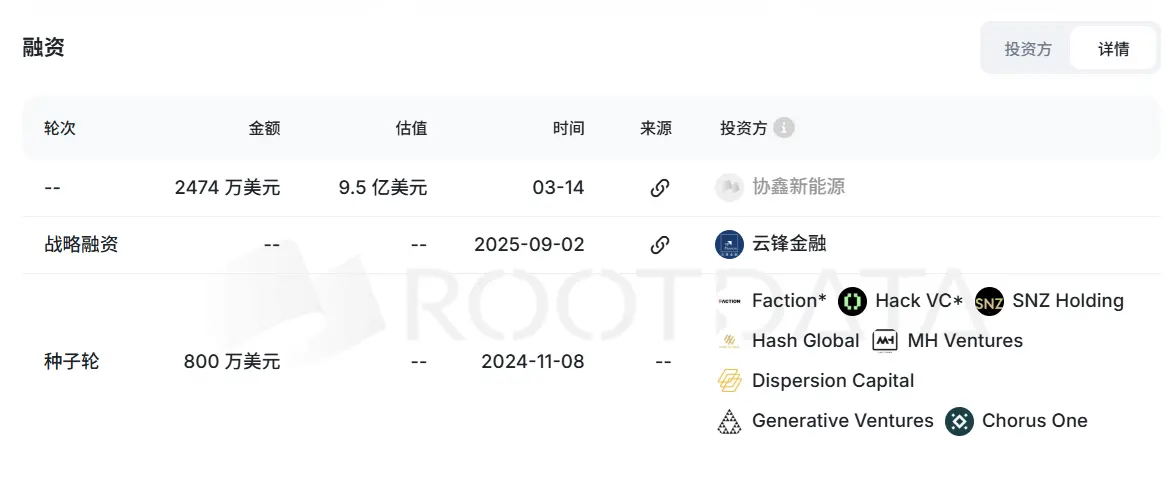
Source: RootData
How Did the $950 Million Valuation Come About?
Another interesting detail is that GCL New Energy also explained in the agreement why it valued Pharos at $950 million. According to the agreement, this valuation is mainly based on the on-chain total locked assets (TVL). In the Layer 1 sector, the average ratio of fully diluted market cap to total locked assets for Ethereum, BSC, Hyperliquid, Tron, and Avalanche is 10x, with a median of 6x. The ratio for similar technical projects like Monad is also 10x.
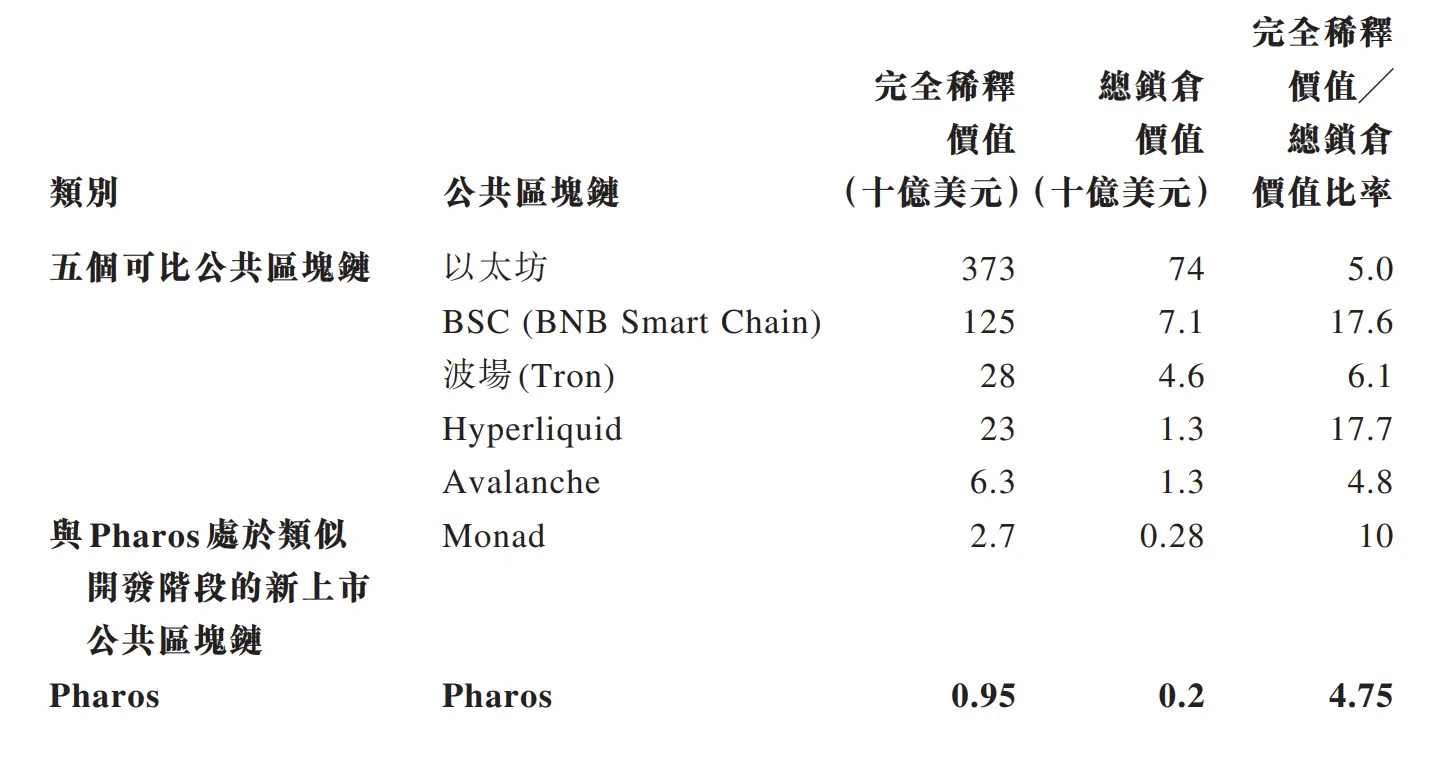
Therefore, both parties decided to set Pharos’s valuation coefficient at 4.75x. Currently, Pharos’s total locked assets are valued at $250 million, and with a 20% discount, the initial valuation is calculated at $950 million.
Regarding the types of assets locked on-chain, the agreement discloses that 51% of Pharos’s locked assets come from distributed photovoltaic operators and centralized power plant operators, representing renewable energy assets. The remaining 49% come from fund management companies and credit asset issuers, representing financial assets.
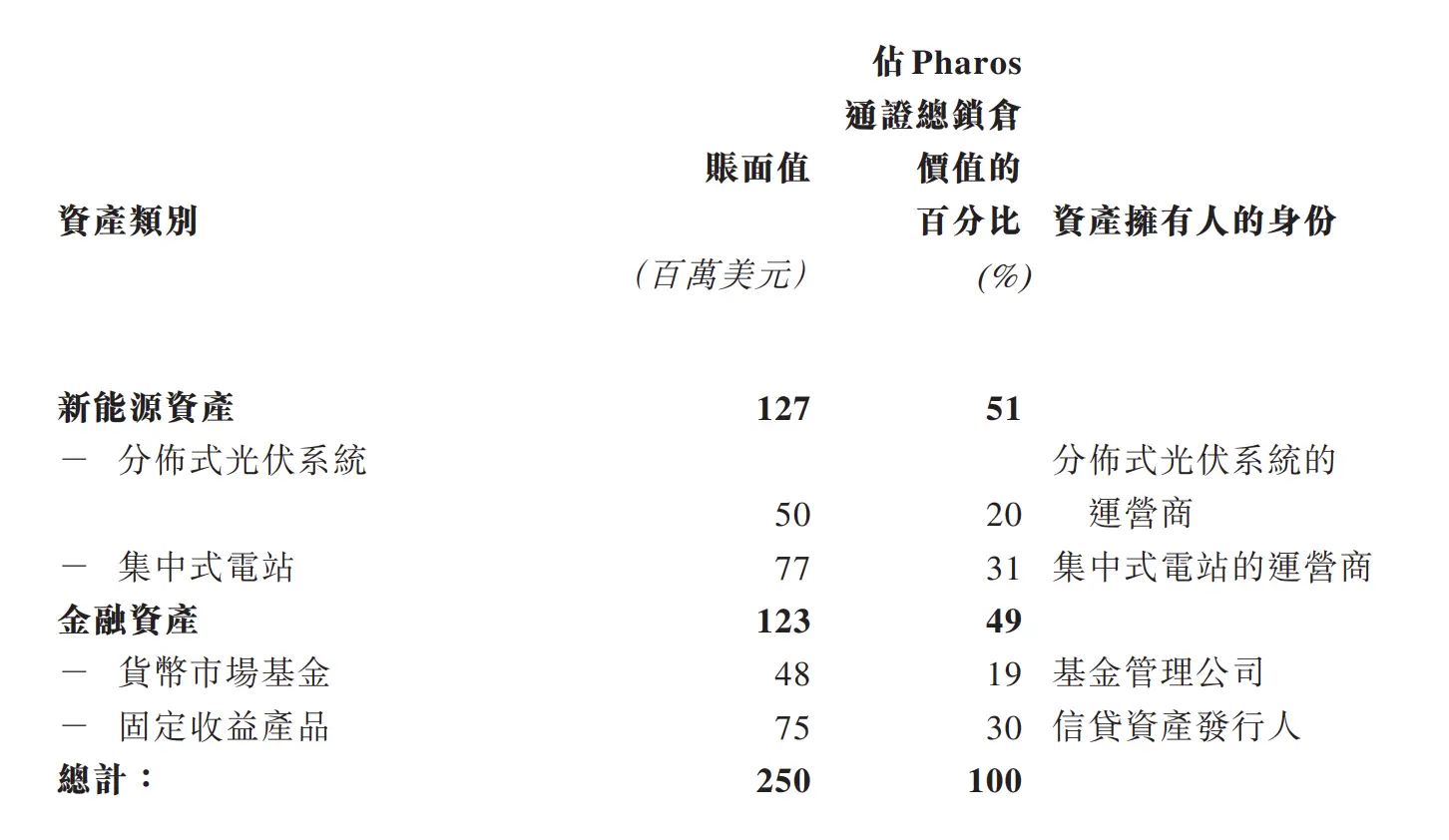
This means that Pharos’s total locked asset value includes physical assets, specifically power plants and photovoltaic assets closely related to the involved parties. This approach sets a precedent in the Layer 1 industry.
In fact, Pharos has not yet officially launched its mainnet, and professional on-chain data platforms like DeFillama have not recorded Pharos’s locked assets. The $250 million figure is solely disclosed by the project team.
The early stock price movements, combined with the layered betting conditions and inflated valuation calculations in the agreement, suggest the real purpose of this deal: for GCL New Energy, it may be a financial maneuver to hype the stock price and boost company valuation using crypto concepts; for Pharos, it appears to be an attempt to leverage the listed company’s physical assets to create high valuation hype and prepare for token listing. Both sides are pursuing their interests while leaving risks to the market and future investors.
When an industrial company injects physical assets into a Layer 1 project and easily creates a $950 million valuation based on multiples of asset value, isn’t this a far-fetched capital game? Does the crypto market really need such RWAs?
Disclaimer: The information on this page may come from third parties and does not represent the views or opinions of Gate. The content displayed on this page is for reference only and does not constitute any financial, investment, or legal advice. Gate does not guarantee the accuracy or completeness of the information and shall not be liable for any losses arising from the use of this information. Virtual asset investments carry high risks and are subject to significant price volatility. You may lose all of your invested principal. Please fully understand the relevant risks and make prudent decisions based on your own financial situation and risk tolerance. For details, please refer to
Disclaimer.
Related Articles
$1B Bitcoin Bet: Strategy Adds 13,927 BTC Amid Market Uncertainty
_Strategy adds 13,927 BTC for $1B, reinforcing long-term accumulation strategy_
_Total holdings reach 780,897 BTC with average acquisition price near $75,577_
_Firm posts 5.6% YTD Bitcoin yield while maintaining steady buying pace_
Strategy expanded its Bitcoin holdings with a $1 billion p
LiveBTCNews57m ago
Bitmine advances to the NYSE main board! Tom Lee: U.S. stocks may have hit bottom, and selling pressure on Ether could ease
Bitmine has officially moved from the U.S. segment of the New York Stock Exchange to the main board, marking an important milestone for the company. Although its share price has fallen sharply, it has still increased the share repurchase plan limit to $4 billion. The company holds a large amount of Ether, and it expects that a rebound in the crypto market will help improve its assets and share price performance.
CryptoCity1h ago
Morgan Stanley’s BTC ETF Debuts With $62M Inflows & Rate Cut
Morgan Stanley launched its spot Bitcoin ETF, MSBT, on NYSE Arca, achieving strong trading volumes and low fees. This marks a significant step for traditional finance in crypto exposure, leveraging the bank's vast wealth management network despite market volatility.
DailyCoin1h ago
Ethereum spot ETF saw a net inflow of $9.4404 million yesterday, with BlackRock’s ETHB recording a daily inflow of $5.7776 million
On April 13, Ethereum spot ETF net inflows reached $9.4404 million, rising for three consecutive days. Among them, the BlackRock Staked ETH ETF had the largest net inflow, at $5.7776 million, bringing its historical total net inflows to $383 million. At the same time, Grayscale’s Ethereum mini trust ETF also performed well, with net inflows of $5.1508 million. Overall, Ethereum spot ETFs’ net assets were $12.98B.
GateNews3h ago
Yesterday, Bitcoin spot ETFs had net outflows of $291 million, and Fidelity's FBTC had net outflows of $229 million
On April 13, Bitcoin spot ETF total net outflows were $291 million, BlackRock’s IBIT had net inflows of $34.7012 million, Bitwise’s BITB had net inflows of $11.8758 million, and Fidelity’s FBTC had net outflows of $229 million. Total spot ETF assets net asset value was $94.51B, and the net asset ratio was 6.45%.
GateNews4h ago
Bitmine Upgrades to the NYSE Main Board! Tom Lee: US stocks may have bottomed out, and selling pressure on Ether could ease
Bitmine has officially moved from the New York Stock Exchange U.S. board to the main board, marking a major milestone for the company. Despite a sharp drop in the stock price, it has still increased the share repurchase plan to $4.0 billion. The company holds a large amount of Ethereum, and expects that a rebound in the crypto market will help strengthen its assets and stock price performance.
CryptoCity4h ago


