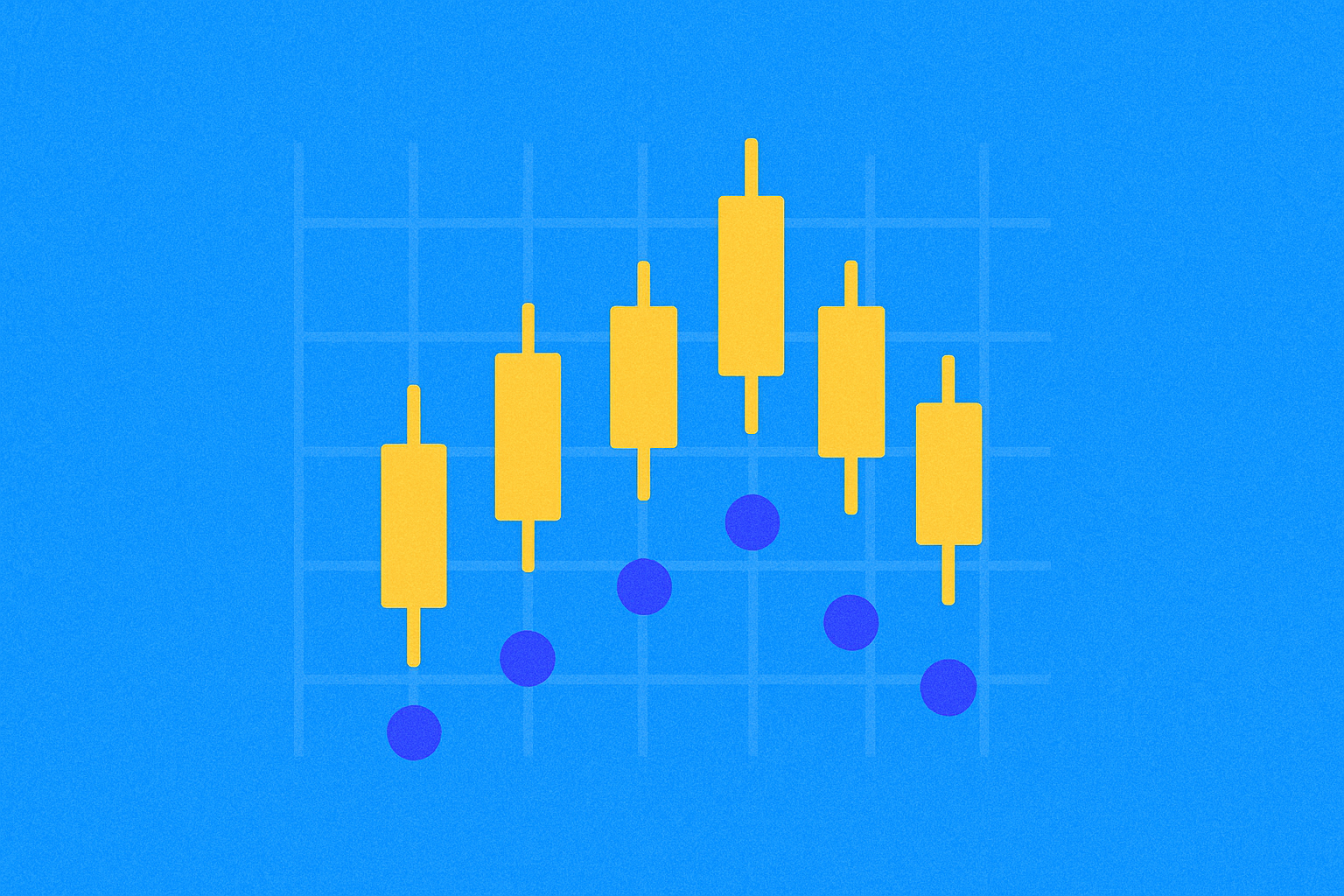
What Is Cryptocurrency Technical Analysis?
Cryptocurrency technical analysis refers to the practice of analyzing charts based on price and trading volume to identify trends.
This method relies on “chart-based decision-making,” using price movements and volume changes to pinpoint potential entry and exit points as well as risk control levels. Technical analysis does not assess the fundamental quality of a crypto project; rather, it focuses on interpreting the behavior patterns of market participants.
Common tools include candlestick charts, support and resistance levels, moving averages, the Relative Strength Index (RSI), Bollinger Bands, and order books along with depth charts. These instruments work in combination to form trading plans and rules for stop-loss and take-profit management.
Why Is Understanding Cryptocurrency Technical Analysis Important?
Technical analysis helps you make structured decisions in a highly volatile market.
Crypto markets operate 24/7 with rapid price swings. Technical analysis breaks down complex trends into actionable steps, such as “where to enter, where to exit, and where to place stop-loss orders.” When price volatility is high, having a systematic plan reduces the likelihood of emotional trading.
In spot trading, technical analysis improves market timing and helps avoid chasing prices at obvious resistance levels. In derivatives trading, it aids in managing position sizes and leverage to minimize significant drawdowns. Even if you do not trade frequently, technical analysis enables you to read market rhythms and plan staggered entries or exits.
How Does Cryptocurrency Technical Analysis Work?
It extracts behavioral insights from charts, prices, and trading volume.
First, candlestick charts capture the open, close, high, and low for each time frame. The “body” and “wicks” of the candle indicate buying and selling pressure. For instance, a long lower wick often signals a rebound attempt at lower price levels, while a long upper wick can signal strong selling at highs.
Second, support and resistance are key price zones where reversals or stalls frequently occur. Think of support as a “floor” and resistance as a “ceiling.” These levels are derived from historical lows, highs, or high-volume areas and often serve as reference points for stop-loss and take-profit decisions.
Third, moving averages track the average price over a given period—commonly 20-day or 50-day periods. Price above the moving average suggests short-term strength; falling below a key moving average implies weakening momentum. Moving average crossovers can indicate trend shifts but should not be used as the sole entry signal.
Fourth, RSI ranges from 0 to 100 and measures bullish versus bearish momentum over a set period. Readings above 70 typically indicate overbought conditions, while readings below 30 suggest oversold markets. Divergences between RSI and price (e.g., price hitting new highs without RSI confirmation) may signal waning momentum.
Fifth, Bollinger Bands consist of a middle band with upper and lower bands that represent volatility boundaries. When the bands contract (“squeeze”), it often precedes an expansion in volatility and potential trend formation. Touching the upper band does not guarantee a reversal; it should be evaluated alongside trend and volume context.
Sixth, trading volume is crucial for confirming signals. An uptrend accompanied by high volume is more robust; if volume declines during an uptrend, it increases the risk of a false breakout. During downtrends, high volume signals concentrated selling pressure, while low volume may indicate sellers losing strength.
Finally, turn chart signals into actionable trading plans: specify entry points, invalidation points (stop-loss), target zones (take-profit), and position sizes. Many traders apply a risk/reward (R:R) ratio like 1:2, but this should be tailored based on asset volatility and personal risk tolerance.
How Is Technical Analysis Used in the Crypto Space?
Technical analysis is most frequently applied in spot markets, derivatives trading, and order book observation.
In spot trading, traders use support levels and moving averages to plan staggered buys or sells. For example, after Bitcoin breaks above a major resistance with strong volume, many traders wait for a pullback to confirm the breakout before entering—reducing the risk of buying at local highs.
In contract trading, technical analysis is combined with funding rates and open interest. Funding rates reflect the cost balance between long and short positions: a positive rate means longs are paying shorts (bullish sentiment); a negative rate indicates shorts pay longs (bearish sentiment). Rising open interest signals increased participation in the derivatives market—potentially amplifying trend continuation or reversals.
On order books and depth charts, clusters of large buy or sell orders can act as temporary support or resistance zones. If price repeatedly approaches a dense sell wall without breaking through, short-term traders may become more cautious—reducing positions or waiting for clearer signals.
How Can You Apply Technical Analysis on Gate?
The goal is to turn charting tools into executable steps.
Step 1: Open the BTC/USDT pair or any pair you follow on Gate. Select your preferred timeframe on the chart (e.g., 1-hour, 4-hour, daily). Shorter timeframes capture market rhythm; longer timeframes establish trend context.
Step 2: Add basic indicators. Start with the 20-day and 50-day moving averages to observe price positioning relative to these averages; then add RSI and Bollinger Bands to assess momentum and volatility ranges. More indicators do not always yield better results—prioritize two or three that you fully understand.
Step 3: Mark key support and resistance levels. Highlight historical lows, highs, and high-volume zones as critical areas. For example: “If closing price breaks above resistance on strong volume, consider entering; if it closes below support, execute stop-loss.”
Step 4: Review Gate’s depth chart and order book. Observe large order clusters near your marked key levels. If significant orders are placed near these areas, expect greater short-term volatility—set stop-loss and take-profit orders in advance.
Step 5: Place trades and manage risk. Always set stop-loss and take-profit prices within the order panel—do not rely on memory alone. In contract trading, keep leverage low, split your position into several parts, scale in/out gradually, and avoid going all-in at once.
Step 6: Review and adjust. After each trade, record your “entry rationale, outcome, and lessons learned.” Regularly review your strategy’s performance under different market conditions (ranging from sideways to trending or volatile markets) and make incremental improvements.
What Are the Latest Trends or Data Points in Crypto Technical Analysis?
As of early 2026, volatility metrics and derivatives data remain critical focus areas.
Over the past year, daily intraday volatility for Bitcoin and major altcoins has often ranged between 2%–5%, spiking above 5% on major event days—and reaching or exceeding 8% in extreme cases. This increases the risk of false signals on shorter timeframes—highlighting the need for disciplined stop-losses and position management.
Throughout 2025, leading exchanges saw combined daily spot trading volumes fluctuate within tens of billions of dollars. High-volume days were more likely to see breakout-followed-by-continuation moves; during low-volume periods, fake breakouts and frequent stop hunts were more common.
From Q3 to Q4 of 2025, open interest in major altcoin derivatives often surpassed $10 billion. Rapid spikes in open interest frequently signaled trend acceleration or potential crowded-trade risks; analyzing funding rates helps gauge overall market sentiment.
Funding rates have fluctuated between positive and negative over the past six months—typically within ±0.03%, but occasionally exceeding 0.1% during extremes. Persistently positive rates suggest crowded longs; any sudden price downturn can trigger forced liquidations and amplify volatility. Persistent negative rates indicate crowded shorts; any rebound is prone to short squeezes.
In terms of market cap structure for 2025, Bitcoin dominance remained in the mid-to-high range with frequent sector rotations among altcoins. When Bitcoin dominance is rising, “breakout-following” strategies tend to work better on major coins; during rotation periods, diversified allocation with individualized stop-levels becomes more important.
These trends reflect shifting liquidity conditions, macroeconomic expectations, and evolving crypto narratives. Regardless of changing data points, always consult Gate’s real-time volume data, funding rates, and open interest before executing your chart-based trading plan.
How Does Technical Analysis Differ from Fundamental Analysis in Crypto?
Technical analysis focuses on price action; fundamental analysis examines project value and supply-demand structures.
Technical analysis asks “what is the market doing now?” using charts and volume to identify trends and key levels—producing rules for entering or exiting trades. Fundamental analysis asks “why is this project worth holding long-term?”—studying team backgrounds, tokenomics, use cases, and competitive landscape.
In practice, combining both approaches yields optimal results: use fundamentals to select promising coins or sectors to follow; then apply technical analysis for trade execution and risk management—providing both direction and actionable plans.
Key Terms
- Candlestick Chart: A graphical representation showing cryptocurrency price movements used for analyzing trends and trading signals.
- Moving Average: An indicator that calculates average prices over a set period to help identify trend direction.
- Support & Resistance Levels: Price points where movement tends to pause or reverse—used to predict rebounds.
- RSI Indicator: Relative Strength Index—a technical indicator that measures momentum and overbought/oversold conditions.
- Trading Volume: The amount traded within a given period—reflecting market participant interest.
- MACD: Moving Average Convergence Divergence—a trend-following indicator used to identify momentum shifts and buy/sell signals.
FAQ
How can beginners quickly get started with technical analysis? Which basic indicators should they learn first?
The foundational trio for beginners are candlestick charts, support/resistance levels, and moving averages. The candlestick chart visualizes price movements intuitively; support/resistance levels help determine entry/exit points; moving averages show overall trend direction. Start with these three core indicators before advancing to others like MACD or RSI once you’ve mastered the basics.
What chart signals may be false breakouts or traps when reading technical analysis?
Common traps include false breakouts, fake bottom bounces, or forced liquidations due to leverage squeezes. A bounce off support does not guarantee trend reversal—always confirm with volume. Signals from single indicators can be manipulated as well. Use multiple indicators for confirmation, set stop-losses to protect capital, and avoid blindly chasing rallies.
Which chart timeframes should I use for technical analysis trading on Gate?
Choose your chart timeframe based on your trading strategy: use 15-minute or 1-hour charts for short-term trades; 4-hour or daily charts for swing trades; weekly or monthly charts for long-term investing. Combine multiple timeframes—use longer ones for overall direction and shorter ones for precise entries—to increase your success rate.
Does technical analysis work differently in bull versus bear markets?
Technical analysis is most accurate during clear bull trends due to directional clarity. In bear markets, there is greater downside room; although rebound signals appear frequently, they are prone to reversals. Sideways markets present the greatest challenge for technical analysis accuracy due to lack of clear direction. Always assess which phase the market is in before choosing your analytical approach.
How should technical analysis be combined with news events? Which takes priority?
News is an external factor that usually takes precedence over technical setups. Major positive news can instantly break through technical resistance; negative news may trigger breakdowns below support levels. Best practice is to use technical analysis for identifying entry points—but set stop-losses ahead of major economic data releases or regulatory news events so that news does not become a “black swan.”