As foundational assets in the crypto market, stablecoins play a central role in decentralized finance, serving as value anchors, mediums of exchange, and core liquidity providers. From early centralized stablecoins to the emergence of overcollateralized models, stablecoin design has gradually evolved from simply maintaining price stability to building broader financial infrastructure.
Against this backdrop, Sky Protocol has upgraded its existing stablecoin system and introduced USDS as a next generation stable asset. USDS not only inherits the decentralized stability mechanism of DAI but also strengthens yield generation and ecosystem integration, allowing it to take on a more central financial role in today’s DeFi landscape.
What Is USDS?
As a decentralized stablecoin within Sky Protocol, USDS is a next generation asset built on top of DAI. Its design aims to maintain a 1:1 peg with the US dollar while offering stronger ecosystem compatibility and expanded financial functionality.
Like traditional stablecoins, USDS is used for storing value, settling transactions, and supporting DeFi applications. What sets it apart is that it was designed from the outset as a composable financial building block. It is not just a price stability tool but also an asset capable of generating yield and integrating directly with protocols.
Why Is USDS Needed? The Upgrade from DAI to USDS
As an early representative of decentralized stablecoins, DAI played a key role in pioneering collateral backed stability mechanisms. However, as DeFi has evolved, a single function focused only on stable value has become insufficient for increasingly complex financial needs.
The launch of USDS is driven by several upgrade requirements:
First, DeFi users are increasingly demanding stable assets that also generate yield. Traditional stablecoins often rely on external protocols for returns, whereas USDS integrates yield mechanisms more deeply into its ecosystem.
Second, protocol layers require more efficient incentive and governance tools. USDS can directly connect with Sky Protocol’s reward systems, turning stablecoins from passive assets into active participants in ecosystem operations.
Finally, as multi-chain environments and complex use cases expand, stablecoins must become more scalable. USDS is designed to better support cross protocol and cross application composability.
The Relationship Between USDS and DAI
USDS is not a replacement for DAI, but an upgrade.
Mechanically, USDS inherits DAI’s core model, including collateralized issuance, debt liquidation, and price stability mechanisms. This means both share the same foundational logic.
In practice, they support 1:1 bidirectional conversion, allowing users to switch freely between DAI and USDS. This ensures a smooth upgrade path while avoiding liquidity fragmentation.
In this sense, DAI can be seen as the base stability layer, while USDS functions as an extended layer built on top of it.
Core Features of USDS
USDS is designed around three pillars: stability, scalability, and incentive alignment. Its key features include:
In terms of decentralization, USDS continues to use an overcollateralization model and does not rely on centralized custodial assets, reducing single point of failure risks.
Within its collateral framework, USDS mirrors DAI, allowing users to mint stablecoins by locking crypto assets, ensuring intrinsic value backing.
From a scalability perspective, USDS is highly composable and can be used across lending, liquidity pools, derivatives, and other DeFi scenarios.
In governance and incentives, USDS integrates directly with Sky Protocol’s reward systems, including token incentives and savings rates. This allows holding and using the stablecoin itself to participate in ecosystem value distribution.
How Does USDS Maintain Stability?
The stability of USDS is supported by a mature decentralized system.
First is the collateral mechanism. Users must deposit assets worth more than the amount they borrow, ensuring each unit of USDS is backed by sufficient value.
Second is the liquidation mechanism. When the value of collateral falls below a certain threshold, the system automatically triggers liquidation to maintain overall solvency.
Additionally, interest rates and supply demand adjustments play a role. By tuning borrowing costs and savings yields, the protocol can influence market behavior and maintain price stability during demand shifts.
Together, these mechanisms allow USDS to maintain its peg to the US dollar without centralized intervention.
The Role of USDS in the Sky Protocol Ecosystem
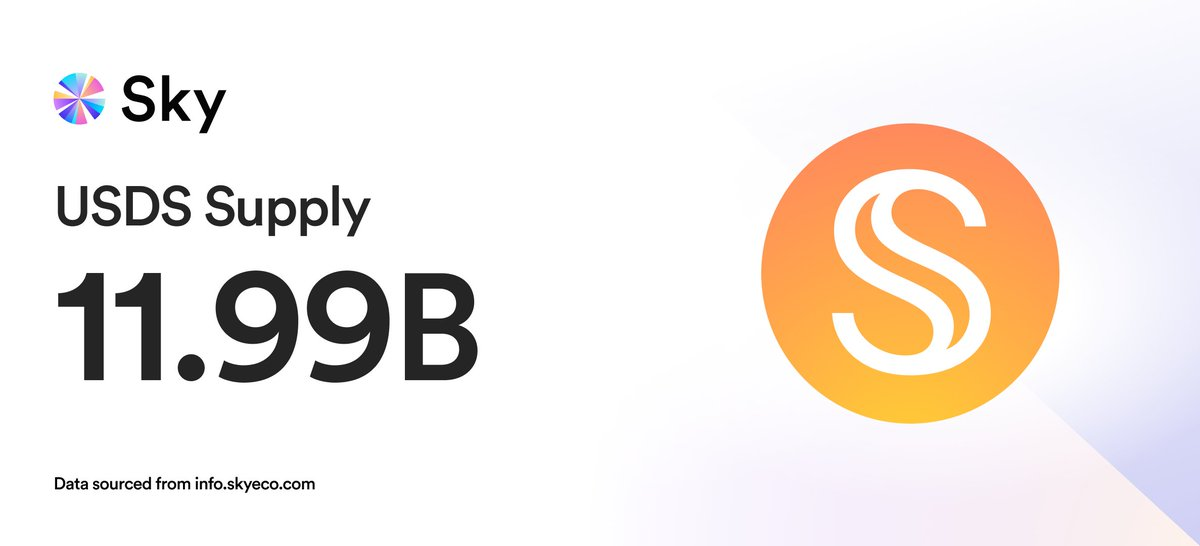
Within Sky Protocol, USDS serves as the core stable asset.
It functions not only as a unit for transactions and settlements but also as a key liquidity layer throughout the ecosystem. Whether in lending markets, yield products, or incentive distribution, USDS acts as a central medium.
At the same time, USDS works in coordination with governance tokens, enabling users to participate in ecosystem incentives and value sharing while holding a stable asset.
This design positions USDS as a critical bridge between stable value and protocol growth.
USDS vs DAI: Key Differences Between the Upgraded and Original Model
Although USDS and DAI share the same underlying mechanisms, they differ across several dimensions.
In collateral and stability design, both rely on overcollateralization and liquidation, making them fundamentally similar.
In governance, USDS is more deeply integrated into Sky Protocol’s incentive systems, allowing it to function not just as a stable asset but also as a tool for ecosystem participation.
In scalability, USDS offers stronger protocol integration, enabling more direct involvement in yield generation and financial applications.
In use cases, DAI primarily serves as a base stable asset, while USDS emphasizes yield generating stability.
In risk modeling, USDS introduces additional ecosystem dependencies, meaning its risks are tied not only to collateral assets but also to overall protocol performance.
Risks and Limitations of USDS
Despite its upgraded design, USDS faces multiple risks.
Collateral risk is primary. If collateral asset prices drop sharply, positions may become undercollateralized and trigger liquidation. In extreme market conditions, this could impact system stability.
Liquidation risk is another concern. During high volatility, large scale liquidations may lead to network congestion or increased slippage, raising the likelihood of bad debt.
USDS also depends on the broader protocol, introducing systemic risks. Smart contract vulnerabilities or oracle failures could have cascading effects.
On the governance side, parameter adjustments rely on community decisions, which introduces risks such as mismanagement or governance capture.
Additionally, USDS may experience depegging under conditions of low liquidity or declining market confidence. As a newer stablecoin, it also faces adoption and liquidity challenges that could affect its stability and use cases.
Conclusion
At its core, USDS represents a functional upgrade to decentralized stablecoins.
It does not change the fundamental logic of stablecoins but builds upon it by enhancing yield capabilities, ecosystem integration, and use cases. This shifts stable assets from simple value anchors to foundational financial components within DeFi.
Through compatibility and 1:1 conversion with DAI, USDS enables a smooth upgrade path while helping Sky Protocol establish a more scalable financial infrastructure.
FAQs
Does USDS completely replace DAI?
USDS does not fully replace DAI. Both can coexist and support 1:1 conversion.
Is USDS always pegged to 1 USD?
USDS maintains its peg through collateral and market mechanisms, though short term fluctuations may occur.
Does USDS rely on centralized assets?
USDS primarily operates on a decentralized collateral model and does not depend on a single centralized issuer.
Can holding USDS generate yield?
Yes, USDS can earn yield through savings and incentive mechanisms within its ecosystem.
What is the difference between USDS and USDT or USDC
USDS is a decentralized stablecoin, while USDT and USDC are typically issued by centralized entities and backed by fiat reserves.