On-Chain Credit Card Project Moto Secures Pre-Seed Funding, Targeting Native Solana Payments
Moto Completes Pre-Seed Funding Round
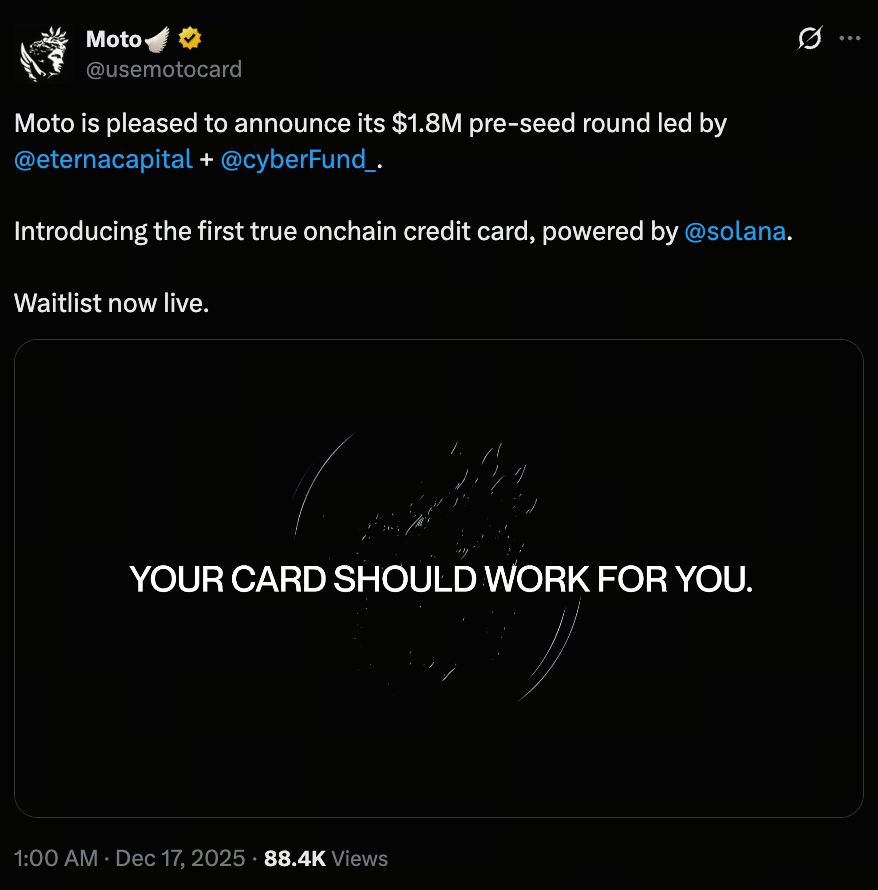
Moto, an on-chain credit card project, recently announced it has raised $1.8 million in a pre-seed round co-led by Eterna Capital and cyber•Fund, with support from several prominent crypto angel investors.
(Source: usemotocard)
Beyond the capital raised, Moto has entered into partnerships with infrastructure providers such as Privy and Crossmint. This underscores Moto’s vision to serve not just as a card product, but as an integrated solution within a broader Web3 payment ecosystem. Moto has launched its waitlist for early access, and the product remains in the early stages of development.
Consumer Card Design Secured by Digital Assets
Moto’s card is issued under the Visa brand, but its operational model sets it apart from traditional credit cards. Instead of offering a credit line, every transaction is fully collateralized by the user’s deposited digital assets.
At the end of each month, the platform settles outstanding balances by directly deducting the corresponding amount from the user’s crypto holdings. This process streamlines settlement and minimizes Moto’s exposure to credit risk.
Rewards and Returns Not Guaranteed; Flexible Eligibility Criteria
Any rewards, returns, or other incentives Moto describes are neither fixed nor guaranteed. Eligibility is determined by factors such as the size of the user’s asset deposits, tier status, or other qualification requirements. All related terms are subject to future changes or termination as the product evolves.
Risk Disclosure and Platform Positioning
Moto is not a bank, and assets on the platform are not covered by FDIC or other deposit insurance. Crypto assets are inherently volatile and carry market risk. Users should carefully assess these risks before applying for or using the card and must agree to Moto’s terms of service and policies.
To explore more about Web3, click to register: https://www.gate.com/
Summary
Moto is entering the on-chain payments market with a non-credit, asset-backed approach. This model sidesteps the risk structure of traditional credit cards and brings crypto assets into routine spending. As Moto completes its pre-seed funding and expands within the Solana ecosystem, its ability to balance security, user experience, and real-world demand will determine its future growth and market acceptance.
Share
Content


Related Articles

2025 BTC Price Prediction: BTC Trend Forecast Based on Technical and Macroeconomic Data

Flare Crypto Explained: What Is Flare Network and Why It Matters in 2025

Pi Coin Transaction Guide: How to Transfer to Gate.com

How to Use a Crypto Whale Tracker: Top Tool Recommendation for 2025 to Follow Whale Moves

What is N2: An AI-Driven Layer 2 Solution