WBTC vs KAVA: Comparing Two Innovative Cryptocurrency Solutions for Cross-Chain Interoperability

2025-10-15 03:38:39
Bitcoin
Blockchain
Crypto Insights
DeFi
Ethereum
Article Rating : 3.7
half-star
0 ratings
This article presents a detailed comparison between WBTC and KAVA, two innovative cryptocurrency solutions shaping cross-chain interoperability. It covers aspects such as historical price trends, core factors affecting investment value, and strategic insights for potential investors. Tailored for both new and experienced investors, the article evaluates the supply mechanisms, institutional adoption, and technical ecosystems, addressing the investment dilemma of "Which is the better buy right now?" By exploring market, technical, and regulatory risks, it provides a comprehensive guide for investment strategies, while incorporating price predictions and FAQs for informed decision-making.
WBTC vs KAVA: Comparing Two Innovative Cryptocurrency Solutions for Cross-Chain Interoperability

Introduction: WBTC vs KAVA Investment Comparison

In the cryptocurrency market, the comparison between WBTC vs KAVA has been an unavoidable topic for investors. The two not only show significant differences in market cap ranking, application scenarios, and price performance, but also represent different positions in the crypto asset landscape.

WBTC (Wrapped Bitcoin): Since its launch in 2019, it has gained market recognition for bringing Bitcoin's liquidity to the Ethereum ecosystem.

KAVA (KAVA): Introduced in 2019, it has been touted as a cross-chain DeFi platform, offering lending and stablecoin services for mainstream digital assets.

This article will comprehensively analyze the investment value comparison between WBTC vs KAVA, focusing on historical price trends, supply mechanisms, institutional adoption, technological ecosystems, and future predictions, attempting to answer the question most concerning to investors:

"Which is the better buy right now?" I. Price History Comparison and Current Market Status

  • 2023: WBTC price fluctuated due to overall cryptocurrency market volatility.
  • 2024: KAVA experienced price movements influenced by developments in the DeFi sector.
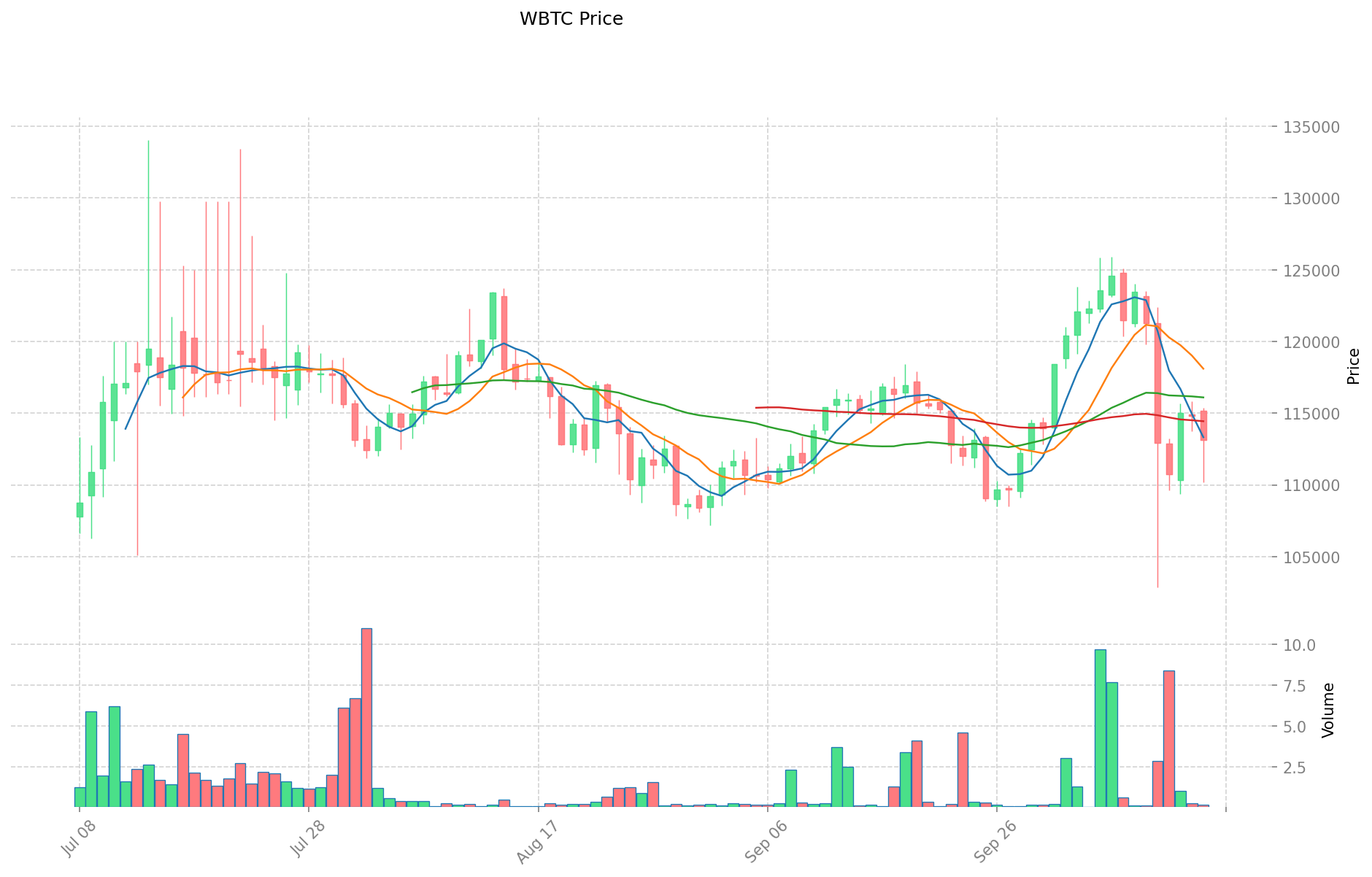
  • Comparative analysis: During the recent market cycle, WBTC reached a high of $125,932 and a low of $3,139.17, while KAVA showed different price behavior.

Current Market Situation (2025-10-15)

  • WBTC current price: $112,279.8
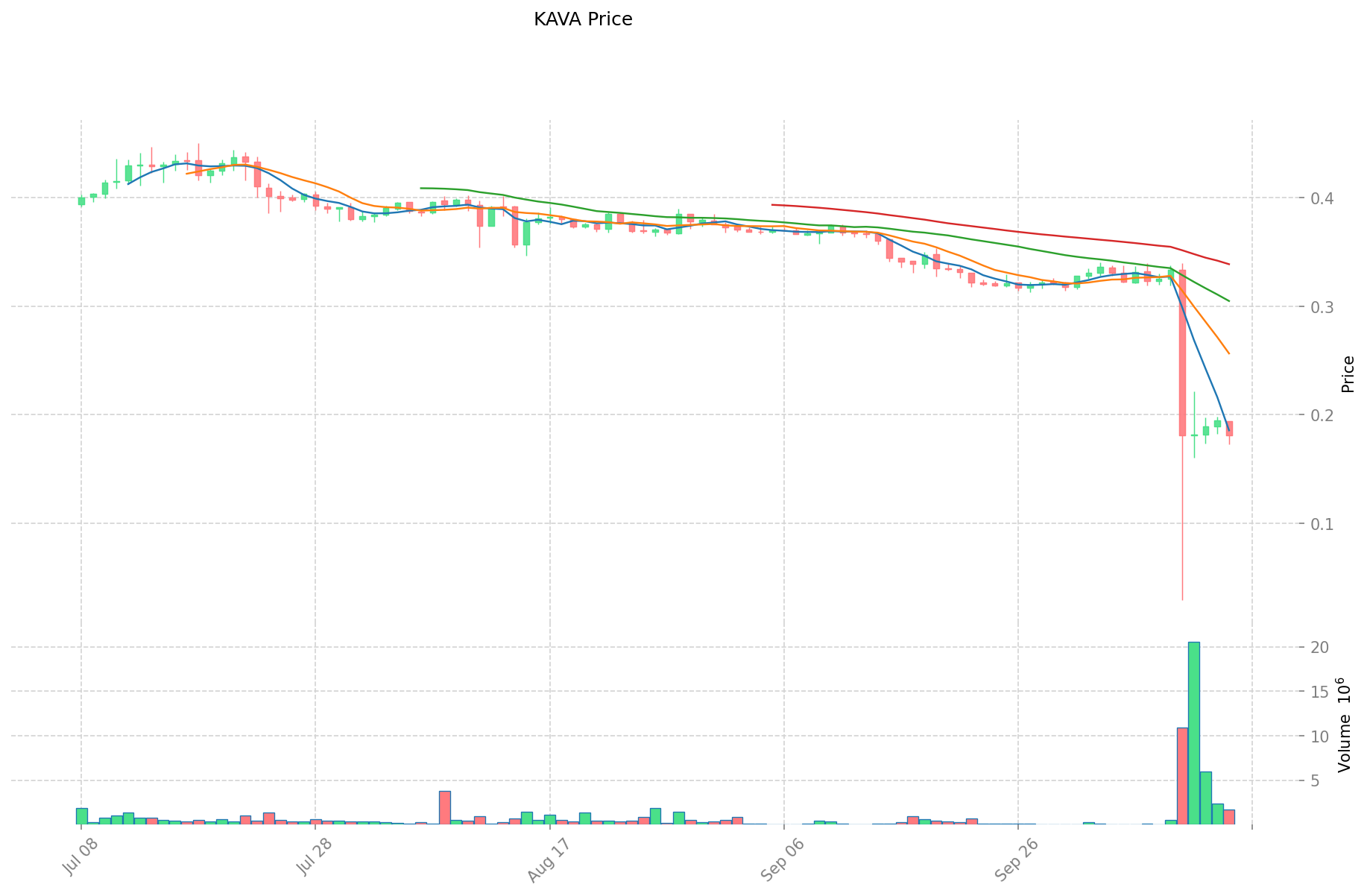
  • KAVA current price: $0.17827
  • 24-hour trading volume: WBTC $16,664.45448 vs KAVA $252,256.4035225
  • Market Sentiment Index (Fear & Greed Index): 34 (Fear)

Click to view real-time prices:

price_image1 price_image2

II. Core Factors Affecting WBTC vs KAVA Investment Value

Supply Mechanism Comparison (Tokenomics)

  • WBTC: Pegged 1:1 to Bitcoin with equivalent supply mechanics, representing Bitcoin's value in ERC-20 token format
  • KAVA: Native token of the Kava platform with supply determined by platform governance and usage
  • 📌 Historical pattern: WBTC follows Bitcoin's price movements while KAVA's value is driven by platform adoption and DeFi usage.

Institutional Adoption and Market Applications

  • Institutional holdings: WBTC typically attracts more institutional interest due to its connection to Bitcoin
  • Enterprise adoption: WBTC serves as a Bitcoin representation within DeFi ecosystems, while KAVA functions as a utility token within its lending platform
  • Regulatory attitudes: Varies by jurisdiction with WBTC generally following Bitcoin's regulatory framework

Technical Development and Ecosystem Building

  • WBTC technical integration: 2022 integration with Kava platform enabling users to leverage Bitcoin value within the Kava ecosystem
  • KAVA technical development: Built on Cosmos blockchain providing crypto collateralization and USDX stablecoin issuance capabilities
  • Ecosystem comparison: Both operate in DeFi space with KAVA focusing on lending and staking services while WBTC brings Bitcoin liquidity to various DeFi applications

Macroeconomic Factors and Market Cycles

  • Inflation performance: WBTC inherits Bitcoin's inflation-resistant properties while KAVA's value depends more on DeFi market conditions
  • Macroeconomic monetary policy: Interest rates affect both, with WBTC typically following Bitcoin's correlation to broader markets
  • Geopolitical factors: Cross-border transaction demand impacts both tokens' utility in international financial applications

III. 2025-2030 Price Prediction: WBTC vs KAVA

Short-term Prediction (2025)

  • WBTC: Conservative $102,172 - $112,277 | Optimistic $112,277 - $148,206
  • KAVA: Conservative $0.092 - $0.178 | Optimistic $0.178 - $0.255

Mid-term Prediction (2027)

  • WBTC may enter a bull market, with prices expected in the range of $84,240 - $207,593
  • KAVA may enter a growth phase, with prices expected in the range of $0.242 - $0.273
  • Key drivers: Institutional inflows, ETF developments, ecosystem growth

Long-term Prediction (2030)

  • WBTC: Base scenario $176,354 - $191,689 | Optimistic scenario $191,689 - $228,111
  • KAVA: Base scenario $0.255 - $0.370 | Optimistic scenario $0.370 - $0.507

View detailed price predictions for WBTC and KAVA

Disclaimer: The above predictions are based on historical data and market analysis. Cryptocurrency markets are highly volatile and subject to change. This information should not be considered as financial advice.

WBTC:

年份 预测最高价 预测平均价格 预测最低价 涨跌幅
2025 148206.696 112277.8 102172.798 0
2026 170617.34488 130242.248 98984.10848 15
2027 207593.1190872 150429.79644 84240.6860064 33
2028 184381.801496508 179011.4577636 98456.30176998 59
2029 201683.25888935994 181696.629630054 152625.16888924536 61
2030 228111.0336690512943 191689.94425970697 176354.7487189304124 70

KAVA:

年份 预测最高价 预测平均价格 预测最低价 涨跌幅
2025 0.2554123 0.17861 0.0928772 0
2026 0.299475387 0.21701115 0.1150159095 21
2027 0.27373786461 0.2582432685 0.24274867239 44
2028 0.36440707618035 0.265990566555 0.1542745286019 49
2029 0.425518408846361 0.315198821367675 0.299438880299291 76
2030 0.507391302696614 0.370358615107018 0.255547444423842 107

IV. Investment Strategy Comparison: WBTC vs KAVA

Long-term vs Short-term Investment Strategy

  • WBTC: Suitable for investors seeking Bitcoin exposure in DeFi ecosystems
  • KAVA: Suitable for investors interested in cross-chain DeFi platforms and lending services

Risk Management and Asset Allocation

  • Conservative investors: WBTC: 70% vs KAVA: 30%
  • Aggressive investors: WBTC: 50% vs KAVA: 50%
  • Hedging tools: Stablecoin allocation, options, cross-currency portfolios

V. Potential Risk Comparison

Market Risk

  • WBTC: Highly correlated with Bitcoin price volatility
  • KAVA: Susceptible to DeFi market fluctuations and platform-specific risks

Technical Risk

  • WBTC: Scalability issues inherited from Ethereum network, smart contract vulnerabilities
  • KAVA: Cross-chain security risks, potential bugs in lending protocols

Regulatory Risk

  • Global regulatory policies may impact both tokens differently, with WBTC following Bitcoin's regulatory framework more closely

VI. Conclusion: Which Is the Better Buy?

📌 Investment Value Summary:

  • WBTC advantages: Bitcoin exposure in DeFi, institutional recognition, potential for long-term value preservation
  • KAVA advantages: Cross-chain DeFi functionality, potential for high growth in emerging DeFi markets

✅ Investment Advice:

  • New investors: Consider a higher allocation to WBTC for more stability and Bitcoin exposure
  • Experienced investors: Balance portfolio with both WBTC and KAVA based on risk tolerance
  • Institutional investors: WBTC may be more suitable due to its connection to Bitcoin and broader market acceptance

⚠️ Risk Warning: Cryptocurrency markets are highly volatile. This article does not constitute investment advice. None

VII. FAQ

Q1: What is the main difference between WBTC and KAVA? A: WBTC is a wrapped version of Bitcoin on the Ethereum network, representing Bitcoin's value in ERC-20 token format. KAVA is a native token of the Kava platform, designed for cross-chain DeFi functionality, lending, and stablecoin services.

Q2: Which token has shown better price performance historically? A: WBTC, being pegged to Bitcoin, has shown higher price levels and follows Bitcoin's price movements. KAVA's price performance has been more volatile and dependent on DeFi market conditions and platform adoption.

Q3: How do institutional investors view WBTC compared to KAVA? A: Institutional investors typically show more interest in WBTC due to its direct connection to Bitcoin and its representation of Bitcoin's value in DeFi ecosystems. KAVA, while having potential in the DeFi space, generally attracts less institutional attention.

Q4: What are the main risks associated with investing in WBTC and KAVA? A: WBTC's main risks include high correlation with Bitcoin's price volatility and potential smart contract vulnerabilities. KAVA faces risks related to DeFi market fluctuations, cross-chain security issues, and potential bugs in lending protocols.

Q5: How might regulatory changes affect WBTC and KAVA differently? A: Regulatory changes are likely to affect WBTC in a manner similar to Bitcoin, as it represents Bitcoin's value. KAVA may be more susceptible to DeFi-specific regulations and cross-border transaction policies, potentially impacting its utility and adoption.

Q6: Which token is more suitable for long-term investment? A: WBTC is generally considered more suitable for long-term investment due to its connection to Bitcoin and potential for value preservation. However, KAVA may offer higher growth potential in the emerging DeFi market, making it attractive for investors with higher risk tolerance.

Q7: How do the supply mechanisms of WBTC and KAVA differ? A: WBTC's supply is pegged 1:1 to Bitcoin, following Bitcoin's supply mechanics. KAVA's supply is determined by the Kava platform's governance and usage, making it more flexible but potentially more inflationary.

* The information is not intended to be and does not constitute financial advice or any other recommendation of any sort offered or endorsed by Gate.
Related Articles
How Does Competitive Analysis Evolve in the Crypto Market by 2030?

How Does Competitive Analysis Evolve in the Crypto Market by 2030?

This article explores the evolution of competitive analysis in the crypto market by 2030, focusing on Bitcoin, Ethereum, and Chainlink. It highlights their differing market caps, unique features like Bitcoin's institutional adoption and Ethereum's DeFi leadership. Additionally, it examines the unique value proposition of GIGGLE, setting itself apart with a charity-education model, contrasting traditional trading platforms. The article also discusses market share shifts, detailing strategic buyer trends and consolidation from 2025 to 2030, offering insights for investors and industry stakeholders navigating the dynamic crypto landscape.
2025-10-25 08:07:02
What Are the Major Security Risks and Historical Attacks in Cryptocurrency?
What Are the Major Security Risks and Historical Attacks in Cryptocurrency?

This article explores major security risks and historical attacks in cryptocurrency, highlighting the significant impact of smart contract vulnerabilities, exchange hacks, and 51% attacks. It addresses the need for robust cybersecurity measures and is tailored for blockchain developers, exchange operators, and investors concerned about asset security. The piece is structured to first examine smart contract pitfalls, followed by a review of major exchange breaches like those at Gate, and concludes with an analysis of 51% attack dynamics. Key themes include vulnerability management and strategic defense against evolving threats.
2025-12-02 12:08:38
How Do Cryptocurrency Competitors Compare: Market Cap, Performance, and User Base Analysis in 2026?

How Do Cryptocurrency Competitors Compare: Market Cap, Performance, and User Base Analysis in 2026?

# Article Overview: Cryptocurrency Market Competitors Analysis 2026 This comprehensive guide examines how Bitcoin, Ethereum, BNB, and emerging cryptocurrencies compete across market cap, performance metrics, and user adoption. Readers gain actionable insights into market dominance shifts, transaction speed comparisons, and security features differentiating top blockchain platforms. The article addresses critical investor questions: Which cryptocurrencies lead in 2026? How do performance metrics influence adoption? What distinguishes emerging competitors? Through data-driven analysis of market capitalization hierarchy, technical innovation, and geographic user distribution, this resource equips traders, institutional investors, and blockchain enthusiasts with essential competitive intelligence. Discover why Layer 2 solutions and AI coins gain traction, how stablecoins reshape payment infrastructure on Gate, and why market cap alone doesn't determine real-world adoption success. Perfect for decision-makers nav
2026-01-01 08:30:13
What is On-Chain Data Analysis and How Does It Track Active Addresses, Whale Movements, and Transaction Trends in Crypto?

What is On-Chain Data Analysis and How Does It Track Active Addresses, Whale Movements, and Transaction Trends in Crypto?

# Article Introduction On-chain data analysis is essential for crypto traders and investors seeking to understand blockchain activity, whale movements, and market trends. This comprehensive guide explores how active addresses, transaction volume, and gas fee metrics reveal real-time market participation and price dynamics. Learn to track whale portfolio shifts across networks using advanced analytics tools, monitor network health through gas fee trends, and identify smart money movements before they impact broader markets. Whether you're analyzing Bitcoin's 300% active address growth, monitoring 25% portfolio reallocation patterns, or leveraging Layer 2 efficiency gains, on-chain data provides crucial indicators for informed trading decisions. Discover the methodologies, top platforms, and limitations of blockchain analysis to enhance your crypto market strategy.
2025-12-30 08:33:33
Bitminer Bot: Worth the Hype or a Crypto Trap?

Bitminer Bot: Worth the Hype or a Crypto Trap?

Bitminer Bot promises easy profits through automated Bitcoin mining—but is it really that simple? With crypto scams on the rise, especially those targeting passive income seekers, tools like Bitminer Bot deserve a closer look.
2025-07-21 03:59:51
Best Crypto to Invest in 2025

Best Crypto to Invest in 2025

The article "Best Crypto to Invest in 2025" provides an insightful analysis of the top-performing cryptocurrencies dominating the market, including Bitcoin, Ethereum, and emerging assets like Solana and Avalanche. It addresses the core investment strategies in the crypto realm, emphasizing diversification, dollar-cost averaging, and fundamental analysis to enhance returns. The article also explores promising blockchain projects in DeFi and Web3, and outlines strategies such as yield farming and staking that smart investors are leveraging to maximize their crypto returns. Ideal for investors seeking robust crypto investment approaches, this piece offers a comprehensive roadmap to capitalize on the future of digital assets.
2025-07-17 09:24:12
Recommended for You
BlockDAG Surpasses $435M in Presale as DOGE and CRO Face Pressure

BlockDAG Surpasses $435M in Presale as DOGE and CRO Face Pressure

This article explores BlockDAG's revolutionary DAG technology transforming Web3 cryptocurrency investment landscape. BlockDAG has achieved a historic presale milestone by raising over $435 million, surpassing Filecoin's ICO record with 312,000+ holders and 20,000+ committed miners. The project addresses scalability challenges through innovative distributed ledger architecture that resonates with investors seeking next-generation blockchain solutions. While Dogecoin faces technical pressures with bearish patterns and Cronos experiences 17.4% price decline, BlockDAG's parallel transaction processing delivers superior throughput compared to traditional blockchains. The article contrasts BlockDAG's competitive advantages—including PoW consensus, EVM compatibility, and mobile mining—against established Layer 1 solutions. For investors, the comprehensive FAQ addresses presale participation, token allocation mechanisms, mainnet launch timeline, and technical differentiation, providing critical insights for understan
2026-01-07 18:34:30
SEI Completes Falling Wedge Pattern Amid Strong Net Inflows and ETF Progress

SEI Completes Falling Wedge Pattern Amid Strong Net Inflows and ETF Progress

SEI Coin demonstrates multiple bullish converging signals positioning it favorably in the blockchain sector. Technically, SEI completed a falling wedge pattern near $0.16, a setup historically correlated with price rallies exceeding 150%. On-chain metrics reveal SEI ranks second in net inflows among blockchain networks behind only Arbitrum, reflecting genuine adoption and capital allocation strength. Institutionally, Canary's staked SEI ETF achieved DTCC listing milestone, enabling regulated exposure for traditional investors while generating staking rewards. This ETF development enhances market liquidity, price stability, and mainstream legitimacy. The alignment of technical breakout confirmation, robust on-chain fundamentals, and institutional product progression creates compelling growth narrative. Key monitoring factors include pattern sustainability above resistance levels, sustained net inflow trends, ETF regulatory approval timing, and broader cryptocurrency market conditions. These developments streng
2026-01-07 18:32:56
Position Reconciliation

Position Reconciliation

This comprehensive guide explores position reconciliation as a critical control mechanism in cryptocurrency trading. The article addresses key concerns for traders and institutions: preventing financial losses through accurate data verification, supporting robust risk management practices, and ensuring regulatory compliance across global markets. It covers the essential role of reconciliation in identifying discrepancies between internal records and external confirmations from counterparties and custodians. The guide highlights how modern technologies, including AI-driven automated systems and cloud-based platforms, have streamlined reconciliation processes across asset classes on Gate and other major venues. Through practical examples and best practices, readers learn to implement effective reconciliation procedures, understand regulatory requirements, and evaluate institutional quality. This resource is designed for traders, risk managers, compliance officers, and investors seeking operational excellence an
2026-01-07 18:14:09
DeFi Terminology Deep Dive: Understanding Yield Farming in 4 Minutes
DeFi Terminology Deep Dive: Understanding Yield Farming in 4 Minutes

This comprehensive guide introduces yield farming, a DeFi strategy enabling cryptocurrency traders to generate passive income by providing liquidity to decentralized protocols. The article explains yield farming's fundamentals, including its origins on Ethereum and core mechanisms like liquidity provision, lending, and staking. It covers essential metrics including APR and APY, helping readers understand return calculations and compare opportunities. The guide details four primary farming methods with varying risk profiles, while thoroughly addressing critical risks such as volatility, impermanent loss, and scams. Featuring analysis of leading protocols like Compound, Aave, and Yearn Finance on Gate, this guide equips beginners with knowledge to navigate DeFi safely and make informed yield farming decisions.
2026-01-07 18:12:21
APY (Annual Percentage Yield)

APY (Annual Percentage Yield)

This comprehensive guide explores Annual Percentage Yield (APY), a fundamental financial metric that reveals true investment returns by accounting for compound interest effects. APY enables informed decision-making across traditional savings accounts, certificates of deposit, and digital asset platforms like Gate, where rates can range from modest percentages to over 20% for cryptocurrency staking. The article examines how APY influences long-term wealth accumulation, compares nominal interest rates with actual yields, and explains why understanding APY is essential for retirement planning and opportunity cost evaluation. Technological advancements have made APY calculations more transparent and accessible through fintech platforms, while market trends and macroeconomic conditions continuously shape available rates. Whether optimizing traditional savings or exploring higher-yield cryptocurrency opportunities, mastering APY empowers investors to make sophisticated financial decisions while carefully balancing
2026-01-07 18:07:49
ETF vs Mutual Fund: How to Choose the Best Investment in 2026

ETF vs Mutual Fund: How to Choose the Best Investment in 2026

The comparison between ETF vs mutual fund remains one of the most common questions among investors in 2026.
2026-01-07 18:07:49