Chairman Chen Chong of the New Generation Financial Foundation sharply criticized Taiwan's stablecoin policy, stating that the Financial Supervisory Commission's “Financial Institution First” approach ignores market realities. Chen pointed out that Taiwan's issuance of stablecoins should meet two major requirements: having a large scale of USD liquidity, and a clear cross-border payment demand from the business side. Observing the current situation, the “Supply Chain Finance” centered around large technology companies is the most powerful, but if Taiwan does not allow businesses to issue, tech companies may turn to other countries.
Chen Chong bombards the Financial Supervisory Commission: Banks are destined to fail first
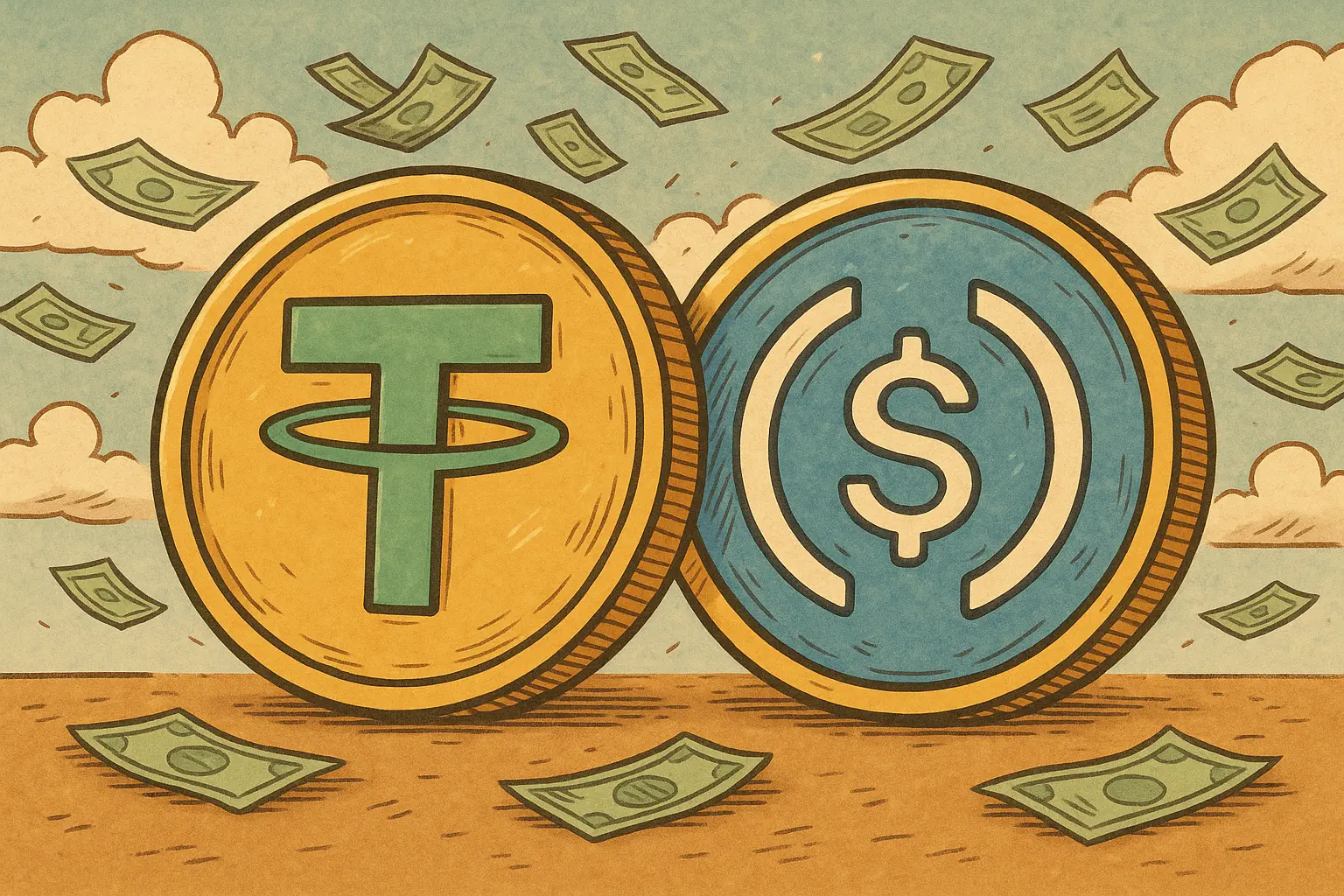
Chen Chong strongly questions the current regulatory authority's tendency of “Financial Institution First.” He believes that in the case of USD stablecoins, if companies judge that they cannot issue in Taiwan, they can turn to other countries. This warning is not alarmist; the case of Sony is the best proof: the Japanese tech giant issued USD stablecoins in the United States through its bank, completely bypassing regulatory restrictions in Taiwan.
The more critical issue is the conflict of interest. Chen Chong pointed out that the application of the stablecoin ecosystem conflicts with the business of financial institutions, and banks may not have the willingness to vigorously promote stablecoins. This judgment hits the nail on the head: stablecoins are essentially meant to replace traditional cross-border remittance businesses, which are an important source of income for banks. Asking banks to promote stablecoins is equivalent to asking them to cripple their own capabilities.
From a business motivation perspective, banks naturally have insufficient willingness to promote stablecoins. The remittance fees for cross-border transactions typically range between 2% to 5%, along with the profits from foreign exchange spreads, which are an important source of profit for banks' international operations. Stablecoins compress the fees to nearly zero and allow for real-time settlement without going through the SWIFT system, which represents a pure loss of income for banks. Asking banks to actively promote stablecoins is akin to asking taxi drivers to promote Uber, contradicting basic business logic.
The “Financial Institution First” approach of Taiwan's Financial Supervisory Commission appears to be prudent on the surface, but it may actually miss the opportunity. While regulators are still discussing which bank should be the first to pilot, Taiwan's tech companies are already contemplating which country to issue stablecoins in. This regulatory lag could lead to an outflow of the industry, causing Taiwan to fall completely behind in the global stablecoin competition.
Supply Chain Finance is the real arena for Taiwan's stablecoin
Chen Chong analyzed that enterprises issuing stablecoins must meet two major core thresholds: first, they must possess a large scale of dollar liquidity, and second, there must be a clear cross-border payment demand on the business side. Observing the current situation in Taiwan, the “Supply Chain Finance” centered around large technology companies is the most capable of constructing a stablecoin ecosystem.
This judgment is based on the objective reality of Taiwan's industrial structure. Taiwan has global supply chain core enterprises such as TSMC, Hon Hai, and Quanta, which handle hundreds of billions of dollars in cross-border transactions every year. TSMC alone has an annual revenue exceeding 70 billion dollars, with its global network of suppliers and customers spanning dozens of countries. This scale of cross-border capital flow is the most ideal application scenario for stablecoins.
Three Major Advantages of Taiwan's Technology Companies Issuing Stablecoins
Natural Dollar Liquidity: Tech giants like TSMC and Foxconn hold hundreds of billions of dollars in cash reserves and consistently generate large amounts of dollar revenue each quarter, possessing sufficient reserves to support stablecoin issuance, far exceeding that of typical financial institutions.
Real Cross-Border Payment Demand: The global Supply Chain involves thousands of upstream and downstream manufacturers, with frequent and large amounts of cross-border payments. Traditional remittances take 3 to 5 days and have high fees, while stablecoins can reduce the time to minutes and costs to nearly zero.
Ecosystem Control Capability: Technology manufacturers can require suppliers to settle using the stablecoins they issue, forming a closed ecosystem, while banks lack this kind of ecosystem control and face greater difficulties in promotion with insufficient motivation.
From a practical operation perspective, if TSMC issues a USD stablecoin, it can require global suppliers to open digital wallets, with all payments settled instantly via the stablecoin. This not only significantly reduces financial costs but also enhances Supply Chain efficiency. For suppliers, once they receive the stablecoin, they can immediately exchange it for fiat currency or use it to pay other suppliers, creating a self-circulating ecosystem. This model cannot be achieved within the traditional banking system.
The Face and Inner Workings of the New Taiwan Dollar Stablecoin
As for whether Taiwan should issue a New Taiwan Dollar stablecoin, Chen Chong stated that in fact, places like Hong Kong, Singapore, Japan, and the European Union all have plans to issue local currency stablecoins. Although over 90% of the market consists of USD stablecoins, not issuing a local currency stablecoin would be quite “face-losing”, and there is still a necessity to issue one.
This concept of “face theory” sounds superficial, but it actually points out the awkward position of sovereign currencies in the digital age. When the global stablecoin market is dominated by USDT and USDC, the currencies of other countries are almost non-existent in the digital payment space. This is not just a technical issue, but also a reflection of monetary sovereignty and financial influence. If the New Taiwan Dollar is completely absent from the stablecoin market, it means total marginalization in the future digital financial system.
However, the actual demand for the New Taiwan Dollar stablecoin is indeed limited. The New Taiwan Dollar is not an international settlement currency, and the demand for cross-border payments is far lower than that of the US Dollar. The issuance of the New Taiwan Dollar stablecoin is more for retail payments in Taiwan and regional trade rather than for global circulation. Chen Chong admitted that this is a “face” demand, but in the competition for digital currencies, face can sometimes also be substance.
Chen Chong emphasized that the issuance of stablecoins poses a huge challenge for central banks around the world. Firstly, it involves foreign exchange controls, and secondly, the effectiveness of monetary policy becomes uncontrollable, “the textbooks on monetary banking need to be rewritten.” When enterprises or private institutions issue stablecoins on a large scale, the central banks' control over the money supply will be diluted, and the effectiveness of traditional monetary policy tools may be significantly reduced.
Taiwan's Choice: Open Enterprises or Industry Outflow
Taiwan's stablecoin policy is at a crossroads. Chen Chong's viewpoint is clear: there should be established issuance conditions, substantial needs, etc., while taking into account the flow of funds in cross-border supply chains to significantly reduce risks, ensuring safety with maximum efficiency, rather than solely focusing on safety by the Financial Supervisory Commission or the central bank.
This criticism points to the tendency of regulatory agencies to be overly conservative. The primary task of the Financial Supervisory Commission and the central bank is to maintain financial stability, and therefore they instinctively adopt a cautious attitude towards innovation. However, the cost of excessive caution is missing out on industry opportunities. While Taiwan is still discussing whether to allow banks to pilot, Hong Kong, Singapore, and Japan have already begun competing for the position of the Asian stablecoin center.
A more realistic threat is the outflow of the industry. If Taiwanese tech companies find the local regulatory environment unfriendly, they can completely issue stablecoins through overseas subsidiaries. TSMC has factories in the United States, and Foxconn has its headquarters in Singapore; these companies have the ability to operate in any jurisdiction. Once the Taiwanese stablecoin industry flows out, not only will the industry opportunities be lost, but there may also be a situation where local companies heavily use foreign stablecoins, making regulation even more difficult.


