Key Points:* CFTC Commissioner approves crypto perpetual futures trading domestically.
- Market eyes potential impact on Bitcoin and Ethereum prices.
- Financial experts analyze regulatory implications and market growth.
According to Cointelegraph, CFTC Commissioner Summer Mersinger stated that cryptocurrency perpetual futures contracts can now be traded in the United States. The statement follows recent regulatory discussions on the viability of expanding futures markets for digital assets.
This decision highlights increased acceptance within regulatory circles, potentially influencing market dynamics and trading volumes, especially for major cryptos.
CFTC Approval: A Boost for U.S. Crypto Markets
CFTC Commissioner Summer Mersinger’s announcement signifies a pivotal shift. The acceptance of crypto perpetual futures in the United States marks a notable development in regulatory evolution. This opens new opportunities for traders and aligns market practices closer to traditional assets.
The introduction of these futures contracts could significantly impact trading behaviors and volumes. With potential for enhanced liquidity, the accessibility to wider financial products may influence both individual and institutional participants seeking diverse portfolios.
Market reactions varied. While some industry experts and traders greeted the development positively, predicting increased market participation, others urged caution. Certain financial analysts noted that added regulatory oversight may affect specific trading strategies.
“In the past 24 hours, total liquidations reached $285 million, with significant short positions affected, particularly in BTC and ETH markets.” – ChainCatcher
Global Trends Mirror U.S. Regulatory Moves in Crypto
Did you know? CFTC’s decision resonates with similar moves in countries like Singapore and the UK, showcasing a global trend towards regulatory acceptance of crypto derivatives.
Recent Bitcoin data provided by CoinMarketCap highlights key performance metrics: trading at $110,884.56, Bitcoin’s market cap is $2.20 trillion, with dominance at 62.73%. Recent upticks are noted with price increasing by 17.53% over 30 days, amidst a -35.66% drop in 24-hour trading volume.
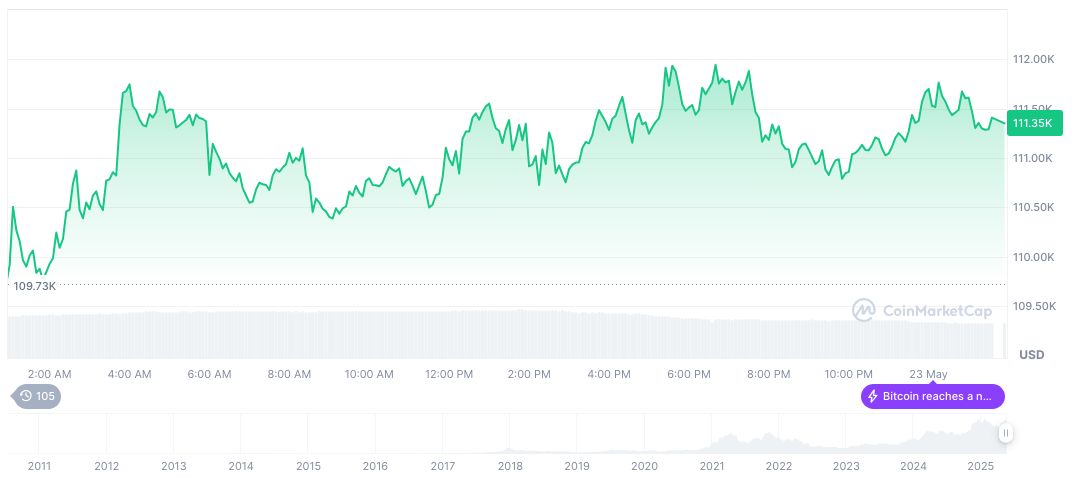 Bitcoin(BTC), daily chart, screenshot on CoinMarketCap at 08:52 UTC on May 23, 2025. Source: CoinMarketCap
Coincu analysts suggest that the inclusion of crypto perpetual futures may result in increased market volatility as both traditional and crypto-native institutions adjust strategies. Potential outcomes include shifts in liquidity management and diversified trading approaches. Additionally, increasing mainstream acceptance might lead to broader regulatory frameworks globally.
Bitcoin(BTC), daily chart, screenshot on CoinMarketCap at 08:52 UTC on May 23, 2025. Source: CoinMarketCap
Coincu analysts suggest that the inclusion of crypto perpetual futures may result in increased market volatility as both traditional and crypto-native institutions adjust strategies. Potential outcomes include shifts in liquidity management and diversified trading approaches. Additionally, increasing mainstream acceptance might lead to broader regulatory frameworks globally.
Disclaimer: The information on this page may come from third parties and does not represent the views or opinions of Gate. The content displayed on this page is for reference only and does not constitute any financial, investment, or legal advice. Gate does not guarantee the accuracy or completeness of the information and shall not be liable for any losses arising from the use of this information. Virtual asset investments carry high risks and are subject to significant price volatility. You may lose all of your invested principal. Please fully understand the relevant risks and make prudent decisions based on your own financial situation and risk tolerance. For details, please refer to
Disclaimer.


