
Futures
Access hundreds of perpetual contracts
TradFi
Gold
One platform for global traditional assets
Options
Hot
Trade European-style vanilla options
Unified Account
Maximize your capital efficiency
Demo Trading
Introduction to Futures Trading
Learn the basics of futures trading
Futures Events
Join events to earn rewards
Demo Trading
Use virtual funds to practice risk-free trading
Launch
CandyDrop
Collect candies to earn airdrops
Launchpool
Quick staking, earn potential new tokens
HODLer Airdrop
Hold GT and get massive airdrops for free
Launchpad
Be early to the next big token project
Alpha Points
Trade on-chain assets and earn airdrops
Futures Points
Earn futures points and claim airdrop rewards


More



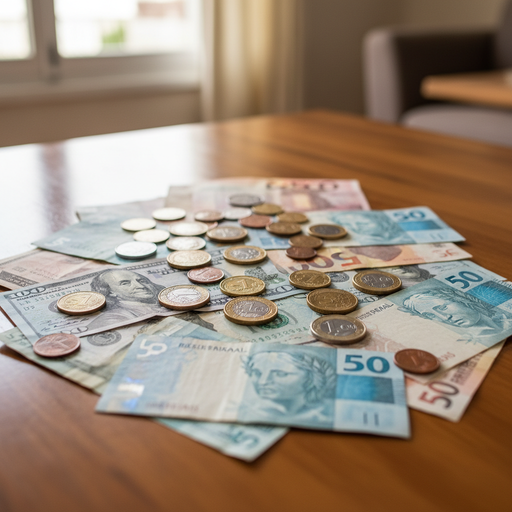


Have you ever wondered which country is the richest in the world? You probably think of the United States, and you're partly right if we look at total GDP. But when we talk about wealth per capita, the story changes completely, and the results are truly surprising.
I recently read that Luxembourg ranks first with a per capita GDP of $154,910. Incredible, right? It’s a small European country that many wouldn’t consider when thinking about the wealthiest countries in the world. But here’s the interesting part: Luxembourg wasn’t always so prosperous. Before the 19th century, it was mainly rural, then it developed an extraordinary financial and banking sector that completely transformed it.
Following Luxembourg is Singapore with $153,610 per capita. This is also fascinating because Singapore went from a developing country to a high-level economy in a relatively short time. Its political stability, business-friendly environment, and low tax rates have made it a global economic hub.
Macau SAR ranks third with $140,250. It is primarily driven by tourism and the gaming industry, which attract millions of visitors each year. Then we have Ireland in fourth place with $131,550, followed by Qatar with $118,760.
Here I notice an interesting pattern: some countries like Qatar, Norway, and Brunei have built their wealth by exploiting oil and natural gas. In contrast, nations like Switzerland, Luxembourg, and Singapore have focused on financial services, innovation, and a business-friendly environment. Two completely different but equally effective strategies.
Norway, for example, was the poorest among Scandinavian countries until it discovered oil in the 20th century. Today, it is one of the wealthiest countries in Europe, with $106,540 per capita. Switzerland, on the other hand, with $98,140 per capita, is famous for its luxury watches, multinational corporations like Nestlé, and its reputation for innovation.
Brunei Darussalam, with $95,040 per capita, relies heavily on oil and gas exports, which account for 90% of government revenue. That’s why it is trying to diversify its economy. Guyana, with $91,380 per capita, experienced an explosion of wealth after discovering offshore oil fields in 2015.
And the United States? Well, despite having the largest overall economy in the world, it ranks tenth with $89,680 per capita. Interesting, isn’t it? It has the largest nominal GDP, hosts major stock exchanges like Wall Street and Nasdaq, and the dollar is the global reserve currency, but when divided by population, the result differs from small European and Asian countries.
What strikes me is that per capita GDP doesn’t tell the whole story. It doesn’t account for income inequality. The United States, for example, has one of the highest income inequalities among developed countries, and its national debt has surpassed $36 trillion, about 125% of GDP.
So, what is the richest country in the world? It depends on how you measure it. But if we look at wealth per person, Luxembourg remains unmatched. What’s certain is that these wealthiest countries share common elements: stable governments, a skilled workforce, solid financial sectors, and business-friendly environments. These are the ingredients of economic prosperity in 2025.