CryptoPunks Enter MoMA Collection, Marking a Milestone for NFT Art
MoMA Adds CryptoPunks to Its Permanent Collection
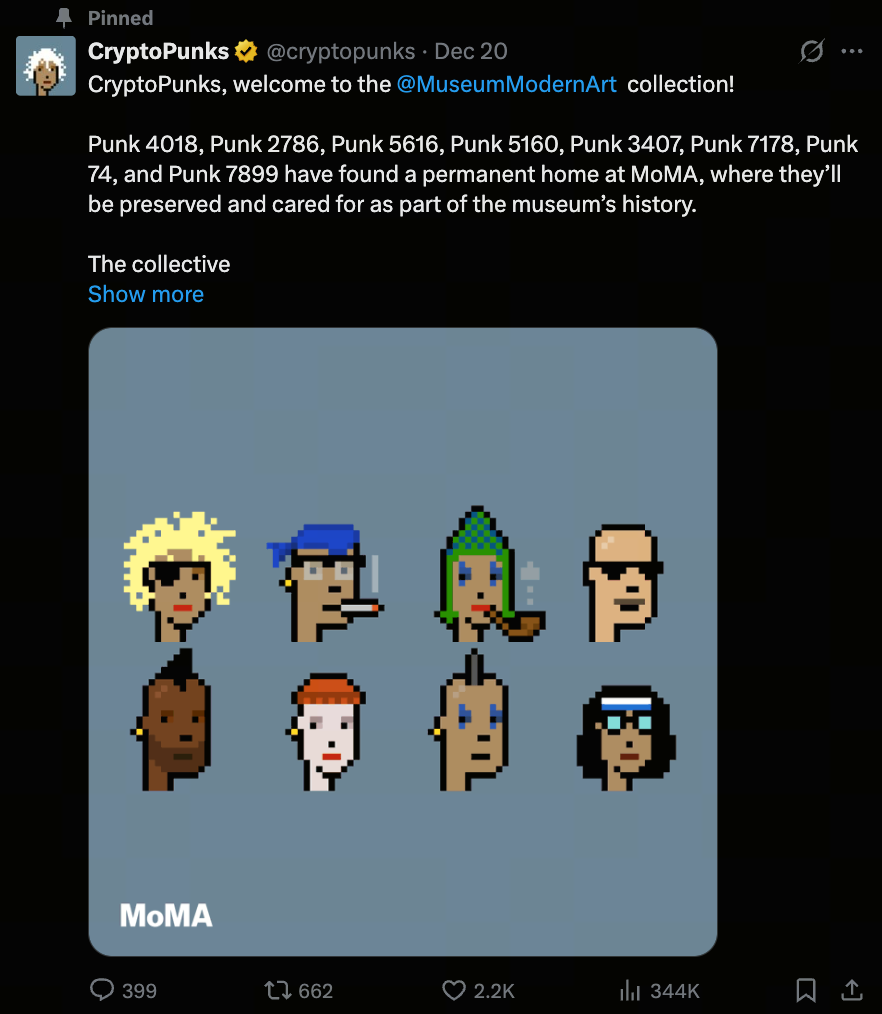
(Source: cryptopunks)
On December 20, CryptoPunks officially announced on X that the Museum of Modern Art (MoMA) in New York has added eight CryptoPunks to its permanent collection. The selected works—Punk 4018, Punk 2786, Punk 5616, Punk 5160, Punk 3407, Punk 7178, Punk 74, and Punk 7899—represent a wide range of attributes and character types.
For one of the world’s most influential contemporary art institutions, this decision carries significant symbolic weight.
From On-Chain Assets to the Halls of Fine Art
MoMA is renowned for its forward-thinking collection of modern and contemporary works, including painting, photography, design, film, and new media art. By adding CryptoPunks, MoMA is not simply acquiring digital images—it’s formally recognizing blockchain-native art as part of contemporary art history. NFTs are no longer viewed merely as speculative assets or community culture symbols; they are entering the mainstream art ecosystem shaped by museums, curators, and academic discourse.
The Historical Significance of CryptoPunks
CryptoPunks are widely acknowledged as one of the earliest and most iconic NFT projects on Ethereum. The series features 10,000 8-bit pixel characters, each generated algorithmically with distinct visual traits and varying rarity. This model—anchored in algorithmic generation, on-chain provenance, and non-fungibility—set the foundation for the NFT ecosystem’s consensus on uniqueness and digital scarcity, marking the birth of digital collectibles culture.
A Lasting Impact on the NFT Ecosystem
The influence of CryptoPunks goes far beyond market value or community hype. From shaping collecting culture and driving adoption of standards like ERC-721, to fostering new interactions among artists, developers, and collectors, nearly every major early experiment in the NFT space can be traced back to the path forged by CryptoPunks.
NFTs at the Intersection with Traditional Art Institutions
MoMA’s decision to add CryptoPunks to its permanent collection signals that these works have moved beyond their symbolic status in the crypto community to become part of the evaluation framework of leading art institutions. This elevates the cultural legitimacy of NFTs as an art medium and sets a precedent for how digital art can be preserved, exhibited, and interpreted. Museum involvement means NFTs are no longer just technological experiments of the present—they are now recognized as cultural artifacts worthy of long-term preservation and study.
If you want to explore more about Web3, click to register: https://www.gate.com/
Summary
MoMA’s inclusion of CryptoPunks in its permanent collection marks a pivotal moment in the evolution of NFTs, as they transition from on-chain experiments and community culture to a recognized place in mainstream art history. This is more than validation of a single project—it’s a clear signal that blockchain-native art is gaining understanding, acceptance, and preservation from the world’s leading cultural institutions. As NFTs enter museums, the cultural forms emerging from Web3 are beginning to establish their place and value for the long term.
Share
Content


Related Articles

2025 BTC Price Prediction: BTC Trend Forecast Based on Technical and Macroeconomic Data

Flare Crypto Explained: What Is Flare Network and Why It Matters in 2025

Pi Coin Transaction Guide: How to Transfer to Gate.com

How to Use a Crypto Whale Tracker: Top Tool Recommendation for 2025 to Follow Whale Moves

What is N2: An AI-Driven Layer 2 Solution