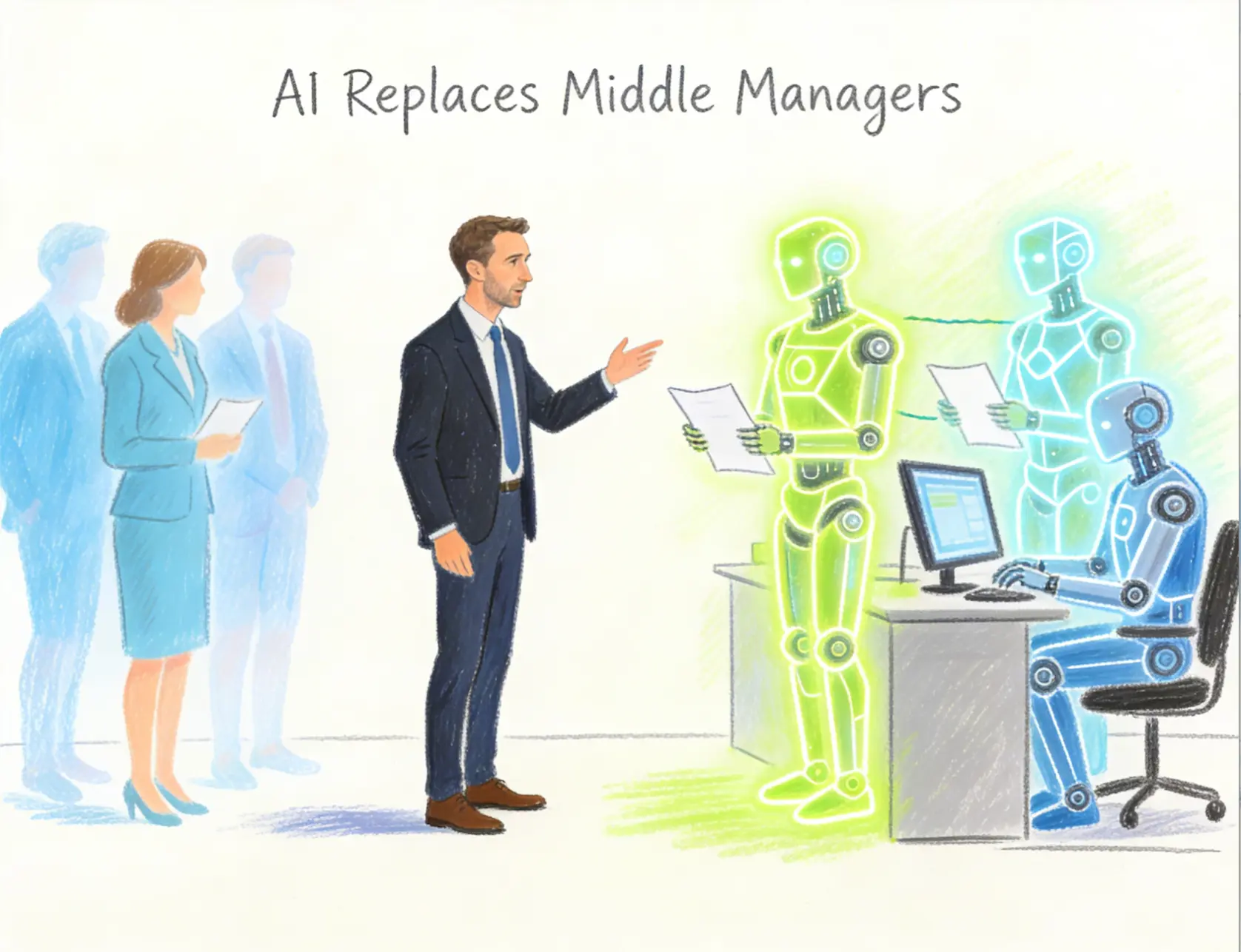
 Block Inc. co-founder and chairman Jack Dorsey outlined a vision on April 1, 2026 for restructuring companies around artificial intelligence, arguing that AI can replace the coordination functions traditionally performed by middle management layers that route information through organizational hierarchies.
The proposal, detailed in a blog post co-authored with Sequoia Capital partner Roelof Botha, envisions companies organized as “intelligences” rather than hierarchies, with employees categorized into three roles and an AI-driven system handling the information flow that has historically required layers of human managers.
Block Proposes Three-Role Structure Replacing Traditional Management Layers
Dorsey’s organizational model eliminates permanent middle management positions in favor of three employee roles. Individual contributors (ICs) build and operate capabilities, the world model, intelligence layer, and interfaces, with the AI system providing the contextual information that managers previously supplied. Directly Responsible Individuals (DRIs) own specific cross-cutting problems or customer outcomes for defined periods, with authority to pull resources from capability teams as needed. Player-coaches combine building products with developing people, replacing traditional managers whose primary function was information routing.
The model aims to address what Dorsey describes as the fundamental constraint of organizational design: hierarchical coordination requires layers of command that slow information flow. The company argues that AI can now perform the coordination functions that have required human managers since the Roman army established hierarchical structures two thousand years ago.
The proposal follows Block’s February 2026 announcement that it was cutting approximately 4,000 employees, representing about 40% of its workforce. Dorsey stated at the time that he believed most companies would reach similar conclusions within the next year and make comparable structural changes, expressing a preference for moving proactively rather than reactively.
Company World Model and Customer Signal Form Foundation for AI Coordination
Block’s approach relies on what the company describes as two foundational elements: a company world model that maintains a continuously updated picture of operations, and a customer signal derived from transaction data. Dorsey argues that Block is uniquely positioned because its remote-first work environment creates machine-readable artifacts of decisions, discussions, code, and designs that can feed the company world model.
The customer signal comes from Block’s dual-sided transaction data through Cash App and Square. Dorsey characterizes money as the most honest signal in the world, noting that every transaction represents a fact about someone’s financial life. The company sees both sides of millions of transactions daily, creating what it calls an “economic graph” that compounds over time as more transactions generate richer signals.
The intelligence layer composes capabilities into solutions for specific customers at specific moments, delivering them proactively. Dorsey describes a scenario where the system detects a restaurant’s cash flow tightening ahead of a seasonal dip, composes a short-term loan from the lending capability, adjusts the repayment schedule, and surfaces it to the merchant before they seek financing.
Historical Context and Industry Debate Surround AI-Driven Restructuring
Dorsey’s proposal positions the AI-driven organization as the next evolution in organizational design, following hierarchical structures developed by the Roman army, the Prussian General Staff, American railroads, and the matrix organizations popularized by McKinsey in the postwar era. The post notes that technology companies including Spotify, Zappos, and Valve have experimented with alternatives to traditional hierarchy, but each reverted to conventional structures as they scaled.
The proposal has sparked debate about whether artificial intelligence is genuinely driving organizational change or serving as justification for cost-cutting measures. Critics have warned of “AI washing” as companies reframe workforce reductions as strategic transformations. Block’s February layoffs reduced approximately 4,000 positions, which the company described as a bet on AI changing the future of work.
Dorsey acknowledged that Block is in the early stages of the transition and that parts of it will likely break before they work. He argued that companies without deep, compounding understanding of their operations will find AI only offers cost optimization rather than structural transformation.
FAQ
What organizational structure is Block proposing?
Block proposes replacing traditional hierarchical management with an AI-driven model where employees fill three roles: individual contributors who build and operate systems, directly responsible individuals who own specific problems, and player-coaches who combine building with developing people. An intelligence layer handles coordination and information flow that previously required layers of middle management.
Why does Block believe it is well positioned for this transition?
Block argues its remote-first work culture creates machine-readable artifacts that can feed a company world model, while its dual-sided transaction data from Cash App and Square provides what Dorsey calls the “economic graph”—real-time, honest signals about customer financial behavior that compounds over time.
What has been the reaction to Block’s organizational restructuring?
Block’s February layoffs of approximately 4,000 employees and the proposed AI-driven organizational model have fueled debate over whether AI is driving structural change or serving as justification for cost-cutting. Critics have raised concerns about “AI washing,” while Dorsey has stated that most companies will reach similar conclusions within the next year.
Disclaimer: The information on this page may come from third parties and does not represent the views or opinions of Gate. The content displayed on this page is for reference only and does not constitute any financial, investment, or legal advice. Gate does not guarantee the accuracy or completeness of the information and shall not be liable for any losses arising from the use of this information. Virtual asset investments carry high risks and are subject to significant price volatility. You may lose all of your invested principal. Please fully understand the relevant risks and make prudent decisions based on your own financial situation and risk tolerance. For details, please refer to
Disclaimer.


