Understanding ERC20 Address Usage in Web3 Applications
What is ERC-20: simplifying development on the Ethereum blockchain
ERC-20 represents a fundamental technical standard that has revolutionized token development on the Ethereum blockchain. As Ethereum emerged as one of the earliest open-source platforms for decentralized applications, developers needed a standardized approach to create tokens that could seamlessly interact across the ecosystem. The ERC-20 standard addresses this need by establishing a set of rules and guidelines that ensure token compatibility and interoperability throughout the Ethereum network, with each token identified by a unique ERC20 address.
What is an ERC-20 token?
ERC-20 tokens are fungible digital assets that exist on the Ethereum blockchain, following a specific technical standard for smart contract implementation. This standard defines a common set of rules that all ERC-20 tokens must adhere to, ensuring compatibility across the Ethereum ecosystem. Each ERC-20 token is associated with a unique ERC20 address, which serves as its identifier on the blockchain. The standardization enables these tokens to interact seamlessly with decentralized applications, wallets, trading platforms, and other services built on Ethereum. Each ERC-20 token maintains fungibility, meaning that one unit is equivalent in value to another unit of the same token. This characteristic makes them ideal for use as currencies, governance tokens, or utility tokens within various blockchain applications.
History of ERC-20 token standard
The ERC-20 standard originated from a proposal submitted by Fabian Vogelsteller through Ethereum's GitHub repository in 2015. The proposal was labeled as an "Ethereum Request Comment" and received the designation "20" as it was the twentieth comment submitted to the platform. After thorough review and approval by the Ethereum developer community, the proposal was officially implemented under the name Ethereum Improvement Proposal 20 (EIP-20), though it is commonly referred to as ERC-20. Since its implementation, the standard has become mandatory for all smart contract tokens developed on the Ethereum blockchain, establishing a foundation for thousands of tokens that have been created subsequently, each with its own unique ERC20 address.
How ERC-20 tokens work
ERC-20 tokens operate through smart contracts on the Ethereum Virtual Machine (EVM), which are self-executing agreements that automatically perform predetermined actions when specific conditions are met. These smart contracts function similarly to automated vending machines, executing programmed instructions without human intervention. When developers create ERC-20 tokens, they must implement required functions and follow established guidelines, including deploying the token to a specific ERC20 address. Once these conditions are satisfied, tokens can be created and issued. The fungible nature of these tokens allows for seamless asset exchange across the network. Users interact with ERC-20 tokens by sending them to and from ERC20 addresses, which are standardized Ethereum addresses that follow the format beginning with "0x". Beyond simple transfers, ERC-20 tokens can grant governance rights to holders, allowing them to participate in protocol decision-making. Additionally, tokens can be staked to support network operations, providing stakers with rewards in the form of additional tokens and creating opportunities for passive income generation.
Benefits of ERC-20 to the Ethereum network
The ERC-20 standard delivers multiple advantages to the Ethereum ecosystem. Interoperability stands as one of its most significant benefits, enabling tokens that follow the standard to communicate and exchange assets effortlessly across different projects and platforms through their ERC20 addresses. This compatibility addresses a major challenge in the cryptocurrency industry by simplifying cross-platform asset transfers. Security is enhanced through the standard's adherence to Ethereum's core security features, including decentralization, immutability, and transparency, which help prevent malicious manipulation of token supplies and transactions. The standard also promotes transparency by recording all transaction details on the Ethereum blockchain, making token movements between ERC20 addresses easily trackable and verifiable. High liquidity characterizes ERC-20 tokens, as they can be traded on both centralized and decentralized platforms, making them attractive to investors. Furthermore, the standard offers customization capabilities, allowing token creators to tailor tokens for specific purposes by setting total supply, adding unique functions, defining decimal points, and selecting symbols. The ease of use provided by tools like MetaMask and MyEtherWallet makes ERC-20 tokens accessible to users and developers of varying technical expertise levels, with simple ERC20 address management interfaces.
Cons of ERC-20 token standard
Despite its advantages, the ERC-20 standard presents several limitations. The standardization that ensures compatibility also restricts flexibility, preventing tokens from performing certain complex tasks that some developers may require. Transaction fees represent a significant concern, as gas fees on the Ethereum network can become prohibitively expensive during periods of high congestion, making the standard less accessible to users with limited resources. The volatility of gas fees also makes it difficult to predict transaction costs accurately when sending tokens between ERC20 addresses. While the standard has gained widespread adoption, universal acceptance remains elusive, as some cryptocurrency platforms do not support or list ERC-20 tokens, potentially limiting liquidity. Reception issues pose another challenge, particularly when tokens are sent to smart contract addresses not designed to handle ERC-20 tokens, which can result in permanent loss of assets. This occurs because the standard lacks a mechanism to notify receiving contracts of incoming tokens, and some contracts are not programmed to recognize or process ERC-20 tokens sent to their ERC20 address.
Popular ERC-20 tokens
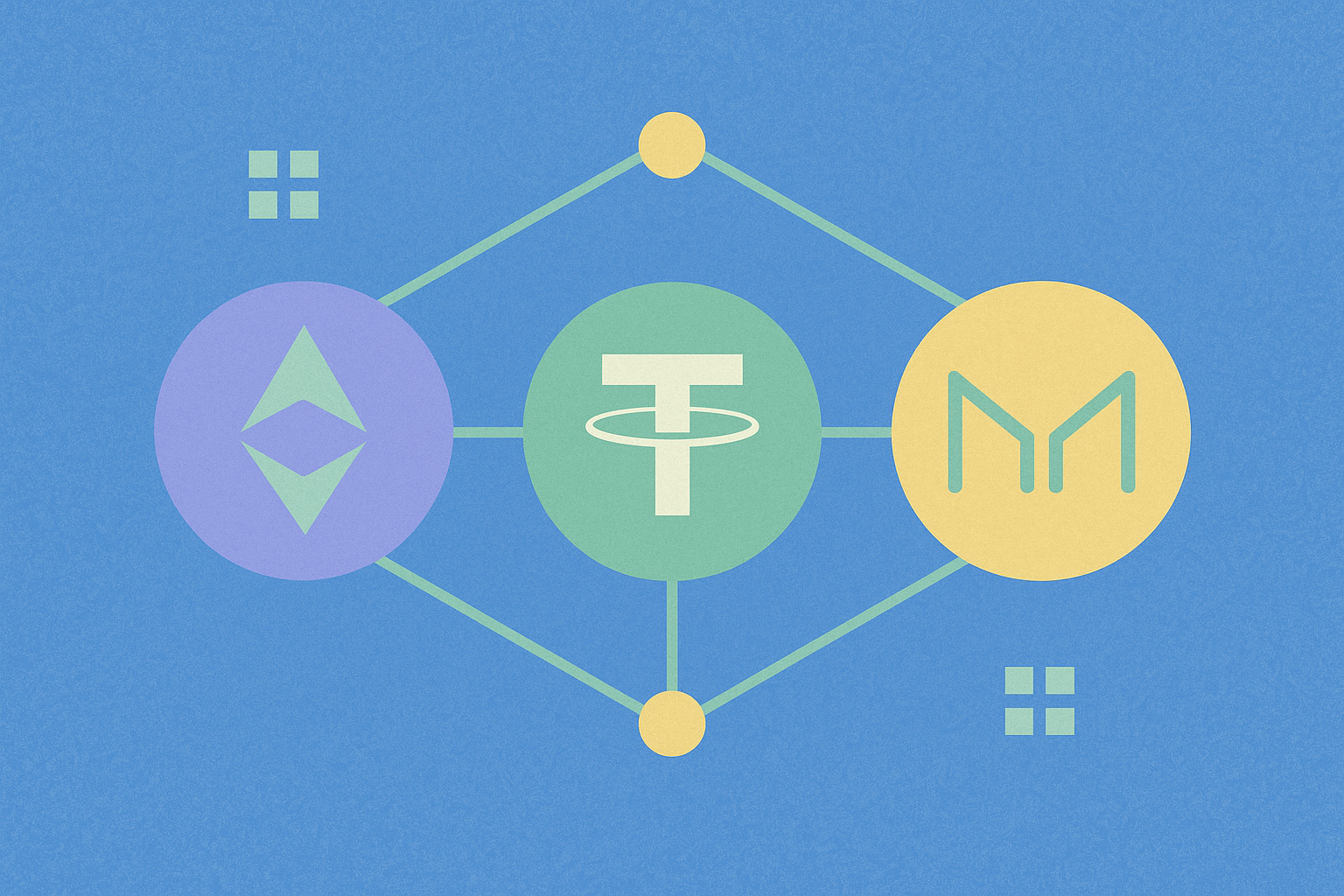
Numerous successful projects have implemented the ERC-20 standard, each operating through their unique ERC20 address. Tether (USDT) operates as a stablecoin on the Ethereum blockchain, designed to maintain a 1:1 peg with the U.S. dollar through equivalent reserves held in secure accounts. Uniswap (UNI) serves as both a decentralized platform and an ERC-20 token, utilizing an automated market maker model instead of traditional order books. Maker (MKR) functions as the governance token of MakerDAO, an open-source protocol that enables holders to manage the Maker Protocol through scientific governance involving executive voting and governance polling. Various platform tokens originally created as ERC-20 tokens serve as native currencies for major cryptocurrency platforms and have achieved widespread acceptance across various services.
Other ERC token standards
Beyond ERC-20, several other Ethereum token standards have been developed to address specific needs. ERC-165 enables contracts to verify whether they support particular interfaces, facilitating interactions between different smart contracts. ERC-621 allows authorized project members to adjust token supply after initial release, either by minting additional tokens or burning existing ones. ERC-777 provides enhanced features including emergency recovery options for lost private keys and improved transaction privacy. ERC-721 was specifically designed for non-fungible tokens (NFTs), addressing the need for unique, non-interchangeable assets with individual token addresses. ERC-223 offers solutions for recovering tokens sent to incorrect addresses. ERC-1155 enables developers to create more efficient transfer tokens that are compatible with both NFTs and utility tokens while reducing transaction costs.
Conclusion
The ERC-20 token standard represents a transformative development for the Ethereum ecosystem, successfully addressing the need for standardized token creation and interaction. By establishing clear guidelines for token development and ERC20 address implementation, ERC-20 has simplified the development process and enhanced interoperability across the network. While the standard faces challenges including limited flexibility, high transaction fees, and reception issues when tokens are sent to incompatible addresses, its benefits in terms of security, transparency, liquidity, and ease of use have made it the most widely adopted token standard in the blockchain industry. The existence of complementary standards such as ERC-721, ERC-777, and ERC-1155 demonstrates the ongoing evolution of the Ethereum ecosystem, with each standard addressing specific use cases and requirements. As the blockchain industry continues to mature, ERC-20 remains a foundational element that has opened doors to countless development opportunities and has played a crucial role in the widespread adoption of decentralized applications and digital assets, with millions of ERC20 addresses actively participating in the ecosystem.
FAQ
How do I find my ERC-20 address?
Log into your wallet, navigate to the 'Wallet' or 'Receive' section, and select an ERC-20 supported coin. Your address will be displayed there.
Is Trust wallet an ERC-20 wallet?
Yes, Trust Wallet is an ERC-20 wallet. It supports Ethereum and ERC-20 tokens, allowing users to store, send, and receive these assets securely.
What does ERC-20 wallet mean?
An ERC-20 wallet is a digital wallet that stores and manages Ethereum-based tokens following the ERC-20 standard. It enables users to hold, send, and receive various cryptocurrencies built on the Ethereum blockchain.
Share
Content
How to Buy Cryptocurrency


Trending Cryptocurrencies



XZXX: A Comprehensive Guide to the BRC-20 Meme Token in 2025

Bitcoin Fear and Greed Index: Market Sentiment Analysis for 2025

Top Crypto ETFs to Watch in 2025: Navigating the Digital Asset Boom
5 ways to get Bitcoin for free in 2025: Newbie Guide
Bitcoin Market Cap in 2025: Analysis and Trends for Investors
2025 Bitcoin Price Prediction: Trump's Tariffs' Impact on BTC

Is Falcon Finance (FF) a good investment?: A Comprehensive Analysis of Returns, Risks, and Market Potential
Is Zebec Protocol (ZBCN) a good investment?: A Comprehensive Analysis of Tokenomics, Use Cases, and Market Potential in 2024
Is Audiera (BEAT) a good investment?: A Comprehensive Analysis of Tokenomics, Market Potential, and Risk Factors

Is zkSync (ZK) a good investment?: A Comprehensive Analysis of Layer 2 Scaling Solutions and Future Prospects

TBC vs MANA: A Comprehensive Comparison of Two Leading Blockchain Governance Tokens