ML vs SOL: Comparing Machine Learning and Statistical Learning for Data Analysis

Introduction: ML vs SOL Investment Comparison
In the cryptocurrency market, Mintlayer vs Solana has always been a topic that investors can't avoid. The two not only have significant differences in market cap ranking, application scenarios, and price performance, but also represent different cryptocurrency asset positioning.
Mintlayer (ML): Since its launch, it has gained market recognition for its ability to build a decentralized finance ecosystem using native Bitcoin through atomic swaps.
Solana (SOL): Since its inception in late 2017, it has been hailed as a high-performance blockchain protocol designed to enable scalability, and is one of the cryptocurrencies with the highest global trading volume and market capitalization.
This article will comprehensively analyze the investment value comparison between Mintlayer and Solana, focusing on historical price trends, supply mechanisms, institutional adoption, technological ecosystems, and future predictions, and attempt to answer the question that investors care about most:
"Which is the better buy right now?"
I. Price History Comparison and Current Market Status
ML (Mintlayer) and SOL (Solana) Historical Price Trends
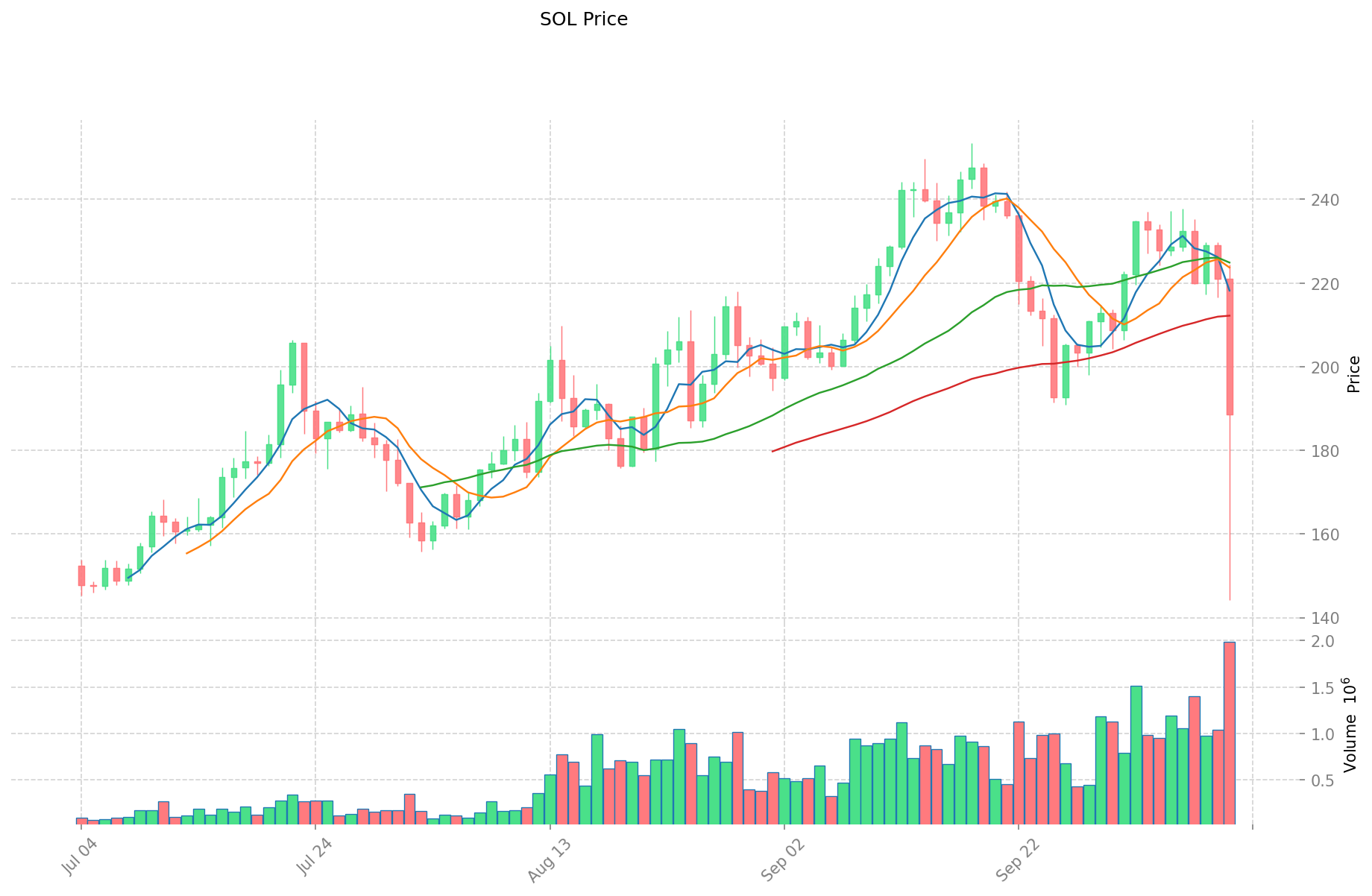
- 2024: SOL experienced significant growth due to increased adoption in DeFi and NFT sectors, with its price reaching an all-time high of $293.31.
- 2025: ML launched and saw initial price volatility as the market assessed its potential.
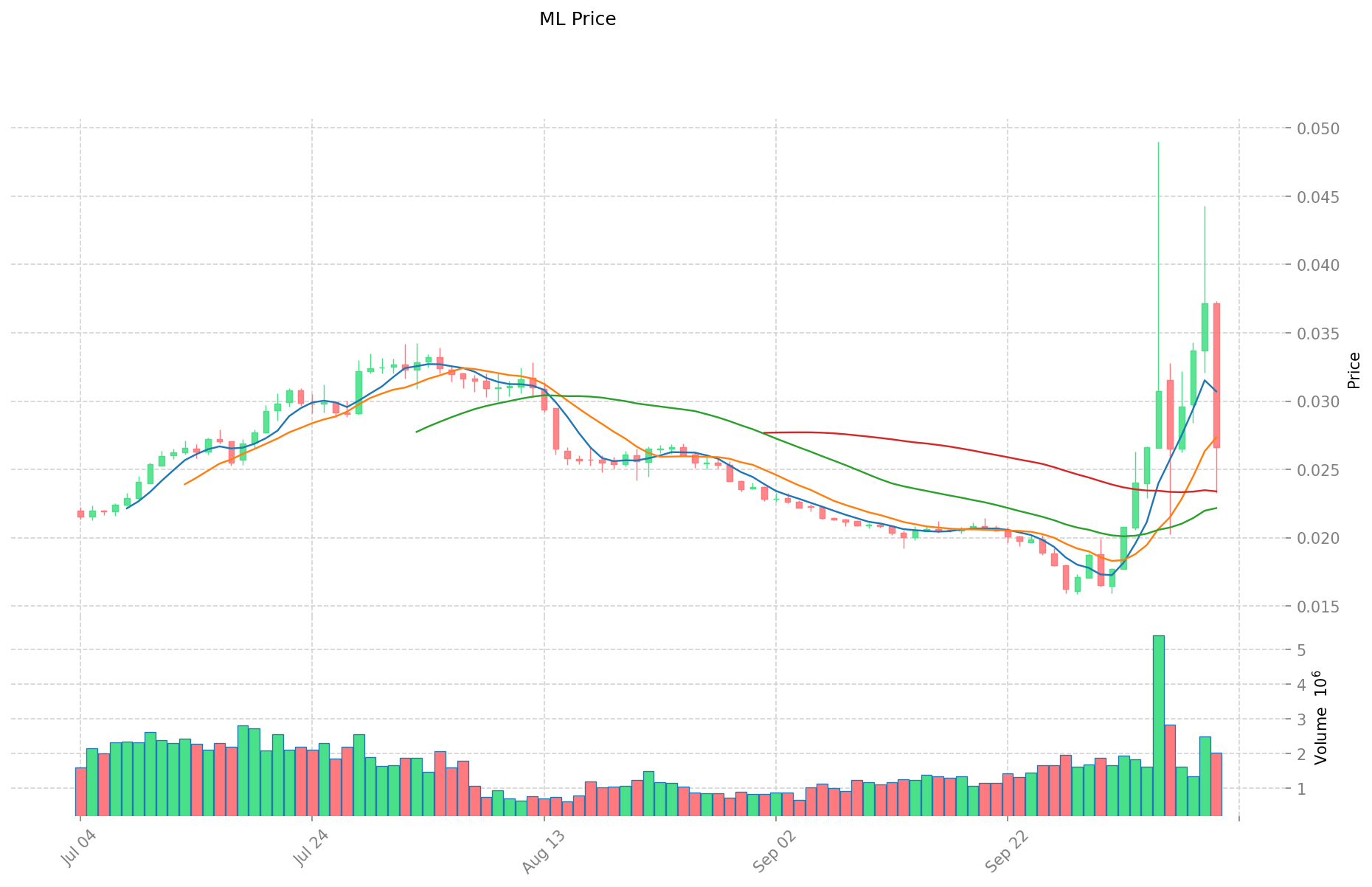
- Comparative analysis: During the recent market cycle, SOL demonstrated resilience, maintaining a price above $180 despite market fluctuations, while ML, being a newer entrant, showed higher volatility.
Current Market Situation (2025-10-11)
- ML current price: $0.02683
- SOL current price: $186.59
- 24-hour trading volume: ML $63,185.39 vs SOL $414,688,713.05
- Market Sentiment Index (Fear & Greed Index): 64 (Greed)
Click to view real-time prices:
- View ML current price Market Price
- View SOL current price Market Price
II. Core Factors Affecting ML vs SOL Investment Value
Supply Mechanism Comparison (Tokenomics)
- ML: Value derived from data analysis capabilities and automation in trading processes
- SOL: Fast transaction speed and high liquidity, following the "first to zero, then to new highs" pattern
- 📌 Historical pattern: SOL projects demonstrate high volatility with potential for multiple recovery waves
Institutional Adoption and Market Applications
- Institutional Holdings: Data insufficient from provided materials
- Enterprise Adoption: ML enhances investment value through data analysis and automated trading systems
- Regulatory Attitudes: Data insufficient from provided materials
Technology Development and Ecosystem Building
- ML Technology Upgrades: Core investment value in data analysis, market data processing, and automated trading algorithms
- SOL Technology Development: Focus on high transaction throughput, with price movements showing hundreds of transactions per second
- Ecosystem Comparison: ML functions as an investment core for trading processes, while SOL facilitates rapid trading execution
Macroeconomic Factors and Market Cycles
- Performance in Inflationary Environments: Data insufficient from provided materials
- Monetary Policy Effects: ML helps in analyzing market data and identifying trading opportunities during various market conditions
- Cross-border Transaction Demand: SOL's high transaction speed enables quick price movements and trading opportunities
III. 2025-2030 Price Prediction: ML vs SOL
Short-term Prediction (2025)
- ML: Conservative $0.0225 - $0.0268 | Optimistic $0.0268 - $0.0290
- SOL: Conservative $152.52 - $186.00 | Optimistic $186.00 - $258.54
Mid-term Prediction (2027)
- ML may enter a growth phase, with expected price range $0.0217 - $0.0337
- SOL may enter a bullish market, with expected price range $177.50 - $398.04
- Key drivers: Institutional inflows, ETFs, ecosystem development
Long-term Prediction (2030)
- ML: Base scenario $0.0385 - $0.0405 | Optimistic scenario $0.0405 - $0.0534
- SOL: Base scenario $269.09 - $498.31 | Optimistic scenario $498.31 - $637.83
Disclaimer
ML:
| 年份 | 预测最高价 | 预测平均价格 | 预测最低价 | 涨跌幅 |
|---|---|---|---|---|
| 2025 | 0.0289764 | 0.02683 | 0.0225372 | 0 |
| 2026 | 0.036832224 | 0.0279032 | 0.02371772 | 4 |
| 2027 | 0.03366242048 | 0.032367712 | 0.02168636704 | 21 |
| 2028 | 0.0349959702144 | 0.03301506624 | 0.0277326556416 | 23 |
| 2029 | 0.046927615153536 | 0.0340055182272 | 0.02210358684768 | 27 |
| 2030 | 0.053415868031285 | 0.040466566690368 | 0.038443238355849 | 51 |
SOL:
| 年份 | 预测最高价 | 预测平均价格 | 预测最低价 | 涨跌幅 |
|---|---|---|---|---|
| 2025 | 258.54 | 186 | 152.52 | -1 |
| 2026 | 315.6234 | 222.27 | 128.9166 | 17 |
| 2027 | 398.041116 | 268.9467 | 177.504822 | 42 |
| 2028 | 493.57098384 | 333.493908 | 186.75658848 | 76 |
| 2029 | 583.0807487472 | 413.53244592 | 260.5254409296 | 119 |
| 2030 | 637.832444587008 | 498.3065973336 | 269.085562560144 | 163 |
IV. Investment Strategy Comparison: ML vs SOL
Long-term vs Short-term Investment Strategy
- ML: Suitable for investors focused on data analysis and automated trading capabilities
- SOL: Suitable for investors seeking high transaction speeds and liquidity in DeFi and NFT sectors
Risk Management and Asset Allocation
- Conservative investors: ML: 20% vs SOL: 80%
- Aggressive investors: ML: 40% vs SOL: 60%
- Hedging tools: Stablecoin allocation, options, cross-currency combinations
V. Potential Risk Comparison
Market Risk
- ML: Higher volatility due to being a newer entrant in the market
- SOL: Susceptible to market sentiment shifts in the broader cryptocurrency ecosystem
Technical Risk
- ML: Scalability, network stability
- SOL: Network congestion during high traffic periods, potential security vulnerabilities
Regulatory Risk
- Global regulatory policies may have different impacts on both tokens, particularly concerning DeFi and automated trading systems
VI. Conclusion: Which Is the Better Buy?
📌 Investment Value Summary:
- ML advantages: Strong potential in data analysis and automated trading processes
- SOL advantages: Established ecosystem, high transaction speed, and proven track record in DeFi and NFTs
✅ Investment Advice:
- New investors: Consider a higher allocation to SOL due to its established market presence
- Experienced investors: Balanced portfolio with both ML and SOL to capitalize on different market segments
- Institutional investors: Evaluate ML for its data analysis capabilities and SOL for its ecosystem strength
⚠️ Risk Warning: The cryptocurrency market is highly volatile, and this article does not constitute investment advice. None
VII. FAQ
Q1: What are the main differences between Mintlayer (ML) and Solana (SOL)? A: ML focuses on data analysis and automated trading capabilities, while SOL is known for its high transaction speed and established ecosystem in DeFi and NFTs. ML is a newer entrant with potential in Bitcoin-based DeFi, while SOL has a longer track record and larger market presence.
Q2: Which cryptocurrency has shown better price performance recently? A: Based on the provided data, SOL has demonstrated stronger price performance and market stability. As of October 11, 2025, SOL's price was $186.59, while ML's price was $0.02683. SOL has also maintained a higher price above $180 despite market fluctuations.
Q3: How do the supply mechanisms of ML and SOL differ? A: ML's value is derived from its data analysis capabilities and automation in trading processes. SOL, on the other hand, focuses on fast transaction speeds and high liquidity, following a "first to zero, then to new highs" pattern. SOL projects have historically shown high volatility with potential for multiple recovery waves.
Q4: What are the long-term price predictions for ML and SOL? A: For 2030, ML's base scenario predicts a price range of $0.0385 - $0.0405, with an optimistic scenario of $0.0405 - $0.0534. SOL's base scenario for 2030 predicts a range of $269.09 - $498.31, with an optimistic scenario of $498.31 - $637.83.
Q5: How should investors allocate their portfolio between ML and SOL? A: For conservative investors, a suggested allocation is 20% ML and 80% SOL. For aggressive investors, the recommendation is 40% ML and 60% SOL. New investors might consider a higher allocation to SOL due to its established market presence, while experienced investors could balance their portfolio with both tokens.
Q6: What are the main risks associated with investing in ML and SOL? A: ML faces higher volatility due to being a newer market entrant and potential scalability and network stability issues. SOL is susceptible to market sentiment shifts and has experienced network congestion during high traffic periods. Both tokens may be impacted by evolving global regulatory policies, particularly concerning DeFi and automated trading systems.
Share
Content
Introduction: ML vs SOL Investment Comparison
I. Price History Comparison and Current Market Status
II. Core Factors Affecting ML vs SOL Investment Value
III. 2025-2030 Price Prediction: ML vs SOL
IV. Investment Strategy Comparison: ML vs SOL
V. Potential Risk Comparison
VI. Conclusion: Which Is the Better Buy?
VII. FAQ
Trending Cryptocurrencies



What Are the Key Differences Between SOL and Its Competitors in 2025?

What Does the Meteora (MET) Whitepaper Reveal About Its Core Logic and Use Cases?

How Will Jupiter (JUP) Evolve in the Crypto Market by 2030?

2025 FRAG Price Prediction: Analyzing Market Trends and Potential Growth Factors for the Cryptocurrency

PLSPAD vs SOL: The Battle of Blockchain Platforms for Decentralized Finance

2025 LIQ Price Prediction: Bullish Trends and Key Factors Shaping the Future of Liquidity Protocol Tokens
Xenea Daily Quiz Answer December 13, 2025

Guide to Bridging Assets to the Polygon Network

Guide to Integrating Polygon Network with Your Crypto Wallet

Beginner's Guide to Secure Digital Asset Storage with BEP2

Guide to Bridging Assets to Polygon PoS Network