O que é FLOKI?
FLOKI é um token de criptomoeda inspirado na cultura de memes com temática canina, lançado nas principais blockchains como Ethereum e BNB Chain. O seu objetivo é conjugar uma “marca divertida” com “utilidade prática”. O ecossistema FLOKI expande-se através de módulos como jogos play-to-earn (P2E), ferramentas DeFi e launchpads, permitindo aos detentores participar em atividades comunitárias e utilizar o token em diversas aplicações.
Em termos de oferta, FLOKI tem um fornecimento total de cerca de 9,65 biliões, dos quais aproximadamente 9,54 biliões estão atualmente em circulação. O projeto não prevê emissão ilimitada, mas não foi definido um limite máximo fixo.
Qual o preço, capitalização de mercado e oferta em circulação atuais de FLOKI (FLOKI)?
Em 07 de janeiro de 2026, às 02:43 (UTC), segundo o instantâneo de mercado:
- Preço mais recente: 0,000056 $
- Oferta em circulação: 9 539 717 023 521,225 FLOKI
- Capitalização de mercado em circulação: 533 780 940,39 $
- Valorização totalmente diluída (FDV): 540 129 541,51 $ (capitalização teórica baseada na oferta total)
- Quota de mercado: 0,0168 %
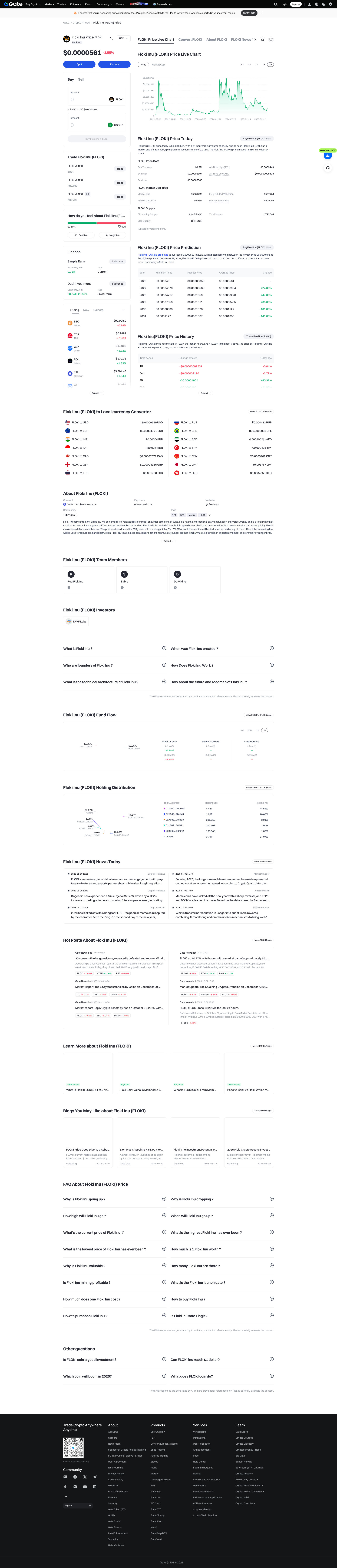
Clique para ver Quota de mercado das principais criptomoedas
- Variação 1h: -0,0578 %; 24h: -3,6881 %; 7d: 40,0713 %; 30d: 21,2991 %
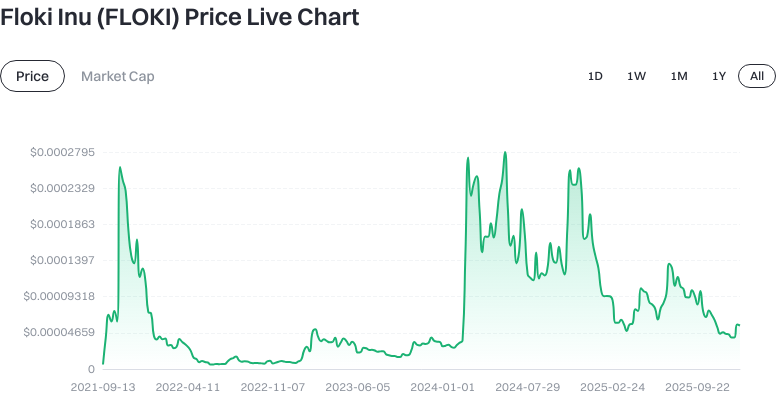
Clique para ver Gráfico de preço de FLOKI
- Volume de negociação 24h: 116 122 663,72 $
- Número de pares de negociação: 686; Estado: ativo
Notas para principiantes:
- Capitalização de mercado = preço × oferta em circulação; é a métrica padrão para dimensionar projetos.
- Valorização totalmente diluída (FDV) é uma estimativa teórica baseada na oferta total de tokens, refletindo a valorização potencial se todos os tokens forem libertados.
- O volume de negociação indica a atividade e liquidez recentes, mas não deve ser usado isoladamente para avaliar o valor.
Quem criou FLOKI (FLOKI) e quando?
FLOKI foi lançado em 2021, inspirando o nome e a marca na cultura de memes canina popularizada nas redes sociais e pelo marketing viral. O projeto expandiu gradualmente o seu ecossistema—abrangendo gaming, DeFi e launchpads—com a divulgação do roadmap no site oficial, procurando evoluir de meme para casos de utilização práticos.
Referência: floki.com (em 07 de janeiro de 2026) e fontes públicas gerais.
Como funciona FLOKI (FLOKI)?
FLOKI opera como token nas redes Ethereum e BNB Chain:
- ERC-20: Formato padrão de token em Ethereum, gerido por smart contracts que automatizam emissão e transferências conforme regras pré-definidas.
- BEP-20: Padrão de token em BNB Chain, semelhante ao ERC-20, mas com taxas de rede e desempenho diferentes.
- Pontes cross-chain: Permitem transferir tokens entre blockchains, facilitando circulação multi-chain. A utilização de pontes exige cautela e auditorias de segurança.
Mecanismo de oferta: O fornecimento total ronda os 9,65 biliões, com cerca de 9,54 biliões em circulação. Não existe limite máximo fixo, mas não é permitida emissão ilimitada. O fornecimento é gerido por parâmetros de contrato como regras de queima ou alocação; consulte sempre contratos oficiais e anúncios para detalhes.
Taxas e confirmações:
- As transferências em Ethereum exigem pagamento de taxas “gas”, variáveis conforme a congestão da rede.
- A BNB Chain geralmente tem taxas mais baixas e confirmações mais rápidas, mas verifique sempre o endereço de contrato correto e a rede antes de transacionar.
Para que serve FLOKI (FLOKI)?
- Pagamentos e microtransações: Meio de pagamento em comerciantes ou eventos comunitários suportados, ideal para transferências pequenas e gorjetas.
- Gaming P2E: Participação em jogos play-to-earn e experiências de metaverso para ganhar tokens ou itens digitais.
- Ferramentas DeFi: Fornecer liquidez, usar ferramentas de rendimento ou participar na governação em protocolos DeFi suportados.
- Participação em launchpad: Qualificação, staking ou compra em lançamentos de projetos ou vendas de tokens no ecossistema (regras dependem dos anúncios oficiais).
Exemplo: Para enviar 10 $ em FLOKI a um amigo via Ethereum, assegure saldo suficiente de ETH para taxas de gas e que o destinatário fornece endereço ERC-20 compatível; para transferências via BNB Chain, use rede BEP-20 e endereço correspondente.
Que carteiras e opções de expansão existem no ecossistema FLOKI (FLOKI)?
- Carteiras mainstream: Qualquer carteira líder que suporte Ethereum e BNB Chain—including browser e mobile—pode gerir FLOKI. Ao criar uma carteira, recebe uma “seed phrase/chave privada”, única forma de recuperar os ativos.
- Carteiras hardware: Guardam as chaves privadas offline para maior segurança; recomendadas para armazenamento a longo prazo.
- Informação oficial e endereços de contrato: Obtenha sempre os endereços de contrato corretos através dos links oficiais de floki.com para evitar tokens falsos; os endereços variam entre redes.
- Expansão do ecossistema: Parcerias com P2E, DeFi, Paal AI e outros estão em curso. Confirme sempre o âmbito de suporte e riscos via canais oficiais e relatórios de auditoria (em 07 de janeiro de 2026).
Quais são os principais riscos e considerações regulatórias para FLOKI (FLOKI)?
- Volatilidade: Tokens meme são altamente voláteis, com variações acentuadas no curto prazo; investir de forma regular pode mitigar risco.
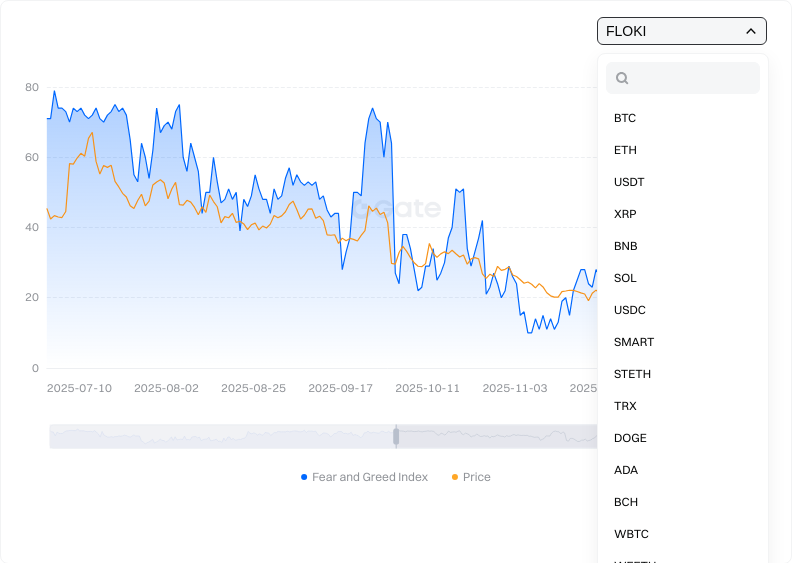
Clique para ver Índice de medo e ganância FLOKI
- Liquidez e slippage: Pares com baixa liquidez ou mercados extremos podem gerar slippage elevado ao realizar ordens.
- Riscos de smart contract e ponte cross-chain: Bugs ou ataques podem provocar perdas; privilegie soluções auditadas e reconhecidas.
- Regulação e impostos: Regras variam por jurisdição; informe-se sobre legislação local antes de negociar ou levantar ativos.
- Risco de contraparte: Armazenar ativos em exchanges centralizadas implica confiar a custódia—monitorize conformidade e segurança; auto-custódia exige gestão rigorosa das chaves privadas.
- Contratos falsos e phishing: Confirme sempre endereços de contrato e websites oficiais por fontes fidedignas; desconfie de links de airdrop ou pedidos suspeitos de aprovação.
Como comprar e guardar FLOKI (FLOKI) em segurança na Gate?
Passo 1: Registe-se e conclua KYC.
Crie conta em gate.com e conclua verificação de identidade para aumentar segurança e limites de levantamento.
Passo 2: Deposite fundos.
Deposite USDT ou use rampas fiat para garantir saldo suficiente para negociação e taxas.
Passo 3: Procure pares de negociação.
No interface spot, pesquise “FLOKI” para encontrar pares como FLOKI/USDT. Confirme sempre símbolos e anúncios oficiais.
Passo 4: Coloque ordem.
Escolha entre ordens limit ou market conforme estratégia. Ordens limit definem preço; market executam ao valor atual. Comece com valores pequenos para reduzir slippage ou erros.
Passo 5: Armazenamento seguro (na plataforma).
Para curto prazo, mantenha tokens na conta Gate; ative autenticação dois fatores e whitelist de levantamentos. Note que é armazenamento custodial com risco de contraparte.
Passo 6: Armazenamento seguro (auto-custódia).
Configure carteira auto-custódia compatível ERC-20 e BEP-20; registe a seed phrase offline. Ao levantar, selecione rede correta—ERC-20 para Ethereum; BEP-20 para BNB Chain—para evitar perdas irreversíveis por incompatibilidade de rede.
Passo 7: Teste levantamentos e gestão.
Teste levantamentos com valores pequenos; após confirmação, transfira montantes superiores. Reveja contratos autorizados, revogue permissões desnecessárias e tenha cautela ao ligar-se a dApps desconhecidos.
Em que difere FLOKI (FLOKI) de Shiba Inu (SHIB)?
- Implementação e padrões: Ambos são tokens centrados em Ethereum, mas FLOKI é emitido nativamente em Ethereum e BNB Chain para liquidez cross-chain. SHIB desenvolve-se sobretudo no ecossistema Ethereum.
- Oferta e métricas: Ambos têm fornecimentos muito elevados—o foco deve ser na capitalização de mercado e FDV, não no preço unitário. FLOKI tem oferta total de cerca de 9,65 biliões; SHIB possui mecanismos próprios de emissão e queima.
- Foco do ecossistema: FLOKI aposta em gaming P2E, DeFi e launchpad; SHIB foca-se em DEX, NFTs, metaverso, etc.—resultando em utilizações distintas.
- Marca e comunidade: Ambos são meme coins com comunidades fortes, mas diferem em eventos e estratégias promocionais.
Em suma, apesar de ambos pertencerem ao setor meme, as implementações técnicas e focos de aplicação divergem. Decida conforme necessidades e objetivos de investimento.
Resumo de FLOKI (FLOKI)
FLOKI conjuga branding de meme com tecnologia multi-chain para oferecer gaming P2E, utilidades DeFi e acesso a launchpad em Ethereum e BNB Chain—evoluindo de entretenimento para utilidade real. Em 07 de janeiro de 2026, apresenta volumes de negociação ativos e presença relevante, mas permanece sujeito à volatilidade e aos riscos de contrato, cross-chain e custódia. Para principiantes, recomenda-se construir posições gradualmente via Gate, verificar endereços de contrato/redes, testar levantamentos com valores pequenos e utilizar carteiras auto-custódia ou hardware para armazenamento prolongado. Monitorize atualizações oficiais e relatórios de auditoria; baseie a avaliação no progresso das aplicações e gestão de riscos.
FAQ
O que é o token FLOKI?
FLOKI é um projeto comunitário descentralizado baseado em blockchain, classificado como meme coin. O nome deriva de Floki da mitologia nórdica e opera através de iniciativas comunitárias e mecanismos inovadores. Como token comunitário, FLOKI procura oferecer aplicações e propostas de valor únicas aos detentores.
Quais as principais utilizações do token FLOKI?
As principais utilizações de FLOKI incluem governação comunitária, incentivos do ecossistema e negociação. Os detentores podem votar em decisões do projeto, aceder a serviços do ecossistema e receber recompensas de airdrop. FLOKI é negociável em exchanges descentralizadas e em plataformas como a Gate.
O token FLOKI é seguro? Que riscos considerar?
Sendo uma meme coin, FLOKI apresenta elevada volatilidade—os preços podem oscilar acentuadamente. Antes de investir, analise o whitepaper, histórico da equipa e relatórios de auditoria. Prefira comprar em plataformas reputadas como a Gate e guarde as chaves privadas de forma segura—carteiras hardware para grandes montantes podem reduzir riscos.
Em que se distingue FLOKI de outras meme coins?
Ao contrário de muitas meme coins, FLOKI privilegia o desenvolvimento do ecossistema e aplicações práticas—including integração DeFi e casos NFT—além da vertente comunitária. Em vez de se focar apenas na especulação de preço, FLOKI aposta num ecossistema abrangente. Avalie com base nos fundamentos do projeto, não em movimentos de preço de curto prazo.
Como podem principiantes comprar e guardar tokens FLOKI em segurança?
Após registo em exchanges reputadas como a Gate e conclusão da verificação, os utilizadores podem adquirir FLOKI com fiat ou outras criptomoedas. Para armazenamento: valores pequenos podem ser mantidos em carteiras de exchange; montantes superiores devem ser transferidos para soluções auto-custódia como MetaMask ou hardware. Faça sempre backup das chaves privadas e seed phrase de forma segura—nunca as partilhe.
Tabela rápida de termos-chave FLOKI
- Meme coin: Criptomoeda inspirada na cultura online ou consenso comunitário—fortemente orientada pela comunidade.
- Tokenomics: Design da oferta, distribuição e incentivos que suportam a saúde do ecossistema a longo prazo.
- Liquidez: Facilidade de compra/venda de token nos mercados; maior liquidez implica menor slippage.
- Capitalização de mercado: Preço atual × oferta em circulação—reflete a valorização total do projeto.
- Par de negociação: Dois ativos negociáveis entre si—exemplo: FLOKI/USDT.
- Volatilidade: Grau de flutuação de preço—indicador de risco de mercado.
Referências e leituras adicionais sobre Floki (FLOKI)
-
Website oficial / Whitepaper:
-
Desenvolvimento / Documentação:
-
Média / Pesquisa especializada: